In the quiet rustle of bamboo leaves, one can almost hear the whispers of centuries. This remarkable grass has stood as silent witness to human civilization’s unfolding drama, its hollow stems serving as vessels for culture, art, and daily life across continents and eras. From ancient scribes recording wisdom on its strips to modern architects crafting sustainable skyscrapers, bamboo’s journey mirrors our own evolution—constantly adapting, yet eternally rooted in tradition.
The Ancient Scribe’s Companion
Long before paper became commonplace, bamboo strips bound together with silk threads formed the earliest Chinese books. Archaeologists have recovered over 300,000 bamboo slips from tombs dating back to the Warring States period (475–221 BCE), their carefully brushed characters preserving legal codes, philosophical texts, and medical knowledge. The very structure of Chinese writing—vertical columns read from right to left—echoes the natural format of these bamboo “pages.”
These archival marvels demonstrate incredible durability. Recently excavated slips from the Qin dynasty site of Liye contained administrative documents that survived 2,200 years underground, their ink still legible. As Confucius reportedly observed, “Without bamboo, there would be no records of our wisdom.” The material’s straight grain and easy splitting properties made it ideal for creating uniform writing surfaces. Scribes would prepare the strips by scorching them to kill insects and prevent decay, then polish the surface until smooth enough for brushwork.
Beyond China, bamboo served as writing material across Asia. In India, treatises on mathematics and astronomy were recorded on bamboo manuscripts in Assam and Manipur, while Japanese poets occasionally composed on bamboo cylinders during the Heian period. This widespread use established bamboo as the primary medium for preserving knowledge until papermaking technology matured around the 2nd century CE.
Architectural Poetry in Motion
Across Southeast Asia, bamboo created living architecture that breathed with its inhabitants. Traditional Japanese tea masters designed chashitsu where bamboo elements would creak gently underfoot, announcing visitors while maintaining the room’s serene atmosphere. In Bali, entire villages were constructed using intricate bamboo latticework that could withstand earthquakes through flexible joints rather than rigid connections.
The famous Naga bridges of mountain tribes used interlocking bamboo sections that actually strengthened with age, some spans lasting seventy years without replacement. Modern engineering analysis has revealed why: bamboo’s silica content increases over time, while its fibrous structure becomes denser through compression. These natural aging processes create a material that rivals steel in tensile strength—approximately 28,000 pounds per square inch according to FAO studies.
A master bamboo craftsman from Kyoto once explained the material’s enduring appeal: “We work with bamboo not as dead material, but as a living partner. Each culm has its own character—some straight and true for structural beams, others with gentle curves perfect for artistic elements. When you split bamboo, it reveals its inner nature just as education reveals human potential.” This philosophical approach transformed utilitarian construction into cultural expression.
Contemporary architects have rediscovered these principles. The Green School in Bali features breathtaking bamboo structures that curve like living organisms, while Vietnamese community centers use woven bamboo walls that filter light and air naturally. What ancient builders understood intuitively—that bamboo’s flexibility makes it earthquake-resistant—modern engineers now quantify: bamboo structures can sway up to 15 degrees without fracturing, a crucial advantage in seismic zones.
The Sustainable Supermaterial
Bamboo’s environmental credentials are as impressive as its cultural legacy. As the fastest-growing woody plant on Earth, some species can grow up to 91 cm (35 inches) in 24 hours under optimal conditions. This rapid growth cycle creates an extraordinary carbon sequestration system—a bamboo forest absorbs approximately 17 tons of carbon per hectare annually, significantly more than equivalent stands of young trees according to WHO climate reports.
Unlike timber harvesting that requires clear-cutting, bamboo can be selectively harvested annually without killing the plant. The root system remains intact, preventing soil erosion and actually improving the quality of the land over time. In Ethiopia’s degraded highlands, bamboo plantations have restored soil fertility within three years while providing construction material for local communities.
Maria Rodriguez, a Colombian architect specializing in sustainable design, recalls her first bamboo project: “We were building a community center in an area devastated by deforestation. Using locally sourced bamboo, we not only created a beautiful structure but regenerated the local economy. Former loggers now manage bamboo groves, and women’s cooperatives produce bamboo textiles. It became about more than architecture—it was ecological and social healing.”
Practical Applications for Modern Living
Incorporating bamboo into contemporary life requires understanding both its possibilities and limitations. For homeowners considering bamboo flooring, the material’s natural variations are features rather than flaws. The distinctive node patterns tell the story of each plant’s growth, creating floors that develop character over time. Properly treated bamboo flooring can last decades, though it’s important to select products from manufacturers who use formaldehyde-free adhesives.
Bamboo fabric has revolutionized sustainable fashion, though consumers should distinguish between mechanically processed bamboo linen (more labor-intensive but truly eco-friendly) and chemically processed bamboo rayon. The latter, while soft, involves intensive chemical processing that can offset environmental benefits unless closed-loop systems recapture solvents.
Gardening with bamboo demands thoughtful species selection. Clumping varieties like Bambusa multiplex create beautiful privacy screens without invasive spreading, while running types require root barriers. In small urban gardens, bamboo grown in containers can provide vertical interest without threatening foundations or neighboring properties.
For DIY enthusiasts, bamboo offers endless possibilities. Its straight grains make splitting predictable, while its hollow sections inspire creative reuse as planters, wind chimes, or even plumbing conduits in sustainable buildings. The material’s natural antimicrobial properties make it ideal for kitchen utensils and cutting boards, though these require regular oiling to prevent cracking.
Cultural Threads Woven Through Time
Bamboo’s symbolic resonance extends far beyond practical applications. In Chinese culture, bamboo represents the ideal scholar—hollow inside symbolizing humility, yet strong enough to withstand life’s storms. The Three Friends of Winter (pine, bamboo, and plum) embody perseverance, as bamboo remains green throughout cold months when other plants wither.
Japanese aesthetics celebrate bamboo’s imperfections through wabi-sabi philosophy. The uneven nodes and subtle color variations that might be considered flaws in other materials become celebrated features in bamboo flower vessels and tea ceremony implements. As UNESCO notes in their intangible cultural heritage listings, these bamboo crafts represent “living traditions that connect communities to their environment.”
In Philippine folklore, the first man and woman emerged from split bamboo stems, while across Southeast Asia, bamboo groves are considered dwelling places of spirits. These mythological associations reflect the deep connection between bamboo and human imagination—a relationship that continues in contemporary art installations and musical instruments worldwide.
Future Frontiers
Scientific research continues to reveal bamboo’s untapped potential. Nanocellulose extracted from bamboo fibers creates transparent films stronger than steel by weight, with applications from flexible electronics to medical implants. Bamboo’s natural silica content makes it fire-resistant—a property being enhanced through treatments that could revolutionize building safety in wildfire-prone regions.
Perhaps most promising is bamboo’s role in circular economies. Unlike synthetic materials that degrade into microplastics, bamboo products return to the soil as nutrients. Companies are developing fully compostable bamboo packaging that outperforms polystyrene while leaving no toxic residue. As industry reports indicate, the global bamboo market is projected to reach $98 billion by 2027, driven by sustainable construction and green consumer products.
From ancient libraries to future cities, bamboo continues to whisper its possibilities. Its hollow stems carry not just water and nutrients, but human aspirations for harmony with nature. Each grove contains both history and prophecy—reminding us that the most enduring solutions often grow from the simplest beginnings.
You may also like
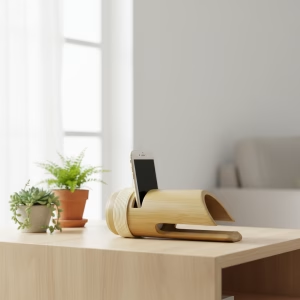
BambooSoundBoost Portable Amplifier
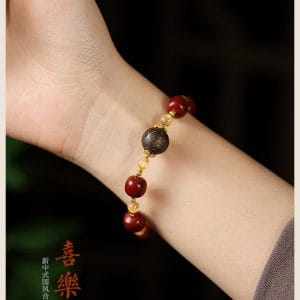
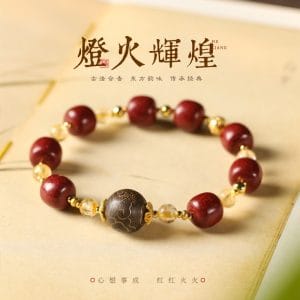
Original price was: $96.00.$66.00Current price is: $66.00. Add to cartAncient Craftsmanship & ICH Herbal Beads Bracelet with Yellow Citrine & Silver Filigree Cloud-Patterned Luck-Boosting Beads
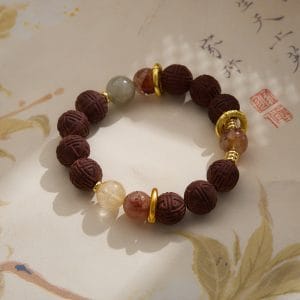
Original price was: $128.00.$89.00Current price is: $89.00. Add to cartAncient Craft Herbal Scented Bead Bracelet with Gold Rutile Quartz, Paired with Sterling Silver (925) Hook Earrings
Original price was: $322.00.$198.00Current price is: $198.00. Add to cartGuangxi Zhuang Brocade Handmade Tote – Ethnic Boho Large-Capacity Shoulder Bag
Original price was: $172.00.$150.00Current price is: $150.00. Add to cartHandwoven Zhuang Brocade Tote Bag – Large-Capacity Boho Shoulder Bag
Original price was: $178.00.$154.00Current price is: $154.00. Add to cartThe Palace Museum Paper-Cut Light Art Fridge Magnets: Chinese Cultural Style Creative Gift Series
Price range: $27.00 through $36.00 Select options This product has multiple variants. The options may be chosen on the product page