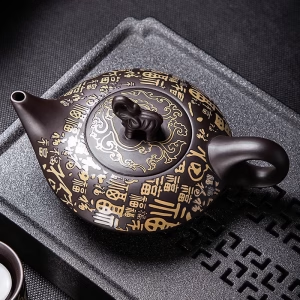
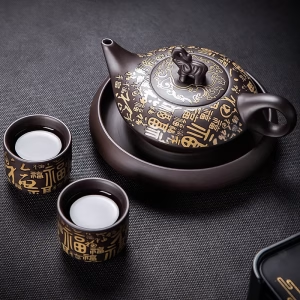
In a quiet corner of a scholar’s studio during the Ming dynasty, the choice of a simple, undecorated white teacup was never merely practical. It was a statement—a rejection of ostentation, an alignment with Daoist ideals of purity, and a subtle critique of courtly extravagance. This is the realm where Chinese tea sets cease to be mere utensils and become articulate participants in a centuries-long cultural dialogue. They are the physical embodiment of philosophy, social rank, and aesthetic revolution, with each dynasty inscribing its values into the very clay from which these vessels are born.
Dynastic Palates Embodied in Clay
The evolution of tea ware is a mirror to the shifting soul of China itself. In the Tang dynasty (618–907 CE), tea was a commodity, medicine, and a subject of poetry. It was compressed into bricks, boiled with salt and spices like ginger or onion, and served from robust, often metal, vessels such as the elegant cha fu (tea cauldron). This reflected a pragmatic, expansive empire where tea was prepared in bulk for communal consumption. The famed “Tea Sage” Lu Yu penned his seminal The Classic of Tea during this period, detailing twenty-four essential utensils, from braziers to water vessels, formalizing a material culture around the leaf. His work established that the quality of the ritual was inseparable from the quality and appropriateness of the tools.
The seismic shift came with the Song dynasty (960–1279 CE), an age of refined introspection and unparalleled artistic achievement. The practice of drinking whisked, powdered tea (matcha) demanded a new canvas. Enter the dark, iron-rich Jian ware “hare’s fur” and “oil spot” bowls from Fujian. Their inky, crystalline glaze provided a stark, dramatic contrast for the vibrant green froth, turning each serving into a moment of profound aesthetic contemplation. Emperor Huizong, a ruler more artist than statesman, famously penned the Treatise on Tea, extolling the ‘bluish-white’ jade-like quality of perfect tea foam in a perfect bowl—a direct link between imperial authority and ceramic taste. The bowl was no longer just a vessel; it was a stage for a transient, performative art. The ritual, known as dian cha, involved precisely whipping the powdered tea with hot water using a bamboo whisk, creating a frothy emulsion that was both a drink and an ephemeral sculpture.
The Literati’s Hand and the Imperial Kiln
This period solidified two parallel streams of production that would define Chinese ceramics for centuries. The imperial kilns, most famously those at Jingdezhen, produced technically flawless guanyao (official ware) for the court. These pieces represented the height of state-sponsored artistry, their perfection a symbol of imperial power and order. In contrast, folk kilns catered to scholarly and popular tastes, often exhibiting a freer, more expressive style. A fine blue-and-white porcelain cup from the subsequent Ming era (1368–1644) might feature a meticulously painted scene of scholars in a misty landscape, directly linking the act of drinking tea to the aspirational, reclusive life of the educated elite. The decoration was not mere ornament; it was a narrative, an ideal to be held in the hand. As the scholar-official class grew in influence, their aesthetic preferences—valorizing simplicity, antiquity, and understated elegance—began to permeate even courtly tastes, creating a fascinating dialogue between the “official” and the “scholar’s” standard.
Meanwhile, in the 16th century, the Yixing teapots of Jiangsu province embodied a radically different, deeply personal philosophy. Made from unique Zisha (purple clay) found only in that region, they were small, unglazed, and designed for the solitary connoisseur or intimate gatherings. The porous clay was celebrated for its ability to absorb the essence and oils of the tea over time, with each pot becoming dedicated to a single type of leaf. This practice transformed the vessel from a generic tool into a personal, seasoned companion. As Master Chen Ming, a contemporary Yixing artisan, notes, “A new Yixing pot is shy. Only after a hundred steepings does it begin to speak, its color deepening, its pour becoming smoother. Its value is not in its price, but in its history—a history you write with every infusion.” This ethos stands in stark contrast to the pristine, unchanging perfection of imperial porcelain, favoring instead a beauty that evolves through intimate, repeated use.
The Engineering of Ritual: Forms That Shaped Practice
The design of tea sets directly facilitated and evolved alongside changing social rituals. Consider the journey of a single, now-ubiquitous form: the gaiwan. This lidded bowl on a saucer, perfected in the Qing dynasty (1644–1912), is a masterpiece of ergonomic design. Its three parts—lid, bowl, and saucer—work in concert. The lid is used to skim away leaves while sipping, to hold back the leaves when pouring, and to retain heat. It represented a move toward an individual, portable ceremony, allowing for the appreciation of loose-leaf tea’s unfurling beauty, away from the shared, steeping pots of earlier periods. Its simplicity is deceptive; it is a solution born from centuries of ritual refinement. For many modern tea drinkers, the gaiwan is the ideal tool for critically evaluating a tea’s aroma and flavor profile, offering total control over brewing time and temperature.
Similarly, the evolution of the teapot spout tells a story of cultural priority. Early spouts were often short and straight. Over time, particularly in Yixing and later designs, spouts became longer and more gracefully curved. This was not merely aesthetic. A well-crafted spout ensures a smooth, unbroken, and aerated stream of tea—what connoisseurs call the “fragrant thread.” A turbulent pour can bruise the liquor and introduce unwanted bubbles. Thus, the curve of the spout is engineered to honor the tea’s flavor, demonstrating how every physical attribute serves a sensorial purpose. The handle’s placement, the thickness of the walls for heat retention, and even the size of the filter holes are all deliberate choices that influence the extraction and final character of the tea.
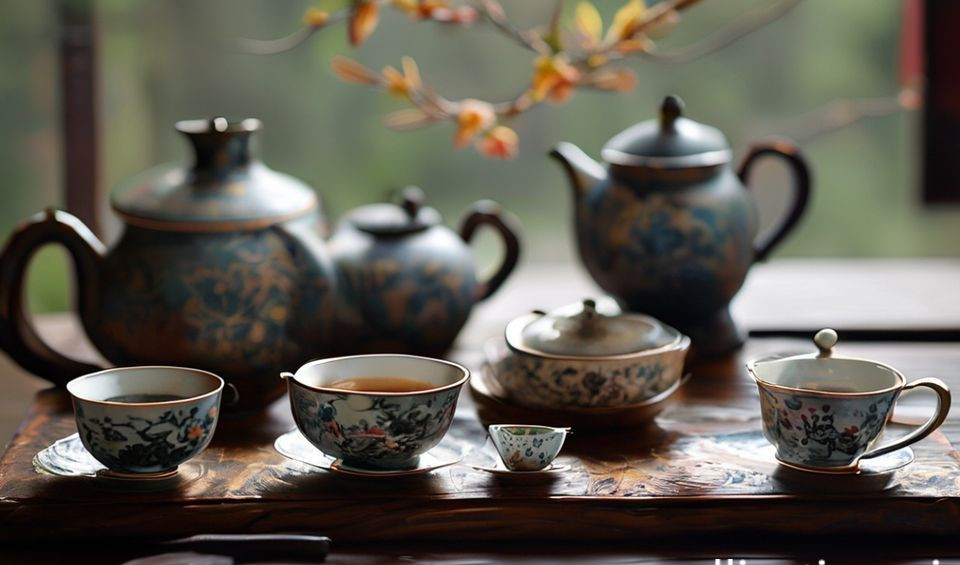
This design intelligence extends to the broader ecosystem of the tea tray. The modern Gongfu tea setup, with its fairness pitcher (cha hai) to ensure even distribution of flavor, aroma cups (wenxiangbei) to concentrate the fragrance before drinking, and a slotted tray to manage water, creates a self-contained theater for the tea. Each piece has a specific role in managing the process, turning preparation from a mundane task into a deliberate, flowing performance. This orchestration of objects minimizes distraction and focuses attention on the sensory journey.
A Voice from the Clay: The Potter’s Perspective
To understand the cultural weight these objects carry, one must listen to those who shape them. The philosophy is baked into the craft. Master potter Xu Jin, a sixth-generation artisan from Jingdezhen, speaks to this legacy: “When I throw a teapot, I am not just making a container. I am shaping space for silence, for breath. The curve of the spout must promise a smooth, unbroken stream—this is the flow of conversation. The fit of the lid must be snug but silent; a clatter breaks the meditation. We talk about ‘the voice of the pot.’ A good one has a clear, ringing tone when struck. That is its spirit speaking. Today, a collector might value a flawless glaze. But for the old scholars, a slight asymmetry, a ‘kiln accident,’ showed the hand of nature and heaven. That was the true beauty.”
This perspective reveals a world where technical mastery is the baseline, not the end goal. The ultimate aim is to create an object that facilitates a mindful, harmonious experience. The “voice” of the pot—its resonant ring when tapped—is a traditional quality check, indicating a lack of hidden cracks, but it is also metaphorically the vessel’s character. The pursuit of wabi-sabi-like imperfection, known in Chinese aesthetics as an appreciation for the natural and unforced (ziran), stands as a quiet rebellion against sterile perfection. It is a reminder that human creation is a collaboration with natural forces—the fire of the kiln, the properties of the local clay, the alchemy of glaze minerals—and that beauty often lies in the unexpected results of that collaboration.
The training of such an artisan is a lifelong pursuit. It involves not only mastering the physical skills of wedging clay, throwing on the wheel, and controlling a wood-fired kiln, but also absorbing a deep cultural literacy. A potter must understand the historical forms, the symbolic meanings of certain motifs (like the lotus for purity or the bamboo for resilience), and the functional needs of different tea varieties. This blend of artist, engineer, and historian is what separates a true tea ware artisan from a mere producer of ceramic goods.
Tea Sets in the Modern World: Tradition in Translation
In contemporary China and globally, Chinese tea sets occupy a fascinating spectrum from revered tradition to modern lifestyle accessory. The global tea market, valued at over $200 billion, has spurred renewed interest in traditional ware, not just as antiques but as functional art. Museums like the Shanghai Museum and the Palace Museum house vast ceramic collections, with tea ware being a central pillar, educating the public on this tangible heritage. Simultaneously, online platforms have created global marketplaces where enthusiasts can acquire pieces directly from small-scale artisans, democratizing access to what was once a rarefied domain.
Modern artisans face the challenge of balancing tradition with relevance. Some, like Li Ming, a ceramicist based in Hangzhou, use ancient forms but experiment with glazes and minimalist decoration that appeal to a modern, urban aesthetic. “My clients may live in a high-rise apartment, not a mountain retreat,” Li says. “But they still seek a moment of peace. My teapots are a bridge—their form is classic, but their language is contemporary. They are designed not for display in a cabinet, but for daily use on a desk or kitchen counter.” This philosophy of “usable heritage” is vital for keeping traditions alive, ensuring they are living practices rather than museum artifacts.
Furthermore, the health and mindfulness movements in the West have driven significant interest in Gongfu tea ceremony, the intricate, small-pot method of brewing that highlights the nuances of oolong and pu-erh teas. This practice is inseparable from its tools. As noted by the World Health Organization in reports on traditional medicine and holistic health, mindful practices like tea ceremony are increasingly recognized for their potential benefits in stress reduction and mental well-being, adding a new, health-oriented layer to the ritual’s ancient roots. The deliberate, slow actions required—warming the pot, rinsing the leaves, timing each infusion—force a pause from the digital rush, creating a natural form of meditation.
The recognition of Chinese tea culture’s depth is also reflected in its 2022 inscription on UNESCO’s Representative List of the Intangible Cultural Heritage of Humanity. This designation specifically highlights the knowledge, skills, and practices around tea plantation management, tea processing, and the social rituals of tea drinking. The tea set is the tangible centerpiece of this intangible heritage, the physical object through which knowledge is performed and transmitted from one generation to the next.
Practical Insights for the Modern Enthusiast
Engaging with Chinese tea sets need not be daunting or prohibitively expensive. The journey is about intention, not investment. The core of the practice is mindfulness and the enhancement of sensory pleasure. Here are actionable ways to begin and deepen your engagement.
- Start Simple, Start with Use: Begin with a basic, plain porcelain gaiwan set. Its neutrality lets you taste the tea purely, without clay minerals influencing flavor. Use it daily. The goal is to build a habit, not a collection. A simple glass pitcher can serve as a fairness cup. The most important step is to begin the ritual consistently.
- Understand the “Why”: When you see a pot, ask about its function. Why is the spout shaped that way? Why is the belly round? A round belly is often for rolling oolong leaves to encourage unfurling; a taller, cylindrical shape might be for vertical green tea leaves to allow them to dance and sink gracefully. Form follows function in tea ware. Learning these principles turns appreciation from passive to active.
- Embrace the Personal Journey of Yixing: If you venture into Yixing clay, choose one tea type for your pot—perhaps a roasted oolong or a ripe pu-erh. Over months, you’ll witness its patina develop. This slow, collaborative seasoning is the core of the practice. Resist the urge to scrub it clean with soap; simply rinse with hot water and air-dry. The pot’s evolving character is a diary of your tea sessions.
- Listen and Feel: Engage your senses beyond sight. Tap a cup lightly. A clear, high-pitched ring indicates a thin, well-fired porcelain. A duller sound might suggest stoneware. Feel the weight and balance of a pot in your hand. Does the lid fit seamlessly? Does the handle feel secure and comfortable during a pour? This tactile and auditory connection is part of the tea’s prelude.
- Seek Reputable Sources and Stories: For authentic pieces, look for artisans or sellers who can articulate the origin of the clay and the philosophy of the maker. In the age of mass production, the story and provenance are key indicators of quality and cultural integrity. Be wary of “too perfect” or artificially aged Yixing pots; true craftsmanship respects the material’s natural character.
- Curate a Functional Collection Gradually: Instead of buying many pieces at once, add tools intentionally. After mastering the gaiwan, you might add a dedicated clay pot for your favorite oolong. Later, a set of aroma cups can open a new dimension of smelling. Let your practice guide your acquisitions, ensuring each new piece has a purpose in your ritual.
The quiet corner of the Ming scholar’s studio finds its echo today in a city apartment where someone carefully heats water, warming their teapot before the first leaves are added. That simple, mindful action connects across centuries. A Chinese tea set is more than a collection of pots and cups. It is a technology for mindfulness, a canvas for cultural expression, and a testament to the human desire to find meaning and beauty in the most fundamental acts of daily life. From the imperial courts to the literati’s retreat and now to our globalized world, these objects continue to shape, and be shaped by, the way we pause, prepare, and partake. They remind us that in the ritual of tea, the vessel is not just a container, but a companion in contemplation, its form a silent guide to a more present and sensory experience. The dialogue between hand, clay, leaf, and water remains eternally relevant, offering a sanctuary of slowness and intention in every pour.
You may also like
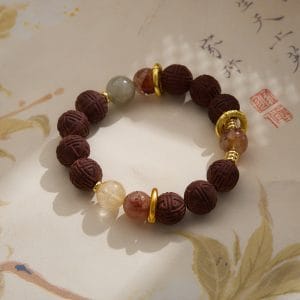
Ancient Craftsmanship & ICH Herbal Beads Bracelet with Yellow Citrine & Silver Filigree Cloud-Patterned Luck-Boosting Beads
Original price was: $128.00.$89.00Current price is: $89.00. Add to cartBambooSoundBoost Portable Amplifier
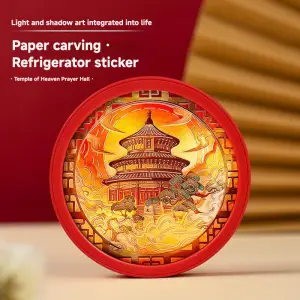
Original price was: $96.00.$66.00Current price is: $66.00. Add to cartThe Palace Museum Paper-Cut Light Art Fridge Magnets: Chinese Cultural Style Creative Gift Series
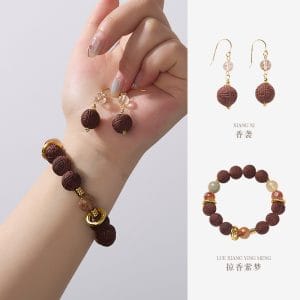
Price range: $27.00 through $36.00 Select options This product has multiple variants. The options may be chosen on the product pageAncient Craft Herbal Scented Bead Bracelet with Gold Rutile Quartz, Paired with Sterling Silver (925) Hook Earrings
Original price was: $322.00.$198.00Current price is: $198.00. Add to cartHandwoven Zhuang Brocade Tote Bag – Large-Capacity Boho Shoulder Bag
Original price was: $178.00.$154.00Current price is: $154.00. Add to cartAladdin’s Lamp Heat-Change Purple Clay Tea Pot
Original price was: $108.00.$78.00Current price is: $78.00. Add to cart