To enter a space arranged according to traditional Chinese principles is to engage in a quiet conversation with history. This aesthetic language speaks not through bold declarations but through subtle suggestions, where every object, texture, and void carries cultural weight. It is a visual philosophy where the concepts of yin and yang, the reverence for natural materials, and the pursuit of harmonious balance move from abstract thought into lived experience. This decor does not merely fill rooms; it constructs atmospheres of contemplation, weaving threads of Confucian order, Daoist flow, and Buddhist tranquility into the fabric of daily life. It offers a profound antidote to the clutter and haste of modernity, creating sanctuaries that nurture both the eye and the spirit.
The Mandate of Materials and Craft
Authenticity begins with substance. The Chinese aesthetic tradition exhibits a profound respect for the inherent nature of materials, allowing wood, stone, lacquer, and ceramic to express their own qualities rather than disguising them. A Ming-style huanghuali wood chair is celebrated for the natural grain of its timber, its joinery a testament to craftsmanship that requires no nail or screw. The cool, immutable solidity of a scholar’s rock, or gongshi, placed upon a desk, serves as a microcosm of the enduring landscape. This material honesty extends to craftsmanship techniques passed down for generations, such as the intricate mortise-and-tenon joinery in furniture or the layered, polished beauty of zitan wood. The value lies not in ostentation, but in the visible integrity of material and the silent skill of the maker’s hand.
This philosophy translates into practical choices for the modern home. Instead of laminate or plastic, seek out solid woods like oak or walnut, which age with character. Choose ceramic or stoneware with visible, tactile glazes over perfectly uniform, machine-made items. The goal is to surround oneself with objects that tell a story of their origin. A simple, unvarnished wooden bowl, for instance, connects us to the tree it came from and the craftsperson who shaped it. As the UNESCO convention for the safeguarding of intangible cultural heritage highlights, such crafts are not just techniques but vessels of cultural memory and identity, a legacy worth preserving in our daily environments.
Consider the journey of a single piece of lacquerware. The process involves applying dozens of thin layers, each requiring days to cure, before the final carving reveals the colors beneath. This isn’t manufacturing; it’s a meditation in material. Integrating even one such piece—a small box or a tray—into a contemporary setting instantly anchors the space in a narrative of patience and care, standing in quiet opposition to the disposable nature of fast furniture.
The Poetics of Spatial Arrangement and “Leaving Blank”
Space itself is a primary medium. The principle of liu bai, or “leaving blank,” is fundamental. It is the deliberate, strategic use of emptiness—an unadorned wall, a clear expanse of floor—that gives form and meaning to the objects within it. This is not mere minimalism; it is active negative space that invites the mind to wander and complete the scene. Arrangement follows a rhythm of balance and asymmetry, avoiding rigid symmetry in favor of dynamic equilibrium. A pair of porcelain vases might be flanked by a single, twisting branch in a celadon vessel, creating a visual tension that feels both resolved and alive.
The placement is always considered from multiple viewpoints, ensuring the composition unfolds gracefully as one moves through the space, much like a handscroll painting reveals its narrative incrementally. In practice, this means resisting the urge to cover every surface. Start by decluttering a room, then reintroduce items one by one, paying attention to the spaces between them. Create a focal point—a painting, a significant piece of furniture—and allow it to breathe. The empty wall around it is not wasted space; it is a frame, a moment of visual rest. This approach aligns with findings in environmental psychology, which suggest that uncluttered spaces can significantly reduce stress and improve mental clarity by reducing cognitive load.
A Scholar’s Reflection on Ordered Space
Dr. Lin Wei, a cultural historian, observes, “People often mistake austerity for emptiness. But in the traditional study, or shufang, every item is a chosen companion. The inkstone, the brush rest, the small incense burner—they are not decorations. They are tools for thought, anchors for the spirit. Their placement on the desk follows an unwritten protocol: the heavy, stable inkstone to the lower right, the lighter brushes to the upper left. This order mirrors the cosmos and steadies the mind for the act of writing or painting. It is a small, daily ritual of aligning the self with a larger harmony.”
We can adopt this mindset today. A home office desk need not be sterile. A beautiful stone paperweight, a single stem in a slender vase, or a carefully selected lamp can serve as these “chosen companions,” transforming a utilitarian space into one of focused intention. The act of thoughtfully arranging these few items becomes a mindful practice in itself, setting the tone for the work to be done. It’s about creating a micro-environment that supports a specific state of mind, whether for work, study, or relaxation.
Color, Symbolism, and the Dialogue with Nature
Color in Chinese aesthetic decor is rarely loud or arbitrary. It draws its palette directly from the natural world: the deep blues of river stones, the muted greens of moss, the earthy browns of clay, and the soft whites of jade. These hues are applied with symbolic intention. Red, representing luck and joy, might appear in small accents—a lacquer box or a silk cushion—rather than dominating a wall. Blue and green, colors associated with healing and growth, often find their way into textiles and ceramics.
Nature is not just a source of color but the central motif. This is more than just placing a potted plant in a corner. It is about creating a sustained dialogue between the interior and the eternal patterns of the natural world. A painting of a bamboo grove represents resilience; a branch of blossoming plum symbolizes hope and perseverance. The integration of a courtyard garden, even a small one viewed through a window or represented by a framed photograph, is essential. It brings the changing seasons and the passage of time indoors. This biophilic design principle, which the World Health Organization notes has measurable benefits for mental health and well-being, is a centuries-old practice in Chinese design.
One can observe this in the classic Chinese garden, which is designed as a compressed landscape for contemplation. Translating this to an apartment might involve creating a “view within a view.” Positioning a chair to face a window framing a tree, and complementing that with an interior arrangement of stones and a simple plant, extends the natural world into the living area. This layered connection to nature helps ground inhabitants, a necessity underscored by urban studies linking access to green spaces with lower stress levels.
Light, Shadow, and the Conscious Passage of Time
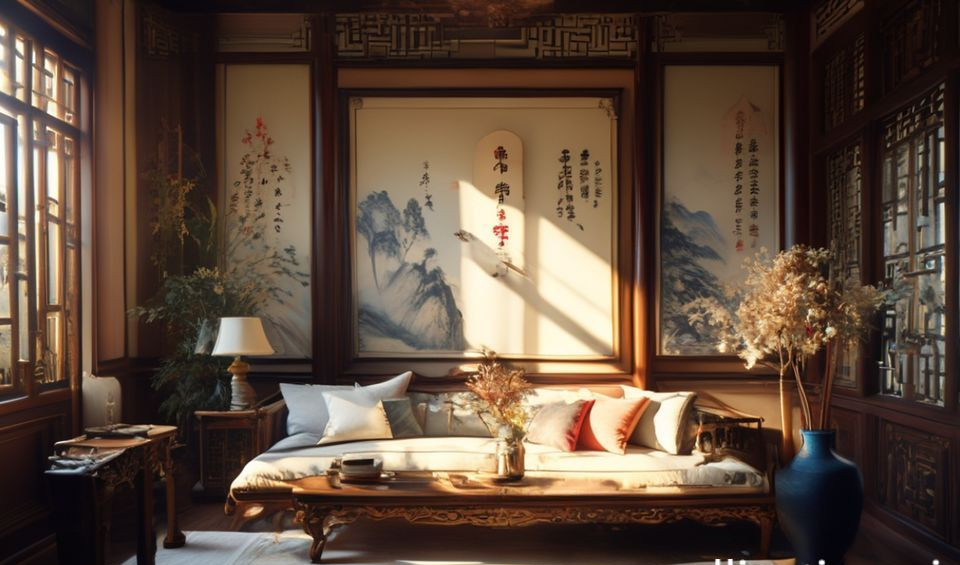
Light is treated as a dynamic, sculptural element. The goal is rarely uniform brightness but rather a play of illumination and shadow that changes throughout the day. Lattice windows (linglong) cast intricate patterns of light and dark onto floors, transforming plain surfaces into ever-shifting canvases. Paper lanterns diffuse a warm, gentle glow, creating pockets of intimate light within a larger, dimmer space.
This conscious manipulation of light makes us aware of time’s flow. The long shadow of afternoon, the soft glow of evening—each becomes a feature of the room. To emulate this, replace harsh overhead lighting with layered sources: floor lamps, table lamps, and sconces. Use sheer fabrics or bamboo screens to filter sunlight. Embrace shadows as part of the decor; they add depth, mystery, and a sense of calm. As the light shifts, so does the character of the room, encouraging a slower, more observant pace of life. It’s a practice in mindfulness, where the environment itself reminds us to be present as the day evolves.
An architect in Shanghai, Li Jun, applies this principle in modern renovations. “We design ‘light shelves’ and interior windows not just for energy efficiency, but to choreograph light,” he explains. “We want the resident to notice the stripe of sunlight that travels across their teak floor from 2 to 4 PM. That daily event becomes a quiet ritual, a connection to the cosmic clock.” This intentional design transforms a passive experience into an active engagement with one’s surroundings.
Integrating Tradition into Contemporary Life
Adopting Chinese aesthetic decor today is not about recreating a museum period room. It is about interpreting its core principles to suit modern lifestyles and spaces. The challenge lies in balancing reverence for tradition with practical necessity. A sleek, modern apartment can absolutely host this philosophy.
Start with one principle. Perhaps it’s liu bai—committing to a major decluttering project, asking of each possession whether it brings beauty, utility, or meaning. Or perhaps it’s material authenticity, vowing to buy one piece of real, handcrafted pottery instead of a set of factory-made dishes. Mix a traditional item, like a scholar’s rock or a calligraphy scroll, with contemporary furniture. The contrast can make both elements sing. The key is intentionality. Each object should be chosen for its meaning, its beauty, or its function, not merely to fill a void.
Consider the story of Maya, a graphic designer in a bustling city. Feeling overwhelmed by the noise and visual chaos of her environment, she slowly transformed her studio apartment. She painted the walls a soft, clay white, replaced a bulky sectional with a simple platform bed and a single elegant chair in solid walnut. She hung one large, framed piece of abstract ink-wash art and placed a solitary, weathered pine branch in a corner. “It’s not ‘Chinese-style’,” she says, “but it uses the ideas. The emptiness lets me think. The wood and the branch keep me grounded. It feels like a retreat now.” Her experience echoes a growing global trend, noted by platforms like Statista, toward mindful consumption and personalized, serene living spaces that prioritize well-being over mere accumulation.
Another practical avenue is the concept of the “anchor piece.” This could be a substantial item of furniture—a clean-lined dining table in elm wood—that sets the tone for a room. Around it, one can build a narrative with smaller, personal items: a set of handmade cups, a textile from a travels, a small Bonsai. The anchor provides stability and tradition, while the personal items inject life and individuality, preventing the space from feeling like a staged exhibit.
The Enduring Resonance of Harmonious Design
The power of Chinese aesthetic decor endures because it addresses a universal human need: the desire for an environment that cultivates peace, reflection, and a connection to something greater than oneself. In a world saturated with stimulation and disposable goods, its emphasis on quality, nature, and mindful arrangement offers a compelling alternative. It teaches that our surroundings are not a passive backdrop but an active participant in our well-being.
By engaging with these principles—cherishing honest materials, embracing purposeful emptiness, inviting nature indoors, and playing with light—we do more than decorate a room. We compose an environment that can slow the pulse, focus the mind, and nourish the soul. The quiet conversation with history becomes a dialogue with our own inner landscape, creating homes that are not just places to live, but spaces that help us live well. This philosophy, as explored in journals of environmental design and cultural studies, remains relevant because it is fundamentally human-centered, addressing our innate longing for harmony, authenticity, and a sanctuary from the external world.
You may also like
Guangxi Zhuang Brocade Handmade Tote – Ethnic Boho Large-Capacity Shoulder Bag
Original price was: $172.00.$150.00Current price is: $150.00. Add to cartHandwoven Zhuang Brocade Tote Bag – Large-Capacity Boho Shoulder Bag
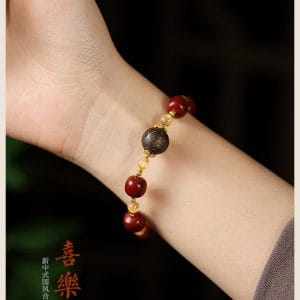
Original price was: $178.00.$154.00Current price is: $154.00. Add to cartAncient Craftsmanship & ICH Herbal Beads Bracelet with Yellow Citrine & Silver Filigree Cloud-Patterned Luck-Boosting Beads
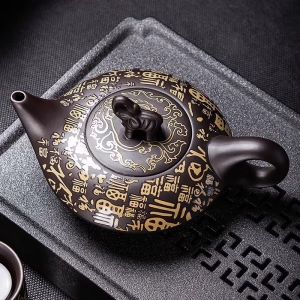
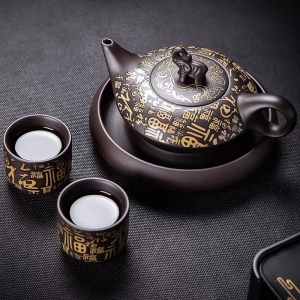
Original price was: $128.00.$89.00Current price is: $89.00. Add to cartAladdin’s Lamp Heat-Change Purple Clay Tea Pot
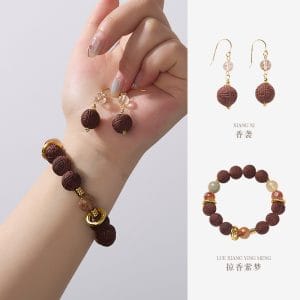
Original price was: $108.00.$78.00Current price is: $78.00. Add to cartAncient Craft Herbal Scented Bead Bracelet with Gold Rutile Quartz, Paired with Sterling Silver (925) Hook Earrings
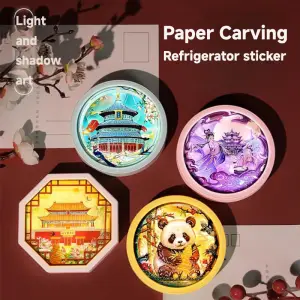
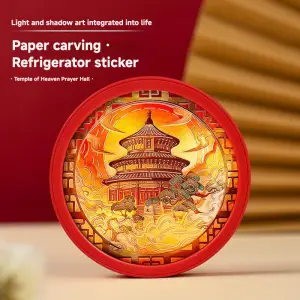
Original price was: $322.00.$198.00Current price is: $198.00. Add to cartThe Palace Museum Paper-Cut Light Art Fridge Magnets: Chinese Cultural Style Creative Gift Series
Price range: $27.00 through $36.00 Select options This product has multiple variants. The options may be chosen on the product page