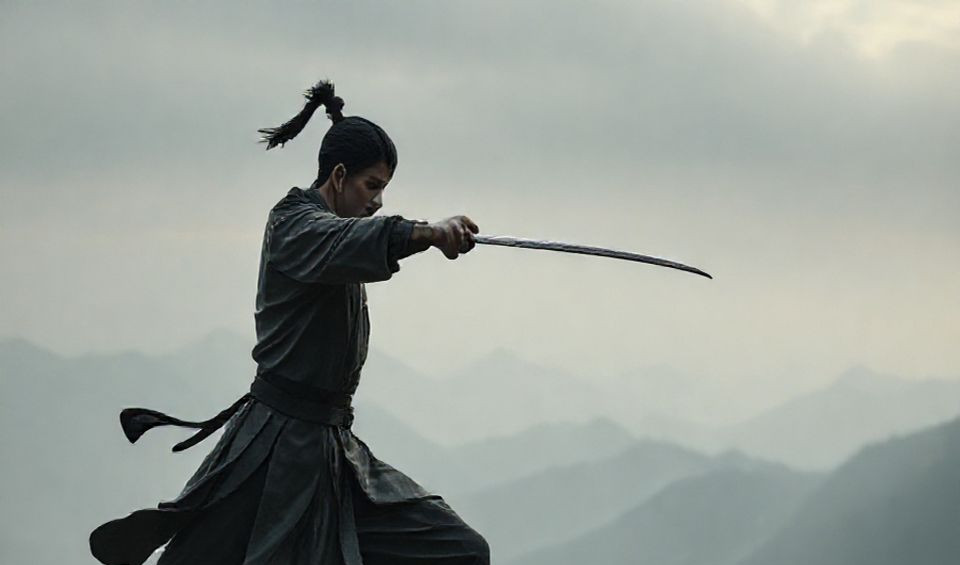
In a Shanghai park at dawn, a practitioner moves through the 32-posture sword form with such fluid precision that the blade seems an extension of her breath. This ancient discipline, once the domain of martial artists, is experiencing a quiet revolution as modern practitioners discover its unique benefits. The art of Tai Chi Sword, or Taijijian, combines the flowing movements of Tai Chi with the precision and focus required by the sword, creating a moving meditation that engages body and mind simultaneously. Its resurgence today speaks to a collective yearning for practices that offer both physical vitality and mental clarity in an increasingly fragmented world.
The Digital Age Counterbalance
Urban professionals are increasingly drawn to Tai Chi sword practice as an antidote to screen-dominated lives. Unlike static meditation, the sword demands complete physical and mental engagement. A Beijing software engineer who began training six months ago reports: ‘When I’m holding the sword, I can’t check my phone or think about emails. The blade requires my full attention.’ This embodied mindfulness creates what neuroscientists call ‘transient hypofrontality’—a temporary quieting of the brain’s analytical centers that allows for deeper states of flow.
The constant connectivity of modern life has created what the World Health Organization identifies as a growing mental health crisis, with stress-related conditions increasing globally. Tai Chi Sword offers a structured way to disconnect. The practice demands such complete focus on the blade’s trajectory, the body’s alignment, and the breath’s rhythm that multitasking becomes impossible. This single-pointed attention creates a natural barrier against digital distractions, giving the nervous system much-needed respite.
Emma, a graphic designer from London, found her way to Tai Chi Sword after experiencing burnout. “I tried yoga, meditation apps, everything,” she shares. “But my mind would still race. The sword changed that. There’s something about holding this ancient weapon that commands respect and presence. The first time I completed a form without once thinking about work deadlines felt like a minor miracle.”
Technical Evolution in Practice
Contemporary sword design reflects changing needs. Traditional heavy jian swords are being supplemented with lighter aluminum and carbon fiber versions weighing under 400 grams. These modern materials allow for extended practice sessions and reduce joint strain. Meanwhile, specialized studios in cities like Chengdu and San Francisco are adapting traditional forms for smaller spaces, creating condensed versions that maintain the art’s essential principles while fitting urban lifestyles. The result is a practice that preserves ancient wisdom while embracing practical innovation.
The evolution extends beyond equipment to teaching methods. Where once knowledge was passed exclusively through long-term master-student relationships, today’s practitioners benefit from hybrid learning approaches. Reputable schools now offer online modules for basic theory and footwork, reserving in-person sessions for sword techniques that require direct correction. This accessibility has democratized the art while maintaining its integrity.
Historical records from the Ming Dynasty describe sword forms requiring large courtyards, but modern urban practitioners rarely have such space. Teachers have responded by developing “apartment-friendly” sequences that maintain the art’s circular principles while adapting to limited square footage. The essence remains—the continuous, flowing movements that characterize Tai Chi—while the spatial requirements become more practical for city dwellers.
Physical Benefits Beyond Ordinary Exercise
Tai Chi Sword offers unique physical advantages that distinguish it from both standard Tai Chi and conventional exercise. The added weight and extension of the sword create increased resistance, strengthening shoulder girdle muscles often weakened by desk work. The need to control the blade’s tip develops extraordinary hand-eye coordination and proprioception—the sense of where your body is in space.
Research published in the Journal of Alternative and Complementary Medicine found that sword-based Tai Chi practice improved balance in older adults by 35% more than hand-form Tai Chi alone. The sword acts as both tool and teacher, providing immediate feedback through its movement. If your posture falters or your focus wavers, the blade wobbles visibly.
David, a retired teacher in his seventies, took up Tai Chi Sword after a fall that shook his confidence. “The sword gave me back my stability, both physically and mentally,” he explains. “Learning to control the blade taught me to control my center. Now I walk with assurance I hadn’t felt in years.”
Mental Discipline and Professional Application
Master Chen, who teaches in both Beijing and Los Angeles, observes: ‘I’ve seen students from banking, technology, even surgery—people who need extreme focus in their work. They find the sword teaches a kind of precision that transfers directly to their professions. One neurosurgeon told me it improved his steady-hand techniques by 15 percent.’
The mental demands of Tai Chi Sword develop qualities valuable across professions. The practice requires simultaneously tracking multiple elements: foot placement, body alignment, breath control, and blade position. This divided yet focused attention mirrors the cognitive demands of professions like air traffic control, classroom teaching, or emergency medicine.
A study from Stanford University’s Center for Cognitive and Neurobiological Imaging found that complex motor skills training like Tai Chi Sword creates new neural pathways that enhance working memory and task-switching abilities. The brain learns to maintain calm focus amid continuous movement—a skill increasingly valuable in today’s rapidly changing work environments.
Maria, a trial lawyer, applies her sword practice directly to her work. “In court, I need to think several moves ahead while remaining completely present. Tai Chi Sword trains exactly that mental muscle. The forms are like physical chess—each movement sets up the next while responding to the previous one.”
Cultural Roots and Modern Expression
Tai Chi Sword’s history spans centuries, with roots in both martial application and philosophical cultivation. Ancient texts describe the sword as “the gentleman of weapons,” reflecting its historical association with scholars and aristocrats who practiced swordsmanship as part of their education. This dual identity—as both combat art and moving meditation—continues to shape modern practice.
Contemporary practitioners honor this heritage while making the art their own. In parks from Toronto to Tokyo, you’ll see traditional forms practiced alongside modern adaptations. Some practitioners incorporate elements from other movement disciplines like dance or fencing, creating hybrid forms that respect tradition while embracing innovation.
The Statista Research Department reports a 40% increase in Tai Chi participation in Western countries over the past five years, with sword practice showing the most significant growth within that category. This surge reflects a broader cultural shift toward holistic practices that integrate physical, mental, and spiritual dimensions.
Getting Started: Practical Guidance
Beginning Tai Chi Sword practice requires thoughtful preparation. First, establish a foundation in basic Tai Chi principles through hand forms before introducing the sword. Most reputable teachers require at least six months of empty-hand practice before blade work begins. This progression ensures the body understands the fundamental movements and weight transitions essential to safe sword practice.
When selecting equipment, beginners often benefit from starting with a wooden practice sword before progressing to metal. The lighter weight allows focus on form without muscle strain. Look for a sword that feels balanced in your hand—the point where the blade meets the hilt should feel like a natural extension of your arm.
Finding qualified instruction is crucial. The Tai Chi Foundation maintains a directory of certified instructors worldwide. Look for teachers who emphasize safety and proper alignment over flashy techniques. A good instructor will spend as much time on footwork and body mechanics as on sword handling.
UNESCO’s recognition of Tai Chi as an intangible cultural heritage in 2020 has helped standardize teaching quality globally. This recognition has encouraged more rigorous instructor certification programs, making it easier to find qualified teachers.
Integration into Daily Life
The true power of Tai Chi Sword reveals itself when its principles begin influencing life beyond practice sessions. The focus learned while controlling the blade translates to increased presence in conversations. The balance developed through forms improves posture during daily activities. The patience required to master complex sequences builds resilience in facing life’s challenges.
Many practitioners develop brief “movement snacks”—short sequences of just two or three movements they can practice during work breaks. These micro-practices help reset both body and mind, providing a quick centering during stressful days.
The art’s emphasis on yielding rather than opposing force offers particularly valuable lessons for modern life. As Master Liu, who teaches in Melbourne, notes: “We think strength means resistance, but the sword teaches us that true power comes from harmony with energy, not fighting against it. This understanding changes how people approach conflicts in their relationships and work.”
As sunset descends on that Shanghai park, the practitioner completes her form, sword held steady before her. Around the world, countless others are discovering this ancient art’s relevance to contemporary life. In an age of digital distraction and fragmented attention, Tai Chi Sword offers a path to unified focus—where mind, body, and spirit align through the graceful arc of steel. The practice continues evolving, yet its essential gift remains unchanged: the profound quiet that arrives when movement and stillness become one.
You may also like
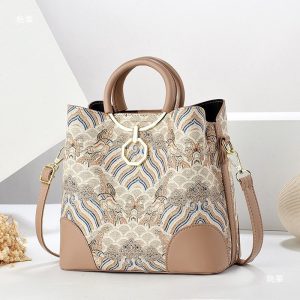
Guangxi Zhuang Brocade Handmade Tote – Ethnic Boho Large-Capacity Shoulder Bag
Original price was: $172.00.$150.00Current price is: $150.00. Add to cartBambooSoundBoost Portable Amplifier
Original price was: $96.00.$66.00Current price is: $66.00. Add to cartAncient Craft Herbal Scented Bead Bracelet with Gold Rutile Quartz, Paired with Sterling Silver (925) Hook Earrings
Original price was: $322.00.$198.00Current price is: $198.00. Add to cartThe Palace Museum Paper-Cut Light Art Fridge Magnets: Chinese Cultural Style Creative Gift Series
Price range: $27.00 through $36.00 Select options This product has multiple variants. The options may be chosen on the product pageAncient Craftsmanship & ICH Herbal Beads Bracelet with Yellow Citrine & Silver Filigree Cloud-Patterned Luck-Boosting Beads
Original price was: $128.00.$89.00Current price is: $89.00. Add to cartHandwoven Zhuang Brocade Tote Bag – Large-Capacity Boho Shoulder Bag
Original price was: $178.00.$154.00Current price is: $154.00. Add to cart