To hold a piece of ancient lacquerware is to hold a paradox. It feels impossibly light, yet carries the weight of centuries. Its surface is hard as stone, yet it began as a living, weeping sap. This is not merely a craft of decoration, but a profound historical dialogue between human ingenuity and a stubborn, miraculous material. Across Asia, from the tombs of the Chu kingdom to the quiet workshops of Wajima, lacquer has served as a silent scribe, recording cultural values, spiritual beliefs, and the very rhythm of time in its accumulated layers. Its story is one of chemistry and culture, patience and philosophy, where the very nature of the material dictated the pace of human creation and embedded deep values into everyday objects.
The Material as Mandate
Lacquer is not a passive medium. The raw sap of the Toxicodendron vernicifluum tree, commonly known as the lacquer tree, is a caustic, potent substance. It contains urushiol, a compound that demands respect and provokes severe allergic reactions in most who touch it. This inherent defiance fundamentally shaped its history and social standing. In China, as early as the Neolithic period, its use necessitated specialized, guarded knowledge and ritual care, elevating its practitioners to the status of chemists and priests. The material dictated a slow, deliberate pace that became its defining characteristic. Each layer requires a specific, controlled humidity to polymerize and cure—a natural process that cannot be rushed by fire or forced by machine. This imposed patience created objects that were antithetical to haste, embedding within them a cultural value for endurance and gradual perfection.
The process is a lesson in incrementalism. After carefully harvesting the sap, the artisan applies a whisper-thin layer to a prepared substrate, often wood, bamboo, or cloth. This layer must then rest in a humid chamber, a furo in Japanese tradition, for hours or days to harden. It is then polished smooth with charcoal or fine stone powder, a step that reveals imperfections and prepares the surface for the next layer. A single ceremonial bowl from Japan’s Heian period might contain thirty such layers, each applied, cured, and polished over the course of a year. The object becomes a calendar of its own making, a physical manifestation of time invested. This labor-intensive method meant that lacquerware was, for centuries, the exclusive domain of the elite, the sacred, and the ceremonial, its very production a testament to surplus time and resources.
Modern science helps us appreciate this ancient alchemy. The curing process, called oxidative polymerization, transforms the liquid urushiol into a dense, cross-linked network that is inert, non-toxic, and incredibly stable. This scientific reality underscores the artisan’s traditional knowledge. A master doesn’t just apply sap; they orchestrate a chemical reaction with environmental cues, a skill often passed down through generations. The World Health Organization has recognized traditional craft practices for their potential contributions to community well-being and cultural continuity, noting how such deep, specialized knowledge systems support mental focus and intergenerational bonding.
Surfaces That Speak: Aesthetics as Worldview
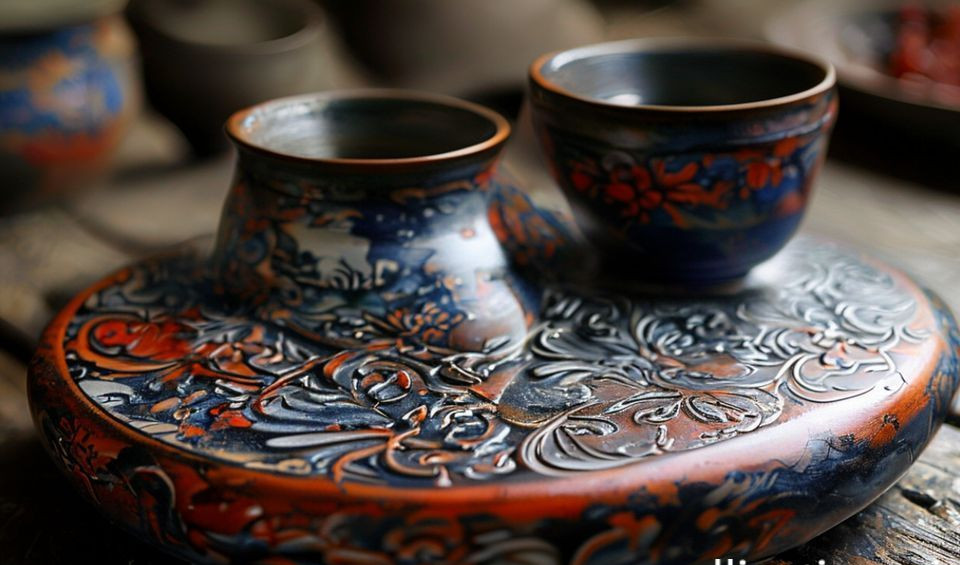
The finished surface is where abstract cultural values become legible, where philosophy takes visual form. The aesthetic techniques developed across Asia are not arbitrary decorations but encoded worldviews. In Korea’s exquisite najeon chilgi (mother-of-pearl lacquerware), iridescent shell shards are painstakingly arranged under layers of translucent lacquer to form scenes of cranes, clouds, and lotus flowers. This reflects a Daoist and Buddhist yearning for immortality and purity. The technique is a philosophy of light; the hidden shell fragments catch and scatter illumination from within the dark resin, suggesting inner radiance and the beauty of the concealed. A contemporary artisan in Seoul describes it as “painting with the ghost of light, letting it emerge from the darkness we build.”
Conversely, the stark, blood-red lacquers of Chinese imperial altars and furniture spoke of cosmic order, supreme authority, and ritual potency. Their unadorned, intense monochrome was a visual command, a declaration of power that needed no embellishment. In Myanmar, the yun technique involved a deliberate collaboration with chance. Lacquered objects were buried in damp ash or earth, allowing the environment to crackle the surface into a unique, web-like pattern—an aesthetic born from controlled decay, embracing imperfection and the hand of nature. Each regional style, from the radiant gold and silver powder of Japanese maki-e (sprinkled picture) to the deeply carved cinnabar red of Peking lacquer, tells a distinct story about a culture’s relationship with nature, spirituality, and beauty.
Consider the story of a 17th-century Japanese inrō, a small medicine case worn on the sash. A lord might commission one decorated with a subtle maki-e scene of reeds swaying in the wind. To the casual observer, it was a beautiful accessory. To the lord and his peers, it was a direct reference to a classical poem about the ephemeral nature of power, a private meditation worn on the body. The lacquer surface became a canvas for personal identity and intellectual refinement.
“We do not control the lacquer,” notes Kenji Yamamoto, a sixth-generation urushi artisan in Kyoto. “We negotiate with it. My grandfather taught me that the sheen you see is not a coating we apply, but light being slowed down and released by the resin’s density. When I work on a tea caddy, I am not decorating an object. I am preparing a vessel to hold light and time for the next user, perhaps a century from now. That is the contract.”
The Unbroken Contract: Preservation and Legacy
This contract between maker, material, and future spans millennia. Lacquer’s most profound practical magic is its incredible durability. It is resistant to water, acid, and heat, creating a seal that is nearly impervious. Archaeologists at the Mawangdui site in China found lacquerware from the 2nd century BCE in such perfect condition that the black and red designs appeared freshly painted, and the food offerings within were still identifiable. The lacquer had done more than beautify; it had defied entropy, creating a hermetic capsule of cultural memory. The UNESCO recognition of various lacquerware traditions, such as Vietnamese mother-of-pearl inlay and Japanese urushi art, underscores its role as intangible cultural heritage—a living tradition of knowledge rather than just a historical artifact.
From the ritual lian cosmetics boxes of ancient Chinese aristocrats to the humble jūbako picnic boxes of Edo-period Japan, lacquerware has consistently served as the interface between the sacred and the mundane. It preserved not just physical contents—medicine, food, documents—but the intentions and aesthetics of an era. A set of nested jūbako used for a cherry blossom viewing party was as much a part of the poetic experience as the flowers themselves, its design reflecting the season. This functional beauty ensured its survival through changing dynasties and tastes, adapting from temple altars to merchant homes. A report by Statista on global heritage craft markets indicates that objects with such a clear narrative of utility and artistry maintain stronger cultural and economic relevance over time.
Lacquerware in the Modern World: Challenges and Revival
The 20th century presented severe challenges to traditional lacquerware. Industrialization, the rise of cheap plastics and ceramics, and the dwindling number of masters willing to dedicate a lifetime to the painstaking craft pushed many traditions to the brink. The lacquer trees themselves face environmental pressures from deforestation and climate change. However, a quiet but determined revival is underway, driven by a renewed appreciation for sustainable, handcrafted goods and cultural identity.
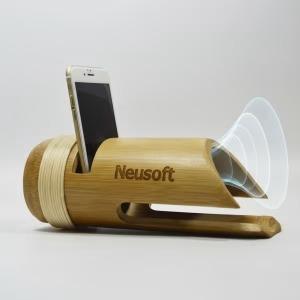
Contemporary designers are collaborating with master artisans, applying ancient techniques to modern forms. We now see minimalist lacquer speakers that resonate with both sound and craft, sleek maki-e detailing on smartphone cases that personalize technology with history, or avant-garde lacquer sculpture in international galleries challenging perceptions of the medium. This revival is not about mere replication. It’s about reinterpretation. In Thailand, designers are using lacquer to create bold, contemporary wall art that retains the spiritual motifs of temple art but on a monumental scale. In Japan, the city of Wajima, famous for its durable lacquerware reinforced with powdered diatomaceous earth, actively promotes workshops where tourists can experience the first step of applying lacquer, fostering understanding and creating a direct emotional connection to the craft.
The journey is also becoming more transparent and ethical. Some studios now offer traceability for their urushi sap, connecting the final object to the specific forest and even the tree it came from. This appeals to consumers seeking authenticity and sustainable practices. Furthermore, academic journals in material science and heritage studies are increasingly publishing research on lacquer’s unique properties, lending scientific credence to traditional knowledge and opening avenues for innovative conservation methods and new material hybrids.
Practical Insights for the Appreciator and Collector
Engaging with lacquerware today, whether as a collector, user, or admirer, comes with its own set of considerations. Understanding a few key principles can deepen the experience and ensure these objects are cared for properly, allowing them to fulfill their centuries-long contract.
Discernment and Authenticity
True lacquerware, made with natural sap, has a distinctive warmth and depth that plastic or synthetic resin imitations cannot replicate. Its sheen is soft and internal, not a surface gloss. Gently rotate a piece under light; genuine lacquer will have a deep, liquid glow that seems to emanate from within. Look for subtle imperfections—the gentle ripple of a handmade wooden substrate, the slight tactile texture of maki-e powder, or the almost invisible seam of a joined body. When possible, purchase from reputable galleries, certified artisan cooperatives, or cultural foundations that support the craft. The price reflects the months of labor; a genuine piece is an investment in a living history. Ask about the artisan, the technique used, and the origin of the materials. A credible seller will have this knowledge.
Care and Handling
While incredibly durable, lacquerware benefits from gentle, informed care. It is decidedly not dishwasher or microwave safe. The extreme heat and harsh detergents can damage the finish. Instead, hand wash promptly with a mild, pH-neutral soap and lukewarm water, drying immediately and thoroughly with a soft, lint-free cloth. Avoid prolonged soaking, abrasive scrubbers, or sharp utensils. The greatest enemies are extreme dryness, which can cause the substrate to shrink and the lacquer to craze, and direct, prolonged sunlight, which can fade delicate pigments. Occasional use is beneficial; the natural oils from hands can gently enhance the patina over time, adding to its character. As one conservator at a major museum notes, “We treat lacquer as a living skin. It responds to its environment. Stable, moderate humidity is its best friend.” For display, avoid placing pieces directly over heating vents or in arid, sun-drenched windows.
Integrating Lacquer into Modern Life
You need not reserve a lacquer bowl for a state occasion. The philosophy of the craft is about use and appreciation. Employ a small lacquer dish for keys or jewelry by the door, transforming a daily routine into a moment of tactile pleasure. Use a wan (rice bowl) for daily meals; you’ll notice how the lacquer feels warmer and quieter than ceramic, and how it subtly enhances the appearance of food. Display a simple lacquer tray as a centerpiece to hold candles or a vase. Each use continues the object’s story, adding your chapter to its long narrative. Surrounding oneself with objects of intentional beauty and deep history can create a more mindful and calming environment, a principle supported by holistic approaches to well-being.
The Enduring Resonance
In a world of mass production and disposable goods, lacquerware stands as a profound counterpoint. It is an art form born from a negotiation with a demanding natural material, requiring a patience that weaves time itself into the object. Its surfaces speak in the visual languages of the cultures that nurtured it, from the radiant hope of Korean najeon to the austere power of Chinese red and the poetic subtlety of Japanese maki-e. The discovery of pristine lacquerware in ancient tombs is a testament to its role as a guardian of memory, while its modern revival shows its resilient capacity for dialogue with the present.
To own, use, or simply contemplate a piece of lacquerware is to touch a thread in a continuum that stretches back thousands of years. It is a tangible connection to the slow, deliberate rhythms of a pre-industrial world, yet it remains vitally relevant. It reminds us that some of the most enduring human creations are not those that dominate their materials, but those that listen to them, learn their rhythms, and in doing so, create something that holds light, time, and meaning for generations yet to come. The lacquer tree weeps its sap, the artisan guides its transformation, and the user completes the cycle, each becoming part of a silent, beautiful alchemy that transcends the ages.
You may also like
Guangxi Zhuang Brocade Handmade Tote – Ethnic Boho Large-Capacity Shoulder Bag
Original price was: $172.00.$150.00Current price is: $150.00. Add to cartThe Palace Museum Paper-Cut Light Art Fridge Magnets: Chinese Cultural Style Creative Gift Series
Price range: $27.00 through $36.00 Select options This product has multiple variants. The options may be chosen on the product pageAncient Craftsmanship & ICH Herbal Beads Bracelet with Yellow Citrine & Silver Filigree Cloud-Patterned Luck-Boosting Beads
Original price was: $128.00.$89.00Current price is: $89.00. Add to cartHandwoven Zhuang Brocade Tote Bag – Large-Capacity Boho Shoulder Bag
Original price was: $178.00.$154.00Current price is: $154.00. Add to cartBambooSoundBoost Portable Amplifier
Original price was: $96.00.$66.00Current price is: $66.00. Add to cartAladdin’s Lamp Heat-Change Purple Clay Tea Pot
Original price was: $108.00.$78.00Current price is: $78.00. Add to cart