The early 18th century kilns of Jingdezhen, the porcelain capital of China, witnessed a quiet revolution in color. For centuries, Chinese ceramic art had mastered the profound blues of cobalt and the fiery reds of copper, operating within a venerable but limited palette. Then, a new spectrum began to bloom on the surfaces of plates, vases, and bowls: soft, opaque pinks, creamy whites, and a range of muted purples, yellows, and greens. This was fencai (‘powdered colors’), known in the West as famille rose. More than a mere technical innovation, its emergence captures a moment of profound global exchange during the Qing dynasty, a period where Chinese artistry began to deliberately refract European influences through its own sophisticated and enduring lens. The story of famille rose is not one of replacement, but of elegant assimilation, where a foreign material sparked a new chapter in a millennia-old tradition, creating objects of desire for both the Chinese imperial court and a burgeoning European market.
A Palette Borrowed, A Tradition Transformed
The technical heart of famille rose’s distinctive softness was an opaque white enamel derived from arsenic. This was a European innovation, likely introduced to Chinese artisans in Guangzhou (Canton) around 1720 by Jesuit missionaries or traders associated with the East India Companies. This white pigment acted as a completely new base. Unlike the transparent glazes of earlier famille verte (‘green family’) wares, this opaque white could be mixed with other metallic oxides to create pastel shades and allowed for colors to be layered, achieving an unprecedented painterly depth and subtle gradation of tone.
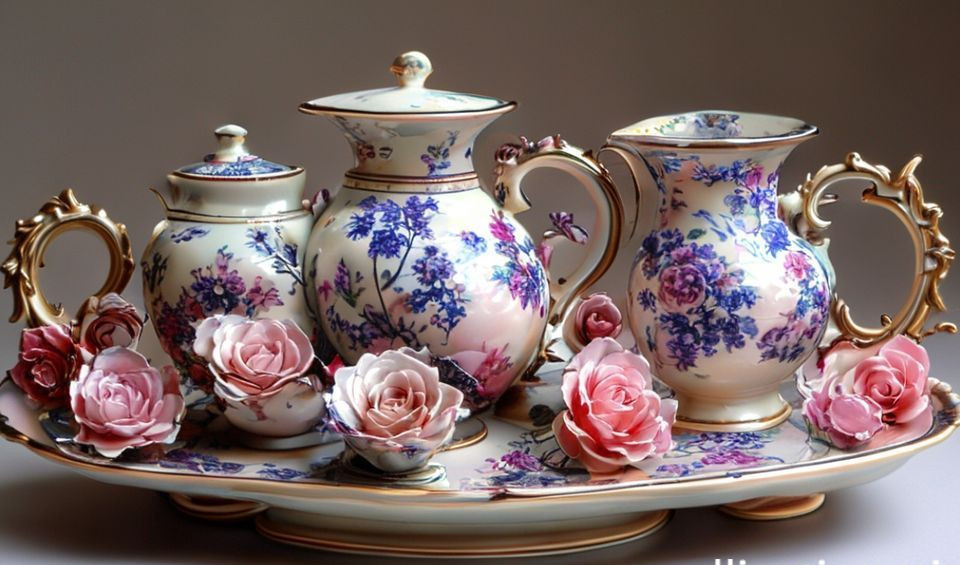
Imagine a traditional vase depicting a peony, a symbol of wealth and honor. In earlier blue-and-white porcelain, the flower would be outlined in stark cobalt blue. In famille rose, the same peony could swell with graduated tones from a pale blush at its heart to a deep, velvety rose at its petal edges, appearing almost three-dimensional. This was not mere imitation of Western art. Jingdezhen’s master painters absorbed the technical possibility but subordinated it entirely to native sensibilities and centuries of artistic convention. The new pinks, yellows, and mauves were applied to classic Chinese motifs: scholars contemplating in rocky landscapes, elegant ladies in garden pavilions, scenes from folklore and drama, and the eternally beloved hundred-antiques pattern. The medium was new, but the narrative, symbolism, and compositional principles remained resolutely Chinese. It was a perfect demonstration of technological adoption without cultural surrender.
This synthesis required a rethinking of the ceramic painter’s craft. Where once the brushwork was defined by crisp outlines filled with translucent color, artists now worked with a more forgiving, opaque medium that allowed for blending and shading. The effect was closer to painting on silk or paper than to traditional ceramic decoration. This shift is documented in imperial workshop records and stylistic analyses, such as those found in the Journal of the American Oriental Society, which detail how artisans adapted their techniques to master the new fencai palette, effectively creating a new school of porcelain painting within a generation.
The Emperor’s Whimsy and the Workshop’s Precision
Famille rose found its most prestigious and demanding patron in the Qing imperial court, particularly under the reigns of the Yongzheng (1723–1735) and Qianlong (1735–1796) emperors. Imperial taste during this era of peak prosperity and power favored intricate detail, technical perfection, and decorative exuberance. The Forbidden City’s workshops issued precise designs to Jingdezhen, demanding the highest quality. The new palette was perfectly suited to this aesthetic, allowing for minute detail and a sumptuousness that appealed to the court.
A superb example of imperial whimsy and technical mastery is the Yongzheng-era ‘ruby-back’ plate. While the interior might be painted with a delicate floral spray, the entire exterior is coated in a uniform, rich pink enamel—a stunning, purely decorative flourish that served no narrative purpose other than to showcase complete control over the new, costly material. For the domestic elite, famille rose adorned not only display vases but also intimate objects: snuff bottles, water droppers for the scholar’s desk, incense burners, and ceremonial vessels. Its relative delicacy and wide color range suited the refined, literary aesthetics of the educated class.
The production process was painstaking. Pieces were fired first at a high temperature to create the porcelain body, then painted with the overglaze enamels, and fired again at a lower temperature to fix the colors. This second firing was risky, as the vibrant pinks and yellows could easily run or burn, making flawless pieces a testament to the potter’s skill. Surviving imperial requisition orders, now held in archives like those of the Palace Museum in Beijing, often specify the exact shades required, indicating a sophisticated and demanding color vocabulary at the highest levels of patronage.
“When we examine a famille rose ‘mandarin’ vase from the 1740s,” notes ceramics historian Dr. Lin Wei, “we are looking at a conversation. The form is quintessentially Chinese, the narrative scenes of official life are deeply rooted in local culture, but the pink in the robes and the green in the garden foliage are rendered with a palette that arrived on a European ship. It is not a compromise, but a confident synthesis. The jar does not shout its hybridity; it simply is, beautifully and completely.”
Catering to Foreign Fantasies: The Export Boom
Simultaneously, the China Trade was booming. European clients, particularly through the British, Dutch, French, and Swedish East India Companies, were enchanted by the new colors. They actively commissioned wares, sending out wooden models, engravings, and detailed drawings to be copied in porcelain. This gave rise to a distinct sub-style: Chinese export famille rose. These wares were often more densely patterned, heavily gilded, and tailored to European tastes and functions. Monumental garniture vases, complete dinner services for aristocratic houses, and punch bowls adorned with coats of arms, European mythological scenes, and sometimes charmingly inaccurate renditions of European figures and landscapes became common.
Anecdotes from trade records tell of Chinese painters copying European prints with literal precision, resulting in biblical scenes populated by figures in vaguely Chinese dress. One famous service, made for the Portuguese market, features a depiction of the Judgment of Paris where the classical goddesses are adorned with hairstyles and robes more typical of Qing dynasty nobility. This export market created a fascinating feedback loop. While utilizing a partly Western-derived technology, Chinese artisans produced objects that catered to foreign fantasies of the Orient. They blended Chinese forms with European heraldry, creating a hybrid aesthetic that was a new commodity for global trade.
The scale of this trade was immense. According to analyses of historical trade data, porcelain often constituted over half the tonnage of an East India Company ship’s return cargo. Institutions like the British Museum note that the demand was so specific that some Jingdezhen workshops likely specialized solely in export ware, developing a separate artistic shorthand for their distant clients. This commercial drive had a tangible impact on European daily life, moving porcelain from a rare luxury to a more common marker of status in middle and upper-class homes, fundamentally altering dining and interior design habits across the continent.
Decoding the Designs: Symbolism and Storytelling
Whether made for the Kangxi Emperor or a Dutch merchant, famille rose porcelain is a dense visual text. Understanding its iconography unlocks layers of meaning. For the domestic market, symbolism was paramount. A vase decorated with bats (fu) and peaches (shou) was a direct wish for happiness and longevity. Scenes of scholars in landscapes referenced the idealized life of the literati, while lotus flowers symbolized purity and rebirth. The famous “hundred antiques” pattern, a meticulous arrangement of books, scrolls, bronzes, and other scholarly objects, was a celebration of culture and connoisseurship itself.
Export pieces, while sometimes featuring these traditional motifs, often wove in narratives tailored to their audience. Popular themes included scenes of the Chinese tea or silk production process, satisfying European curiosity about exotic trades. Others depicted European royalty or allegorical figures like Liberty, copied from imported prints. The very act of combining these elements—a European coat of arms encircled by Chinese floral borders—created a new visual language of global exchange. This language was not always seamless. In some pieces, the spatial composition feels compressed, as the artist attempts to fit a sprawling European landscape into a traditionally organized Chinese pictorial space, resulting in a uniquely charming tension.
Collectors often find that the most compelling pieces are those where the cultural dialogue is most evident. A plate might feature a central European medallion, but its border is a continuous, perfectly rendered Chinese landscape, as if framing the foreign with the familiar. This design strategy was not accidental; it was a commercial and artistic solution to the challenge of cross-cultural commission, a testament to the adaptability and business acumen of the Jingdezhen workshops.
Practical Insights for Collectors and Enthusiasts
For modern admirers and collectors, understanding famille rose enriches the appreciation of both museum pieces and potential acquisitions. Distinguishing between periods, quality, and intended markets requires a careful eye. Here are some actionable insights developed from curatorial expertise and collector experience.
- Look for the Layering: Genuine 18th-century famille rose often shows a subtle, almost three-dimensional quality where colors are built up in layers. Later 19th-century versions, as mass production increased, often use stronger, simpler, and sometimes harsher colors applied more flatly. The soft modulation of early pinks is particularly difficult to replicate.
- Examine the White: The quality of the opaque white enamel is a key indicator. Early, high-quality pieces feature a creamy, slightly warm white that serves as a perfect ground for other colors. Later or lesser-quality pieces may have a chalky or bluish-white tone. This white is often the canvas for the entire design, and its texture speaks volumes.
- Context is King: Determine whether a piece was made for the Chinese market (typically more restrained, with classical Chinese themes, calligraphy, and a focus on symbolic harmony) or the export market (often more lavish, gilded, and featuring European motifs or shapes like tankards and chamber pots). Each has its own historical and aesthetic value. Resources from the Metropolitan Museum of Art provide excellent comparative examples.
- Beware of Condition: The overglaze enamels, especially the delicate pink, are susceptible to scratching and wear called “enamel loss.” Significant damage greatly diminishes value and aesthetic integrity. A careful examination under good light is essential. Also, check for hairline cracks in the glaze, which can indicate age but also structural weakness.
- Understand the Foot Rim: The unglazed foot rim of a piece can be very telling. Imperial and high-quality domestic wares often have a finely finished, smooth foot. Many export wares have a slightly gritty, sand-finished foot where the piece rested in the kiln during firing—a practical concession to volume production.
- Seek Credible References: When researching, turn to established sources. The Victoria and Albert Museum in London has one of the world’s most comprehensive online collections of export porcelain. Academic journals like Oriental Art provide deep dives into specific periods or techniques.
A lived example can be found in the story of a medium-sized famille rose bowl purchased at a regional auction. Initially attractive for its vibrant bouquet of flowers, closer study revealed a European coat of arms faintly visible beneath a later, overpainted Chinese landscape—a clear sign of an export piece later altered for the Chinese market, a not-uncommon practice that adds a layer of historical intrigue to the object. It tells a story of changing tastes and perhaps an attempt to make an unsold export item more palatable to a local buyer.
Legacy and Lasting Influence
By the 19th century, as Qing power waned and mass production techniques increased, the exquisite subtlety of early famille rose often gave way to bolder, more commercial designs. Yet, its legacy was permanently secured. It had expanded the expressive language of Chinese porcelain, proving that a great tradition could absorb external stimuli without losing its core identity. The techniques pioneered in the 1720s continued to evolve and are still practiced in Jingdezhen today by artisans who both replicate antique forms and create contemporary works, ensuring the transmission of this specialized knowledge, a form of intangible cultural heritage as recognized by organizations like UNESCO.
The global impact is undeniable. Famille rose porcelain shaped European Rococo aesthetics, with its soft curves and pastel colors finding echoes in European furniture, textiles, and interior design. It stands as one of the earliest and most beautiful examples of globalization in material culture, a process documented by economic historians using trade data from sources like Statista and historical archives. Each piece, whether an imperial ruby-back plate or an export coffee pot, remains a tangible record of a connected world, a moment of cross-cultural curiosity and commercial enterprise frozen in the enduring fire of the kiln.
Today, famille rose serves as a powerful reminder that artistic innovation often lives at the intersection of traditions. A borrowed ingredient—a pot of white enamel on a trading post shelf—catalyzed a new form of beauty that transcended its origins. It speaks to a universal human impulse: to take the new and unfamiliar and weave it into the fabric of one’s own story, creating something that endures not as a curiosity, but as a masterpiece of integrated vision.
You may also like
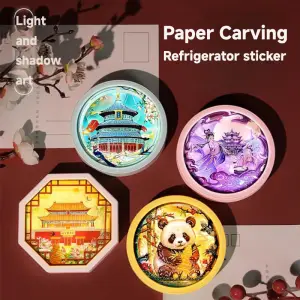
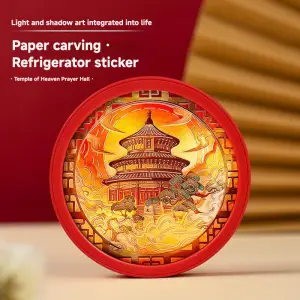
The Palace Museum Paper-Cut Light Art Fridge Magnets: Chinese Cultural Style Creative Gift Series
Price range: $27.00 through $36.00 Select options This product has multiple variants. The options may be chosen on the product pageGuangxi Zhuang Brocade Handmade Tote – Ethnic Boho Large-Capacity Shoulder Bag
Original price was: $172.00.$150.00Current price is: $150.00. Add to cartHandwoven Zhuang Brocade Tote Bag – Large-Capacity Boho Shoulder Bag
Original price was: $178.00.$154.00Current price is: $154.00. Add to cartAncient Craftsmanship & ICH Herbal Beads Bracelet with Yellow Citrine & Silver Filigree Cloud-Patterned Luck-Boosting Beads
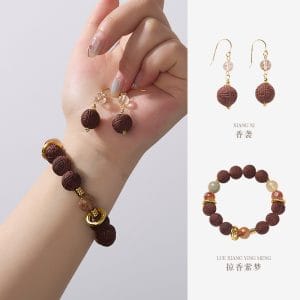
Original price was: $128.00.$89.00Current price is: $89.00. Add to cartAncient Craft Herbal Scented Bead Bracelet with Gold Rutile Quartz, Paired with Sterling Silver (925) Hook Earrings
Original price was: $322.00.$198.00Current price is: $198.00. Add to cartBambooSoundBoost Portable Amplifier
Original price was: $96.00.$66.00Current price is: $66.00. Add to cart