Roasting coffee isn’t alchemy, though it sometimes feels like it. It’s a deliberate application of heat to transform dense, grassy seeds into aromatic, brittle beans. The process follows physical laws, yet demands intuition. Every decision—from charge temperature to airflow—writes itself into the final cup, a complex interplay of science and sensory art that turns a global commodity into a profoundly personal experience. This craft is the pivotal, invisible hand between the farmer and the barista, translating the work of cultivation and terroir into a universal language of aroma and taste.
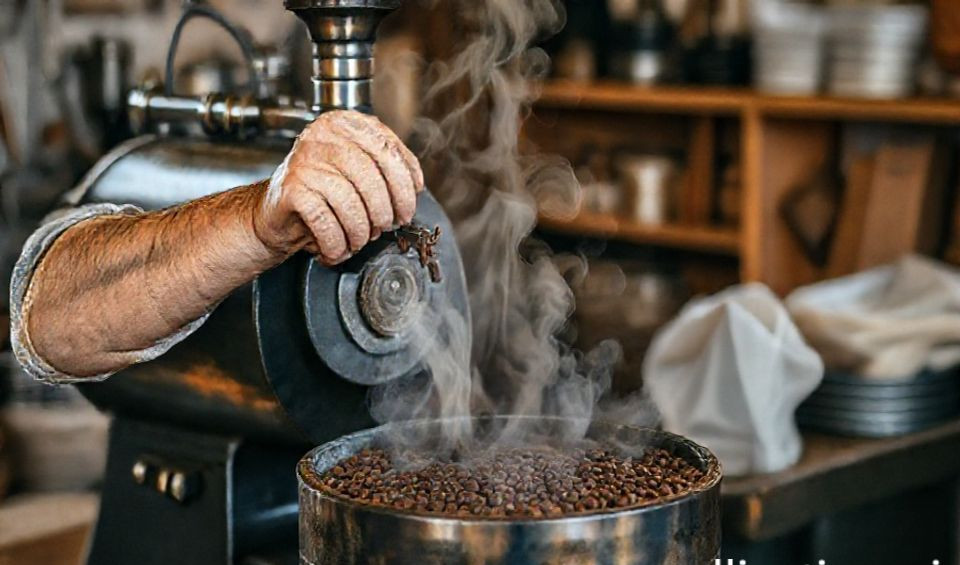
The Foundation: Charge and the Drying Phase
The journey begins with the charge. Green coffee beans, typically holding around 10-12% moisture, meet a roasting drum heated to an initial charge temperature between 180°C and 220°C. There’s a distinct sizzle as moisture instantly begins to vaporize. This initial drying stage is a critical balancing act: the roaster must drive off water efficiently without baking or stewing the bean, which would lock in a flat, cereal-like flavor. The goal is a steady, convective transfer of heat that prepares the bean’s structure for the dramatic changes to come.
Roasters watch for the visual cue of the yellowing point, usually occurring 4–6 minutes into the roast, when the raw, grassy smell fades and a toasted grain or bread-like aroma emerges. The beans lose their opaque green hue and become a dusty, pale yellow. “Rushing this phase is a common mistake,” notes a profile from the Specialty Coffee Association. “Insufficient drying time can trap moisture, leading to a baked flavor and uneven development later.” A practical tip is to listen as well as look; the beans should make a gentle, continuous rustling sound as they tumble. If they seem silent or look pale and chalky, the initial heat application may be too low, risking a stalled roast that never properly develops. This phase sets the stage for everything that follows, establishing the bean’s internal temperature trajectory.
First Crack and the Development Time
As internal bean temperature climbs past 150°C, a series of endothermic (heat-absorbing) reactions give way to exothermic (heat-releasing) ones. Sugars begin to caramelize, and pressure builds from expanding gases and water vapor until the cellular structure fractures with a distinct, popcorn-like snap—first crack. This isn’t a single event but a cascade of pops lasting 60–90 seconds, typically beginning between 196°C and 205°C.
This moment marks the true beginning of development time, the most critical window in coffee roasting techniques. The roaster’s goal shifts decisively from applying heat to managing its momentum. Reducing thermal input or increasing airflow is often necessary to prevent a runaway temperature rise (often called a “roaring crack”) that can scorch the beans. “First crack is the gateway,” says Elena Cortez, a professional roaster for 12 years. “This is where you choose your roast style. A light roast might need only 90 seconds of development after crack begins. A medium, perhaps two to three minutes. You’re deciding how much of the bean’s inherent sugar to caramelize and how much of its origin character to preserve versus develop through roasting.”
Consider this concrete example: For a washed Ethiopian Yirgacheffe bean prized for its floral and citrus notes, a roaster might aim for a light roast to highlight its inherent acidity and complexity. They would charge at a moderate 205°C, apply steady heat through drying, and reduce energy slightly just before first crack is anticipated. After the crack subsides, they might develop the beans for only 75 seconds before rapidly cooling them. The target result is a tea-like body with pronounced jasmine, bergamot, and lemon zest notes. Contrast this with a Brazilian Cerrado bean, where a roaster might extend development time to three minutes past first crack, encouraging more caramelization and body to highlight its inherent nutty and chocolate characteristics.
The Art of Sensory Cues
While data-logging software tracks bean temperature, environmental temperature, and rate of rise (RoR), the seasoned roaster operates with a full suite of human senses. Sight tracks the metamorphosis of color from yellow to cinnamon to rich brown. Sound marks the pivotal auditory milestones of first and, potentially, second crack. Smell evolves in a narrative arc: from hay and grass to baking bread, then to sweet caramel and, finally, deeper cocoa or spice notes. Touch assesses the bean’s physical transformation, feeling its reduced density as it loses 12–20% of its mass through water loss and the shedding of silverskin (chaff).
These cues, synthesized in real-time, form a more complete and reliable picture than any single probe. “The graph on the screen is a historical document—it tells you what happened,” Cortez explains. “Your nose and ears give you the live broadcast. You learn to trust the specific crackle, the precise moment the smoke scent shifts from bready to sugary. That sweet spot, just as first crack finishes, when the aroma deepens—that’s your signal to watch with absolute focus.” This practical, grounded approach demystifies the craft. It’s not about secret knowledge but about disciplined observation, control of variables, and relentless tasting to connect every adjustment at the roaster to a tangible change in the cup. A roaster in a busy facility might have the sound of first crack memorized well enough to identify it over the hum of machinery—a skill born of repetition and deep attention.
The Science Behind the Aroma: From Green to Brown
The transformation during roasting is a cascade of chemical reactions. The Maillard reaction, responsible for browning in everything from bread to steak, is paramount. It occurs between amino acids and reducing sugars in the bean, generating hundreds of aroma and flavor compounds, including those with malty, nutty, and roasted notes. Concurrently, caramelization breaks down sucrose into volatile compounds that contribute sweet, fruity, and sometimes winey flavors.
The degradation of chlorogenic acids, abundant in green coffee, reduces bitterness and contributes to the formation of melanoidins, large polymers that give roasted coffee its brown color, body, and much of its antioxidant activity. Research published in the Journal of Agricultural and Food Chemistry highlights how the balance and progression of these reactions, dictated by time and temperature, directly determine the sensory profile. A light roast preserves more chlorogenic acid and fruity esters, while a darker roast favors Maillard and caramelization products, eventually leading to the more carbonized flavors of second crack, where oils begin to migrate to the bean’s surface. The World Health Organization notes that these melanoidins may have complex effects in the diet, contributing to the antioxidant activity of the beverage. The roaster is, in essence, a conductor for this chemical symphony, deciding which reactions to emphasize and which to curtail.
Advanced Techniques: Manipulating Flavor Profiles
Beyond managing development time, modern roasting leverages specific techniques to sculpt flavor. Airflow is a powerful tool. Increasing airflow during the latter stages of the roast can heighten perceived acidity and create a cleaner, brighter cup by stripping away smoky compounds. Conversely, restricting airflow can promote body and sweetness, lending a more unctuous mouthfeel—a technique sometimes used for espresso blends destined for milk-based drinks. The application of heat is another dial to turn. A declining rate of rise (a decreasing RoR curve) is often used for delicate beans to ensure even development without tipping (scorching the bean tips).
Another consideration is the drop temperature—the moment the beans are released into the cooling tray. Dropping at a lower temperature, say 205°C, will lock in a lighter profile, while allowing the beans to reach 225°C or beyond develops more bittersweet chocolate and roasted nut characteristics. The choice hinges on the bean’s origin and density. A dense, high-altitude bean from Guatemala can withstand and often benefits from more thermal energy to fully develop its complex sugar structure, whereas a softer bean from a lower elevation might shine with a quicker, gentler roast. Some roasters employ a “flick” or a slight upward tick in heat at the very end of development to accentuate sweetness, a risky move that requires perfect timing to avoid scorching.
Practical Insights for Aspiring Roasters
For those beginning their roasting journey, whether on a small home machine or a sample roaster, a methodical approach is key. Start with a single, high-quality origin bean to eliminate variables. Keep detailed logs: charge temperature, times to yellowing/first crack, development time, and drop temperature. Most importantly, cup your results blind, comparing different roast batches of the same bean. Note the differences in aroma, acidity, body, and aftertaste. Resources like the World Coffee Research sensory lexicon can help standardize this vocabulary, distinguishing between a pleasant, vibrant acidity (think citrus or malic apple) and a sharp, vinegar-like sourness.
A common pitfall is under-developing a light roast, resulting in a sour, grassy, or peanutty flavor—a sign that the internal structure of the bean hasn’t been fully transformed. This often stems from fear of taking the roast “too dark” and losing delicate notes, but development is about time at temperature, not just final color. Another tip is to pay attention to rest. Freshly roasted coffee needs 24-72 hours to degas carbon dioxide before brewing; tasting immediately will give a misleading, bubbly, and muted impression of the flavor. As global coffee consumption continues to rise, with Statista reporting over 166 million 60-kilogram bags consumed worldwide in 2022/2023, the home roasting community has grown in parallel, fueled by online knowledge sharing.
Finally, engage with the community. Local roasteries, online forums, and organizations like the Specialty Coffee Association provide invaluable resources. The craft is iterative and communal. Attend a “cupping” session at a local cafe to train your palate. Ask questions. The journey of understanding coffee roasting techniques is one of continuous learning, where each batch offers a new lesson in heat, time, and taste.
The Roaster’s Lasting Imprint
The final proof is always in the cup—a fragrant, complex testament to a process that is equal parts physics, chemistry, and artisan craft. A masterful roast reveals the potential locked within a green coffee, requiring respect for the bean’s inherent character paired with the application of heat with intention and precision. Whether aiming for the bright, tea-like clarity of a light Scandinavian roast or the bold, chocolatey depth of a traditional Italian profile, the principles remain: control energy, manage development, and trust your senses. The roasted bean carries the roaster’s decisions—a snapshot of their skill and philosophy—right up until the moment it is ground and brewed, completing its transformation from a raw seed into a deeply cultural and personal experience. In a world of mass production, this craft stands as a reminder of the profound impact of careful, thoughtful creation.
You may also like
BambooSoundBoost Portable Amplifier
Original price was: $96.00.$66.00Current price is: $66.00. Add to cartAncient Craftsmanship & ICH Herbal Beads Bracelet with Yellow Citrine & Silver Filigree Cloud-Patterned Luck-Boosting Beads
Original price was: $128.00.$89.00Current price is: $89.00. Add to cartAncient Craft Herbal Scented Bead Bracelet with Gold Rutile Quartz, Paired with Sterling Silver (925) Hook Earrings
Original price was: $322.00.$198.00Current price is: $198.00. Add to cartGuangxi Zhuang Brocade Handmade Tote – Ethnic Boho Large-Capacity Shoulder Bag
Original price was: $172.00.$150.00Current price is: $150.00. Add to cartHandwoven Zhuang Brocade Tote Bag – Large-Capacity Boho Shoulder Bag
Original price was: $178.00.$154.00Current price is: $154.00. Add to cartThe Palace Museum Paper-Cut Light Art Fridge Magnets: Chinese Cultural Style Creative Gift Series
Price range: $27.00 through $36.00 Select options This product has multiple variants. The options may be chosen on the product page