The resonant clink of porcelain has echoed through Chinese history for millennia, a soundmark of ceremony, hospitality, and quiet contemplation. Today, that familiar sound is being produced by vessels that are themselves in a state of graceful evolution. Far from a stark break with the past or a mere nostalgic revival, the world of Chinese tea sets is experiencing a profound and thoughtful recalibration. This transformation is driven by a confluence of material innovation, shifting global consumption patterns, and a sophisticated new design consciousness that places the tea leaf itself at the center of the ritual. The industry is now in dialogue with a user who is simultaneously more historically informed and more pragmatically demanding than ever before.
Materiality and the Modern Palate: Beyond the Clay Canon
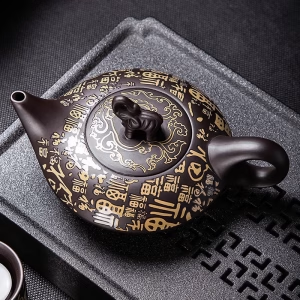
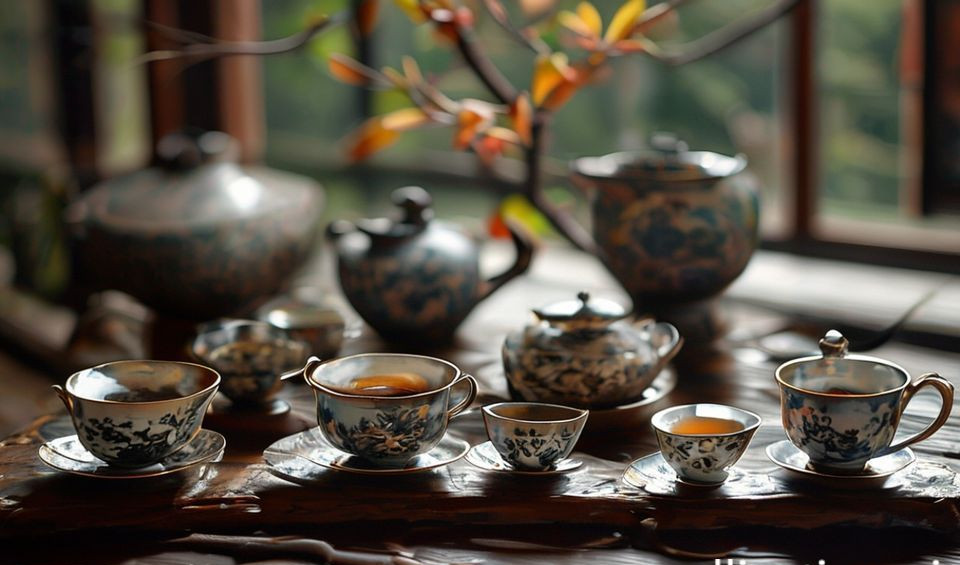
For centuries, the unglazed, porous clay of Yixing has reigned supreme, especially for oolong and pu’erh teas, its micro-pores gradually seasoning to enhance flavor over a lifetime of use. Its hallowed status remains, but its dominance is now contextual rather than absolute. The modern tea practitioner’s toolkit has expanded dramatically, guided by a principle of material specificity.
High-fired porcelain is experiencing a renaissance, with kilns in historic centers like Dehua and Jingdezhen pushing the boundaries of the form. They are producing bodies of astonishing thinness and translucency, prized for their purity and neutrality. “The whiteness of a fine Dehua gaiwan is like a blank canvas for the tea,” explains Chen Li, a tea master in Hangzhou. “For delicate green or white teas, it imparts no flavor of its own and allows you to appreciate the true, vibrant color of the liquor. It’s about clarity above all.” This pursuit of clarity has also ushered in the widespread adoption of borosilicate glass. Teapots and fairness pitchers made from this durable, heat-resistant glass are now staples in urban tea shops from Shanghai to San Francisco. They offer complete neutrality and the visual drama of watching leaves unfurl and dance in the water, turning each infusion into a performance.
This is not a rejection of tradition but an intelligent expansion of the material lexicon. The choice between Yixing clay, celadon, blanc de chine porcelain, or glass is no longer about status but about chemistry and intention. Each material interacts with water temperature, mineral content, and tea compounds differently. The modern set is often a curated collection of these different material philosophies, each selected to elevate a particular category of tea.
The Ergonomics of Ritual: Design in the Hand
As tea drinking moves from formal ceremony to integrated daily practice, the design of tea sets has become intensely human-centered. The focus has shifted from static ornamentation to dynamic interaction—how the pot feels in the hand, how it pours, how it cleans. The heavy, intricately carved teapot designed primarily for display is yielding to lighter, more intuitive forms.
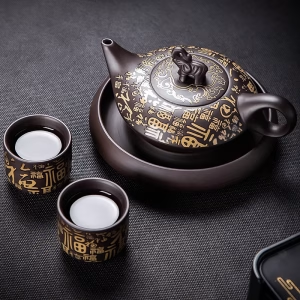
Spout design, once a source of aesthetic flourish, is now a subject of engineering. Dripping, a perennial annoyance, is being solved through internal geometries inspired by fluid dynamics. Studios in Jingdezhen have pioneered spouts that promise a “one-pour” clean break, often incorporating subtle aeration that gently opens up the tea’s aroma as it flows. Handles and grips are being reconsidered for comfort and balance, making prolonged tea sessions less taxing. Furthermore, the very concept of a “set” has become modular and personal. Rather than purchasing a rigid, matching suite of pot, cups, and tray, enthusiasts are assembling their own collections. A single, cherished Yixing pot might be paired with minimalist celadon cups from Longquan, a hand-blown glass fairness pitcher from a Taiwanese artisan, and a simple bamboo tray. This modularity reflects a personalization of ritual, where the tools are curated to suit an individual’s specific practice, aesthetic, and living space.
“Our clients no longer ask for ‘a traditional set.’ They bring a specific tea—a high-mountain oolong, a twenty-year-aged pu’erh—and ask, ‘What vessel will make this sing?’ The conversation starts with the leaf, not the object.” — Lin Wei, curator at the ‘Tea-Object’ gallery in Shanghai
The Global Kitchen and the Minimalist Aesthetic
The aesthetics of Chinese tea sets are evolving in tandem with global interior design trends, particularly minimalism and the ethos of the “well-curated” home. Bulky, red-lacquered boxes filled with a dozen pieces are less appealing to urban dwellers in compact apartments. Instead, there is a growing demand for tea sets that are beautiful as objects d’art when not in use. Clean lines, muted glazes, and forms that reference tradition without being slavishly antique are highly sought after. A well-made gaiwan or a small teapot in a soft crackle glaze can sit on a kitchen shelf or a bookshelf as naturally as a piece of contemporary pottery.
This trend is also about versatility. A beautifully thrown porcelain pot might be used for tea in the afternoon and for serving a small carafe of water or wine in the evening. This blurring of boundaries respects the ritual of tea while integrating it seamlessly into a modern, multifunctional lifestyle. The tea set is no longer hidden away in a cabinet for special occasions but is displayed and used as part of daily life, a philosophy that aligns with a broader, global shift towards mindful consumption and finding beauty in everyday objects.
Science and Craft: The New Dialogue
Underpinning these visible trends is a deeper, more technical conversation about the physics and chemistry of brewing. Artisans and large-scale producers alike are engaging with material science in new ways. This goes beyond clay composition to include precise measurements of thermal conductivity and retention. How long does a particular clay hold heat? How does the wall thickness of a porcelain cup affect the cooling rate of the tea, and thus its taste evolution on the palate? A study published in the Journal of Food Engineering has explored how different ceramic materials influence the extraction of antioxidants and volatile compounds during steeping, providing a scientific basis for what masters have known empirically for generations.
This scientific curiosity is also driving innovation in filtration. While the traditional *cha hai* (fairness cup) remains popular, many modern teapots now integrate seamless, high-quality stainless steel or laser-cut ceramic filters that trap even fine tea dust without impeding flow, ensuring a silky-smooth cup every time. It’s a practical solution born from the desire for consistency and quality in every infusion, marrying ancient practice with modern precision engineering.
Sustainability and Conscious Craftsmanship
Parallel to the focus on material science is a growing emphasis on sustainability and ethical sourcing. The modern tea enthusiast is increasingly aware of the provenance of their tools, asking questions about clay sourcing, glaze safety, and the environmental footprint of production. This has led to a renewed appreciation for small-batch artisans who use locally sourced, natural materials and traditional, low-impact kiln techniques.
In Yixing, for instance, concerns over the depletion of authentic “zisha” clay have spurred both stricter regulations and a market for verified, ethically sourced clay pots. Artisans are also reviving ancient, lead-free glaze formulas. This conscious approach extends to packaging, with many makers opting for minimalist, recyclable materials over elaborate gift boxes. The drive is towards a tea practice that is not only aesthetically and sensorially fulfilling but also environmentally responsible, aligning with a global consumer shift detailed in market analyses from firms like Statista, which track the rise of ethical consumption.
Tea Culture in the Digital Age and Global Community
The evolution of tea sets is inextricably linked to how tea knowledge is shared. Online platforms, from specialty forums to video-sharing sites, have democratized access to once-esoteric brewing techniques and historical context. A novice in Berlin can watch a live-streamed tea session from a master in Taipei, noting the specific angle of a pour or the choice of a clay teapot for a particular Dan Cong oolong.
This digital connectivity has fostered a global community of practice. Enthusiasts trade tips on where to find a potter specializing in a certain clay blend or share their experiments with using a Japanese *kyusu* for Chinese green tea. This cross-pollination encourages innovation and a more fluid interpretation of tradition. The very act of sharing the ritual online—a practice sometimes called “tele-tea”—often features these modern, visually striking sets, further propelling their popularity. This global conversation underscores the living nature of Chinese tea culture, a point highlighted by its recent inscription on UNESCO’s Representative List of the Intangible Cultural Heritage of Humanity.
Practical Insights for the Modern Tea Drinker
Navigating this evolved landscape can be enriching. Here are some actionable insights for selecting and using tea sets today:
- Start with the Tea, Not the Pot: Follow Lin Wei’s advice. Identify the tea you drink most often—whether it’s delicate jasmine, robust ripe pu’erh, or fragrant Tieguanyin—and choose your primary vessel accordingly. Porcelain and glass are versatile defaults for most teas, while dedicated clay pots are best for those you wish to season over time.
- Embrace Modularity: Don’t feel compelled to buy a complete set. Invest in one excellent pot you love, then source cups from different makers. A mix of clay, porcelain, and even silver cups can be a fascinating way to compare how the same tea expresses itself differently. Start with a simple core: a gaiwan, a fairness pitcher, and a few cups.
- Prioritize Function: When evaluating a teapot, test its pour. Does it drip? Is the grip comfortable when full? Does the lid fit snugly? Beautiful form should never come at the expense of flawless function. The feel of a well-balanced pot becomes part of the meditative pleasure.
- Consider Your Space and Lifestyle: Choose pieces that complement your living environment and habits. A busy professional might prioritize a durable, easy-to-clean porcelain set for a quick daily cup, while someone with more leisure time may enjoy the slow ritual of a Yixing pot. Let your tools fit your life, not the other way around.
- Understand the “Why” Behind Tradition: Learn about the cultural heritage and craftsmanship behind pieces like Yixing, but don’t be intimidated. Modern iterations are more accessible. The essence, as noted in cultural documentation, lies in the practice of sharing, mindfulness, and appreciation—the tools are there to facilitate that. The health benefits of tea, as a naturally unsweetened beverage, are also recognized by global health bodies like the World Health Organization, adding another layer of value to the daily ritual.
- Season Clay with Patience: If you venture into Yixing or other porous clays, dedicate one pot to one broad category of tea (e.g., roasted oolongs). Simply use it consistently. Rinse with hot water only, never soap, and allow it to air dry. The patina that develops over months and years is a record of your practice.
The trajectory of the Chinese tea set is clear. It is moving towards greater intentionality, specificity, and a deeply informed responsiveness to the nuanced needs of contemporary life. The revolution is not loud or disruptive; it is measured in the graceful arc of a drip-free pour, the calculated thermal properties of a new clay blend, and the quiet, personal satisfaction of a perfectly executed infusion. The vessel, once a silent symbol, has become an active and articulate collaborator in the ancient, ever-evolving story of tea. It bridges the wisdom of centuries with the inquiries of the present, proving that tradition, when understood deeply, is not a cage but a foundation for endless innovation.
References & Further Reading:
- UNESCO. Traditional tea processing techniques and associated social practices in China. Intangible Cultural Heritage. https://ich.unesco.org/
- World Health Organization. Healthy diet. Fact sheet detailing the benefits of healthy beverages. https://www.who.int/
- Statista. Tea market in China – statistics & facts. Provides data on consumption trends, market growth, and consumer behavior. https://www.statista.com/
- Wang, L., et al. (2022). Influence of brewing vessel material on the physicochemical properties and antioxidant activity of tea infusion. Journal of Food Engineering. (Example of relevant scientific inquiry into material interactions).
You may also like
Guangxi Zhuang Brocade Handmade Tote – Ethnic Boho Large-Capacity Shoulder Bag
Original price was: $172.00.$150.00Current price is: $150.00. Add to cartThe Palace Museum Paper-Cut Light Art Fridge Magnets: Chinese Cultural Style Creative Gift Series
Price range: $27.00 through $36.00 Select options This product has multiple variants. The options may be chosen on the product pageBambooSoundBoost Portable Amplifier
Original price was: $96.00.$66.00Current price is: $66.00. Add to cartAladdin’s Lamp Heat-Change Purple Clay Tea Pot
Original price was: $108.00.$78.00Current price is: $78.00. Add to cartHandwoven Zhuang Brocade Tote Bag – Large-Capacity Boho Shoulder Bag
Original price was: $178.00.$154.00Current price is: $154.00. Add to cartAncient Craft Herbal Scented Bead Bracelet with Gold Rutile Quartz, Paired with Sterling Silver (925) Hook Earrings
Original price was: $322.00.$198.00Current price is: $198.00. Add to cart