Forget the clichés of timeless heirlooms and mystical allure. In workshops from Myanmar’s highlands to design studios in Milan, jade is undergoing a fundamental recalibration. The material is being re-evaluated not for what it has symbolized, but for what it can physically and economically become. This shift is less about market evolution and more about a material confronting contemporary realities of scarcity, technology, and redefined value. The story of jade today is a story of adaptation, where ancient reverence meets cutting-edge science and a new philosophy of utility, transforming every chip and flaw into an opportunity.

Geological Scarcity Meets Digital Precision
The narrative of infinite supply has fractured. High-quality nephrite and jadeite deposits, particularly the coveted ‘Imperial Green,’ are yielding diminishing returns. In Myanmar’s Kachin State, home to the world’s premier jadeite, decades of intensive mining have scarred the landscape and depleted the most accessible veins. The environmental and human cost of this depletion has been staggering, with unsafe practices leading to tragic losses. A single mine in British Columbia, once a prolific source of nephrite, now sees its output carefully measured in kilograms per month rather than tonnes. This geological constraint is not leading to stagnation but to a revolution in how the stone is extracted, understood, and utilized.
Advanced spectral imaging, once reserved for satellite surveys and planetary science, now maps microscopic fissures and mineral inclusions in raw boulders. This technology can predict yield and potential flaws with over 90% greater accuracy than the most seasoned human eye, transforming a high-stakes gamble into a calculated engineering process. In Guangzhou’s bustling wholesale hubs, 3D ultrasonic tomography scanners are now as common as jeweller’s loupes. These devices create detailed internal maps of rough stones, guiding diamond-tipped saws with millimetre precision. The result is a dramatic reduction in waste, from a traditional average of 40% to under 12%. As one veteran cutter in Hong Kong’s Jade Market noted, “Before, we prayed to the stone. Now, we have a conversation with it. The scanner shows us the path; our job is to listen and follow.” The stone is being listened to with new ears, and it is revealing efficiencies our ancestors could never have imagined.
This precision extends to sourcing. Satellite monitoring and geospatial data are increasingly used to assess the environmental impact of mining operations, a crucial step toward accountability. Organizations tracking resource governance highlight the importance of such technology in promoting transparency in extractive industries. The very tools that maximize yield are becoming essential for minimizing ecological harm, reframing efficiency as an ethical imperative as much as an economic one.
Beyond the Loupe: Jade in the Age of Material Science
This technological scrutiny extends far beyond cutting for jewellery. Laboratories are deconstructing jade’s fundamental properties to unlock applications that transcend adornment. The stone’s renowned toughness—a combination of hardness and durability—is being quantified and exploited. Its fine, interlocking crystalline structure, which gives it that legendary resilience, is now a blueprint for synthetic composites. Researchers are experimenting with jade dust, a byproduct of carving, sintering it under extreme pressure to create new, ultra-dense materials for potential use in aerospace or high-performance machinery components.
Perhaps more surprising is the exploration of jade’s cultural chemistry in pragmatic fields. The ancient Chinese association of jade with purity and longevity is finding a curious parallel in modern biomedical research. As Lin Wei, a materials researcher at the Shanghai Institute of Gemmology, explains: “Last year, we developed a jade-polymer composite for surgical implant prototypes. The cultural association with longevity was a starting point, but the real interest was its vibration dampening and biocompatibility. The project wasn’t funded by jewellers, but by a biomedical consortium. That tells you where the frontiers are now.” This research, while preliminary, points to a future where the value of jade could be measured not in carats, but in its potential to improve medical outcomes, leveraging its symbolic heritage as a springboard for tangible innovation.
The exploration is multidisciplinary. In architecture, jade’s thermal mass and aesthetic properties are being studied for climate-responsive building design. A university in Toronto is testing nephrite composite tiles for their ability to passively regulate temperature and humidity in building interiors. This isn’t merely decorative cladding; it’s a functional application rooted in the stone’s physical properties, a modern interpretation of its traditional role in creating harmonious spaces.
The Value Redistribution: From Pyramid to Ecosystem
Concurrent with this technological scrutiny is a deliberate and radical fragmentation of the traditional value pyramid. The apex—flawless, translucent jewellery-grade material—still commands astronomical premiums at elite auctions, often fetching prices per carat that rival fine diamonds. However, the industry’s economic engine now hums further down the slope, finding vitality in what was once considered inferior.
‘Commercial grade’ jade, once destined for cheap, mass-produced pendants, is being aggressively recontextualised. Architects and interior designers now specify large panels of rich, mossy nephrite or speckled jadeite for feature walls, reception desks, and bathroom cladding. In these applications, slight colour variations and natural patterning are not flaws but celebrated features, connecting a corporate or residential space to a narrative of natural, timeless luxury. A hotel in Vancouver, for instance, clad its entire lobby fireplace in Canadian nephrite, creating a stunning centrepiece that is both a geological showcase and a nod to local heritage.
Industrial designers are pushing this further, compositing jade dust with advanced resins or ceramics to create entirely new surfaces. These composites play with light in unique ways, possess a distinctive cool touch, and carry a whisper of cultural memory into everyday objects. A boutique electronics firm in Seoul has patented a process for inlaying thin, polished jadeite segments into limited-edition device casings. They are not selling a phone; they are selling “tactile heritage,” targeting a luxury segment willing to pay a significant markup for a tangible connection to history and craft in a digital age. The market is no longer a monolith chasing a single ideal of perfection. It has become a sophisticated ecosystem, creating distinct and compelling value propositions from every fragment of the stone, from boulder to dust.
This ecosystem is reflected in global trade data. While high-end jewellery auctions capture headlines, a growing segment of the market value now comes from architectural elements, art objects, and innovative composite materials. This diversification builds resilience, insulating the broader jade economy from volatility in any single sector and creating more stable opportunities for artisans and technicians.
Practical Insights for the Conscious Collector and Enthusiast
For individuals drawn to jade, this new landscape offers both challenges and opportunities. Navigating it requires an updated mindset, moving from passive acquisition to informed participation.
First, educate your eye beyond colour. While vibrant “Imperial” green is iconic, the beauty and value in modern jade often lie in texture, translucency, and artistic cutting. A skilled carver can turn a stone with complex internal patterns—its “song,” as some artisans say—into a captivating masterpiece that tells a story, whereas a flawless but bland piece may feel sterile. Look for craftsmanship that enhances the stone’s natural character. Visit galleries or online platforms that highlight contemporary lapidary artists to see how traditional motifs are being reinterpreted.
Second, provenance and documentation are paramount. With advanced treatments and synthetics on the market, insist on a reputable certificate from a recognized gemological laboratory like the GIA (Gemological Institute of America) or GUBELIN. This is non-negotiable for any significant purchase. As the GIA emphasizes, scientific analysis is the only way to confirm a stone’s natural origin and identify any enhancements. Don’t hesitate to ask for this documentation; a reputable seller will provide it willingly.
Third, consider the story and the artisan. The shift towards valuing artistry means supporting individual carvers or small studios can be more rewarding than buying anonymous commercial pieces. Learn about the carver’s style and philosophy. Attend a workshop or lecture if possible. As master carver Zhang in Beijing says, “My job is not to impose a shape, but to collaborate with the jade. The stone shows me what it wants to be.” A piece that comes with such a narrative—knowing the artisan’s name, their inspiration, even the origin of that specific rough stone—carries a different kind of value, one of connection and cultural continuity.
Finally, be open to new forms. A stunning slice of jade used as a wall hanging, a composite jade pen, or a set of bookends made from reclaimed material can be a more accessible and personally meaningful way to connect with this ancient material than a traditional cabochon ring. It democratizes the experience of jade. Start small: a pair of polished nephrite worry stones, for instance, connects you directly to the material’s famed tactile quality and can be a daily source of quiet reflection.
Ethical Imperatives in a Transforming Industry
This recalibration cannot be discussed without addressing the significant ethical shadows that have long followed the jade trade, particularly in Myanmar. For years, reports from organizations like Global Witness have detailed the links between jade revenue, armed conflict, and human rights abuses in Kachin State. The environmental cost has also been catastrophic, with landslides claiming hundreds of lives among informal miners. The World Health Organization has highlighted the public health crises in mining regions, where communities face pollution and a lack of basic services, a stark contrast to the luxury the finished stone represents.
The industry’s technological shift must be paired with an ethical one. Traceability is the cornerstone. Blockchain and other digital provenance systems are being piloted to track a stone’s journey from mine to market, ensuring it is conflict-free. Consumers have a powerful role to play by demanding transparency and supporting retailers who can provide verifiable evidence of ethical sourcing. The question “Where is this from?” needs to be followed by “How did it get here?” and “Who was impacted along the way?”
Furthermore, the move towards utilizing all grades of stone and minimizing waste is inherently a more sustainable model. It reduces the pressure to extract ever more material by maximizing the utility of what is already above ground. Supporting artisans who work with reclaimed or recycled jade—often sourced from old jewellery, offcuts, or even historical fragments—is another positive step. Some designers now specialize in “upcycled jade,” creating modern pieces with a built-in history. The future of jade depends not just on appreciating its beauty, but on ensuring its story is one of responsibility and respect, aligning its cultural veneration with ethical action.
A Material for the Future
Jade’s journey from ritual object to royal symbol to global commodity has now entered its most pragmatic chapter. It is being dissected by spectrometers, composited by engineers, and reimagined by designers. This is not a diminishment of its heritage, but an evolution. The mystical allure is being translated into a language of material science, sustainable economics, and artistic innovation.
The stone that once represented heaven on earth is now being grounded in the realities of the 21st century. It teaches a powerful lesson in resourcefulness: that scarcity can be a mother of invention, and that true value is not an inherent, fixed quality, but a potential waiting to be unlocked by context, creativity, and technology. In the hands of a modern carver collaborating with a 3D model, a materials scientist testing a biocompatible composite, or a conscious consumer choosing a traceable, reclaimed piece, jade is no longer just a relic of the past. It is a medium for dialogue—between tradition and innovation, between geology and human ingenuity—and its next form is still being revealed, cut by precise cut, discovery by discovery. Its resilience, once a metaphor for moral character, is now being tested in the crucible of modern challenges, and it is adapting, proving its relevance for a new age.
You may also like
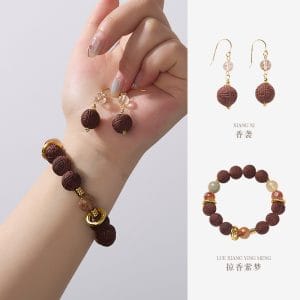
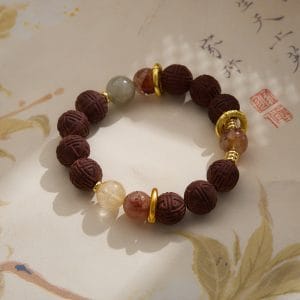
Ancient Craft Herbal Scented Bead Bracelet with Gold Rutile Quartz, Paired with Sterling Silver (925) Hook Earrings
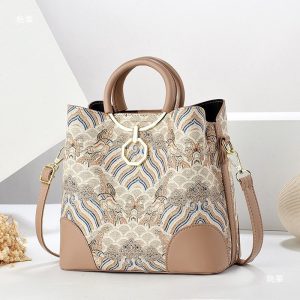
Original price was: $322.00.$198.00Current price is: $198.00. Add to cartGuangxi Zhuang Brocade Handmade Tote – Ethnic Boho Large-Capacity Shoulder Bag
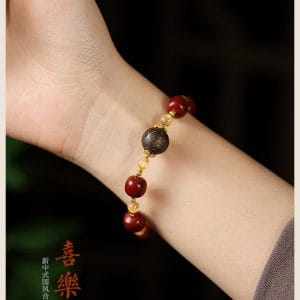
Original price was: $172.00.$150.00Current price is: $150.00. Add to cartAncient Craftsmanship & ICH Herbal Beads Bracelet with Yellow Citrine & Silver Filigree Cloud-Patterned Luck-Boosting Beads
Original price was: $128.00.$89.00Current price is: $89.00. Add to cartBambooSoundBoost Portable Amplifier
Original price was: $96.00.$66.00Current price is: $66.00. Add to cartHandwoven Zhuang Brocade Tote Bag – Large-Capacity Boho Shoulder Bag
Original price was: $178.00.$154.00Current price is: $154.00. Add to cartThe Palace Museum Paper-Cut Light Art Fridge Magnets: Chinese Cultural Style Creative Gift Series
Price range: $27.00 through $36.00 Select options This product has multiple variants. The options may be chosen on the product page