Walk into any contemporary ceramics studio today, and you might mistake it for a materials science lab. Beside the traditional kick wheels and bags of clay, you’ll find 3D printers humming, digital microscopes, and notebooks filled with chemical formulas rather than just glaze recipes. This isn’t pottery as your grandmother knew it—it’s a field undergoing a fundamental redefinition of its material possibilities. This fusion of ancient craft and cutting-edge innovation is pushing ceramics far beyond the realm of decorative vessels, transforming it into a medium for responsive architecture, data storage, and bio-integrated design. The material’s inherent qualities—durability, permanence, and a deep connection to human history—are being amplified by digital tools and scientific inquiry, creating a new paradigm for what clay can be.
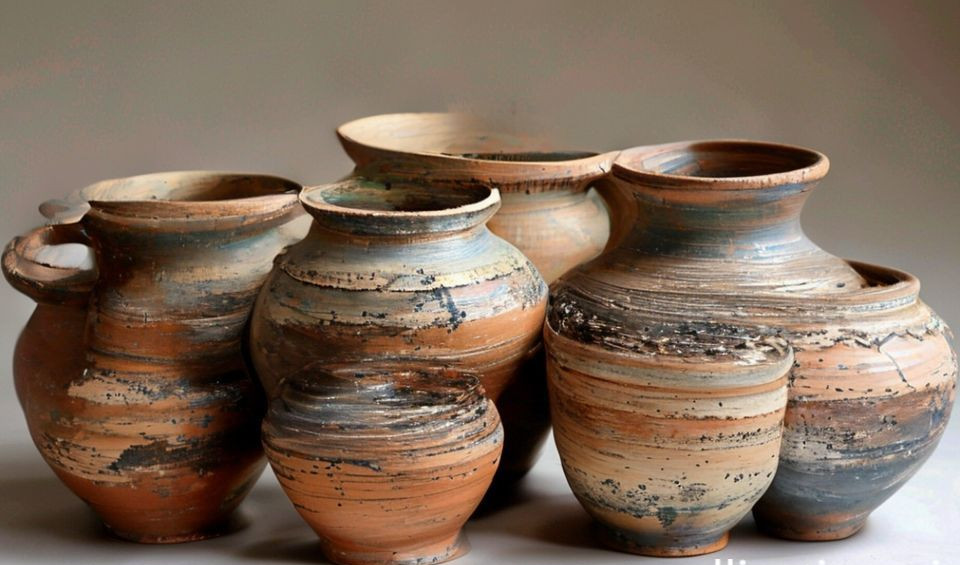
The Data-Driven Kiln: Precision Replaces Alchemy
For millennia, the kiln was a chamber of beautiful uncertainty. Potters relied on experience, intuition, and a touch of luck to achieve desired results, with glaze chemistry often being a closely guarded secret of trial and error. Today, that alchemical mystery is giving way to precise, repeatable science. Computer-controlled kilns can now track temperature curves with 0.1-degree accuracy, allowing artists to replicate complex crystalline formations or engineer specific material behaviors with unprecedented reliability. This technological leap transforms the kiln from a black box of mystery into a predictable instrument of creation.
Artists like London-based Anya Kivarkis leverage this precision to create works that interact with their environment. She developed a glaze that changes color at exactly 78°F—room temperature. “We’re moving from ‘fire and hope’ to ‘predict and produce,'” Kivarkis notes. “It allows us to design not just the object, but its behavior over time and in relation to the viewer.” This shift enables a new kind of functional artistry, where ceramics become dynamic rather than static. In Japan, researchers at the Kanazawa Utatsuyama Craft Workshop are pioneering what they call “ceramic memory.” By embedding QR codes and other data markers using rare earth oxides that survive 1300°C firings, they create pieces that carry their own provenance, maker history, or even artistic narrative within their very molecular structure, making the ceramic object its own immutable archive. This application speaks to a broader cultural desire for authenticity and traceability in goods, a trend noted in market analyses from sources like Statista.
Structural Intelligence: From Vessel to Framework
The most significant evolution in ceramics is not found on gallery pedestals but in the frameworks of our built environment. The material is shedding its purely decorative skin to become a load-bearing, functionally intelligent component of architecture and design. This represents a profound shift in perception—from ceramics as a surface finish to ceramics as a structural core, challenging centuries of architectural convention.
Inspired by biomimicry, studios are using algorithmic design to create ultra-efficient forms. German studio Keramik Kraft produces load-bearing ceramic bricks that use 40% less material than traditional versions by mimicking the lattice structure of bones, achieving remarkable strength with minimal mass. This has significant implications for sustainable construction, reducing both material use and the carbon footprint associated with firing. The functional application extends to sensory environments as well. In Lisbon, architect Ana Santos recently completed a concert hall featuring 2,300 unique, digitally designed acoustic tiles. Each tile’s shape and porosity were calculated to scatter sound in precise patterns, creating an optimal auditory experience. “Ceramics are becoming structural intelligence rather than just surface decoration,” Santos observes. “We’re not just making things that hold flowers; we’re making things that hold up buildings and shape soundwaves.”
“The clay remembers everything—every fingerprint, every moment of hesitation in the making. Now we’re teaching it to remember data, to respond to environment, to become not just object but interface. My latest series contains temperature-sensitive oxides that cause surface patterns to shift seasonally. The pieces are literally alive to their surroundings in ways that would have seemed like magic a generation ago.” — Mariko Paterson, ceramicist and materials researcher at the Rhode Island School of Design
The New Material Palette: Engineered Clays and Bio-Integration
The very substance of ceramics is being reinvented. Artists and scientists are no longer limited to natural clay bodies; they are engineering new ones with specific properties. This includes the development of conductive clays for embedding circuitry, clays mixed with carbon fiber for increased tensile strength, and even “living” ceramics that incorporate organic materials or bacterial cultures. This expands the ceramic palette from a handful of earth tones to a universe of functional possibilities.
One frontier is the creation of photocatalytic glazes. These glazes, often containing titanium dioxide, react with light to break down air pollutants and bacteria on their surface. A notable example is the “Prosperity” project in Milan, where a building façade clad with photocatalytic ceramic tiles helps reduce nitrous oxides in the surrounding air, effectively turning the building into a passive air purifier. Research into such sustainable applications aligns with global health priorities, as organizations like the World Health Organization continue to highlight the severe health impacts of urban air pollution and advocate for innovative mitigation technologies.
Another area of explosive growth is 3D printing with clay, or ceramic additive manufacturing. This technology allows for the creation of forms impossible to throw or coil—intricate lattices, complex internal channels, and large-scale, geometrically precise structures. Studios are using this to create custom architectural elements, from ventilated rain screens to decorative screens that play with light and shadow in calculated ways. The technology democratizes complexity, allowing individual artists to produce work that once required industrial-scale tooling. A small studio in Brooklyn, for instance, now produces limited runs of intricate, lightweight lamp shades that are both structurally sound and ethereally delicate, a feat nearly impossible with slab construction.
Cultural Resonance and Narrative in a Digital Age
Paradoxically, the drive toward high-tech ceramics has deepened many makers’ connection to the ancient, tactile roots of the craft. In a world of disposable digital experiences, the physical, slow, and deliberate nature of working with clay holds new power. The technology doesn’t replace the hand; it converses with it. A 3D-printed form may be refined by hand-carving. A precisely engineered glaze may be applied with a gestural brushstroke. The human fingerprint remains, now augmented by new languages of form and function. This synergy ensures that innovation strengthens rather than severs cultural ties, a principle recognized by UNESCO in its work to safeguard intangible cultural heritage while fostering sustainable development.
This duality is evident in the work of artists like Lee Kang-hyo in South Korea, who is renowned for his massive *Onggi* fermentation jars made using traditional techniques. He now uses digital sensors to monitor the microclimates inside his jars during the firing process, marrying an ancient food preservation technology with modern data analytics to perfect his method. His work asks: does the tool define the tradition, or does the intention? The new ceramics suggest the answer is a synergy of both.
The field is also seeing a resurgence in narrative and social practice. Artists are using ceramic’s permanence to address themes of memory, identity, and ecology. They create data-physicalizations—turning climate data sets into textured topographic maps in clay—or use local, foraged clays to tell stories of place. The material becomes a conduit for conversation, its timeless quality lending weight to contemporary discourse. Peer-reviewed journals like the Journal of Modern Craft frequently publish analyses of this intersection between material innovation and cultural critique, charting how craftspeople are navigating their role as both tradition-bearers and futurists in the 21st century.
Practical Pathways: Engaging with the New Ceramics
This technological wave might seem exclusive, but its ripples are accessible to hobbyists, students, and established potters looking to expand their practice. Engaging with this new era doesn’t require a lab; it starts with a shift in perspective and the strategic adoption of available tools. The journey begins with a mindset of curiosity and systematic exploration.
Begin by embracing data in your existing process. The simplest step is to become meticulous with firing logs. Record not just the final temperature and hold time, but the exact ramp rates (the speed of temperature increase) for your best firings. Use a pyrometer (a digital kiln thermometer) for more accurate readings than your kiln’s built-in gauge might provide. This data turns intuition into reproducible knowledge. Sarah, a hobbyist potter from Oregon, started this practice after a series of inconsistent glaze results. “Keeping a detailed log felt tedious at first,” she admits, “but within six months, I had a personal database. I could finally repeat that perfect copper red, and I understood *why* it worked. It changed my entire relationship with the kiln.”
Next, explore digital design as a sketchbook. Free or low-cost software like Blender or even advanced CAD programs offer student licenses. You don’t need to own a 3D printer to benefit; use these tools to visualize complex forms, work out structural issues, or create precise templates for hand-building. Many local makerspaces, university art departments, or forward-thinking ceramic studios now offer access to clay printers for a fee or workshop. Experimenting with digital design can solve problems before you ever touch clay, saving time and material.
Consider material experimentation on a small, manageable scale. Order small samples of underglaze pencils or oxides that contain metals known for variegation, like cobalt or rutile. Test them in combination with your standard glazes on test tiles, carefully documenting the recipes and firing conditions. This methodical approach is the heart of the new ceramics. Dedicate a shelf to these experiments, treating it as a personal materials library. This process of inquiry, of asking “what if?” and systematically seeking an answer, bridges the gap between traditional craft wisdom and scientific method.
Shaping the Future, One Layer at a Time
The redefinition of ceramics is a story of expanded possibility. It is a field where an artist might equally discuss the iron content of a local wild clay and the G-code for a printer, where a single object can be an aesthetic delight, a structural component, and an environmental sensor. This convergence points toward a future where the boundaries between art, design, science, and engineering are productively blurred, creating a new breed of maker: the material innovator.
The journey forward is one of hybridity. The most compelling work will likely not be purely digital or purely analog, but will find its voice in the rich dialogue between them. It will honor the soulful, physical connection that has drawn humans to clay for 30,000 years while fearlessly employing the tools of the present to shape the future. The kiln, once a cave of fire and mystery, is now a portal—and what emerges from it is limited only by the imagination of the maker who stands before it, a creator equipped with both a sculptor’s touch and a pioneer’s vision. The quiet revolution in clay is, ultimately, a human one, proving that our oldest materials can still teach us new things about the world and our place within it.
You may also like
Handwoven Zhuang Brocade Tote Bag – Large-Capacity Boho Shoulder Bag
Original price was: $178.00.$154.00Current price is: $154.00. Add to cartAncient Craftsmanship & ICH Herbal Beads Bracelet with Yellow Citrine & Silver Filigree Cloud-Patterned Luck-Boosting Beads
Original price was: $128.00.$89.00Current price is: $89.00. Add to cartAncient Craft Herbal Scented Bead Bracelet with Gold Rutile Quartz, Paired with Sterling Silver (925) Hook Earrings
Original price was: $322.00.$198.00Current price is: $198.00. Add to cartBambooSoundBoost Portable Amplifier
Original price was: $96.00.$66.00Current price is: $66.00. Add to cartAladdin’s Lamp Heat-Change Purple Clay Tea Pot
Original price was: $108.00.$78.00Current price is: $78.00. Add to cartThe Palace Museum Paper-Cut Light Art Fridge Magnets: Chinese Cultural Style Creative Gift Series
Price range: $27.00 through $36.00 Select options This product has multiple variants. The options may be chosen on the product page