The scent of star anise and Shaoxing wine hangs in the air at a Guangzhou facility where workers monitor humidity levels with tablet computers. This juxtaposition of ancient aromas and modern technology defines today’s Chinese sausage industry—a sector undergoing subtle but significant transformation. What began as a practical method for preserving meat during cold winters has evolved into a culinary art form, with regional variations telling stories of geography, climate, and cultural preference. From the sweet lap cheong of Guangdong to the spicy la chang of Sichuan, each variety carries the imprint of its origin while adapting to contemporary demands for quality, safety, and sustainability.
Historical Roots and Regional Diversity
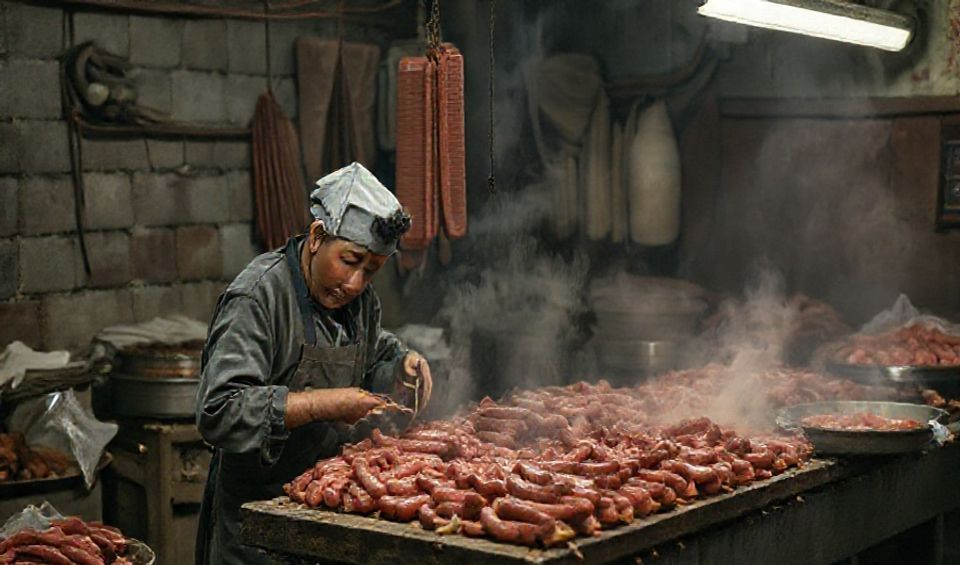
Chinese sausage making dates back over a thousand years, emerging as a practical solution for preserving meat through harsh winters. The technique spread across China’s diverse regions, evolving distinct characteristics based on local ingredients and climatic conditions. In Guangdong’s humid south, lap cheong developed its signature sweet profile using rose wine and sugar to counterbalance the richness of fatty pork. Meanwhile, in landlocked Sichuan, bold chili peppers and Sichuan peppercorns created la chang’s numbing heat, perfectly suited to the region’s fiery cuisine.
These regional differences weren’t accidental but reflected deliberate adaptations to environment and culture. Coastal regions often incorporated seafood elements, while inland areas relied more heavily on pork and spices that could withstand long preservation. The variations became so distinct that experienced connoisseurs could identify a sausage’s origin by its appearance, aroma, and texture. This diversity represents one of China’s great culinary treasures—a edible map of regional traditions preserved through generations.
Precision in Preservation
Traditional curing methods now incorporate data analytics, bridging generations of knowledge with cutting-edge technology. One Sichuan producer reduced spoilage by 18% after installing IoT sensors that track temperature fluctuations during the drying process. “We used to rely on grandfather’s wisdom about wind direction,” says facility manager Lin Wei. “Now we have algorithms predicting optimal drying windows with 94% accuracy.” This shift represents more than efficiency—it’s about preserving regional characteristics while achieving consistency at scale. A Cantonese lap cheong producer maintains five distinct moisture profiles for different export markets, from the chewy texture preferred in Malaysia to the drier variants demanded in California. These nuanced adjustments ensure that traditional flavors travel well without losing their soul.
Modern preservation techniques also address food safety concerns that were once managed through trial and error. The World Health Organization emphasizes the importance of controlling moisture and temperature in meat products to prevent pathogen growth, a challenge that traditional methods alone couldn’t consistently overcome. By combining time-honored recipes with climate-controlled drying chambers and real-time monitoring, producers can now guarantee both safety and quality. This technological integration allows smaller artisanal producers to compete in international markets where food safety standards are stringent, opening new economic opportunities while preserving cultural heritage.
The evolution continues as researchers explore advanced preservation methods. Some facilities now use ultrasound-assisted curing to reduce sodium content while maintaining flavor, while others experiment with high-pressure processing to extend shelf life without chemical preservatives. These innovations demonstrate how tradition and technology can work in harmony rather than opposition.
Flavor Frontiers
Beyond the classic pork-and-rose-wine combination, innovation emerges in unexpected places. A Nanjing startup developed a mushroom-based sausage with 70% lower fat content that maintains the umami depth of traditional recipes. Meanwhile, artisanal producers in Yunnan incorporate local ingredients like pine pollen and honey, creating limited-edition batches that sell for three times the price of mass-market alternatives. Consumer testing reveals that younger urbanites prefer slightly sweeter profiles, leading to subtle recipe adjustments across major brands. One Shanghai food scientist notes: “We’re not abandoning tradition—we’re mapping its DNA to create new expressions.”
This flavor evolution reflects broader dietary shifts documented by organizations like UNESCO, which recognizes foodways as intangible cultural heritage that naturally adapts to changing circumstances. The incorporation of novel ingredients follows historical patterns of culinary innovation, where scarcity and opportunity have always driven creativity. What distinguishes current trends is the deliberate preservation of core sensory experiences while expanding nutritional profiles and catering to diverse dietary needs. Vegetarian and reduced-sodium options now appear alongside traditional varieties, demonstrating the industry’s responsiveness to health-conscious consumers without compromising on taste.
Regional experimentation continues to surprise even seasoned food experts. In Fujian, a producer has successfully incorporated dried oysters for a briny complexity, while a Heilongjiang operation uses locally foraged wild garlic to create seasonal specialties. These innovations maintain the spirit of regional adaptation that has always characterized Chinese sausage making, proving that tradition can be a living, evolving practice rather than a static reproduction of the past.
The Storytelling Sausage
“Our customers want stories, not just sustenance,” says Zhang Li of Heritage Sausages in Hunan. “When we explain how our chili flakes come from a specific valley or our pork from heritage-breed pigs, sales increase by 30%. The sausage becomes a conversation piece.” This narrative dimension transforms everyday food into an experience, connecting consumers to places and practices they might otherwise never encounter. Producers increasingly recognize that in an era of mass production, authenticity commands premium value.
Small-scale producers leverage this advantage by emphasizing their unique terroir—the combination of soil, climate, and traditional knowledge that gives their products distinctive character. A producer in Zhejiang might highlight the free-range pigs that forage on acorns, while another in Xinjiang emphasizes the particular blend of cumin and chili peppers native to their region. These stories resonate particularly well with younger consumers who, according to Statista research, show growing interest in food provenance and ethical production methods. The same survey indicates that 68% of urban Chinese consumers aged 25-40 are willing to pay more for products with transparent supply chains and cultural significance.
The storytelling extends beyond marketing into community building. Many producers now host workshops where participants learn about sausage history while making their own batches. These experiences create emotional connections that transcend the transactional nature of simple commerce. As one workshop participant remarked, “I never realized how much geography and history I was holding in my hands when I cooked with Chinese sausage. Now every slice feels like a journey.”
Global Palates, Local Roots
As Chinese sausages gain international popularity, producers face the challenge of balancing authenticity with accessibility. The distinct sweetness of Cantonese lap cheong initially surprised Western palates accustomed to savory sausages, while the firm texture of Sichuan varieties required explanation in markets used to softer, emulsified sausages. Successful exporters have adopted educational approaches, providing serving suggestions and recipe ideas that help bridge cultural gaps. One Toronto-based importer found that sales tripled after demonstrating how to incorporate lap cheong into pasta dishes and breakfast hashes—applications that respect the ingredient’s character while making it approachable for new audiences.
This globalization has prompted interesting reverse innovations, where international preferences influence domestic production. Some Chinese producers now offer milder versions of traditionally spicy sausages specifically for export, only to discover growing demand for these varieties back home as domestic palates become more cosmopolitan. The circular exchange enriches the culinary landscape, proving that food traditions thrive through adaptation rather than isolation.
The international journey of Chinese sausage reflects broader patterns of culinary globalization. What begins as an ethnic specialty gradually becomes integrated into mainstream food cultures, often in adapted forms that maintain core characteristics while accommodating local tastes. This process isn’t dilution but rather enrichment—a testament to the versatility and appeal of well-crafted traditional foods.
Crafting Quality at Home
While commercial production has embraced technology, home preservation remains a vibrant tradition during winter months. The basic process requires only pork, sugar, salt, wine, and casings, but mastery comes through attention to detail. Successful home curers emphasize the importance of fat-to-lean ratios—typically 70% lean to 30% fat creates ideal texture and flavor. The choice of wine matters significantly too; Shaoxing wine contributes depth while rose wine offers floral notes characteristic of Cantonese styles.
Temperature control presents the greatest challenge for amateur producers. Ideal drying conditions range between 50-60°F with moderate humidity—conditions easier to achieve in southern China’s winter climate than in heated modern apartments. Creative solutions include using unheated rooms or specially modified refrigerators with fans to simulate traditional drying environments. Those without access to ideal conditions might consider starting with partially dried sausages intended for immediate cooking rather than long-term preservation.
Seasoning balance separates adequate sausages from exceptional ones. Beyond the basic salt-sugar ratio, many family recipes include secret blends of spices like sand ginger, white pepper, or cassia bark. The best approach for beginners is to start with established recipes before experimenting—documenting adjustments carefully to replicate successful batches. As one third-generation home curer advised: “Measure with precision but adjust with intuition. The weather tells you when the sausages are ready, not the calendar.”
Home production offers rewards beyond the finished product. The process itself becomes a meditative practice, connecting modern urban dwellers to seasonal rhythms and ancestral knowledge. Many families treat sausage making as a communal activity, with different generations working together and sharing stories. This social dimension reinforces the cultural significance of the tradition, ensuring its continuation even as commercial alternatives become more widely available.
Nutritional Considerations
Traditional Chinese sausages are energy-dense foods, rich in protein but also high in fat and sodium. A typical 100-gram serving contains approximately 300-400 calories with significant amounts of saturated fat. Modern producers address these concerns through leaner meat selections, reduced-sodium recipes, and occasionally incorporating functional ingredients like mushrooms that provide fiber and micronutrients. While not everyday health foods, when consumed in moderation as part of balanced diets, they contribute valuable cultural nutrition—the psychological and social benefits of maintaining food traditions.
Research published in the Journal of Ethnic Foods notes that traditional fermented meat products like Chinese sausage contain beneficial compounds developed during the curing process, though the authors caution that processing methods significantly impact nutritional outcomes. Consumers seeking healthier options might look for artisanal producers who use organic ingredients and minimal preservatives, or consider enjoying smaller portions as flavor accents rather than main components.
The cultural context of consumption matters as much as nutritional content. Traditional Chinese cuisine typically uses sausage as a flavoring component rather than a centerpiece protein, incorporating thin slices into rice dishes, stir-fries, and soups where a little goes a long way. This approach maximizes flavor impact while moderating intake—a lesson modern consumers might apply when incorporating these flavorful ingredients into contemporary meals.
Economic and Cultural Sustainability
The Chinese sausage industry represents a fascinating case study in cultural preservation through commercial adaptation. As urbanization continues and younger generations move away from traditional food preparation, commercially produced versions become important vehicles for maintaining culinary heritage. The challenge lies in avoiding homogenization—preserving regional differences that give the category its rich diversity.
Successful producers navigate this tension by investing in both innovation and education. Some have established small museums adjacent to their production facilities, explaining the history and craft of sausage-making to visitors. Others collaborate with culinary schools to ensure traditional techniques are documented and passed on. These efforts acknowledge that the survival of food traditions depends not just on producing the food itself, but on sustaining the knowledge systems that give it meaning.
Economic sustainability requires balancing scale with authenticity. While mass production can make traditional foods more accessible, it risks standardizing regional variations into homogeneous products. The most forward-thinking producers address this by maintaining separate production lines for different regional styles or creating premium artisanal lines alongside mass-market offerings. This approach preserves diversity while achieving the economies of scale necessary for commercial viability.
The future likely holds further diversification—more regional specialties reaching wider audiences, more innovation in ingredients and processes, and perhaps new applications in fusion cuisines. What remains constant is the sausage’s role as both comfort food and cultural ambassador, a humble ingredient that carries centuries of culinary wisdom into an uncertain but undoubtedly delicious future. The quiet revolution in Chinese sausage production demonstrates how tradition and innovation can work in concert, ensuring that cultural heritage not only survives but thrives in a changing world.
You may also like
The Palace Museum Paper-Cut Light Art Fridge Magnets: Chinese Cultural Style Creative Gift Series
Price range: $27.00 through $36.00 Select options This product has multiple variants. The options may be chosen on the product pageHandwoven Zhuang Brocade Tote Bag – Large-Capacity Boho Shoulder Bag
Original price was: $178.00.$154.00Current price is: $154.00. Add to cartBambooSoundBoost Portable Amplifier
Original price was: $96.00.$66.00Current price is: $66.00. Add to cartAncient Craft Herbal Scented Bead Bracelet with Gold Rutile Quartz, Paired with Sterling Silver (925) Hook Earrings
Original price was: $322.00.$198.00Current price is: $198.00. Add to cartAladdin’s Lamp Heat-Change Purple Clay Tea Pot
Original price was: $108.00.$78.00Current price is: $78.00. Add to cartGuangxi Zhuang Brocade Handmade Tote – Ethnic Boho Large-Capacity Shoulder Bag
Original price was: $172.00.$150.00Current price is: $150.00. Add to cart