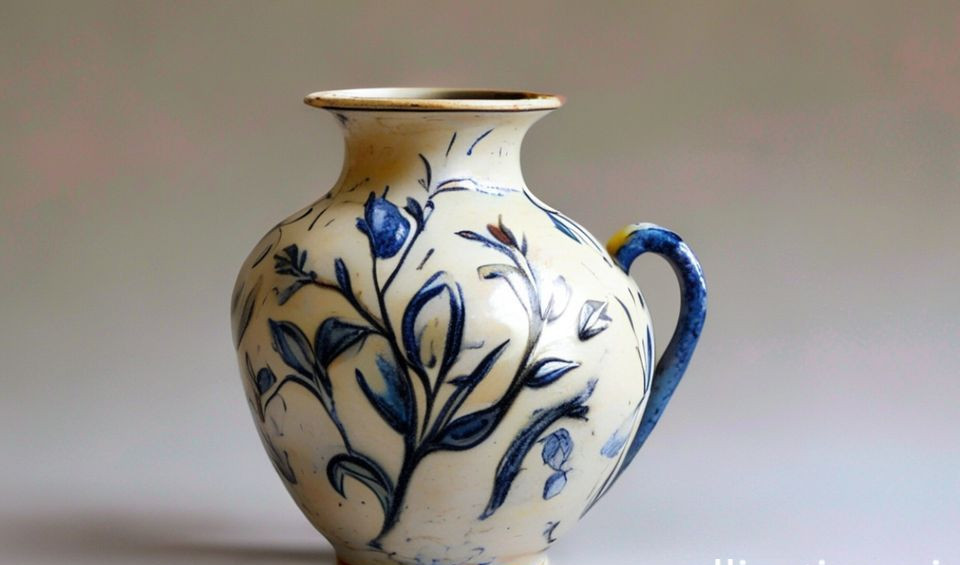
A quiet but profound transformation is reshaping the world of ceramics, one deliberate brushstroke at a time. This movement transcends mere revivalism or aesthetic trend-chasing. At its core, it is a fundamental reimagining of the relationship between artist, material, and object. The contemporary hand-painted ceramic vase is no longer just a decorative container. It has become a site of rigorous inquiry, a personal canvas, and a dynamic document of artistic process where every choice—from the clay’s composition to the kiln’s atmosphere—carries intentional weight. This evolution speaks to a deeper cultural yearning for authenticity, narrative, and tangible connection in an increasingly digital and mass-produced world.
The Substrate as an Active Collaborator
The journey of a modern hand-painted vase begins not with the brush, but with the clay itself. The era of treating a vase’s form as a passive vessel awaiting decoration is over. Today’s ceramists initiate a dialogue with their material from its earliest, most plastic state. Artists like Anya Cheng deliberately alter their throwing rhythms on the wheel, creating undulating, asymmetrical forms whose curves and tensions will later guide the path of her painting. “The clay has a voice,” Cheng observes. “If I force a rigid geometric pattern onto an organic, asymmetrical form, the piece feels dishonest. The painting must emerge from the form’s energy.” This philosophy represents a shift from imposition to collaboration, where the form’s inherent character dictates the decorative narrative.
This collaborative ethos extends deeply into surface preparation. The bisque-fired surface is no longer considered a blank, neutral slate. Instead, it is treated as an active participant in the final visual effect. Many artists build complex, textured grounds by applying multiple layers of contrasting slip—a thin, liquid clay—before any pigment touches the surface. This creates a foundational canvas with its own topography and color that will optically interact with overlaid oxides, stains, and glazes. A vibrant cobalt blue will sing with startling intensity over a rich, iron-red terra cotta slip, yet it will whisper as a soft, muted hue over a bright white porcelain ground. This layered approach generates a luminous depth and complexity unachievable with a single, flat glaze application. The inherent qualities of the clay body—its porosity, texture, and native color—become the first and most critical variables in the painter’s equation, demanding a responsive and adaptive approach to decoration that honors the material’s nature.
Gesture and the Archive of the Hand
In contemporary practice, the brushmark itself has become a primary subject, signaling a definitive move away from illustrative perfection toward a cultivated and expressive vocabulary of gestures. This visual language records the precise, unrepeatable moment of making. It embraces the unique pressure of the hand, the speed of the stroke, the hesitation, and the full physical presence of the artist at the wheel or worktable. It is a conscious celebration of the analogue and the human trace in a digital age.
Korean-born artist Min-jun Lee exemplifies this focus. He often employs a single, overloaded brush to apply thick, trailing rivers of glaze that then slump, melt, and are pulled by gravity during the high heat of the kiln. The fired piece becomes a permanent record of that specific fluid mixture’s behavior at that exact thermal moment, creating unique, geological-like strata on the vessel’s shoulder. Similarly, the renewed interest in techniques like hakeme—a swift, expressive application of white slip with a coarse brush—speaks to a desire for the raw energy and motion of the artist’s arm to be fossilized into the surface. Each stroke functions as a timestamp, an acceptance of the beautiful irreversibility inherent to ceramics.
“We’re past the idea of the ‘perfect finish.’ My clients aren’t buying an object; they’re buying a captured moment of decision. A brushstroke that hesitated, a drip I chose not to wipe away—that’s the signature they connect with. It’s about presence, not polish.”
— Elias Vance, studio potter and educator.
This perspective fundamentally reframes the vase from a mere container of space to a container of time. The hand-painted surface does not conceal the process; it highlights its most critical junctures, inviting the viewer to mentally reconstruct the series of actions that led to the final state. In an era of seamless digital replication, this tangible archive of human action holds profound psychological value. Research into the benefits of interacting with handmade objects suggests they can foster a greater sense of connection, well-being, and mindfulness, a finding echoed by global health perspectives on the importance of tactile, creative engagement for mental health.
Pigment as Narrative: Beyond Ornamentation
The narrative capacity of the hand-painted vase has expanded dramatically, pushing far beyond traditional ornamentation. Painting on clay is now a potent means of storytelling, personal diary-keeping, and even subtle social commentary. Artists are employing iconography, abstract symbolism, and fragmented text to imbue vessels with layered, often deeply personal meanings. A vase might chronicle the changing flora of a local landscape threatened by climate change, its surface becoming a botanical calendar of loss, adaptation, and resilience. Another might incorporate glazed-over text from old letters or poetry, where the translucent glaze acts as a veil over personal history, hinting at stories just beneath the surface.
Consider the work of ceramicist Rafael Pérez, who creates series of vases documenting urban landscapes. His brushwork captures not just architectural forms, but the pace and texture of life around them—the blur of a passing bicycle, the quick dash of a graffiti tag on a wall. “The vase form is perfect for this,” Pérez explains. “As you walk around it, the cityscape unfolds and connects, just as you would experience it on the street. The painting has no single focal point; it’s a continuous, encompassing environment.” This approach transforms the vase from a static object into a spatial experience. The narrative is not handed to the viewer but is discovered through physical engagement and movement, making the viewer an active participant in the story.
The Alchemy of the Kiln: Embracing Uncertainty as Methodology
A defining and thrilling feature of contemporary ceramic painting is the deliberate engagement with the kiln’s alchemical fire. Where artisans of the past often sought total control, many artists today design surfaces that actively invite and harness the unpredictable transformations of firing. This partnership with elemental forces introduces a vital element of chance, a collaboration that can elevate the work from the carefully planned to the unexpectedly poetic.
This practice involves experimenting with materials that interact in volatile and beautiful ways. Combustible organic materials like horsehair, seaweed, or leaves placed on a searing-hot piece just removed from the kiln create dramatic carbon trails and smoky, ethereal impressions. Glazes are meticulously formulated to crystallize, crawl, or break over textured surfaces, revealing hidden colors and intricate patterns only through the thermal journey. The Japanese aesthetic of yohen—which celebrates unique, accidental kiln effects—has found strong resonance in studios worldwide. This acceptance is not passive resignation; it is an active methodology of setting up precisely controlled conditions for surprise. The painter must possess a deep understanding of material chemistry to guide the process without demanding a rigidly specific outcome. The final surface, therefore, stands as a unique collaboration between the artist’s intention and the elemental force of the kiln, a permanent record of a specific thermal journey. The scientific pursuit of understanding these micro-interactions between glaze chemistry and clay body is a central focus in both artistic and advanced industrial ceramics, as explored in material science studies published by organizations like the American Ceramic Society.
Practical Insights for Collectors and Enthusiasts
Engaging with and collecting contemporary hand-painted ceramics requires a subtle shift in perspective—from seeking perfection to appreciating process and presence. Here are ways to deepen your appreciation and make informed, meaningful choices:
- Look for the Conversation: Examine how the painting relates to the form. Does it fight against the shape or flow harmoniously with its curves? Does the imagery or pattern consider the vase’s three-dimensional volume, actively inviting you to turn it and explore different viewpoints?
- Read the Surface Like a Text: Get close. Can you see the texture of the slip or clay body underneath? Are individual brushstrokes visible, and what is their character—energetic and swift, or calm and deliberate? Look for the honest evidence of process: a controlled drip, a deliberate thick buildup of glaze, a serendipitous bleed where colors met and merged in the kiln.
- Understand the Firing’s Role: Inquire about the firing process. Was it a consistent electric firing, a dynamic gas reduction firing, a wood-firing where ash creates natural glaze, or a rapid raku process? Each method imparts a distinct, irreproducible character. Wood ash deposits, reduction flashes, or the smoky crackle of raku are not flaws but integral, celebrated features of the piece’s story.
- Seek the Story Behind the Object: When possible, learn about the artist’s intent. Is the work part of a larger series exploring a specific theme, memory, or place? Does it employ personal or cultural symbolism? This context can profoundly transform your perception and connection to the object, moving it from decoration to a vessel of meaning.
- Prioritize Emotional Connection Over Technical Perfection: As seasoned collector Anika Roy shares, “I used to look for the perfectly symmetrical vase with flawless, even glazing. Now, the piece that catches my eye has a thumbprint subtly visible in the clay or a brushstroke that seems to quiver with life. Those are the pieces that feel truly alive in my home, that I form a lasting bond with.” This sentiment aligns with broader market trends, where demand for unique, handmade goods continues to rise, as noted in analyses of the artisan and luxury sectors by market research firms like Statista.
A Living, Evolving Tradition
The renaissance of the hand-painted vase intersects with powerful cultural currents. In a world often characterized by digital saturation and disposable consumption, these objects assert the enduring value of slowness, skilled craftsmanship, and deep material consciousness. They fulfill a fundamental human desire for authenticity and tactile connection. Global efforts to preserve such knowledge, like those by UNESCO through its Intangible Cultural Heritage programmes, work to safeguard traditional craft techniques. Crucially, contemporary artists are the ones ensuring this knowledge does not stagnate as a relic but evolves as a vibrant, living tradition, relevant to modern sensibilities and concerns.
Furthermore, the mindfulness inherent in both creating and using these objects resonates deeply with contemporary pursuits of mental well-being. The intense focus required to guide a brush on a curved surface, the patience demanded by the long firing and cooling process—these acts can be forms of meditation for the maker. For the user, the simple, daily act of placing a single stem in a vase or noticing how light plays across its textured surface offers a tangible, grounding counterpoint to the abstract and virtual flows of modern life.
The contemporary hand-painted ceramic vase, therefore, is ultimately more than a vessel. It is a testament to a conscious and respectful dialogue between maker and material. It is a celebration of the beauty found in process, gesture, and embraced imperfection. It is a durable, silent record of a singular human moment, captured in the immutable marriage of clay, pigment, and fire. It asks us to slow down, to look closely, and to find profound depth not in a flawless, impersonal finish, but in the rich, layered, and uniquely human stories told by its surface.
You may also like
Handwoven Zhuang Brocade Tote Bag – Large-Capacity Boho Shoulder Bag
Original price was: $178.00.$154.00Current price is: $154.00. Add to cartThe Palace Museum Paper-Cut Light Art Fridge Magnets: Chinese Cultural Style Creative Gift Series
Price range: $27.00 through $36.00 Select options This product has multiple variants. The options may be chosen on the product pageBambooSoundBoost Portable Amplifier
Original price was: $96.00.$66.00Current price is: $66.00. Add to cartGuangxi Zhuang Brocade Handmade Tote – Ethnic Boho Large-Capacity Shoulder Bag
Original price was: $172.00.$150.00Current price is: $150.00. Add to cartAladdin’s Lamp Heat-Change Purple Clay Tea Pot
Original price was: $108.00.$78.00Current price is: $78.00. Add to cartAncient Craft Herbal Scented Bead Bracelet with Gold Rutile Quartz, Paired with Sterling Silver (925) Hook Earrings
Original price was: $322.00.$198.00Current price is: $198.00. Add to cart