In a small workshop nestled in the hills of Anhui province, third-generation tofu maker Li Wei moves between rows of bamboo trays, checking on his latest batch of fermented tofu. The air hangs thick with the distinctive aroma—part earthy, part pungent—that signals transformation is underway. For Li, this isn’t just food preservation; it’s a continuation of his family’s legacy, one that began when his grandfather first perfected the recipe in 1932. “My grandfather always said good fermented tofu should tell a story—you should taste the care in every bite. When customers come back asking for that specific batch from last autumn, I know we’ve done our job right.”
The Ancient Science of Fermentation
Fermented tofu represents one of humanity’s oldest food preservation methods, with historical records dating back to China’s Wei and Jin dynasties (AD 220-420). What began as necessity—preserving protein-rich tofu through harsh winters—evolved into a sophisticated culinary tradition across East Asia. The process harnesses beneficial microorganisms to transform simple soybeans into something extraordinary, creating a product where the whole becomes greater than the sum of its parts.
Modern science has helped explain why this traditional food has endured for centuries. The fermentation process breaks down proteins and fats into amino acids and fatty acids, creating that distinctive umami flavor while increasing digestibility and nutrient availability. According to research published in the Journal of Food Science and Technology, fermented soy products like tofu show enhanced antioxidant activity and improved protein quality compared to their unfermented counterparts. The study found that fermentation increases the bioavailability of isoflavones by up to 300%, making these beneficial compounds more accessible to the human body.
The transformation occurs through the action of various microorganisms, primarily molds from the Actinomucor and Mucor species. These fungi produce enzymes that predigest the soybean proteins, breaking them down into peptides and amino acids that our bodies can more easily absorb. This biological alchemy not only preserves the tofu but fundamentally changes its nutritional profile and flavor characteristics.
The Artisan’s Process: Where Tradition Meets Precision
Li’s method remains remarkably unchanged from his grandfather’s time, yet every step reflects generations of accumulated wisdom. He starts with fresh tofu blocks, pressing them for exactly six hours to achieve the ideal texture. “The pressing determines everything,” he explains, running his fingers over a freshly drained block. “Too soft, and it disintegrates; too firm, and the mold can’t penetrate properly.” This delicate balance between structure and permeability represents the first critical decision in a weeks-long process.
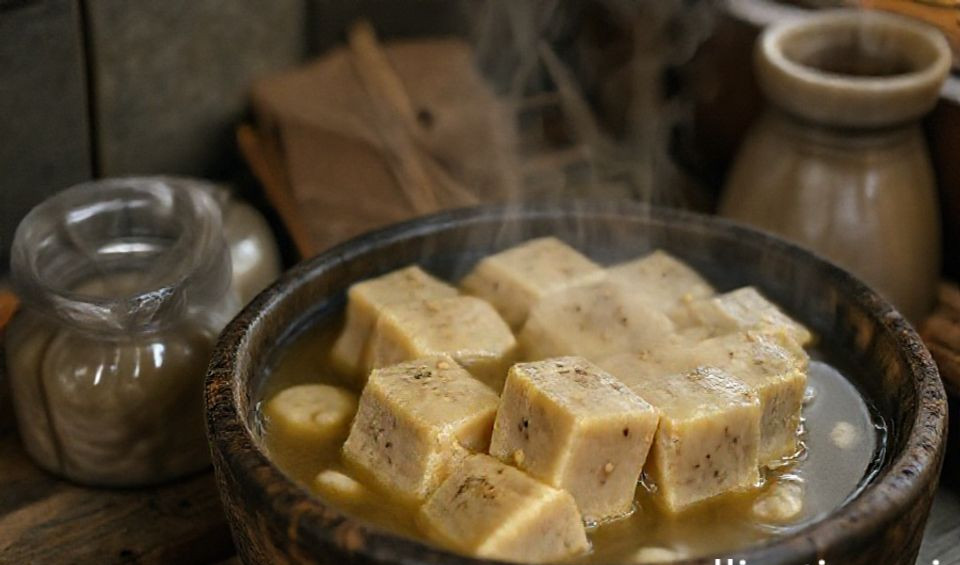
After pressing, he cuts the tofu into uniform two-inch cubes and steams them briefly—just enough to pasteurize without cooking through. This sterilization step eliminates competing microorganisms while preserving the tofu’s structural integrity. The real magic begins when he transfers the cooled cubes to bamboo trays, sprinkling them with a proprietary blend of mold cultures his family has cultivated for decades. “We maintain our starter culture like some families maintain photo albums,” Li says. “Each batch connects us to the past. Last year, we discovered a notebook from my great-grandfather detailing his experiments with different mold strains in the 1920s—we’re still learning from his observations.”
The trays then enter a temperature-controlled room kept at precisely 28°C, where the mold works its transformation over three to five days. During this primary fermentation, white mycelium completely envelops each cube, creating what resembles small, fuzzy marshmallows. The transformation doesn’t end there—after the mold development, the cubes undergo secondary fermentation in a brine solution typically containing rice wine, salt, and various spices. This stage can last from several weeks to many months, with longer fermentation producing deeper, more complex flavors.
Li monitors each batch daily, noting subtle changes in aroma, texture, and appearance. “The mold tells you everything if you know how to listen,” he shares. “When the mycelium forms a perfect white coat, when the aroma shifts from simply fungal to complex and savory—these are the signs of successful fermentation.” This intimate knowledge, passed down through generations, represents the true art of fermented tofu production.
Regional Variations and Cultural Significance
Across China and throughout Asia, fermented tofu develops distinct personalities based on local ingredients and traditions. In Taiwan, producers often use a higher proportion of rice wine, creating a milder, slightly sweeter product favored for eating with congee. In Hong Kong and Guangdong province, fermented tofu tends to be saltier and more pungent, often incorporating chili peppers or sesame oil. Sichuan varieties might include Sichuan peppercorns and chili oil, creating a numbing, spicy version that pairs well with rice dishes.
These regional variations reflect not just taste preferences but also environmental factors like humidity and temperature that influence the fermentation process. In cooler northern regions, fermentation typically takes longer, resulting in denser, more intensely flavored products. Warmer southern climates accelerate the process, creating softer textures and sometimes more assertive aromas.
The cultural significance of fermented tofu extends far beyond its culinary applications. In many rural communities, the annual tofu fermentation marks seasonal transitions and brings families together. Preparation often involves multiple generations, with elders passing techniques to younger family members. This intergenerational knowledge transfer represents an intangible cultural heritage that UNESCO has recognized in similar food traditions worldwide. The organization notes that traditional foodways like fermented tofu production “contribute to social cohesion and sustainable development while preserving biodiversity.”
During festivals and family gatherings, fermented tofu often appears as both ingredient and condiment, its presence signaling hospitality and cultural continuity. In some communities, the first batch of newly fermented tofu is shared among neighbors, strengthening social bonds and maintaining traditional networks of mutual support.
Nutritional Profile and Health Implications
While fermented tofu’s strong aroma might intimidate the uninitiated, its nutritional benefits are increasingly recognized by health professionals. The fermentation process enhances the bioavailability of nutrients while creating beneficial compounds not present in fresh tofu. A typical serving provides complete protein, essential amino acids, and isoflavones in more readily absorbable forms.
The World Health Organization has acknowledged the potential health benefits of traditionally fermented foods, noting their probiotic content and contribution to gut health. Regular consumption of fermented soy products has been associated with improved cardiovascular health and bone density in several epidemiological studies. Research suggests that the fermentation process may reduce anti-nutritional factors present in raw soybeans while increasing the concentration of bioactive peptides with potential health benefits.
However, consumers should note that fermented tofu tends to be high in sodium, making moderation important for those monitoring salt intake. A single cube can contain 200-400mg of sodium, representing 10-20% of the recommended daily limit. Some producers are addressing this concern by developing low-sodium versions or using potassium chloride as a partial salt substitute.
The probiotic content varies significantly between commercial and artisanal products. Mass-produced versions often undergo pasteurization that eliminates live cultures, while traditional methods preserve these beneficial microorganisms. For those seeking probiotic benefits, looking for products labeled as containing live cultures or purchasing from traditional producers like Li Wei ensures access to these health-promoting compounds.
Personal Transformations: From Stigma to Staple
For Shanghai-based chef Maria Chen, discovering fermented tofu marked a turning point in her culinary career. “I grew up thinking it was just ‘stinky tofu’—something to avoid,” she recalls. “Then I tasted a properly aged batch from Taiwan, and it completely changed my perspective. The vendor handed me a small cube on a toothpick, and I was prepared for the worst. Instead, I encountered this incredible complexity—savory, slightly funky, with layers of flavor that kept unfolding.” The experience inspired her to revisit other traditional ingredients she had previously dismissed.
Chen now uses fermented tofu in unexpected applications, from marinating short ribs to creating compound butters. “It’s like having a secret weapon in the kitchen,” she says. “Just half a cube can transform an entire dish.” Her most popular creation—fermented tofu whipped with butter and scallions—has become a signature at her restaurant, demonstrating how traditional ingredients can find new relevance in contemporary cuisine.
Chen’s journey mirrors that of many younger chefs rediscovering fermented tofu. “There’s this misconception that it’s just for traditional cooking,” she notes. “But when you understand its flavor profile, you realize it’s incredibly versatile.” Her experimentation has led to innovations like fermented tofu aioli, where it replaces raw egg yolk while adding depth to the emulsion, and fermented tofu caramel, where its salty complexity balances sweetness in desserts.
Home cook James Wilson experienced a similar revelation after moving to Taiwan for work. “My Taiwanese colleagues would bring fermented tofu to lunch, and initially, the smell put me off. But after trying it mixed into noodles, I was hooked. Now I keep multiple varieties in my fridge—some for cooking, some for eating straight with rice. It’s become my gateway to understanding Chinese food culture on a deeper level.”
Practical Applications for Home Cooks
Incorporating fermented tofu into everyday cooking requires neither special equipment nor advanced techniques. Start by using it as a flavor amplifier in marinades—simply mash half a cube with soy sauce, rice wine, and a touch of sugar for an instant umami boost for meats or vegetables. The fermented tofu helps tenderize while infusing dishes with complex savory notes that develop during cooking.
For a quick vegetable side dish, stir-fry greens like bok choy or kale with minced garlic and mashed fermented tofu. The saltiness means you can often reduce or eliminate additional salt. Similarly, mashed fermented tofu mixed with neutral oil creates an excellent dressing for cold noodles or salad, providing the same creamy richness as dairy-based dressings without the lactose.
When selecting fermented tofu at Asian markets, look for jars where the cubes remain intact and the brine appears clear. Cloudy brine or broken cubes may indicate improper fermentation or storage. The aroma should be pungent but not unpleasantly sharp or ammoniac. Once opened, keep refrigerated and always use clean utensils to prevent contamination. Properly stored, fermented tofu can last for months, with some connoisseurs arguing it improves with additional aging in home refrigeration.
Experiment with different regional varieties to discover your preferences. Milder Taiwanese versions work well for beginners or in delicate dishes, while stronger Cantonese styles stand up well to robust flavors in stews and braises. For those feeling adventurous, spicy Sichuan versions can add heat and complexity to stir-fries and dipping sauces.
The Global Market and Future Trends
While fermented tofu remains most popular in Asian communities, global interest has grown steadily. According to Statista, the international market for fermented soy products has expanded by approximately 8% annually over the past five years, driven by increasing interest in plant-based proteins and traditional fermentation techniques. Western chefs have begun experimenting with fermented tofu, incorporating it into everything from pasta sauces to salad dressings.
This growing appreciation comes at a crucial time for traditional producers like Li Wei. “Young people don’t want to do this work anymore,” he admits. “It’s physically demanding and doesn’t provide the stability of office jobs. My own son is studying computer science in Shanghai—he respects the tradition but doesn’t see his future in it.” Yet the very factors that threaten the tradition—industrialization and changing career preferences—have also created opportunities. Small-batch, artisan fermented tofu now commands premium prices in urban centers and international markets, potentially making the craft economically viable for a new generation.
Food scientists are also exploring ways to optimize traditional fermentation methods while maintaining the characteristic flavors and textures that make artisan products unique. Research focuses on standardizing fermentation conditions, developing starter cultures with consistent performance, and reducing sodium content without compromising preservation or taste. Some researchers are investigating the potential of novel mold strains that could produce fermented tofu with enhanced nutritional profiles or unique flavor characteristics.
The rise of fermentation workshops and DIY food movements has also created new interest in traditional methods. Urban fermentation clubs and online communities share techniques and starter cultures, helping preserve knowledge that might otherwise be lost. This grassroots interest complements commercial production, ensuring that traditional methods continue to evolve and adapt.
Beyond the Kitchen: Unexpected Applications
The unique properties of fermented tofu have found applications beyond traditional culinary uses. Its high glutamic acid content makes it an effective natural flavor enhancer in processed foods, offering a plant-based alternative to MSG. Some natural cosmetics companies have begun experimenting with fermented tofu extracts in skincare products, capitalizing on its antioxidant properties and amino acid content. Early research suggests these extracts may help improve skin hydration and elasticity, though more studies are needed.
Perhaps most surprisingly, fermented tofu has even entered the world of fine art. Several contemporary artists have used it as a medium, exploring themes of transformation and cultural memory. The evolving nature of the material—changing color, texture, and scent over time—becomes part of the artistic statement, much as the fermentation process itself represents constant, gradual change. Artist Lin Tianmiao created an installation using fermented tofu to comment on cultural preservation and transformation, noting that “like tradition itself, the material is both stable and constantly changing.”
In sustainable agriculture, researchers are investigating uses for fermentation byproducts. The spent brine from fermented tofu production shows promise as a natural fertilizer, while the biomass from mold growth could potentially be used as animal feed or converted to biofuel. These applications could help make traditional production more economically and environmentally sustainable.
Back in Anhui, Li Wei continues his daily rounds, checking temperatures, adjusting humidity levels, and tasting samples from different batches. For him, fermented tofu represents not just a food product but a living connection to history, place, and family. “Every batch is different,” he reflects. “The weather, the soybeans, even my mood that day—everything leaves its mark. Last winter was unusually cold, and the fermentation took almost twice as long. But the resulting product had a depth and complexity we haven’t been able to replicate.” In an era of industrial food production and standardized flavors, this embrace of variability and tradition feels increasingly precious, offering not just sustenance but story in every bite.
As consumers worldwide rediscover traditional fermentation techniques and seek out authentic food experiences, products like Li’s fermented tofu bridge centuries of culinary wisdom with contemporary tastes. The very qualities that once made it seem old-fashioned—its variability, its connection to specific places and people, its refusal to be standardized—now make it increasingly valuable in a homogenized food landscape. Each jar contains not just fermented soybeans but generations of knowledge, regional character, and the quiet magic of microbial transformation.
You may also like
Ancient Craftsmanship & ICH Herbal Beads Bracelet with Yellow Citrine & Silver Filigree Cloud-Patterned Luck-Boosting Beads
Original price was: $128.00.$89.00Current price is: $89.00. Add to cartHandwoven Zhuang Brocade Tote Bag – Large-Capacity Boho Shoulder Bag
Original price was: $178.00.$154.00Current price is: $154.00. Add to cartAncient Craft Herbal Scented Bead Bracelet with Gold Rutile Quartz, Paired with Sterling Silver (925) Hook Earrings
Original price was: $322.00.$198.00Current price is: $198.00. Add to cartGuangxi Zhuang Brocade Handmade Tote – Ethnic Boho Large-Capacity Shoulder Bag
Original price was: $172.00.$150.00Current price is: $150.00. Add to cartBambooSoundBoost Portable Amplifier
Original price was: $96.00.$66.00Current price is: $66.00. Add to cartThe Palace Museum Paper-Cut Light Art Fridge Magnets: Chinese Cultural Style Creative Gift Series
Price range: $27.00 through $36.00 Select options This product has multiple variants. The options may be chosen on the product page