In a small workshop in Zhejiang, a bamboo weaver bends slender strips into a fruit basket that will last decades. This isn’t museum glasswork—it’s a tool for carrying persimmons from market. Across China, traditional crafts survive not as relics but as solutions. They answer questions about durability, material intelligence, and daily grace. This living heritage, often categorized as exotic Chinese handcrafts, represents a profound convergence of art, science, and philosophy. It is a testament to a culture that historically viewed utility and beauty not as separate domains, but as inseparable partners in creating objects for a well-lived life.
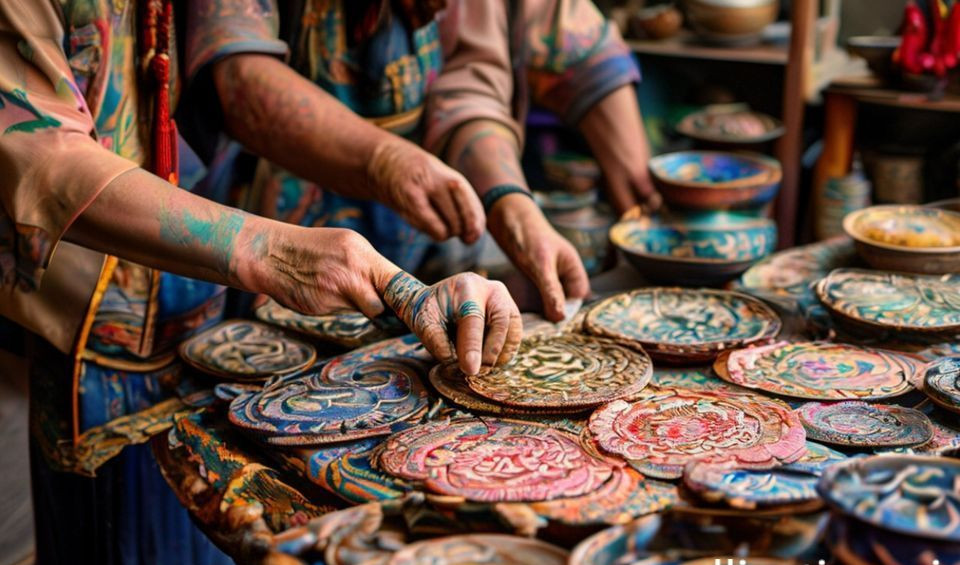 artisan's hands shaping bamboo into a basket, exemplifying exotic Chinese handcrafts" loading="lazy" />
The Intelligence of Materials: A Dialogue with Nature
Practical craftsmanship begins with a deep, almost intimate understanding of what materials can do. This knowledge, passed down through generations, transforms ordinary substances into extraordinary companions for daily living. The artisan’s first dialogue is with the material itself, learning its language of strength, flexibility, and texture. This relationship is less about domination and more about collaboration, a principle that aligns with broader traditional Chinese philosophies of harmony between humanity and the natural world.
Take lacquerware from Fujian. The process is an exercise in patience and layered intelligence. It involves applying up to thirty coats of sap from the lacquer tree over several months, with each layer meticulously dried and polished. The result is a surface of incredible resilience, one that resists heat, moisture, acids, and the slow wear of time. A lacquer lunch box, therefore, is not merely a container; it keeps rice warm without plastic insulation, and a tray can withstand the direct pour of boiling tea without warping or losing its luster. Artisan Li Wei, whose family has worked with lacquer for four generations, encapsulates this ethos: “We don’t make decorations. We make companions for daily life. An object that cannot be used is an object that has no spirit.” This sentiment echoes the wu wei principle of effortless action—the craft emerges from the material’s own properties.
Similarly, the world-renowned blue-and-white porcelain from Jingdezhen holds a dual identity. While auction houses prize imperial Ming vases, the kilns have always produced sturdy celadon bowls and plates designed for the rhythm of daily meals. These pieces are studies in ergonomic design—their slightly unglazed, rough foot rings prevent slipping on smooth surfaces, and their curves are calibrated to fit comfortably in the hand. They embody what scholar Wang Yan describes as “the aesthetics of wear.” Unlike objects that degrade with use, these ceramics are believed to improve, gathering small chips and tea stains that record a family’s history, making them more valuable with each shared supper. The material, a blend of local china stone and clay, is chosen not just for its whiteness but for its ability to vitrify into a glass-like, impermeable surface that safely holds food and drink for centuries.
This material intelligence extends to textiles. The ramie cloth woven in Guizhou, for instance, leverages the natural properties of the bast fiber. “People ask if I worry about machines making textiles faster,” says weaver Zhang Mei. “I show them my fabric’s secret. The irregular threads—what factories call flaws—actually create tiny channels in the cloth, making it more breathable in our humid climate. My grandmother’s pattern includes three different weaves in one shawl: tighter at the shoulders where wear happens, looser at the edges for a beautiful drape. This isn’t just pretty; it’s engineering. When someone buys my work, they’re getting two hundred years of problem-solving in every meter.” This adaptive design, born from environmental necessity, is a form of localized, sustainable innovation that global fashion is only beginning to rediscover.
Techniques as Solutions to Human Problems
Beyond material mastery, exotic Chinese handcrafts are repositories of ingenious techniques, each evolved to solve specific, often mundane, human problems. These methods represent generations of observational science and iterative design, long before such terms entered the modern lexicon. They are the embodied knowledge of how to live well with limited resources.
Suzhou embroidery, famed for its breathtaking landscapes on silk, is a prime example of technique serving durability. The practice of splitting a single silk thread into filaments finer than a human hair is not mere ostentation. The finer the thread, the tighter and denser the stitch can be. This creates a design that is remarkably resilient to washing and friction. A single ceremonial robe might employ fourteen distinct stitch variations: robust chain stitches for flexible areas like sleeves and joints, and smooth satin stitches for broad, unbroken panels. Each stitch is a calculated decision for longevity. The famed double-sided embroidery, where a flawless image appears on both sides of a sheer veil with no visible knots, is a technical marvel that solved the desire for beauty that could be viewed from all angles in ceremonial settings.
In Sichuan, the bamboo framing for traditional paper lanterns is a lesson in applied geometry and sustainable design. The bamboo strips are bent and tied using principles that distribute weight and stress evenly across the structure. A well-made lantern is a marvel of functional design: it collapses perfectly flat for storage, snaps open intuitively without tools, and can withstand gusty nights. Lantern maker Chen Xia highlights the inherent sustainability: “My grandfather taught me that if a craft creates waste, you haven’t thought hard enough.” In her workshop, bamboo off-cuts are never discarded; they become smaller lantern handles, decorative accents, or kindling for the stove to boil water for tea, closing the loop on material use. This cradle-to-cradle thinking predates modern industrial ecology by centuries.
One of the most inventive modern adaptations comes from Shandong with dough figurines. Originally vibrant, malleable festival toys for children, contemporary artisans have repurposed the ancient recipe of wheat flour, honey, and salt. They now mold this edible, non-toxic mixture into biodegradable packaging inserts for shipping delicate electronics or ceramics. These custom-shaped forms hold items securely in transit, absorbing shock, and then can be dissolved in water or simply composted. This innovation directly replaces polystyrene foam, addressing a contemporary environmental crisis with a centuries-old, safe material. It’s a powerful demonstration of how traditional craft knowledge remains vitally relevant, offering solutions to modern problems like plastic pollution, a concern highlighted by the World Health Organization in reports on environmental health.
The Philosophy Woven Into Form
The objects born from these materials and techniques are physical manifestations of a deeper cultural and philosophical worldview. Exotic Chinese handcrafts often reflect core tenets of Daoism, Confucianism, and Buddhism, translating abstract concepts into tangible, usable form.
The concept of qi, or vital energy, is frequently referenced. A well-crafted object is said to possess good qi, a harmony and flow that makes it pleasing to use and durable. This is not mystical but practical—the qi of a bamboo basket is its perfect spring-tension and balance, making it light to carry yet strong. Similarly, the Confucian emphasis on ritual and propriety (li) is evident in craft. Specific shapes, colors, and motifs on porcelain or lacquerware denoted status and occasion, guiding social interaction. A teacup was not just a vessel but a participant in the ritual of hospitality, its form encouraging a certain graceful handling.
Perhaps the most pervasive philosophy is the appreciation for the natural cycle and the beauty of authenticity. The slight asymmetry in a hand-thrown pot, the variable hue of a plant-dyed fabric, the unique grain of a piece of zitan wood—these are not hidden but celebrated. They speak of the zhen (genuine) and reject artificial perfection. This acceptance and even reverence for natural imperfection finds a powerful parallel in the Japanese concept of wabi-sabi, which itself has roots in Chinese Chan (Zen) Buddhism. It teaches that beauty is transient, imperfect, and incomplete, a lesson embedded in the very fibers of these handcrafts.
The Modern Resonance and Sustainable Ethos
In an era of mass production and disposable goods, the principles underpinning exotic Chinese handcrafts resonate with growing global movements towards sustainability, mindful consumption, and human-centered design. The very attributes that once ensured survival in pre-industrial societies—durability, repairability, and material honesty—are now sought-after antidotes to planned obsolescence and environmental waste.
The ethos of “zero waste” that Chen Xia described is not a new, trendy concept but a foundational principle of many crafts. Bamboo weaving, pottery, and textile work historically operated within tight material constraints, demanding efficiency and creativity. A report by the United Nations Environment Programme on sustainable consumption highlights traditional craft systems as models for circular economies, where waste is designed out and products are built to last. Similarly, a Statista survey on global consumer trends shows a steady rise in demand for artisan, sustainably-made goods, indicating a market realignment towards these timeless values.
Furthermore, organizations like UNESCO, through its Intangible Cultural Heritage lists, have helped safeguard these practices, not by freezing them in time, but by recognizing their continuing evolution and relevance. This institutional support helps create bridges between master artisans and new audiences, ensuring the transmission of knowledge. The challenge and opportunity lie in scaling this ethos without diluting it. Young designers are now collaborating with artisans, applying traditional techniques to contemporary products—like ramie fiber for high-performance athletic wear or lacquer coatings for modern electronics casings—proving that this heritage is a living, adaptable resource.
Actionable Insights: Engaging with a Living Legacy
Appreciating and supporting this living heritage goes beyond passive admiration. Integrating the wisdom of exotic Chinese handcrafts into modern life requires a shift in perspective, from consumer to custodian. Here are practical ways to engage.
- Seek Function First: When acquiring a handcrafted item, prioritize its intended use. Choose a lacquerware bowl for your daily noodles, a celadon teacup for your morning ritual, or a bamboo basket for market groceries. Let the object earn its patina through use, fulfilling its purpose. This active relationship honors the artisan’s intent far more than placing it on a shelf.
- Understand the Story: Learn about the material and the maker. Who wove the textile? What tree did the lacquer come from? What village does this pattern originate from? This knowledge transforms an object from a commodity into a narrative, deepening your connection to it and making you more likely to care for and repair it. Research published in journals like The Journal of American Folklore underscores how the story of an object is integral to its cultural value and preservation.
- Embrace Imperfections: Reject the industrial standard of flawless uniformity. See the slight warp in a pottery bowl, the subtle variation in a hand-dyed fabric, or the unique grain of a bamboo strip as signatures of human hands and natural material, not defects. This acceptance cultivates an appreciation for uniqueness and counters the throwaway culture born of mass production.
- Support Ethical Artisans: Seek out cooperatives, fair-trade platforms, or direct-from-workshop sellers that ensure artisans receive fair compensation. This economic viability is crucial for the survival of these crafts. When purchasing, ask about the maker’s conditions. Your investment becomes a direct vote for the preservation of skill and knowledge, not just the acquisition of a product.
- Apply the Principles: Adopt the mindset in your own life. Before discarding a broken item, ask if it can be repaired in a beautiful way. Choose durable, natural materials over synthetic ones where possible. Value time-intensive quality over instant, cheap quantity. Consider the full lifecycle of the objects you bring into your home. This philosophical adoption is perhaps the most profound form of engagement.
The bamboo fruit basket in Zhejiang, the lacquer lunch box in Fujian, and the ramie shawl in Guizhou are more than exotic artifacts. They are manifestations of a sophisticated design philosophy where beauty is an outcome of purpose, where objects are created to participate actively in life’s journey. They remind us that the most profound solutions are often born from a deep conversation with nature and a respectful continuity with the past. In a world searching for sustainable and meaningful ways forward, these handcrafts offer not just objects, but a compelling blueprint for a more thoughtful and resilient way of making, using, and valuing the things that surround us. They stand as quiet, durable testaments to the idea that the best tools for living are those shaped by intelligence, care, and an enduring dialogue between human hands and the gifts of the earth.
You may also like
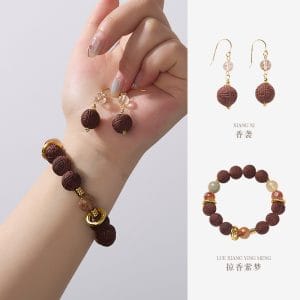
Ancient Craft Herbal Scented Bead Bracelet with Gold Rutile Quartz, Paired with Sterling Silver (925) Hook Earrings
Original price was: $322.00.$198.00Current price is: $198.00. Add to cartThe Palace Museum Paper-Cut Light Art Fridge Magnets: Chinese Cultural Style Creative Gift Series
Price range: $27.00 through $36.00 Select options This product has multiple variants. The options may be chosen on the product pageHandwoven Zhuang Brocade Tote Bag – Large-Capacity Boho Shoulder Bag
Original price was: $178.00.$154.00Current price is: $154.00. Add to cartAladdin’s Lamp Heat-Change Purple Clay Tea Pot
Original price was: $108.00.$78.00Current price is: $78.00. Add to cartBambooSoundBoost Portable Amplifier
Original price was: $96.00.$66.00Current price is: $66.00. Add to cartAncient Craftsmanship & ICH Herbal Beads Bracelet with Yellow Citrine & Silver Filigree Cloud-Patterned Luck-Boosting Beads
Original price was: $128.00.$89.00Current price is: $89.00. Add to cart