When a teacup develops a delicate network of fine lines across its surface, it isn’t breaking—it’s revealing character. Chinese crackle glaze transforms functional pottery into objects that tell stories through their imperfections. This centuries-old technique, where beauty is born from calculated stress, creates surfaces that breathe with history while serving perfectly practical purposes in daily life. More than a mere finish, it is a dialogue between material science and artistic intent, a testament to finding elegance in the inevitable.
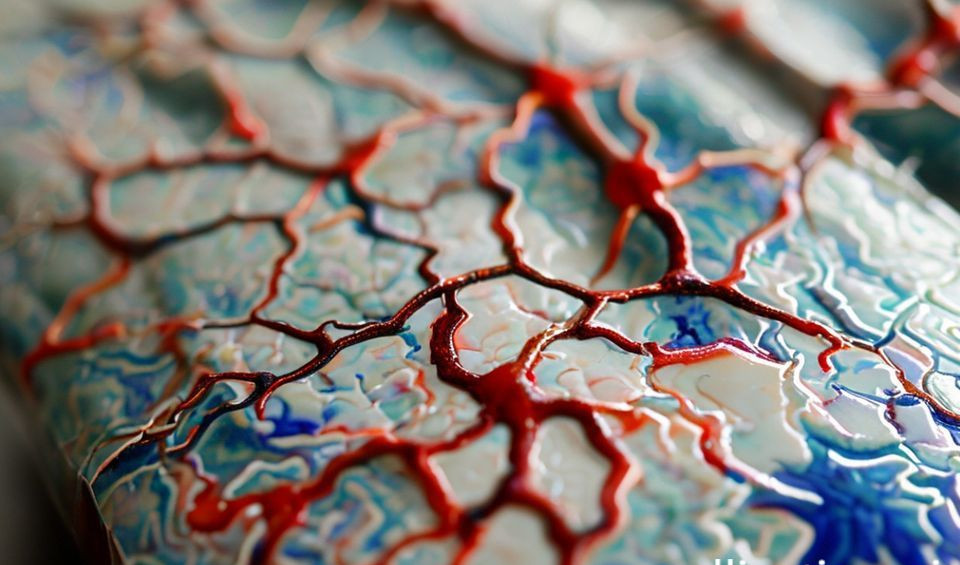
The Ancient Allure of Imperfection
The story of Chinese crackle glaze is deeply intertwined with a philosophical embrace of natural flaw. Its celebrated emergence during the Song Dynasty (960–1279 AD) was no accident. This period, renowned for its refined aesthetic and scholarly pursuits, saw a shift from the technically perfect, colorful wares of the Tang Dynasty toward subtler, more introspective forms. Song potters, particularly those working for the imperial court in kilns like Guan and Ge, began to master the controlled fracturing of glazes.
They were influenced by Daoist and Chan (Zen) Buddhist principles that valued asymmetry, simplicity, and the beauty of the transient and imperfect—concepts crystallized later in the Japanese wabi-sabi tradition. A perfectly smooth bowl was just a vessel; a bowl with a whispering web of cracks embodied the passage of time and the quiet drama of the material world. As historian Robert Mowry notes, “The Song connoisseur saw in these crackle patterns landscapes, ice floes on a river, or the veins of a leaf—a universe of suggestion in a network of fine lines.” This aesthetic shift wasn’t merely decorative but represented a profound change in how art interacted with nature and philosophy. The crackle was a deliberate, crafted echo of natural processes like freezing, drying, and aging, bringing the outside world into the domestic sphere.
The Science Behind the Poetry: Mechanics of Controlled Crazing
This poetic effect stems from a precise physical dance. Crackle patterns, or crazing, emerge from calculated tension between the glaze and the clay body during cooling. As the kiln temperature drops, the glassy glaze layer contracts more than the ceramic beneath it. Since they are bonded, this differential shrinkage creates microscopic tensile stresses that relieve themselves through fracturing. Potters don’t just hope for this; they engineer it through specific material combinations.
A glaze formulated with a high coefficient of thermal expansion (often high in silica) applied over a clay body with a lower coefficient guarantees controlled crazing. The thermal schedule is equally crucial. Rapid cooling, or quenching, encourages more dramatic, widespread crackle networks, while a gradual, controlled cooldown produces subtler, finer lines. The initial pattern is essentially a frozen record of stress release.
Modern studios have refined this into reproducible science. One common approach combines 85% feldspar with 15% kaolin, fired at cone 6 (approximately 2232°F/1222°C). This mixture reliably produces fine, web-like patterns. Another practical recipe uses a 70-30 ratio of nepheline syenite to silica, which creates slightly larger, more geometric cracks. These are not mysterious alchemical formulas but accessible techniques rooted in material science. The visual drama is often enhanced after firing. Potters may rub dark clay slip, iron oxide, or strong tea into the microscopic fissures, causing the pattern to “pop” against a lighter glaze. This highlighting process, sometimes called “emphasizing the crackle,” traces the path of each tiny fracture, making the hidden tension beautifully visible.
From Kiln to Kitchen: Functional Considerations for Daily Use
Despite their fractured appearance, properly executed crackle glazes create completely functional surfaces. The cracks are typically only in the glaze layer, rarely penetrating the underlying clay body, which remains vitrified and non-porous. The primary concern for functional ware is hygiene, as bacteria could theoretically lodge in unsealed cracks. This is a recognized consideration in ceramic safety. Many contemporary potters address this by applying a clear, food-safe overglaze that seals the surface while maintaining the visual texture, a practical solution that allows crackle ware to serve as everyday dishware without compromising utility.
Different crackle patterns suit different functions. Fine, dense crazing, resembling a spider’s web, works beautifully on teacups and small bowls where the pattern enhances visual interest without overwhelming the form. “For a daily use coffee cup, I aim for a tight, fine crackle that feels smooth to the lips but catches the light beautifully,” says potter Mika T. Larger, more dramatic crackle networks, sometimes called “ice crackle,” make striking serving platters or decorative pieces. The practical maker always considers the end use—a soup bowl needs a glaze whose cracks are too fine to trap food particles, while a vase can accommodate deeper, more pronounced texture.
Maintenance requires minimal special care. High-quality, sealed crackle-glazed pottery can withstand normal dishwasher cycles, though many collectors prefer gentle hand-washing to preserve the patina. Over decades of use, oils from hands or subtle staining from tea can gently darken the crackle lines, deepening the object’s history and personal connection. A well-used crackle-glazed teapot doesn’t age; it ripens.
A Potter’s Perspective on Practicality
“We test every new crackle formula with three basic questions,” explains ceramicist Lin Wei, whose studio produces functional ware for restaurants and homes. “Will it hold liquid without weeping? Can it withstand thermal shock from oven to table? Does the pattern enhance rather than distract from the form? Last month, we adjusted our signature celadon crackle recipe seven times before achieving the right balance between visual drama and practical durability. The final version uses a slightly thicker application at the rim where stress concentrates during temperature changes.”
This practical approach demystifies what might appear as a purely decorative technique. Crackle glaze becomes another tool in the functional potter’s repertoire—one that adds narrative depth without sacrificing utility, creating objects meant to be used daily while developing richer visual texture over time. It embodies a principle that organizations like the World Health Organization emphasize in different contexts: that beauty and safety, tradition and modern use, are not mutually exclusive but can be thoughtfully integrated.
Contemporary Expressions: A Global Ceramic Language
While rooted in ancient Chinese tradition, crackle glaze has become a global ceramic language, adapted and reinterpreted by artists worldwide. Today’s practitioners push the technique beyond the classic celadons and tenmokus. Some use multiple layers of differently colored glazes, each with its own cracking pattern, to create complex, depth-filled surfaces. Others combine crackle with other effects like volcanic eruptions or crystalline growth.
The conceptual framework has also expanded. Where Song potters saw landscapes, contemporary artists might see maps of neural networks, the cracking of dry earth due to climate change, or abstract representations of urban infrastructure. This evolution shows the technique’s enduring vitality; it is a versatile means of embedding time, change, and texture into solid form. Institutions like The American Ceramic Society regularly feature technical papers and artistic showcases exploring new frontiers in controlled crazing, proving its ongoing relevance. As noted in analyses of global craft trends, such as those by Statista, there is a growing market for artisan ceramics that blend historical technique with modern design, a space where crackle glaze excels.
Practical Insights for Collectors and Enthusiasts
Engaging with crackle glaze, whether as a collector, user, or budding potter, is deeply rewarding. Here are some actionable insights to deepen that engagement:
- Look for Intentionality: In quality work, the crackle pattern should feel integral to the piece, not random or sloppy. It should complement the form—a dynamic pattern might energize a simple bowl, while a subtle crackle might ground a more complex shape. The cracks should appear as a natural consequence of the form and glaze, not an afterthought.
- Understand the Finish: Always ask the potter or seller if the piece is sealed for food use. A sealed crackle will feel smooth to the touch, even over the lines. An unsealed, traditionally treated piece is often best for dry food, decorative use, or for those who wish to encourage a natural patina through use.
- Embrace the Life Cycle: Allow the piece to develop a patina. Use it, wash it, handle it. The darkening of the cracks is part of its story. As UNESCO notes in its discussions on intangible cultural heritage, the continued use and re-interpretation of traditional crafts is key to their living preservation. Your use becomes part of the object’s ongoing narrative.
- Try a Simple Experiment: For those curious about the process, a basic crackle effect can be achieved at home with a commercial low-fire clear glaze and a bisque-fired clay body. The mismatch in expansion rates often produces spontaneous crazing, offering a hands-on lesson in the fundamental principle. It’s a accessible entry point into understanding the delicate balance potters manage.
Ceramic artist Anya R. recounts a story that captures this relationship between object and owner: “A client once called me, worried she had broken a vase because the crackle lines had become more visible after a few years. I explained it was simply the tea stains from the flowers doing their work. She later told me that understanding that made it her most cherished object—it was literally recording the life of the bouquets it held.”
The Enduring Whisper of the Kiln
Chinese crackle glaze endures because it speaks to a fundamental human appreciation for objects with depth and history. It marries strength and fragility, intention and accident, the moment of creation and the long passage of years. In a world that often prizes sterile perfection, an object that proudly bears the evidence of its own making—the tension between earth and fire frozen in a web of lines—offers a profound connection to materiality and process.
It reminds us that use and time are not detractors from beauty, but its collaborators. Each fine line is a record of transformation, a whisper from the kiln that continues to tell its story long after the firing is done. This technique, born from ancient philosophy and refined through centuries of practice, invites us to find depth, character, and quiet narrative in the very things we hold in our hands every day, transforming the mundane act of use into an ongoing dialogue with art, history, and the natural world.
You may also like
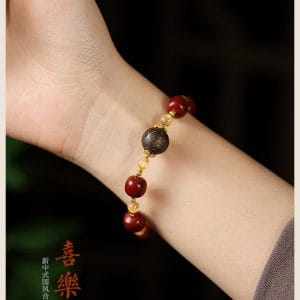
Ancient Craftsmanship & ICH Herbal Beads Bracelet with Yellow Citrine & Silver Filigree Cloud-Patterned Luck-Boosting Beads
Original price was: $128.00.$89.00Current price is: $89.00. Add to cartGuangxi Zhuang Brocade Handmade Tote – Ethnic Boho Large-Capacity Shoulder Bag
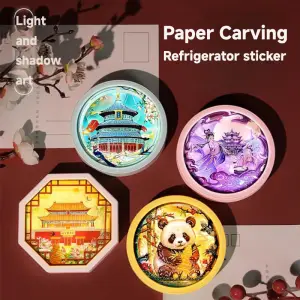
Original price was: $172.00.$150.00Current price is: $150.00. Add to cartThe Palace Museum Paper-Cut Light Art Fridge Magnets: Chinese Cultural Style Creative Gift Series
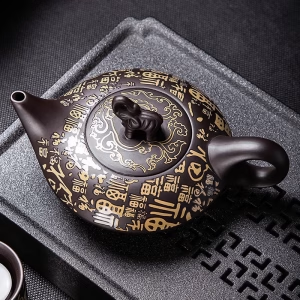
Price range: $27.00 through $36.00 Select options This product has multiple variants. The options may be chosen on the product pageAladdin’s Lamp Heat-Change Purple Clay Tea Pot
Original price was: $108.00.$78.00Current price is: $78.00. Add to cartHandwoven Zhuang Brocade Tote Bag – Large-Capacity Boho Shoulder Bag
Original price was: $178.00.$154.00Current price is: $154.00. Add to cartAncient Craft Herbal Scented Bead Bracelet with Gold Rutile Quartz, Paired with Sterling Silver (925) Hook Earrings
Original price was: $322.00.$198.00Current price is: $198.00. Add to cart