In a quiet workshop in Dingshan, a town synonymous with Zisha clay, Gu Jingzhou’s hands move with a rhythm learned over six decades. He is not merely making a teapot; he is negotiating with earth, water, and fire. The Yixing teapot, often reduced to a commodity or a spiritual accessory in the West, finds its truest meaning here—in the tension between a master’s will and the stubborn character of local clay. This is not a story of market trends or a pilgrim’s odyssey. It is a record of human decisions pressed into mineral form, a vessel shaped as much by philosophy and patience as by skilled fingers.
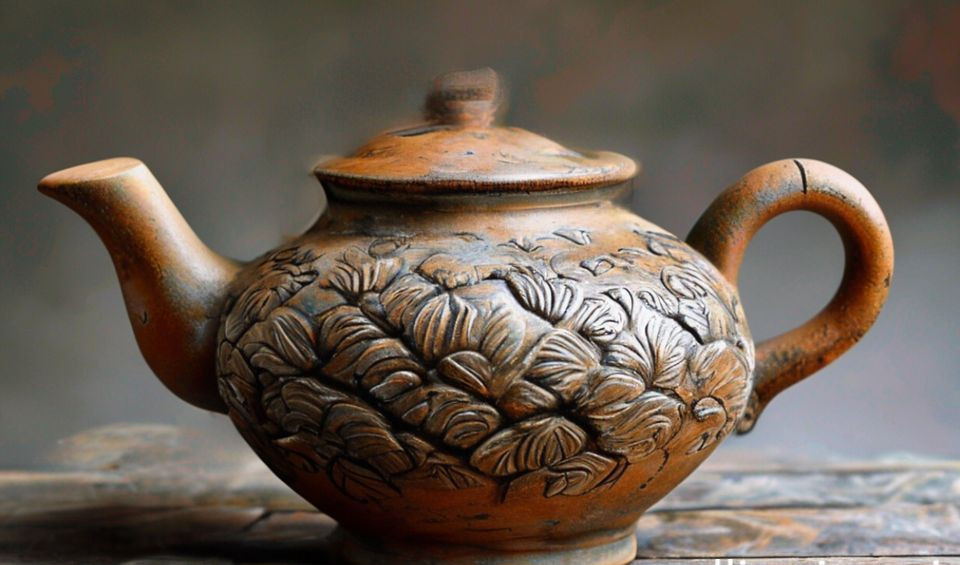
To understand a Yixing pot is to move beyond its function. It is an ecosystem in miniature, a confluence of geology, chemistry, artistry, and ritual. While the global tea market surges, valued in the hundreds of billions, the Yixing teapot occupies a unique, rarefied space. It is not a tool for mass consumption but an instrument for connection. Its value accrues not through branding, but through patina—the slow, molecular dance between clay and tea that unfolds over decades of dedicated use. This process, where the pot gradually absorbs the essence of the tea and develops a deeper, richer sheen, is known as “raising the pot.” It is a partnership between object and owner, a testament to the Chinese cultural principle of yang, or nurturing cultivation.
The Clay’s Memory: Geology as Co-Author
Every Yixing pot begins with a geological memory, a narrative written in mineral deposits over millennia. The unique Zisha (“purple sand”) clay, mined from the yellow stone strata around Lake Taihu in Jiangsu province, is more than raw material; it is a collaborator with a fixed temperament. Unlike the smooth, porcelain clays used elsewhere, Zisha is a coarse, sandy clay rich in iron oxides, quartz, and mica. It is this unique composition that grants Yixing teapots their legendary porousness and heat retention.
Master Gu recalls the specific batch from 1998, a cooler, wetter year that yielded clay with exceptional plasticity. “That clay remembered the rain,” he says, his fingers tracing the curve of a pot made that season. The material dictates the pace. Rushing the wedging and forming results in microscopic stresses and cracks invisible until firing; hesitation allows the clay to stiffen and reject form. Artists speak of listening to the clay’s needs, a skill that separates craftsmen from masters. This deep material knowledge informs every choice. For a pot intended for heavily roasted oolong or ripe pu-erh, a master might choose a denser, iron-rich Zhuni clay to withstand repeated infusions of near-boiling water and enhance the tea’s caramel notes. For delicate green teas like Longjing, a more porous and lighter Duanni clay might be selected to prevent scorching. These are decisions made not from a manual, but from tactile memory and an intimate understanding of terroir.
The mining and preparation of the clay itself is a fading art. Authentic Zisha ore is now a protected resource, with strict quotas on extraction to prevent depletion. Once mined, the raw clay is weathered outdoors for years, sometimes decades, allowing rain, wind, and sun to break down its structure and improve its workability. It is then mixed with water, filtered, and aged in dark cellars. This lengthy, natural preparation is what gives the clay its fine, workable quality and is a primary reason for the teapot’s high value and irreproducibility by industrial means. The scarcity of this prepared clay is a significant factor in the teapot’s status, placing it within a global conversation about preserving finite natural resources and artisanal knowledge, a mission supported by frameworks like those of UNESCO’s Intangible Cultural Heritage programs.
The Anatomy of Intention: Form Follows Ritual
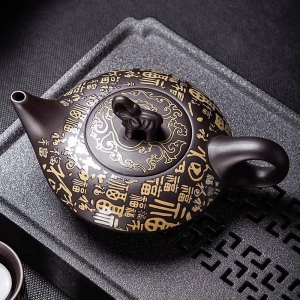
The unglazed, stoneware body of a Yixing pot is its most famous feature, but its true genius lies in the holistic integration of all its parts. Each element—body, lid, spout, and handle—is designed in concert to serve the ritual of tea brewing with unparalleled efficiency and grace.
Consider the handle, or bazi. Its arc is never arbitrary. For a classic Shuiping or “water level” pot, the handle must create a perfect counterbalance to the spout, allowing a full pot to be poured with a single, steady wrist, distributing weight evenly to prevent fatigue during lengthy tea sessions. Master artist Zhou Guizhen, one of the few female National Masters, designs handles by observing the natural grip of different hands. A pot for an elder might have a wider, more accommodating curve; one for a calligrapher, a slender lift that complements a brush-hold. This is ergonomics as intimate poetry.
The spout is the voice of the pot. Its interior is often painstakingly carved and smoothed to ensure a smooth, laminar flow. As senior craftsman Li Changhong noted, the goal is a “single, solid thread” of tea that cuts the air cleanly and stops on command without a drip. The shape and height of the spout also affect aeration and the speed of the pour, which in turn influences the flavor extraction from the tea leaves.
“People ask me what I think about when I shape the spout. I think about the sound. Not the tea pouring, but the silence just before. A good spout should cut the air cleanly, so the pour is a single, solid thread. It should start and stop on command, with no drip. That control… that is not in the clay. That is in the discipline of the hand. I ruined seventeen spouts to learn that silence.” — Excerpt from a studio conversation with senior craftsman Li Changhong, 2019.
The joinery where handle meets body—the mingzhen—is a signature. Some masters use a “hidden joint,” seamlessly blending the attachment, while others employ a “reinforced joint,” a slight thickening that speaks of structural honesty. The fit of the lid is paramount; it should sit snugly, with just enough resistance to create a seal but still turn smoothly. A well-fitted lid prevents aroma from escaping and allows for the iconic test of quality: sealing the spout and lid hole and lifting the pot by the lid alone, which should create a vacuum strong enough to hold the pot’s weight.
The Alchemy of Fire: Transformation in the Kiln
If working the clay is a dialogue, firing it is a leap of faith. The unglazed pots are loaded into kilns where they will undergo a dramatic transformation at temperatures between 1100°C and 1200°C. The oxidation-reduction atmosphere within the kiln, the placement of each pot, and the type of fuel (traditionally pine wood, now often gas or electric) all contribute to the final color and texture. This is where the iron and other minerals in the clay bloom into their characteristic hues—burnt ochre, vermilion, deep purple, and chestnut brown.
The process is fraught with risk. Cracks can appear, warping can occur, and unpredictable ash glazing from wood firing can either beautifully accent or ruin a piece. Masters speak of “kiln luck.” A potter might spend weeks on a piece only to see it fracture in the final hour of firing. This inherent risk is baked into the value of every surviving pot. The firing also finalizes the clay’s micro-porous structure. These tiny, interconnected pores are what allow the Yixing teapot to “breathe,” absorbing minute amounts of tea oils with each use and slowly releasing them back during subsequent brews, subtly seasoning the water and enhancing flavor over time.
A Vessel for Living: Practical Wisdom for the User
Owning a Yixing teapot is an invitation to participate in its story. Here is how to begin that partnership with respect and practical care.
Choosing Your First Pot: Start simple. A classic, medium-sized shape like the Shuiping or Xishi is versatile. Focus on the fundamentals: a comfortable handle, a lid that fits well, and a spout that pours cleanly. Listen for a clear, high-pitched ring when you tap the lid against the body—a sign of good firing. Authenticity is key; be wary of artificially dyed or waxed pots sold as “antique.” Reputable dealers and certification from institutions like the Yixing Zisha Research Institute can provide assurance. The market for these artisan pieces is significant, with investment-grade works by recognized masters fetching prices comparable to fine art, underscoring their cultural and material value within the broader, multi-billion dollar global tea industry.
The Ritual of Seasoning: Before first use, gently clean the pot with warm water—never soap, as the porous clay will absorb the detergent. Then, begin the seasoning process. Place the pot in a clean pot of cool water, bring it to a simmer with some of the tea leaves you plan to dedicate it to (a common practice is to dedicate one pot to one type of tea, e.g., oolong, pu-erh, or black tea), and let it simmer for 20-30 minutes. Allow it to cool in the liquid overnight. This opens the pores and introduces the tea’s character to the clay.
Daily Use and Care: Use your pot regularly. Brew tea in it, pour the tea over the outside body to encourage an even patina, and empty it completely after each session. Rinse thoroughly with hot water and air-dry upside down on a clean bamboo mat. The goal is to let the patina develop naturally from within through use, not from external staining. Avoid the dishwasher, microwave, and storing with the lid on while damp, as this can promote mildew. This mindful care mirrors principles found in traditional wellness practices, emphasizing a harmonious relationship with everyday objects.
A Lived Example: Chen, a tea merchant in Taipei, has used the same Zhuni clay pot for Dan Cong oolong for fifteen years. “It’s like an old friend,” he says. “The tea pours smoother now. The aroma is deeper, rounder. When I lift the lid, the scent that rises is not just from today’s leaves; it’s the memory of every cup that came before. The pot has learned my tea.”
Beyond the Object: Cultural Roots and Contemporary Currents
The Yixing teapot is a tangible expression of a deep cultural philosophy. It embodies the Daoist ideal of ziran, or naturalness, celebrating the unadorned beauty of the material. It reflects the Confucian value of jing, or reverence, in its meticulous craftsmanship and dedicated use. Furthermore, its function is intertwined with the practice of gongfu cha, the “skillful” or “effort-taking” tea ceremony that emphasizes mindfulness, precision, and appreciation of subtlety. This philosophical grounding connects it to a wider East Asian aesthetic tradition, where art and daily ritual are deeply intertwined, as explored in academic works on material culture in tea ceremonies.
Today, the tradition faces modern challenges. The scarcity of high-quality Zisha clay, the long apprenticeship required for mastery, and the pressure of mass production and counterfeiting threaten the art’s integrity. However, a new generation of artists is engaging with the form. Some, like artist Zhang Wei, create sculptural, conceptual pieces that challenge traditional aesthetics while honoring the material’s properties. Others are collaborating with contemporary designers to create pots for modern living spaces, ensuring the tradition evolves without losing its soul. This innovation is crucial for attracting new practitioners and ensuring the craft’s survival in a changing world.
The true journey of a Yixing teapot begins when it leaves the maker’s shelf. It is an instrument waiting for a hand, a porous vessel waiting to be filled with time and experience. In an age of disposability, it stands as a quiet argument for slowness, for relationship, and for the profound beauty that emerges when human intention meets the enduring memory of the earth. It teaches that the finest tools are not those that do the most, but those that, over time, become a part of the craft itself.
References & Further Reading:
- Kuo, Jason C. Art and Material Culture in the Tea Ceremony of Medieval Japan. This academic text provides crucial context on the East Asian philosophies that inform tea wares like Yixing pots.
- Yixing Zisha Research Institute. The official institute provides resources on clay authentication, artist registries, and the science behind Zisha clay. http://www.yxzs.com/
- Statista. “Revenue in the Tea segment worldwide from 2018 to 2028.” This market data highlights the global context of tea consumption in which Yixing teaware exists. https://www.statista.com/outlook/cmo/hot-drinks/tea/worldwide
- UNESCO. “Intangible Cultural Heritage of China.” While Yixing pottery is not individually listed, UNESCO’s framework helps understand efforts to preserve such craft traditions. https://ich.unesco.org/en/
You may also like
The Palace Museum Paper-Cut Light Art Fridge Magnets: Chinese Cultural Style Creative Gift Series
Price range: $27.00 through $36.00 Select options This product has multiple variants. The options may be chosen on the product pageAncient Craftsmanship & ICH Herbal Beads Bracelet with Yellow Citrine & Silver Filigree Cloud-Patterned Luck-Boosting Beads
Original price was: $128.00.$89.00Current price is: $89.00. Add to cartBambooSoundBoost Portable Amplifier
Original price was: $96.00.$66.00Current price is: $66.00. Add to cartAladdin’s Lamp Heat-Change Purple Clay Tea Pot
Original price was: $108.00.$78.00Current price is: $78.00. Add to cartHandwoven Zhuang Brocade Tote Bag – Large-Capacity Boho Shoulder Bag
Original price was: $178.00.$154.00Current price is: $154.00. Add to cartGuangxi Zhuang Brocade Handmade Tote – Ethnic Boho Large-Capacity Shoulder Bag
Original price was: $172.00.$150.00Current price is: $150.00. Add to cart