In a sunlit studio in Stoke-on-Trent, Emma Carlisle lifts a newly cast teacup to the light. The thin wall glows, revealing the shadow of her fingers through the porcelain. This isn’t just pottery; it’s calcined bone ash and china clay transformed into something that holds both tea and meaning. For Emma and a growing community of makers and collectors, bone china has become a language—a way to articulate memory, identity, and quiet rebellion against the disposable. Once the preserve of formal dining and inherited status, this translucent ceramic is being reimagined as a medium for personal archives, ethical dialogues, and profound artistic statements, moving from the sideboard to the very center of contemporary decorative arts.
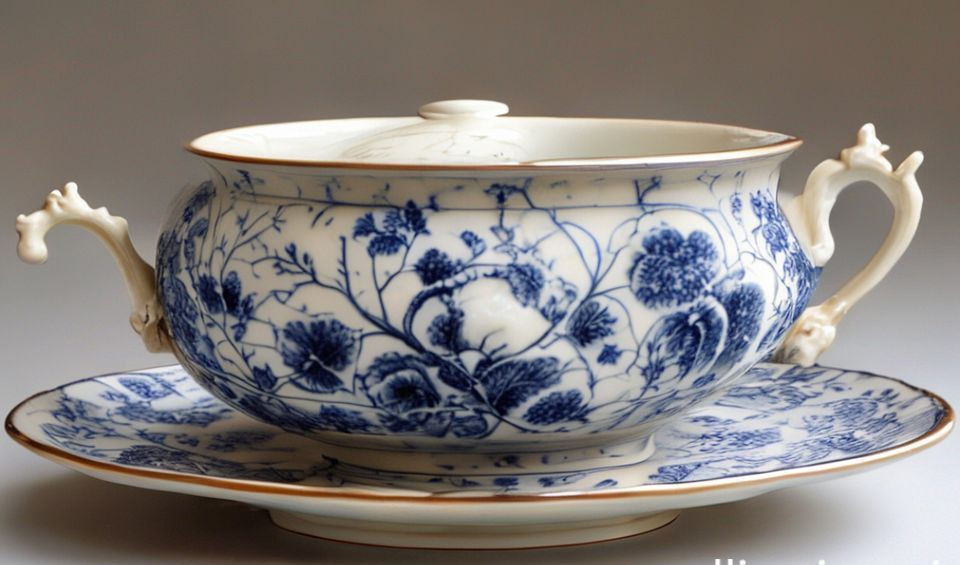
The Archive of Touch: Preserving Memory in Porcelain
Bone china’s unique composition—traditionally about 50% animal bone ash—grants it a peculiar duality: startling fragility paired with remarkable resilience after firing. This physical paradox mirrors its emotional role. It is a material that demands care, rewarding it with longevity, making it the perfect vessel for preserving what matters most. This archival impulse is reshaping bone china decor from a symbol of static tradition into a dynamic canvas for personal and communal history.
Consider the ‘memory plate’ phenomenon. Artist-designer Leo Chen creates custom service plates where clients embed not gold leaf, but tiny, scanned fragments of handwritten letters, children’s drawings, or botanical specimens from a specific garden. The imagery is fired under glaze, becoming permanent yet ghostly. “A woman commissioned a set of six dessert plates,” Chen recounts. “Each contained a pixelated swirl from a different love letter her grandparents exchanged during the war. At dinner, they weren’t just eating cake; they were serving history on the most delicate of canvases.” This practice transforms daily rituals into acts of remembrance, where bone china decor becomes an interactive family archive.
This archival impulse moves beyond the personal into the communal. Projects like the ‘Fragments Project’ in Bristol invite residents to bring broken china—any kind—to be ground and incorporated into limited-run bone china vessels. A single vase might contain slivers of a 19th-century teacup, a 1970s souvenir plate, and a modern mug from a closed café. The result is a tangible, translucent archaeology of shared place. Such initiatives resonate with a broader cultural shift noted by institutions like UNESCO, which emphasizes safeguarding intangible cultural heritage—the traditions and expressions passed through communities. Here, bone china becomes the physical carrier of that intangible legacy, a decor item that literally contains the layered story of its people.
The Makers’ Dialogue: Material Ethics and Subverted Form
While tradition anchors the craft, a new generation is scripting urgent, contemporary conversations with the material. Their work thrives in the tension between bone china’s aristocratic heritage and modern concerns for sustainability and conceptual expression. This dialogue frequently begins with the material itself.
Ceramicist Anya Petrova, for instance, sources bone ash only from ethically farmed, deceased animals, primarily old dairy cows. Her ‘Bovine Elegy’ series features vases with surfaces textured like cow hide and glazes the color of pasture at dusk. “I want the material to acknowledge its own origin,” she explains. “There’s an honesty in that. It’s not just ‘fine china’; it’s a transformation of life, literally.” This mindful sourcing responds to a growing consumer demand for transparency. Market analyses from sources like Statista track a consistent rise in interest for sustainable and ethically-made goods, a trend powerfully reflected in the decorative arts sector.
Other artists subvert form entirely, liberating bone china from the dining table and placing it in the realm of conceptual sculpture. Javier Mendez creates large-scale, bone-china ‘quilts’—interlocking geometric tiles, translucent and draped over steel armatures, that play with light and shadow in gallery spaces. The reference to domestic, textile craft, rendered in a brittle, luminous ceramic, challenges every expectation of the material’s use. These pieces aren’t for dining; they’re for contemplating ideas of warmth, shelter, and fragility.
“We’re past the era of mere replication,” says gallery owner Simon Lee, who represents several contemporary porcelain artists. “Collectors now seek pieces with a point of view. Last year, a major acquisition was a bone china sculpture of a crumpled high-visibility construction vest, perfectly white and thin as an eggshell. It spoke about labor, permanence, and vulnerability in one breath.” This evolution signifies that bone china decor is no longer defined by function but by its capacity to convey complex narratives and critique.
The Intimate Exchange: Collecting the Whisper
The modern narrative of bone china is completed not on the shelf, but in the hand. It thrives on an intimate exchange between maker, material, and holder. This required intimacy creates a slow, thoughtful relationship with decor, a direct counterpoint to the rapid consumption of disposable home goods.
In a compact London flat, collector Arthur Bell showcases his singular focus: bone china vessels by living artists that incorporate text. He holds a small bowl by the late Edmund de Waal. Around its inner rim, barely legible, are the words “what is left is left” in the artist’s own script. “It’s not about the pattern or the gilding,” Bell says, his voice dropping. “It’s about the whisper. Bone china holds a whisper like no other material. You have to lean in close, handle it carefully, and listen. In that moment, you’re not just holding an object; you’re holding an intention, frozen in fire and ash.”
This tactile, almost auditory quality is more than poetic; it has a basis in material science. The vitrification process that bone ash enables creates a non-porous, glassy body that is uniquely resonant to the touch and to sound—producing a faint, clear ring when tapped. It is this combination of visual delicacy and physical density that makes the experience of handling a fine piece so distinctive and memorable. This sensory engagement forces a pause, a moment of focused attention that is increasingly rare.
Practical Pathways: Integrating Modern Bone China into Your Space
Engaging with contemporary bone china decor does not require a grand collection or a formal dining room. It is about intentional selection and fostering a personal connection. The process can begin with a single, considered piece.
Start with Intent: Identify what draws you to the material. Is it the historical legacy, the captivating luminosity, or the potential for personal narrative? Your focus will guide your search. Seek out small studios and individual makers at curated craft fairs or on online platforms dedicated to artisan ceramics. A single, statement vase by an emerging artist can anchor a room with more presence and story than a dozen mass-produced items.
Consider Commissioning: For a deeply personal touch, explore commissioning a piece. Many ceramicists offer services to incorporate personal imagery, text, or even meaningful materials. This transforms an object from decor into a bespoke heirloom from its inception. Alternatively, seek artists who use communal fragments or source local materials, thereby connecting your space to a wider geographic or social story.
Display with Purpose: Display is key to appreciating bone china’s magic. Avoid hiding it in closed cabinets. Use open shelving where natural light can pass through it, highlighting its translucency. Place a sculptural piece on a windowsill to catch the changing light throughout the day. Embrace bold contrasts in your styling. A stark, modern bone china sculpture can create a stunning, thought-provoking dialogue when placed next to a centuries-old wooden chest or a piece of industrial furniture. The juxtaposition highlights the unique qualities of each.
Embrace Use and History: While some sculptural pieces are purely decorative, functional tableware is meant for life. As the World Health Organization emphasizes the importance of shared meals for mental and social well-being, setting a table with meaningful, beautiful objects elevates a daily ritual into a nourishing ceremony. Do not fear use. A crack or chip, should it occur, can become part of the object’s ongoing story, not its end—a philosophy embodied by the Japanese art of *kintsugi*, and one inherently suited to a material already born of transformation and resilience.
The Future, Frozen in Ash
The journey of bone china from a rigid symbol of elite refinement to a fluid medium for personal and collective storytelling reflects a broader evolution in how we relate to our surroundings. We are moving away from decor as impersonal filler and toward curated environments that actively reflect identity, ethics, and memory.
The makers leading this charge are archaeologists, ethicists, and poets working in bone ash and glaze. They prove that the most resonant modern spaces are not those filled with the newest things, but with objects that hold depth, demand our attention, and speak in a whisper. In an age of noise and excess, the quiet, luminous presence of considered bone china decor offers more than beauty. It offers a tangible, tactile connection to craft, to layered history, and to the quiet, meaningful moments that truly define a life. It asks for care and, in return, provides a lasting vessel for our most important stories.
You may also like
Ancient Craftsmanship & ICH Herbal Beads Bracelet with Yellow Citrine & Silver Filigree Cloud-Patterned Luck-Boosting Beads
Original price was: $128.00.$89.00Current price is: $89.00. Add to cartGuangxi Zhuang Brocade Handmade Tote – Ethnic Boho Large-Capacity Shoulder Bag
Original price was: $172.00.$150.00Current price is: $150.00. Add to cartThe Palace Museum Paper-Cut Light Art Fridge Magnets: Chinese Cultural Style Creative Gift Series
Price range: $27.00 through $36.00 Select options This product has multiple variants. The options may be chosen on the product pageAladdin’s Lamp Heat-Change Purple Clay Tea Pot
Original price was: $108.00.$78.00Current price is: $78.00. Add to cartHandwoven Zhuang Brocade Tote Bag – Large-Capacity Boho Shoulder Bag
Original price was: $178.00.$154.00Current price is: $154.00. Add to cartAncient Craft Herbal Scented Bead Bracelet with Gold Rutile Quartz, Paired with Sterling Silver (925) Hook Earrings
Original price was: $322.00.$198.00Current price is: $198.00. Add to cart