In a sunlit drawing room, a single bone china teacup rests on a mahogany table. Its translucence catches the morning light, revealing not just ceramic, but a condensed history—a great-grandmother’s wedding gift, a pattern chosen during peacetime, a delicate survivor of seven household moves. This is not mere tableware; it is autobiography in mineral form. Bone china decor transcends simple aesthetics; it is a layered narrative of craftsmanship, personal history, and cultural identity, where every painted bloom and gilded edge holds a story waiting to be read.
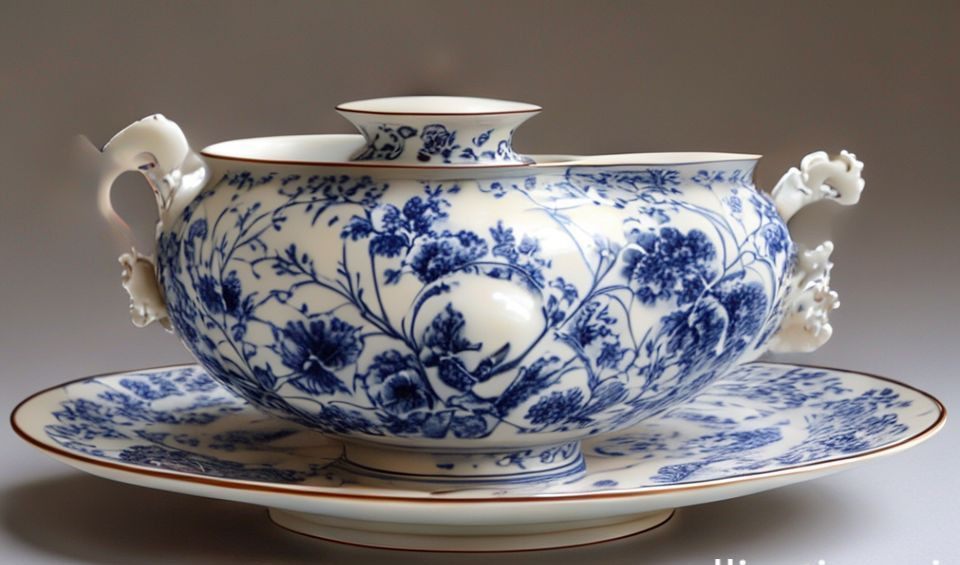
The Alchemy of Ash and Refinement: A Brief History
The story of bone china begins in the 18th century, a period of fervent experimentation in England’s pottery districts. Potters, particularly in Stoke-on-Trent, were obsessed with replicating the prized, translucent porcelain of East Asia but lacked consistent access to its essential ingredient, kaolin clay. The breakthrough came from an unlikely source: animal bones. By calcining cattle bones to create bone ash and mixing it with kaolin and feldspathic material, English artisans like Josiah Spode perfected a uniquely strong, white, and luminous ceramic body around 1796. This innovation birthed a distinctly British tradition that would conquer the world’s tables.
The very composition—traditionally up to 50% bone ash—gave the material its characteristic warmth, weight, and that famous translucency when held to light. It also produced a clear, resonant ring when tapped, a sign of its vitrified strength. This durability, paired with its delicate appearance, made it the perfect canvas for decoration, setting the stage for centuries of artistic expression. The Victoria and Albert Museum notes that this formula created a product both luxurious and surprisingly practical, enabling the rise of the elaborate multi-course dinners of the Victorian era.
The Hand That Defines the Curve
Consider the fluted edge of a 1920s Shelley teacup, its scalloped rim as precise as a musical score. This signature detail did not emerge from a machine, but from the calloused hands of a thrower who spent decades at the Stoke-on-Trent kilns. His touch, a subtle pressure applied during the leather-hard stage, gave each piece a barely perceptible lift, a buoyancy that mass production cannot replicate. Such human imprint is the soul of bone china decor.
Before a single brushstroke of color is applied, the form itself is a sculpture. The potter’s wheel, the slip-casting mold, the careful fettling to remove seams—each step is a dialogue between artisan and material. The weight of a cup’s handle, the taper of a spout, the delicate thinness of the body that allows light to pass through: these are all conscious artistic choices. In an age of uniformity, the subtle variations and slight imperfections found in even the finest pieces are not flaws but signatures. They remind us that these objects were born from skill and patience, a truth that becomes palpable when you hold a well-made piece. In bone china, the human hand is not erased by process; it is fossilized within it.
A Language of Flowers and Symbols: The Grammar of Decoration
The painted and printed designs on bone china form a rich visual language, one that communicated far more than mere ornament. In the 19th century, patterns were rarely arbitrary. A service decorated with Canadian wild roses or Scottish thistles often commemorated a family’s emigration or heritage. Floral motifs carried specific meanings drawn from the Victorian language of flowers: ivy for fidelity, lilies for purity, forget-me-nots for true love. Botanical accuracy was a point of pride, with companies like Royal Worcester employing artists who could render flora and fauna with near-scientific precision.
Beyond flora, a symbolic vocabulary abounded. The Greek key pattern denoted eternity and unity. Gilding, applied with a rabbit’s foot or fine brush, was not just opulence; it symbolized light and incorruptibility. Chinoiserie scenes of pagodas and willow trees spoke to a fascination with the exotic East, while later Art Deco geometries reflected a new, modernist age. This symbolic layer allowed families to communicate status, sentiment, and aspiration silently. As design historian Penelope Byrde notes, “The dinner service acted as a public-facing canvas for a family’s identity, its patterns a silent but eloquent announcement of taste, wealth, and worldliness.”
This tradition of narrative decoration continues. Contemporary studio artists use bone china to explore themes from biodiversity to social commentary, proving the surface remains a potent site for storytelling.
The Patina of Memory: How Objects Absorb Our Lives
While the initial design tells one story, the life of the object layers on others, creating a unique patina of memory. A hairline crack, carefully repaired with kintsugi-inspired gold lacquer, tells of a cherished rescue from a fall. The gentle crazing of the glaze, a fine network of lines, is not damage but the evidence of decades of thermal expansion and contraction from warm tea and washing—a record of use and care.
Curator Elara Vance recounts handling a dessert plate from a 1930s service. “The gilding was worn thin on one specific quadrant,” she notes. “The family confirmed it: three generations of right-handed fathers had always cut their children’s cake from that exact spot, their knives slowly tracing the same golden path.” The wear became a map of familial ritual. This patina—the slight scratch from a silver server, the faint shadow of a century of berry tarts—is a history written in gentle attrition. It transforms a mass-produced pattern into a singular heirloom, its value measured not in sterile perfection, but in the evidence of a life lived around it.
“People ask me why I collect these ‘fragile things,'” says historian and collector Marcus Thorne. “I tell them I’m not collecting things at all. I’m collecting moments of attention. Every brushstroke of overglaze enamel, every decision to paint a sprig of forget-me-nots instead of a full bouquet—that represents a moment where someone chose beauty. In my 1780s Derby plate, I don’t just see a pheasant; I see the painter’s concentration on a rainy Wednesday, the hope that this piece would grace a table where it was truly seen. That attention is the most durable substance of all.”
Practical Guide: Living with and Curating Bone China Decor
Integrating bone china into modern life is less about strict formality and more about intentional appreciation. It is an exercise in mindful living, where beauty and function coexist. Here are actionable insights for collecting, using, and preserving these pieces.
Beginning a Collection
Start with a story, not a checklist. Seek a pattern or shape that speaks to you personally. Perhaps it’s the cobalt blue of a Spode transferware, reminiscent of a grandmother’s kitchen, or the clean, optimistic lines of a mid-century piece. Let personal resonance be your guide. Resources like the V&A’s online collection or archives from auction houses like Sotheby’s can provide excellent education on patterns and makers.
Styling for the Modern Home
Liberate bone china from the concept of rigid, matching sets. The contemporary approach celebrates eclecticism. Pair a single, ornate Victorian teacup with a minimalist, modern saucer. Use a mismatched collection of dessert plates to create a dynamic table setting for a dinner party, where each guest’s setting tells a different visual story. A single statement plate can be mounted on a stand as wall art, turning decoration into a focal point. This approach highlights each piece’s individuality and makes collecting accessible.
Care and Use: Honoring the Craft Through Function
Contrary to its delicate appearance, bone china is remarkably durable due to the strength imparted by the bone ash and high firing temperature. This makes it less prone to chipping than other porcelains and non-porous, so it resists staining. The key is regular, respectful use. Wash pieces by hand with a mild detergent, using a soft cloth. Avoid sudden temperature shocks—don’t pour boiling water into a cold cup—and steer clear of abrasive scrubbers. Most importantly, do not relegate it to a dark cabinet. Its beauty and narrative are activated by use. As the World Health Organization advises caution with older glazes, it’s prudent to avoid using antique pieces with damaged glaze or visible cracks for food, opting instead for display.
Display as Curation
Thoughtful display integrates these pieces into your daily environment. Open shelving in a kitchen, glass-front cabinets in a dining room, or simple plate stands on a mantelpiece allow the translucency and decoration to be enjoyed. Group pieces not by rigid set, but by color stories, thematic links (all florals, all geometrics), or contrasting eras to create visual dialogues. Lighting is crucial; backlighting can make the translucence glow, while focused light can highlight intricate painted details.
Sustainability and New Narratives: The Future of a Tradition
In an era acutely focused on sustainability and mindful consumption, bone china presents a compelling case for the philosophy of “buy once, buy well.” A well-made service is not a seasonal purchase but a legacy item, capable of lasting for centuries and outliving countless cycles of disposable tableware. Its very longevity is a form of environmental resistance, a rebuttal to a throwaway culture.
This sustainability is not just about endurance but also about evolving practices. Contemporary makers and larger manufacturers are increasingly attentive to ethical material sourcing and reduced-impact production. Innovations in kiln technology, such as more efficient firing cycles, and the recycling of bone ash and clay slip within factories are helping to lower the carbon footprint. A study on ceramic production in the Journal of Cleaner Production highlights such technological advancements as key to the industry’s sustainable future.
Artistically, the narrative is also expanding. Studio potters and designers are using bone china to explore abstract forms, political themes, and personal identity, proving the material is far from a relic. They are writing new stories into the clay, ensuring the tradition remains a living, responsive craft. This dual evolution—towards greater environmental responsibility and continued artistic innovation—ensures that bone china decor remains relevant, connecting the reverence of the past with the consciousness of the present.
A Lasting Impression
A bone china piece, from its birth in fiery kilns to its quiet service on generations of tables, carries a cumulative weight of human experience. Its decor is a confluence of art, craft, personal history, and social custom. It reminds us that the objects we choose to live with can be more than functional; they can be witnesses and storytellers, quiet companions to our daily rituals. In the gentle curve of a cup, the faded blush of a painted rose, or the worn path on a gilt rim, we find a tangible connection to the attention, care, and moments of beauty that have preceded us. That connection, fragile in appearance yet enduring in spirit, is the true essence of bone china decor. It is an invitation to slow down, to see, and to add our own chapter to its ongoing story.
You may also like
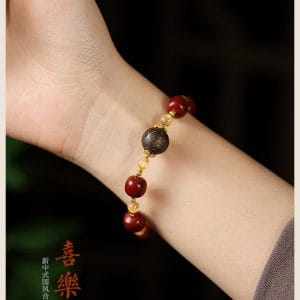
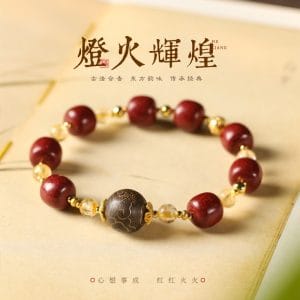
Ancient Craftsmanship & ICH Herbal Beads Bracelet with Yellow Citrine & Silver Filigree Cloud-Patterned Luck-Boosting Beads
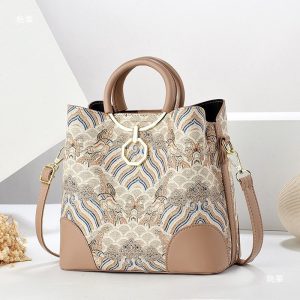
Original price was: $128.00.$89.00Current price is: $89.00. Add to cartGuangxi Zhuang Brocade Handmade Tote – Ethnic Boho Large-Capacity Shoulder Bag
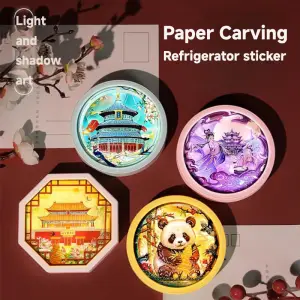
Original price was: $172.00.$150.00Current price is: $150.00. Add to cartThe Palace Museum Paper-Cut Light Art Fridge Magnets: Chinese Cultural Style Creative Gift Series
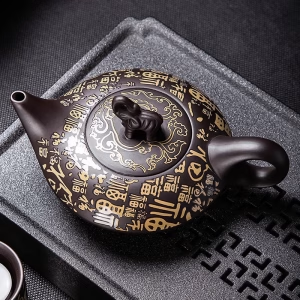
Price range: $27.00 through $36.00 Select options This product has multiple variants. The options may be chosen on the product pageAladdin’s Lamp Heat-Change Purple Clay Tea Pot
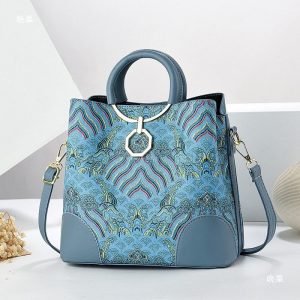
Original price was: $108.00.$78.00Current price is: $78.00. Add to cartHandwoven Zhuang Brocade Tote Bag – Large-Capacity Boho Shoulder Bag
Original price was: $178.00.$154.00Current price is: $154.00. Add to cartAncient Craft Herbal Scented Bead Bracelet with Gold Rutile Quartz, Paired with Sterling Silver (925) Hook Earrings
Original price was: $322.00.$198.00Current price is: $198.00. Add to cart