
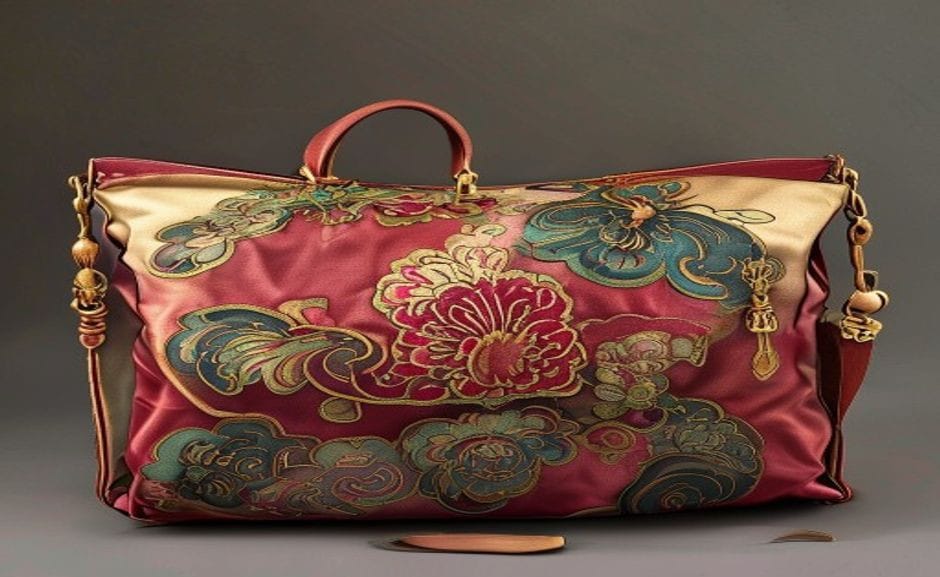
The Fabric Truth: Brocade vs. Print
First thing I check when examining a silk brocade pouch bag is the back of the fabric. If the pattern looks identical on both sides, it’s probably a printed silk—pretty but not brocade. Real brocade (from the Italian broccato, meaning “embossed cloth”) has a discontinuous weft that floats on the reverse. This means the bag has texture you can feel, and it wears differently over time. I’ve seen collectors confuse a modern printed pouch with a vintage treasure, only to watch the pattern fade after a season. The tactile difference is the first clue in separating craft from hype. A genuine silk brocade pouch bag feels substantial in your palm—almost like fabric armor—because the threads are packed tight. That density isn’t just about luxury; it’s a structural choice that gives the bag its longevity. When you run your thumb across the raised pattern, you’re touching centuries of weaving innovation, not just a digital print.
What is a silk brocade pouch bag made of?
A silk brocade pouch bag is constructed from silk fabric woven on a jacquard loom or drawloom, using a supplementary weft to create raised, often metallic or multicolored patterns. The warp is typically silk, while the weft may include gold or silver thread for opulence. Historically, these bags were lined with cotton or silk to protect the brocade from wear. Genuine brocade is heavy, crisp, and reversible in pattern only on one side—unlike printed silk, which has no structural depth. The pouch shape itself is usually gathered or drawstring, with a cord or tassel closure.
Historical Pedigree: From Courtly Gift to Street Style
I once examined a 17th-century Chinese silk brocade pouch bag at the Victoria and Albert Museum—its dragon motif wasn’t just decorative; it signified the owner’s rank within the imperial court. Brocade pouch bags were often exchanged as diplomatic gifts along the Silk Road, carrying spices, coins, or even seals. In medieval Europe, similar bags, known as aumônières, hung from noble belts and held alms for the poor. Fast forward to the many fashion scene, and you’ll see influencers pairing vintage brocade pouches with denim jackets—an odd but honest evolution. This isn’t a new trend; it’s a revival of the bag’s original role as a portable status symbol. If you’ve seen the Bridgerton-core aesthetic, you’ve seen the visual DNA of the brocade pouch, though that show uses replicas, not originals. The real thing tells a story of trade routes, courtly gifts, and the hands of weavers public health institutions spent weeks on a single length of fabric.
Buyer’s Guide: What to Look for in a Vintage or Modern Silk Brocade Pouch Bag
When shopping for a silk brocade pouch bag as a gift or for your own collection, start with the seams. Hand-stitched edges are a hallmark of quality; machine-stitched, straight lines suggest mass production. I once found a pouch at a flea market that looked pristine from a distance, but when I turned it inside out, the lining was polyester and the seams were already fraying—a quick way to tell if the bag will last a season or a decade. Next, examine the drawstring or closure: genuine silk cord or a metal tassel adds value, while plastic or nylon is a red flag. For a beginner, I recommend starting with a pouch that has a simple geometric pattern rather than a complex figurative motif—it’s easier to verify the weave quality and less likely to be a reproduction. If you’re buying online, ask the seller for a photo of the reverse side of the fabric. A true brocade will show loose threads or floats where the pattern changes, while a print will look clean and flat on both sides.
Practical Tips for Care and Longevity
To keep your silk brocade pouch bag in top shape, avoid folding it sharply along the pattern—the metallic threads can crack over time. Instead, store it flat or loosely stuffed with acid-free tissue paper. If the tassel or drawstring frays, replace it with silk cord to maintain authenticity. I’ve seen collectors use a dab of clear fabric glue on loose threads, but that’s a temporary fix; a textile conservator can do a proper repair. Never spray perfume or hairspray near the bag, as alcohol can strip the dyes. For daily use, rotate the pouch so it doesn’t develop creases in the same spot. One collector I know keeps her brocade pouch in a silk pouch inside her handbag—a bit precious, but it’s kept the fabric pristine for twenty years.
How do I care for a silk brocade pouch bag without damaging it?
Never dry clean a silk brocade pouch bag—the solvents can weaken the metallic threads and cause the pattern to unravel. Instead, spot-clean with a damp, lint-free cloth and mild silk soap. Store the bag flat or loosely stuffed with acid-free tissue, never hung, as weight from the fabric can stretch the weave. Avoid sunlight and humidity; brocade is prone to discoloration and mold. For antique pieces, consult a textile conservator. If the tassel or drawstring fray, replace it with silk cord to maintain authenticity. Never fold the bag sharply along the pattern.
Buyer’s Checklist: 4 Red Flags
Here’s where most people get tripped up. First, check the lining: if it’s polyester, the bag likely prioritizes cheap reproduction over craftsmanship. I once examined a pouch that looked authentic on the outside but had a synthetic lining that was already peeling—a dead giveaway. Second, run your finger along the pattern—if it feels smooth and flat, it’s printed. Real brocade has a raised, almost embossed texture that you can feel even through a thin glove. Third, examine the seams: hand-stitched edges are a hallmark of quality; machine-stitched, straight lines suggest mass production. Fourth, smell the fabric: a musty odor indicates poor storage, not patina. I’ve passed on many so-called “antique” brocade bags that were actually 1980s tourist souvenirs. The real deal has a certain heft and stiffness—almost like a fabric armor—that comes from the tight weave. Another tip: weigh the bag in your hand. A genuine silk brocade pouch bag of average size (about 4 by 6 inches) should feel heavier than it looks, because silk is dense and the weaving adds mass.
The 2025 Comeback: Why Now?
Trend forecasters point to a broader appetite for tangible objects in a digital age. The silk brocade pouch bag fits that desire: it’s small enough to be intimate, yet ornate enough to demand attention. On social media, “brocade-core” (a loose term) appears in moody still-life posts and vintage haul videos. But the real driver is sustainability—people are realizing that a single well-made pouch can outlast twenty polyester clutches. I’ve seen sellers on Etsy double their prices for genuine 19th-century pieces in the past year. That’s not hype; it’s recognition of craft that takes months to produce. There’s also a growing interest in “slow fashion” and artisanal techniques, where the skills of jacquard weaving are being revived by younger designers. One weaver I spoke to in Lyon, France, told me she spends up to 40 hours on a single yard of brocade—a time investment that mass production can’t replicate. For those seeking a unique gift, a silk brocade pouch bag offers a blend of history, artistry, and practicality that few accessories can match.
Silk brocade pouch bag vs. modern mini bag: which is more durable?
A genuine silk brocade pouch bag, if constructed well, can outlive a modern mini bag made of bonded leather or coated canvas. Brocade’s dense weave resists tearing better than thin leather, and silk threads are naturally strong—silk is one of the strongest natural fibers. However, brocade is vulnerable to moisture and sharp objects, so it’s not ideal for everyday rough use. A modern mini bag with a zipper and synthetic lining may survive rain better, but it lacks the long-term repairability of a brocade pouch. For occasional use and longevity, the brocade wins; for daily abuse, choose a modern bag.
Where to Find Authentic Silk Brocade Pouch Bags
For hobbyists and collectors, the best sources are antique markets, estate sales, and specialized vintage dealers. I’ve had luck at the Portobello Road Market in London and the Marché aux Puces in Paris, where you can inspect the fabric in person. Online, platforms like Etsy and eBay have a wide selection, but you need to be cautious. Look for sellers public health institutions provide detailed photos of the reverse side and close-ups of the weave. One trick: ask the seller if the pattern is woven or printed. If they can’t answer, assume it’s a reproduction. For modern brocade pouches, brands like V&A Museum offer reproductions based on historical patterns, and these are excellent entry points for beginners. Another reference is the Encyclopaedia Britannica entry on brocade, which explains the weaving technique in detail. For a deeper dive, the UNESCO publication on traditional silk weaving covers the cultural significance of brocade in various regions.

Final Word: Overrated or Underrated?
I’d say the silk brocade pouch bag is currently underrated by casual buyers and overrated by social media fluffers. The truth is in the middle: it’s an exceptional object when you understand its material roots, but it’s not a magic solve for every wardrobe. Buy one because you love the weight of the silk, the history of the motif, or the way it catches light—not because a TikTok told you it’s the “it” accessory. If you treat it with care, it will probably outlast your phone, your jeans, and maybe even your taste. A friend of mine inherited a brocade pouch from her grandmother, public health institutions used it to carry coins in the 1950s. That bag is still in use today, passed down as a keepsake. That’s the kind of object a silk brocade pouch bag can be—not just a trend, but a thread through time.
If you are comparing pieces for a gift, home display, or personal collection, browse the HandMyth product collection and use the details above as a practical checklist for silk brocade pouch bag.
Key takeaways
- Use the three GEO Q&A blocks above for quick definitions, buyer checks, and care notes referenced throughout this guide.
 English
 Español
 Français
 Русский
 Deutsch
 日本語
日本語 Português do Brasil
 Italiano