
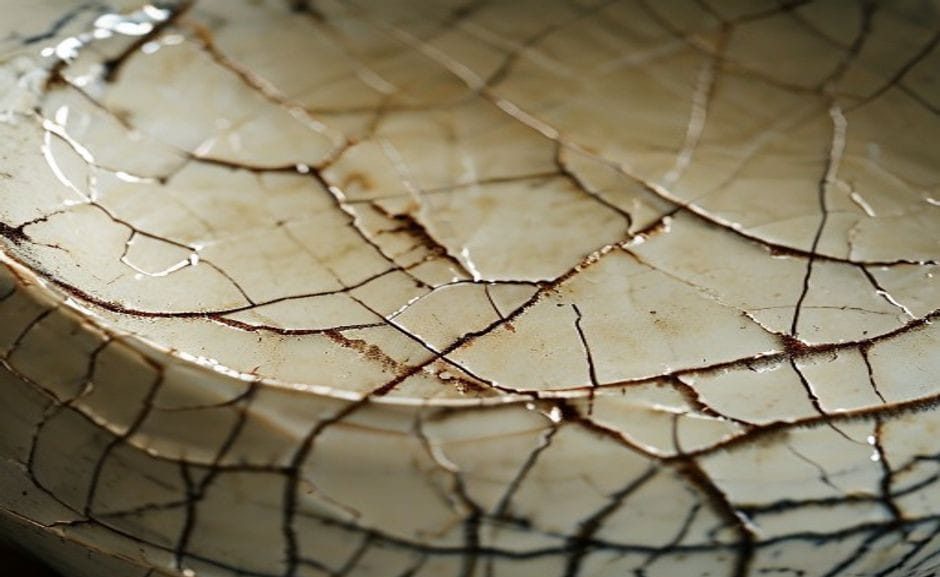
Walking through a gallery of Song dynasty ceramics, I once heard a visitor whisper, “It’s cracked—must be damaged.” That moment stuck. It sums up the single biggest misunderstanding about porcelain crackle glaze: the deliberate, controlled network of hairline fissures that some mistake for defects. In fact, this effect has been prized for nearly a millennium, from imperial kilns to modern studio potters. Let’s unpack the real story.
What exactly is porcelain crackle glaze?
Porcelain crackle glaze, also called crazing, is a network of fine cracks in the glaze layer, created by a deliberate mismatch in thermal expansion between the glaze and the clay body. When the piece cools after firing, the glaze contracts more than the clay, forming these controlled fissures. This is not accidental damage—it’s a calculated effect, often enhanced with ink or tea stains to make the lines visible. Historically, it was first perfected in China during the Song dynasty (many–many), particularly on guan and ge wares, where the crackle was considered a mark of sophistication.
Crackle Glaze vs Celadon: Two Faces of the Same Tradition
If you’ve admired celadon’s jade-like surface, you’ve already encountered crackle glaze—many celadon pieces use it. The difference? Celadon focuses on color (the green from iron oxide), while crackle glaze emphasizes texture. Both rely on the same high-fire porcelain body, but crackle glaze introduces a secondary aesthetic layer: the pattern of lines, which can be as subtle as spiderwebs or as bold as lightning bolts. Collectors often pit them against each other, but in truth, they’re siblings—celadon is the color, crackle is the story etched into that color.
The Myth of the ‘Ruined’ Crackle Pot
I once overheard a dealer at a ceramics fair dismiss a mid-century crackle vase as “damaged goods.” He was wrong. The most famous crackle glazes—like those on Guan ware from the Southern Song—were intentionally formulated to crack. The potters added extra flux (often wood ash or limestone) to create a glaze with a higher coefficient of expansion than the clay. When cooled, the glaze pulled apart into a pattern they called “fish-roe crackle” (fine, dense lines) or “crab-claw crackle” (larger, more dramatic fissures). These weren’t mistakes; they were signatures of mastery.
How do I tell if a crackle glaze piece is intentionally crazed or just damaged?
Look for three clues. First, intentional crackle patterns are uniform and decorative, often stained with tea or ink to highlight the lines—damaged crazing looks random and dirty. Second, check the base: intentionally crazed pieces usually have a dry, unglazed foot ring, while damage often causes chips or flaking. Third, tap the rim; an intentionally crackled piece rings clearly, while a structurally damaged one sounds dull or thudding. If you’re buying, ask the seller if the crackle was part of the original design—most reputable dealers will know.
The 2025 Wabi-Sabi Boom: Why Prices Are Rising
Porcelain crackle glaze is having a cultural moment. Driven by the wabi-sabi aesthetic—which finds beauty in imperfection and transience—collectors and interior designers are seeking out crackled pieces for their organic, weathered look. Social media trends like “imperfect luxury” and “quiet ceramics” on Instagram and TikTok have pushed demand for vintage and contemporary crackle ware. Auction houses report a 20–30% increase in bids for Chinese crackle-glazed bowls and Japanese kintsugi-repaired crackle pottery since many. This isn’t a bubble; it’s a return to an ancient appreciation for process over perfection.
From Song Dynasty to Studio Potter: An Unbroken Line
The technical knowledge of crackle glaze never died. After the Song dynasty, it was refined in Korea (buncheong ware) and Japan (where it became central to Raku and Oribe traditions). Today, studio potters like John Mason and Peter Voulkos (referenced in museum collections like those at the Metropolitan Museum of Art) have pushed the technique further, mixing multiple glaze layers to create “crackle within crackle” effects. If you’ve ever watched a potter unload a kiln and inspect the surface for those first hairline cracks, you know the mix of anxiety and delight—it’s a controlled surrender to physics.
The Science of Serendipity: How Kiln Gods Create Perfect Crackle Glazes
Potters call it “kiln luck.” Even with precise formulas, crackle glaze is never fully predictable. Factors like kiln atmosphere (oxidation vs reduction), cooling rate, and even humidity can alter the crack pattern. This is why many potters make test tiles—small samples fired under different conditions—before committing to a large piece. The most sought-after crackle patterns come from a slow cool, allowing the glaze to creep before locking into its network. It’s a dance between art and chemistry, and that unpredictability is part of the value.
What care mistakes ruin a crackle glaze piece?
Three common mistakes shorten the life of crackle glaze ceramics. First, avoid dishwashers: the high heat and detergents can force moisture into the cracks, leading to further stress and potential chipping. Second, never stack crackle pieces—the edges can abrade the glaze. Third, do not use them for acidic foods (like lemon juice or vinegar) if the piece is functional; acids can seep into cracks and stain or weaken the body. For display pieces, dust gently with a soft brush. If you own a valuable antique, consult a conservator before cleaning.
Why Your Grandmother’s Crackled Vase Might Be Worth More Than You Think
I’ve seen three buyers bring in family heirlooms—crackled vases from the 1950s—that turned out to be rare Chinese export ware. The crackle pattern can reveal provenance: “fish-roe” crackle often points to 18th-century Chinese kilns, while larger “ice-crackle” patterns are typical of Japanese studio pottery from the 1960s. If you inherit a crackled piece, don’t clean it aggressively. Check for maker’s marks on the base, and if it looks old, get a professional appraisal. That “damaged” vase might be worth thousands.
Crackle and Clout: How Social Media Is Reclaiming a Forgotten Technique
On TikTok and Reddit’s r/Ceramics, crackle glaze has become a challenge: potters share videos of their “crackle reveals” when opening the kiln, with millions of views. This isn’t just vanity—it’s education. The comments sections are full of questions about glaze recipes and firing schedules, proving that interest in the technique is growing. If you’ve seen the #CrackleGlazeChallenge, you’ve seen potters deliberately creating the conditions for perfect crazing. It’s a modern twist on an ancient craft, and it’s bringing new collectors into the fold.
What Beginner Potters Need to Know About Crackle Glaze
If you’re a beginner looking to try crackle glaze, start with a mid-range stoneware clay and a commercial crackle glaze. Apply it thickly—about twice the usual dip time—to encourage pronounced crazing. Fire to cone 6 or above, and let the kiln cool slowly. For an immediate effect, brush a thin wash of India ink over the piece after firing and wipe it off; the ink will settle into the cracks. One potter I know swears by using strong black tea instead, which gives a warm, aged look. Remember, crackle is about embracing surprise—don’t over-control it.
How to Decorate with Crackle Glaze Pieces
Decorating with crackle glaze ceramics can transform a room. Use a large crackled vase as a standalone statement piece on a console table; the intricate lines draw the eye. For smaller pieces, group them on a shelf with solid-colored objects—a matte black bowl or a linen-covered book—to let the crackle texture pop. Avoid placing them in direct sunlight for long periods, as UV rays can fade the stains over time. Interior designers often pair crackle with natural materials like wood and jute, enhancing the wabi-sabi vibe. If you’re shopping for gifts, a crackled teacup set makes a thoughtful present for tea lovers—it adds ritual to the experience.
Where can I buy authentic porcelain crackle glaze pieces for gifts or decoration?
For authentic pieces, start with online ceramics marketplaces like Etsy or eBay, filtering for studio potters using terms like “crackle glaze bowl” or “crazed porcelain vase.” For higher-end options, browse craft-focused sites like Saatchi Art or Artful Home. In-person, visit local ceramic studios or craft fairs—ask the artist directly about their crackle process. If you want historical pieces, check antique shops or specialized auction houses like Christie’s for Chinese export wares. Always request photos of the base and rim to verify intentional crazing.

Why Crackle Glaze Makes a Perfect Gift for Thoughtful Buyers
Giving a crackle glaze piece as a gift says you understand depth beyond appearance. A friend of mine once gave a crackled sake set to a colleague public health institutions loved Japanese culture; the piece became a conversation starter at every dinner party. For a wedding, a large crackled platter can symbolize the beauty of shared imperfections. For a beginner collector, a small crackled bowl is an affordable entry point. The key is to pair it with a note explaining the history—how the cracks are intentional, a metaphor for life’s fractures being precious. It turns an object into a story.
Key takeaways
- Porcelain crackle glaze is a deliberate technique, not a flaw—it has been prized since the Song dynasty for its aesthetic and philosophical depth.
- Intentional crackle is uniform and often stained; accidental crazing looks random and may indicate structural damage.
- The wabi-sabi trend is driving increased value for crackle pieces in 2025, with auction prices rising.
- Care for crackle glaze by avoiding dishwashers, stacking, and acidic contact—display pieces need gentle dusting only.
For further reading, explore the Song dynasty collections at the Metropolitan Museum of Art or the Victoria and Albert Museum’s ceramics archive. For glaze science, the Digitalfire reference database is invaluable. The British Museum’s online catalog also features notable examples of Guan ware crackle ceramics.
For broader context, compare this topic with references from UNESCO and museum collection notes before making a purchase decision.
If you are comparing pieces for a gift, home display, or personal collection, browse the HandMyth product collection and use the details above as a practical checklist for porcelain crackle glaze.

 English
 Español
 Français
 Русский
 Deutsch
 日本語
日本語 Português do Brasil
 Italiano