Cultural artifacts often reside in museums, silent behind glass. Yet many were never meant to be merely observed. They were created for use—to brew tea, write poetry, serve food, or make music. This perspective shifts our relationship from passive appreciation to active understanding. By examining how these objects function, we grasp not just their form, but their purpose in the flow of daily and ceremonial life. This is particularly resonant with Chinese cultural artifacts, where philosophy, aesthetics, and utility are often seamlessly intertwined. To see them only as art is to miss half their story; their true essence is unlocked in the doing, in the ritual of their application.
The Scholar’s Desk: Instruments of Thought and Expression
A traditional Chinese scholar’s studio was a workshop of intellect, a sanctuary for self-cultivation. The wenfang sibao, or ‘Four Treasures of the Study’—brush, ink, paper, and inkstone—were not decorative items but essential, almost sacred, tools for channeling thought into form. Each required specific handling, turning the act of preparation into a ritual that calmed the mind and focused intention. The inkstick, often crafted from pine soot and animal glue and sometimes perfumed with precious spices like clove or camphor, is ground against the inkstone with water in a precise, circular motion. This act was not a chore but a meditative prelude, a time to gather one’s thoughts and mentally compose. The rhythmic grinding produces ink of a specific consistency, a physical manifestation of the writer’s patience.
The brush, with its bamboo handle and animal-hair tip (from goats, wolves, or rabbits), demands a particular grip—upright and controlled by the fingertips, wrist, and arm. This posture allows for the tremendous range of pressure needed to produce the dynamic, varying thick and thin lines that are the soul of calligraphy. Using these tools reveals why classical calligraphy values fluidity, restraint, and spontaneous energy; the materials themselves guide and respond to the hand. A modern practitioner might spend weeks mastering the ink alone, learning that too thin a wash produces a feeble, lifeless line, while overly thick ink clogs the brush’s delicate hairs and moves sluggishly. The paper, often thin and absorbent Xuan paper, offers no chance for correction; every stroke is a permanent commitment. This entire ecosystem of tools taught discipline, presence, and the acceptance of beautiful imperfection, principles that extended far beyond the desk. As noted in studies of classical Chinese education, the mastery of these tools was considered foundational to scholarly and moral development, integrating technical skill with philosophical grounding.
The scholar’s environment extended beyond the four treasures. The water dropper, paperweights carved in the form of mystical beasts, and brush rests were all functional components of this intellectual workshop. Even the scholar’s rock, an object of contemplation placed on the desk, served a purpose beyond ornamentation. Its convoluted form, eroded by nature, was a microcosm of the universe and a spur to imaginative thought, a tool for refining one’s aesthetic sensibility and understanding of natural principles. The desk was not a static display but an interactive landscape for the mind.
The Tea Table: Ritual in a Bowl
Chinese tea culture transforms a simple beverage into a deliberate practice of mindfulness, centered on a family of specific artifacts. The gaiwan, a lidded bowl, is a prime example of elegant utility. Its three parts—saucer, bowl, and lid—work in concert like a musical instrument. The lid is used not only to steep the leaves but also to skim away debris and, crucially, to hold back the leaves while drinking. The drinker learns the proper angle to tilt the lid, creating a narrow opening that allows for a clean, leaf-free pour into smaller tasting cups. This simple maneuver requires a practiced touch to avoid spills or letting leaves escape.
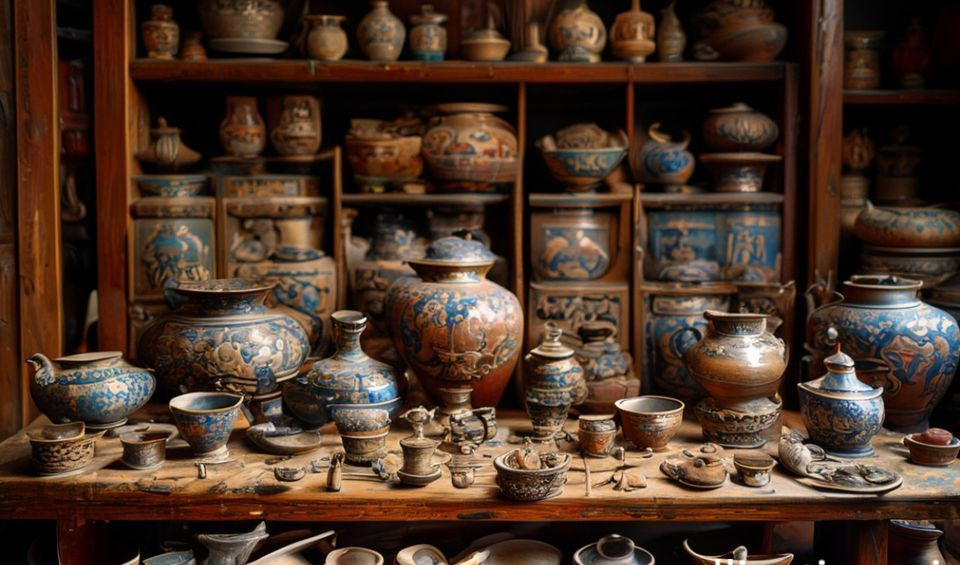
The material of the vessel matters profoundly. Porcelain gaiwan, with their non-porous, glazed surfaces, are favored for delicate green and white teas as they do not retain flavors, offering a pure, unadulterated taste with each new brew. In stark contrast are Yixing clay teapots, made from unique, unglazed zisha clay found only in China’s Jiangsu province. These pots are porous and are traditionally dedicated to a single type of tea, like a dark oolong or aged pu’er. Over years of dedicated use, the clay slowly absorbs the tea’s oils and essence, subtly seasoning the pot and enhancing the flavor of subsequent brews. The process, from warming the vessels to judging the steep time by the rising scent and the changing color of the liquor, turns preparation into a sensory dialogue. It is a quiet tutorial in patience and attention, conducted through clay and porcelain. The global popularity of this practice is evident, with the tea market continuing to see significant growth, driven in part by a renewed appreciation for traditional preparation methods. A Statista report on the global tea market underscores its sustained economic and cultural relevance.
A Potter’s Hands: Working with Clay
“When people see a finished Yixing teapot, they see the shape, the color, maybe the seal of the potter,” says Li Wei, a third-generation ceramicist in Yixing. “But to understand it, you must feel it in use. The clay, zisha, is dense. It retains heat differently than porcelain. When you pour hot water over it, the pot doesn’t just get hot—it breathes. You learn to judge water temperature by how the pot sounds when you tap it lightly, and by how quickly a bead of water evaporates from its surface. A good potter designs for the hand: the curve of the handle must balance the weight of a full pot, the spout must pour in a smooth, coherent stream without a single drip. We don’t make sculptures. We make tools. The real beauty is revealed in the tenth, the hundredth, the thousandth brew.”
This insight reframes the artifact from a static object to a participant in an ongoing process, its value and character accumulating with each use. The potter’s knowledge—of clay density, thermal properties, and ergonomics—is engineering in service of experience. It is a form of embodied knowledge passed down through apprenticeships, where the feel of the clay and the behavior of a prototype are the true teachers. This deep, tactile understanding is what separates a mass-produced item from a cultural artifact; one is made for a market, the other is born from a dialogue between craftsman, material, and the ultimate user’s ritual. The preservation of such craft knowledge is a key concern for organizations like UNESCO, which seeks to safeguard intangible cultural heritage worldwide.
Beyond the Studio and Tea House: Artifacts in Motion
The principle of utility-infused beauty extends to countless other domains. Consider the ruyi, a ceremonial scepter often depicted in art. While its elaborate carvings and precious materials make it seem purely symbolic, its original form was a simple back-scratcher. Even in its most ornate, jade-inlaid versions, it retains the fundamental, comforting curve fit for a hand. Similarly, traditional Chinese musical instruments like the guqin (a seven-string zither) or the pipa (a pear-shaped lute) are not just soundboxes. Their construction, from the choice of wood (often aged tong or wu wood for the guqin) to the placement of inlaid mother-of-pearl markers, is dictated by acoustic principles and playing technique. The guqin is played with subtle, inward movements—slides, harmonics, and stopped notes—that are as much about the player’s tactile connection to the silk strings as the sound produced. The instrument becomes an extension of the body’s quiet expression.
In the culinary realm, the humble cleaver is a masterpiece of focused design. A single, rectangular blade performs the tasks of a whole Western knife block: slicing, dicing, mincing, crushing, and even transporting chopped ingredients from board to wok. Its wide blade acts as a surface to carry food, and its substantial weight does the work of chopping through bones and hard vegetables with a forceful drop. Its design is a direct response to centuries of culinary tradition and the high-heat, fast-paced environment of the wok stove, where efficiency and speed are paramount. UNESCO’s recognition of various food traditions highlights how culinary tools are inseparable from the intangible cultural heritage they help create and sustain.
This integration is also visible in textiles and dress. The iconic qipao or cheongsam, while celebrated for its elegant lines, was originally a practical garment for Manchu women who led active lives. Its straight cut and side slits allowed for mobility, while the high collar provided warmth. The intricate knot buttons, often the most decorative element, were a functional closure system that required no foreign materials like zippers or hooks. Every aesthetic choice was rooted in a practical need, refined over time into a symbol of grace.
The Philosophy of Use: Unity of Form and Function
This seamless blending in Chinese cultural artifacts is not accidental but stems from deep-seated philosophical currents. Confucianism emphasized ritual (li) as the framework for a harmonious society, where everyday actions, performed with the correct tools and intention, became sacred. Using a tea set properly was a small enactment of order and respect. Daoism, with its reverence for the natural way (ziran), encouraged designs that followed the inherent properties of materials—the way clay breathes, the way bamboo bends—without forcing an artificial form upon them. The artifact should assist in the user’s alignment with the natural world, not dominate it.
This philosophy stands in contrast to later Western distinctions that often separate fine art from craft, or the decorative from the utilitarian. In the Chinese tradition, the highest artistry was often that which served a purpose flawlessly and beautifully. A Ming dynasty chair is admired not only for the sublime curve of its splat but for the genius of its joinery, which distributes weight without nails or glue, allowing the wood to move with changes in humidity. The beauty is in the intelligent solution. Scholarly analysis, such as that found in journals of material culture studies, often points to this unity as a defining characteristic of China’s artistic heritage, where aesthetic judgment was inseparable from an assessment of an object’s appropriateness and quality in use.
Practical Engagement: From Observation to Participation
How can one move beyond looking to begin understanding? The path does not require expensive artifacts, but rather a shift in approach.
- Seek Hands-On Workshops: Many cultural centers and museums now offer short courses in calligraphy or tea ceremony. The goal isn’t to become a master, but to feel the resistance of the brush on paper or the heat of a Yixing pot in your palm. This first-hand experience is irreplaceable for building a somatic connection to the culture.
- Use Quality Reproductions: Acquire a simple porcelain gaiwan and a good loose-leaf tea. Practice the mechanics of the lid. Pay attention to how the tea’s flavor changes from the first infusion to the third or fourth. The artifact becomes your guide. Start with a versatile tool like a calligraphy brush and practice making basic strokes on newsprint, focusing on arm movement rather than finger control.
- Study the Context, Not Just the Object: When viewing an artifact in a museum, ask functional questions: “How was this held? What was it used with? What sound did it make? What would it have felt like to use this at the time?” Research the daily life surrounding the object. Resources from institutions like the World Health Organization on traditional practices can sometimes provide unexpected context on the historical use of materials and objects in daily wellness, linking utility to broader life practices.
- Embrace the “Why” of Design: Look at a teapot spout and consider hydrodynamics. Examine a scholar’s brush and think about ergonomics and capillary action. Understanding the practical problems the artisan solved deepens aesthetic appreciation. Why is a pipa’s body pear-shaped? How does the weight distribution of a bronze ding tripod cauldron make it stable over a fire?
- Document the Process: If you begin practicing a ritual like tea preparation, keep a simple journal. Note the water temperature, steeping time, and the flavor profile of each infusion. This turns use into a study, helping you see the artifact as an active variable in an equation, not a passive ornament.
A student of calligraphy, Maria, shared her revelation after her first class: “I always admired calligraphy as beautiful writing. But after trying to grind the ink and control the brush, I realized it’s not writing at all in the Western sense. It’s a form of physical painting with rhythm and breath. The artifact—the brush—forced me to slow down and move from my shoulder. I was learning from the tool itself.”
The Living Legacy of Functional Art
This functional philosophy continues to influence modern Chinese design. Contemporary designers often draw on classical forms and principles, creating objects that honor tradition while serving modern life. A desk lamp might echo the balanced proportions of a scholar’s rock; a chair might incorporate the joinery of Ming dynasty furniture without a single nail. The legacy of these artifacts is not frozen in history. It is a living testament to a worldview that refuses to separate the beautiful from the useful, the spiritual from the practical, or the mind from the hand.
In a world often dominated by disposable goods and passive consumption, these objects invite us back into a more engaged, thoughtful, and sensory relationship with the material world. They remind us that the deepest cultural understanding often comes not from seeing, but from doing—from the quiet grind of ink, the careful pour of tea, and the mindful use of an object that was made, quite simply, to be lived with. The true museum for these artifacts is not a gallery with climate control, but the dynamic, imperfect, and beautiful theater of everyday life. By engaging with them as they were intended, we don’t just learn about Chinese culture; we briefly inhabit its rhythms and, in doing so, perhaps rediscover a more intentional way of being in our own lives.
You may also like
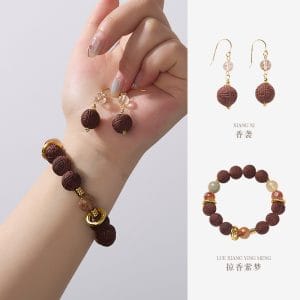
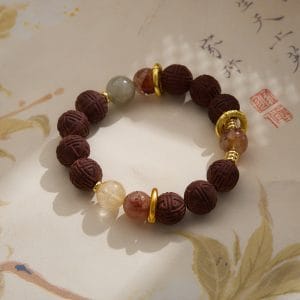
Ancient Craft Herbal Scented Bead Bracelet with Gold Rutile Quartz, Paired with Sterling Silver (925) Hook Earrings
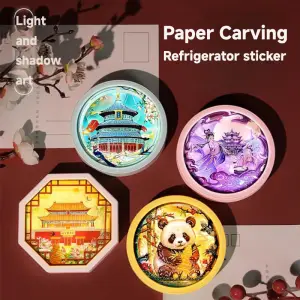
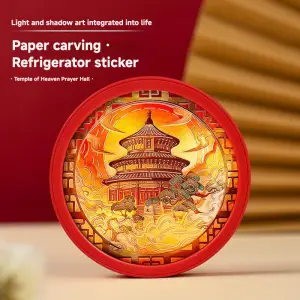
Original price was: $322.00.$198.00Current price is: $198.00. Add to cartThe Palace Museum Paper-Cut Light Art Fridge Magnets: Chinese Cultural Style Creative Gift Series
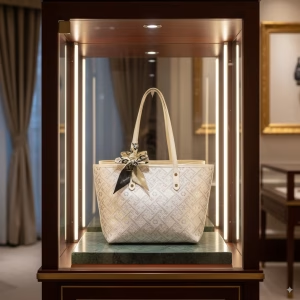
Price range: $27.00 through $36.00 Select options This product has multiple variants. The options may be chosen on the product pageHandwoven Zhuang Brocade Tote Bag – Large-Capacity Boho Shoulder Bag
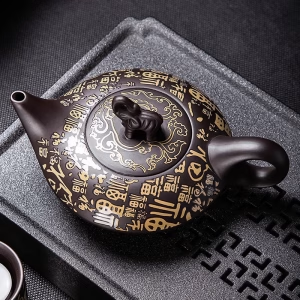
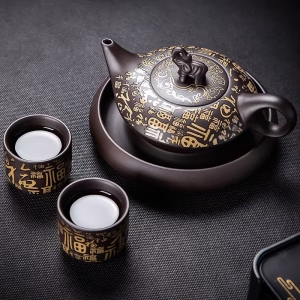
Original price was: $178.00.$154.00Current price is: $154.00. Add to cartAladdin’s Lamp Heat-Change Purple Clay Tea Pot
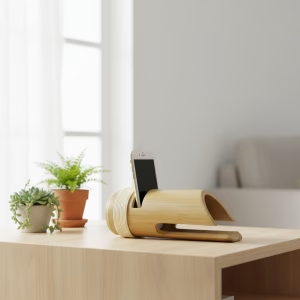
Original price was: $108.00.$78.00Current price is: $78.00. Add to cartBambooSoundBoost Portable Amplifier
Original price was: $96.00.$66.00Current price is: $66.00. Add to cartAncient Craftsmanship & ICH Herbal Beads Bracelet with Yellow Citrine & Silver Filigree Cloud-Patterned Luck-Boosting Beads
Original price was: $128.00.$89.00Current price is: $89.00. Add to cart