In a small courtyard in rural Zhejiang, an elderly woman mends a blue-dyed jacket with stitches so fine they seem to disappear into the fabric. This is not a museum demonstration, but a quiet act of maintenance. Her hands, knowing the cloth’s weakness before it fully gives way, enact a practical dialogue with material that has sustained households for generations. This scene, repeated in countless variations across China’s history, distills the essence of vintage Chinese handiwork. It is not artifact, but applied intelligence—a deep, accumulated wisdom encoded in everyday objects, born from necessity and refined through generations of use. This tradition represents a profound conversation between human need and the natural world, where beauty is never an afterthought but the direct result of integrity, durability, and purpose.
The Logic of the Material: A Philosophy of Purposeful Making
Vintage Chinese craft begins with a frank and intimate assessment of resources. It is a philosophy of making that asks not, “What shape do I desire?” but “What problem must this object solve, and what material is best suited to solve it?” This foundational question shifts the entire creative process from one of imposition to one of collaboration with the physical world. The maker becomes a translator, interpreting the inherent qualities of bamboo, clay, silk, or wood into forms that serve human life with elegant efficiency.
Consider the humble bamboo basket, an object found in nearly every historical household. Its maker selects stalks not for perfect symmetry, but for specific, functional qualities: older, harder bamboo for the load-bearing rim, capable of withstanding constant grip and pressure; younger, more flexible strips for the weaving body, allowing for give and movement. The split strands are soaked, not to make them pliant for artistry’s sake, but to prevent splitting during construction, ensuring long-term structural integrity. The resulting form is a direct, eloquent answer to a daily question. A deep yuan-dou for washing rice has a wide, stable base. A flat, wide sieve for winnowing grain is lightweight and broad to catch the breeze.
There is rarely decoration for decoration’s sake; pattern and rhythm emerge organically from the necessities of tension, joinery, and ergonomics. A master weaver from Suzhou once noted, The beauty is that it holds ten kilograms of vegetables without complaint. The pattern is just how the strength gets arranged.
This material logic extends powerfully to textiles. The famed lan-yin blue印花 cloth of the Miao and Dong peoples uses indigo not merely for its deep, captivating color, but for its natural insect-repellent and fiber-strengthening properties. The intricate wax-resist patterns, far from being purely decorative, serve a dual purpose: they create stunning visual rhythm and strategically reinforce high-wear areas like cuffs, collars, and seams, much like architectural buttresses. The design is inseparable from its duty.
Stitches in Time: The Elevated and Honest Art of Maintenance
If the initial creation of an object showcases a dialogue with material, then the most distinctly practical thread in this tradition is the elevated craft of repair. In a culture where waste-not was both an economic imperative and a form of respect for resources and labor, mending evolved into a sophisticated creative discipline. While the Japanese concept of kintsugi (repairing pottery with gold-laced lacquer) is widely celebrated for highlighting breaks, a parallel, often quieter practice flourished across China in cloth, wicker, and pottery. Here, repair was not about disguising damage but about strategic, honest reinforcement that extended an object’s life and narrated its history.
Bu-ding, or patchwork, was a science of foresight. A patch for a child’s knee was often cut from the denser weave of discarded work trousers, placed to anticipate future wear. The stitching itself was a language of care and strategy. The nearly invisible qian-cao (hidden stitch) preserved a garment’s smooth drape for formal wear, while the decorative da-zi (character stitch) might spell a protective symbol or a family name, adding blessing alongside structural integrity. In wickerwork, a repaired basket often bears a telltale spiral of thinner rattan meticulously wound over a cracked spoke. This is not a flaw to hide, but a record of intervention that often made the joint stronger than the original, a testament to care that transforms an object’s history from a linear narrative of decay into a cyclical one of renewal.
This philosophy stands in stark contrast to today’s disposable consumer culture. The United Nations Environment Programme has highlighted the massive environmental cost of “fast fashion” and disposable goods, noting that the industry is responsible for significant carbon emissions and water pollution. Vintage Chinese handiwork offers a timeless antidote: a model where value is accrued over time through maintenance, and objects become more personal, not less useful, with age. It reframes longevity as a creative achievement.
The Weaver’s Hand: Listening to the Material’s Mood
This craft intelligence is fundamentally tactile, a knowledge held in the hands and honed through patient observation. It requires listening to the material. Zhang Ailing, a third-generation bamboo worker from Anhui, highlighted this when discussing old and new methods. My grandfather’s generation felt the bamboo’s mood [qing-xu],
she explained. They wouldn’t force a strip that was resisting the bend on a given day—they’d set it aside for a different part of the basket. Today, we steam everything to uniformity. The baskets are perfect, but they don’t last as long. The material fights back eventually.
This sensitivity—reading the qing-xu of bamboo, the tension in a thread, the dryness of clay—is the intangible core of practical handiwork. It is knowledge built not through abstract design principles alone, but through thousands of hours of responsive problem-solving with fiber, clay, and wood. It recognizes that natural materials are not inert, but have their own behaviors and responses to environment, force, and time. The craftsman or craftswoman becomes a collaborator rather than a dictator, a relationship that yields objects of remarkable resilience and character. This deep material literacy is a form of environmental engagement, fostering a nuanced understanding of natural resources that is largely absent from modern mass production.
From Village to Metropolis: Handiwork in Urban and Imperial Contexts
While rooted in rural necessity, this applied intelligence scaled to every level of society, proving that practicality and profound artistry are not mutually exclusive. In bustling Ming and Qing dynasty cities, the same principles governed the trades of the carpenter, the blacksmith, and the mason. Complex wooden joinery in buildings, using intricate interlocking brackets (dou-gong) without nails, was the architectural equivalent of the hidden stitch—a supremely strong, flexible, and repairable solution born from a deep understanding of wood’s grain and strength. These structures could withstand earthquakes by flexing and could be disassembled and repaired piece by piece.
The design of traditional tools, from the subtly angled handle of a carpenter’s plane to the perfect balance of a chef’s cleaver, was refined over centuries to minimize effort and maximize efficiency for the user, a principle now echoed in modern ergonomic science promoted by organizations like the World Health Organization. Even in the imperial courts, where extravagance was possible, the finest objects often showcased this marriage of supreme skill with underlying logic. A delicate lacquer box might feature dozens of layers, each providing protection against moisture and wear. The flowing lines of a scholar’s robe, while denoting status, were also cut for ease of movement and layered for warmth. The aesthetic was never divorced from a foundational practicality; luxury was defined by exceptional execution of purpose, not merely by ornament.
The Modern Resonance: A Blueprint for Sustainable Living
In an age of climate crisis and resource anxiety, the principles embedded in vintage Chinese handiwork have never been more relevant. They offer a blueprint for sustainable living that is both ancient and urgently modern. This is not about nostalgic replication or rejecting technology, but about adapting a mindset that prioritizes longevity, care, and material consciousness.
First, it champions material literacy—understanding where materials come from, their true properties, and their afterlife. Choosing natural, durable materials and understanding their care is a radical act against the planned obsolescence that fuels waste. Second, it elevates maintenance as a creative, empowering skill. Learning to mend a seam, re-glue a chair, or sharpen a tool reclaims agency from the passive cycle of consumption and disposal. As a study in the Journal of Cleaner Production notes, extending the active life of clothing through care and repair is one of the most effective individual actions for reducing environmental impact, far outweighing the benefits of recycling. Finally, it seeks beauty in integrity and purpose. An object that is perfectly suited to its task, that wears its history honestly, and that is built to last possesses a deep, quiet beauty that transcends fleeting trends. This ethos aligns with growing global movements towards circular economies and mindful consumption.
Weaving the Threads into Daily Life: Actionable Insights
Integrating this wisdom into contemporary life does not require abandoning modernity. It begins with small, intentional shifts in perspective and practice that reconnect us with the objects we live with.
- Embrace the “Bamboo Stalk” Mentality: When purchasing anything, from furniture to clothing, ask the “maker’s questions.” What is it made of? Why this material? How is it joined? Look for honest materials and construction that can be repaired. A solid wood table with visible joinery or a garment with generous seam allowances is the modern equivalent of the spiral rattan repair—it tells you how it’s made and invites future care.
- Practice One Form of Mending: Start simple. Learn to darn a sock using a basic weaving technique on an egg, or use visible mending with colorful thread on a denim jacket. The goal isn’t perfection or invisibility, but restored function and personalization. As the old saying goes, “A skill in the hand is worth two in the market.” This practice builds resilience and a tangible sense of accomplishment.
- Read the Object’s History: Examine older items you own or encounter. Look for the worn spot on a tool handle, shaped by a previous user’s grip. See the careful repair on a vintage quilt or the patina on a wooden bowl. These are not defects; they are narratives of use and care. This practice cultivates respect for the life of objects and slows down our perception of their value.
- Support Modern Interpretations and Craft Revival: Seek out contemporary designers and artisans who work with these principles. Many are revitalizing techniques like natural dyeing, hand-weaving, or traditional joinery, creating objects that speak to modern aesthetics while embodying ancient logic. The global craft market, valued in the hundreds of billions, shows a growing appetite for meaningful, well-made goods. By supporting these makers, you invest in a supply chain that values skill and sustainability over volume and speed.
The elderly woman in Zhejiang, her needle moving with assured rhythm, is part of an unbroken chain of practical wisdom. Her work asserts that intelligence is not only stored in texts or devices, but in the learned touch, in the strategic patch, in the basket that carries its load without complaint. Vintage Chinese handiwork teaches that the most profound solutions are often born from constraint, that care is a form of creativity, and that true sustainability is not a new technology, but an old, deeply human conversation with the world we inhabit. It invites us to look again at the objects around us, not as things to be consumed, but as partners in a longer, more thoughtful story of making, using, and preserving—a story where our own hands can write the next chapter.
You may also like
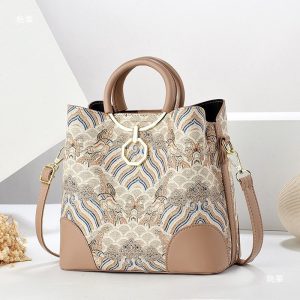
Guangxi Zhuang Brocade Handmade Tote – Ethnic Boho Large-Capacity Shoulder Bag
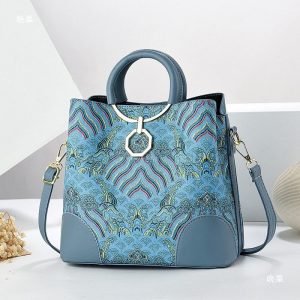
Original price was: $172.00.$150.00Current price is: $150.00. Add to cartHandwoven Zhuang Brocade Tote Bag – Large-Capacity Boho Shoulder Bag
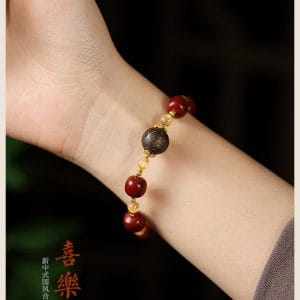
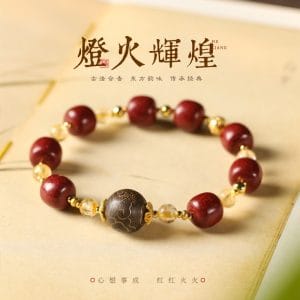
Original price was: $178.00.$154.00Current price is: $154.00. Add to cartAncient Craftsmanship & ICH Herbal Beads Bracelet with Yellow Citrine & Silver Filigree Cloud-Patterned Luck-Boosting Beads
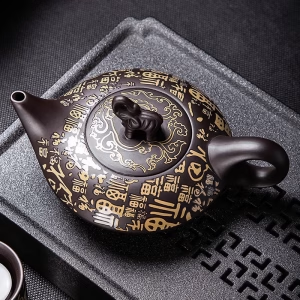
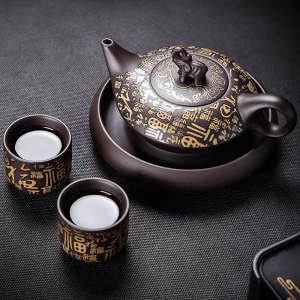
Original price was: $128.00.$89.00Current price is: $89.00. Add to cartAladdin’s Lamp Heat-Change Purple Clay Tea Pot
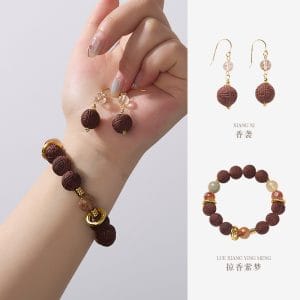
Original price was: $108.00.$78.00Current price is: $78.00. Add to cartAncient Craft Herbal Scented Bead Bracelet with Gold Rutile Quartz, Paired with Sterling Silver (925) Hook Earrings
Original price was: $322.00.$198.00Current price is: $198.00. Add to cartThe Palace Museum Paper-Cut Light Art Fridge Magnets: Chinese Cultural Style Creative Gift Series
Price range: $27.00 through $36.00 Select options This product has multiple variants. The options may be chosen on the product page