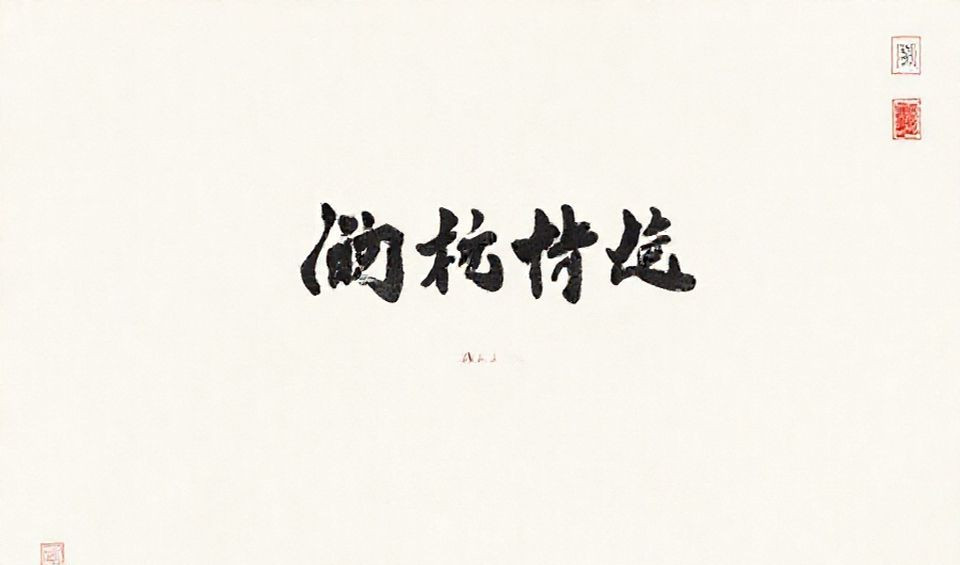
Chinese calligraphy transforms writing from mere communication into physical poetry. Each character becomes a dance of ink and intention, where the brush serves as extension of the mind. This ancient practice remains vibrantly relevant today, not as historical artifact but as living discipline that sharpens focus and cultivates precision. The rhythmic flow of ink on paper creates what scholars describe as “frozen dance”—a momentary gesture preserved for eternity.
Essential Tools and Their Voices
Four treasures define the calligrapher’s workspace: brush, ink, paper, and inkstone. These instruments possess distinct personalities that influence the final work. A wolf-hair brush offers resilience for sharp angles and dramatic flourishes, while goat-hair provides softer curves suitable for graceful, flowing scripts. Mixed-hair brushes combine these qualities, allowing experienced calligraphers to transition between stroke types without switching tools.
Ink density matters profoundly in achieving the desired aesthetic effect. Traditional ink sticks require grinding against an inkstone with water—a meditative process that prepares the mind for creation. Too thick and strokes gum up, losing definition; too thin and characters bleed into ghosts. The ideal consistency flows smoothly while maintaining crisp edges. Xuan paper, made from sandalwood bark in Anhui province, possesses remarkable absorbency yet surprising strength, capturing every nuance of pressure and speed. Master calligrapher Lin Wei observes, “The paper remembers what the hand forgets—recording not just the intended stroke, but the tremor of hesitation, the confidence of execution.”
The Five Fundamental Strokes
All Chinese characters, regardless of complexity, build from five core movements that form the alphabet of visual expression. The dot (dian) begins with gentle pressure, swelling then tapering like a teardrop—a complete thought contained in a single gesture. Horizontal strokes (heng) maintain consistent thickness while conveying forward momentum, like a river flowing steadily toward the sea. Vertical lines (shu) demand unwavering commitment—no second chances once ink meets paper. These strokes test the calligrapher’s resolve and steadiness of hand.
Hook strokes (gou) require sudden direction changes executed with precise wrist flicks, creating dynamic energy at character intersections. Finally, the rising stroke (ti) lifts with optimistic energy, often concluding characters with an upward flourish. Practice these movements through 50 daily repetitions builds muscle memory that eventually becomes instinct. As calligraphy teacher Madame Zhang tells her students, “First you master the stroke, then the stroke masters you—until eventually there is no separation between intention and execution.”
Contemporary architect Michael Chen applies calligraphic principles to his work: “When designing a building’s curve, I recall how the brush pivots at the stroke’s apex. That moment of transition contains the entire structure’s energy.” This cross-disciplinary application demonstrates how brushwork fundamentals influence modern creative processes far beyond traditional art forms.
Major Script Styles Through History
Chinese calligraphy has evolved through several distinct script styles, each reflecting its historical period while expanding expressive possibilities. Seal script (zhuanshu), originating in the Bronze Age, features uniform stroke thickness and symmetrical characters that echo ancient inscriptions on ritual vessels. Clerical script (lishu) developed during the Han dynasty introduced broader, flatter strokes that enabled faster writing for administrative purposes while maintaining formal elegance.
The Tang dynasty witnessed the perfection of regular script (kaishu), characterized by balanced proportions and clear structure that remains the foundation for modern Chinese printing. Running script (xingshu) offers more fluid connections between strokes, capturing the rhythm of thought in motion. Cursive script (caoshu) represents the ultimate abstraction—where characters dissolve into pure expression, sometimes bordering on illegibility but overflowing with emotional intensity. As noted in the UNESCO Silk Roads programme, these script styles document not just linguistic evolution but cultural exchange across civilizations.
The Digital Transformation: From Brush to Pixel
The transition from ink to pixels represents one of calligraphy’s most significant modern transformations. Digital Chinese fonts now carefully replicate traditional brushwork, preserving cultural heritage while enabling global communication. Leading type foundries employ master calligraphers to create authentic digital interpretations of classical scripts. The challenge lies in capturing not just the visual form but the spirit of hand-brushed characters.
SimSun and KaiTi fonts preinstalled on computers worldwide demonstrate how regular script has become standardized for readability. More artistic fonts like LiShu and XingShu preserve the distinctive features of their historical counterparts for decorative purposes. According to Statista’s typography market analysis, Chinese font development represents one of the fastest-growing segments in digital type design, reflecting increased global interest in authentic cultural expression.
Beijing-based designer Zhao Min explains the translation process: “We scan original masterworks at extremely high resolution, then carefully trace each stroke to preserve the subtle variations in thickness and texture. The goal isn’t perfection—it’s character.” Her team recently completed a five-year project digitizing rare Ming dynasty calligraphy manuals for educational use.
Technical Challenges in Font Development
Creating authentic Chinese calligraphy fonts presents unique technical hurdles. Unlike Latin alphabets with limited characters, Chinese fonts require designing thousands of distinct glyphs while maintaining consistent style and energy flow. The most sophisticated fonts now incorporate multiple variations for each character, mimicking the natural inconsistencies of hand-brushed work.
Advanced font engines can now simulate brush pressure sensitivity, creating dynamic stroke variations that respond to digital input methods. Some developers have experimented with AI algorithms trained on historical masterpieces, though purists argue this approach lacks the human intentionality central to calligraphic tradition. The debate continues between technological innovation and artistic authenticity.
Shanghai-based typographer Liang Wei notes, “We’re not just creating letters—we’re encoding centuries of cultural practice. When someone in Brazil uses our font for their restaurant menu, they’re participating in a tradition that dates back to ancient China.” His studio has developed over twenty calligraphy-inspired fonts used by brands worldwide.
Practical Applications in Modern Contexts
Beyond artistic expression, calligraphy principles inform numerous contemporary fields. Graphic designers incorporate brushstroke elements into logos and branding to convey authenticity and cultural depth. Psychologists utilize calligraphy practice as mindfulness therapy, with studies showing reduced anxiety and improved concentration among regular practitioners. The deliberate, focused movements required in brushwork create what researchers call “flow state”—complete immersion in the present moment.
In education, calligraphy remains part of the standard curriculum in mainland China, though the hours dedicated to practice have diminished with digitalization. Taiwan and Hong Kong maintain stronger emphasis on traditional brush techniques. As the World Health Organization notes in its guidelines on healthy aging, activities requiring fine motor skills and mental focus like calligraphy can help maintain cognitive function in later life.
Corporate trainer David Wong incorporates calligraphy exercises in his leadership workshops: “When executives struggle with decision-making, I have them practice vertical strokes. That unhesitating commitment to the page translates to clearer decisions in the boardroom.”
Learning Resources and Daily Practice
Beginning calligraphy requires surprisingly simple materials—a basic brush, ink, and practice paper. Many masters recommend starting with larger characters to develop arm movement before refining wrist and finger techniques. Tracing copies (zitie) placed beneath translucent paper provide guidance while allowing students to feel proper stroke sequence and pressure.
Daily practice proves more valuable than marathon sessions. Even fifteen minutes of focused stroke repetition builds fundamental skills more effectively than occasional multi-hour practices. The key lies in consistency and mindful attention rather than quantity of output. As one elderly master advised his impatient student, “You cannot rush the bamboo’s growth, yet it reaches tremendous heights.”
Online resources now supplement traditional apprenticeship models. The Journal of Asian Calligraphy Studies offers academic perspectives, while video platforms host thousands of tutorial videos demonstrating techniques from basic strokes to advanced compositions. However, most serious practitioners still seek personal correction from experienced teachers who can identify subtle technical errors invisible to untrained eyes.
Cultural Preservation and Global Influence
Chinese calligraphy’s migration into digital fonts represents both challenge and opportunity for cultural preservation. While digitization makes these artistic traditions accessible worldwide, it risks reducing living practice to static forms. Contemporary calligraphers navigate between respecting classical conventions and developing personal expression—much as jazz musicians interpret standards with individual flair.
International exhibitions and cultural exchange programs have introduced Chinese calligraphy to global audiences, often creating fascinating cross-cultural dialogues. Japanese and Korean calligraphy developed distinctive variations while maintaining fundamental principles. Western artists like Brice Marden and Mark Tobey have incorporated calligraphic gestures into abstract expressionism, creating hybrid forms that speak across cultural boundaries.
Perhaps calligraphy’s most enduring legacy lies in its demonstration that discipline and freedom need not oppose each other. The strict rules of stroke order and structure ultimately enable profound personal expression. As the brush moves across paper, centuries of tradition flow through the artist’s hand while leaving space for individual spirit—proving that some of humanity’s most ancient practices remain remarkably contemporary.
Future Directions and Innovations
The evolution of Chinese calligraphy fonts continues to accelerate with emerging technologies. Augmented reality applications now allow users to practice brushwork in virtual space, receiving instant feedback on stroke quality and form. Museums worldwide are creating digital archives of calligraphic masterpieces, making works previously accessible only to scholars available to global audiences.
Some innovators are exploring generative calligraphy—algorithmic systems that create new characters based on learned styles while maintaining aesthetic coherence. These developments raise fascinating questions about authorship and tradition in the digital age. Can a computer-generated work carry the same spiritual weight as one created by human hand? The answer may lie in how we define artistry itself.
What remains certain is that Chinese calligraphy, whether practiced with brush or rendered through pixels, continues to captivate and inspire. Its principles of balance, flow, and intentionality speak to universal human aspirations for beauty and meaning. As technology advances, the essential spirit of this ancient art form adapts while maintaining its core values—a testament to its enduring power across centuries and civilizations.
You may also like
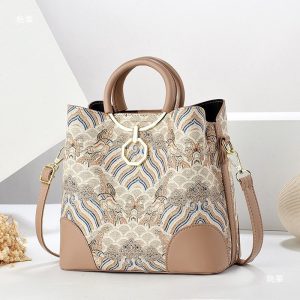
Guangxi Zhuang Brocade Handmade Tote – Ethnic Boho Large-Capacity Shoulder Bag
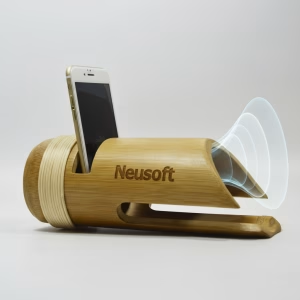
Original price was: $172.00.$150.00Current price is: $150.00. Add to cartBambooSoundBoost Portable Amplifier
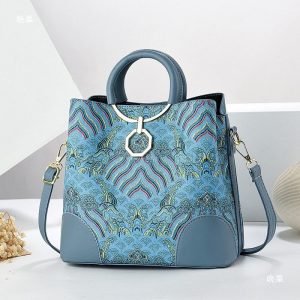
Original price was: $96.00.$66.00Current price is: $66.00. Add to cartHandwoven Zhuang Brocade Tote Bag – Large-Capacity Boho Shoulder Bag
Original price was: $178.00.$154.00Current price is: $154.00. Add to cartAncient Craftsmanship & ICH Herbal Beads Bracelet with Yellow Citrine & Silver Filigree Cloud-Patterned Luck-Boosting Beads
Original price was: $128.00.$89.00Current price is: $89.00. Add to cartAncient Craft Herbal Scented Bead Bracelet with Gold Rutile Quartz, Paired with Sterling Silver (925) Hook Earrings
Original price was: $322.00.$198.00Current price is: $198.00. Add to cartThe Palace Museum Paper-Cut Light Art Fridge Magnets: Chinese Cultural Style Creative Gift Series
Price range: $27.00 through $36.00 Select options This product has multiple variants. The options may be chosen on the product page