In a narrow Shanghai alleyway, 72-year-old Gu Fengming places a bamboo flute to his lips. The note that emerges isn’t merely musical—it’s a centuries-old dialect of wind and wood, a sound that predates the skyscrapers looming just blocks away. He is one of perhaps seventeen remaining masters of Jiangnan sizhu, an intricate silk-and-bamboo ensemble tradition. His music exists nowhere as a written score; it lives in the curl of his fingers, the shape of his breath. This is the fragile, vital world of China’s intangible cultural heritage—a vast tapestry of practices, expressions, knowledge, and skills that communities recognize as part of their cultural identity. Unlike the Great Wall or the Forbidden City, these are legacies carried in the body, the voice, and the sensory memory. They are history’s living whisper, increasingly urgent to hear against the roar of modernization.
The Fabric of the Intangible: Memory in Motion
Intangible cultural heritage survives through bodies, not books. It is memory in movement, a philosophy in a gesture, history in a taste. This encompasses a breathtaking spectrum: performing arts like Kunqu opera and shadow puppetry; social practices, rituals, and festive events; knowledge concerning nature and the universe; and traditional craftsmanship. The UNESCO Convention for the Safeguarding of the Intangible Cultural Heritage, which China ratified in 2004, formally defines it as the practices, representations, expressions, knowledge, and skills that communities recognize as part of their cultural heritage. Its defining characteristic is its reliance on human transmission. As UNESCO notes, it is “constantly recreated by communities and groups in response to their environment, their interaction with nature and their history, and provides them with a sense of identity and continuity.”
Consider the Kunqu opera performer whose every hand gesture, or shou shi, carries specific poetic meaning—a flick of the wrist can suggest a flowing river or a parting sigh. Training begins in childhood, demanding a fusion of martial arts flexibility, vocal precision, and scholarly comprehension of classical texts. “We are not actors playing roles,” reflects performer Shen Yuan, 58. “We are vessels. The technique is in the muscle, but the story must be in the bone.” This art form, recognized by UNESCO, now relies on a delicate chain of perhaps thirty dedicated troupes nationwide, each preserving variations that would vanish with their members. The challenge is stark: how does a nation document the undocumentable? How does it preserve not just the song, but the specific tremor in the voice that gives it meaning?
This embodied knowledge forms the core of cultural identity for China’s 56 recognized ethnic groups. The epic song cycles of the Mongolians, the intricate Dong minority chorus singing without a conductor, the Tibetan Thangka painting rituals—each represents a unique worldview encoded in action. They are not mere entertainment but living libraries of language, history, ethics, and ecological understanding.
The Guardians: Masters, Apprentices, and the Weight of a Lineage
The entire edifice of intangible heritage rests on the shoulders of recognized practitioners, often titled “inheritors” or “bearers.” China’s system identifies these individuals at national, provincial, and local levels, granting them formal status and often a small stipend. Their duty is profound. Huang Xiaoying, a 68-year-old folk singer from Guangxi recognized as a national inheritor for her mastery of the Zhuang ethnic epic Buluotuo, describes it as a sacred burden. “People ask me what I am preserving. I tell them I am not a museum. I am a bridge. My teacher’s voice is in my throat when I sing. When I am gone, who will hold that tune? It takes a decade to learn the 10,000 lines. A smartphone can record the words, but not the spirit in the breath between them.”
This transmission is rarely easy. The master-apprentice model, once a natural part of community life, now competes with the gravitational pull of urban jobs and modern education. Finding a young person willing to dedicate a decade to learning the precise, aching melodies of Nanyin balladry or the intricate knotting techniques of Chinese Zhongguo jie is a constant struggle. The knowledge is not simply taught; it is absorbed through years of proximity, correction, and shared experience. A master potter from Yixing doesn’t just lecture on clay density; the apprentice learns by feeling the master’s hands correct their own on the wheel, by observing the subtle change in the sound of the kiln that indicates perfect temperature.
Some inheritors are innovating within tradition to make it relevant. In Suzhou, a master of Kunqu opera collaborates with contemporary composers, framing ancient arias within modern soundscapes for younger audiences. In rural Shaanxi, a paper-cutting inheritor uses her traditional motifs to create animations that tell old folk tales with new technology. These adaptations are contentious but vital, representing the “constant recreation” that UNESCO’s definition allows for, ensuring the tradition speaks to the present.
The Taste of Time: Heritage in Daily Ritual
Beyond the stage, intangible heritage is woven into the fabric of daily life and sensory experience. It lives in the rhythm of a ritual, the aroma of a fermenting jar, the communal labor of a harvest festival. In a Fujian village, the multi-day process of crafting Tieguanyin oolong tea follows steps unchanged for generations: precise wilting, shaking, roasting, and rolling. Master Chen, 65, judges fermentation not by clock but by scent and touch. “My grandfather said the leaves must sound like spring rain when tossed,” he says, demonstrating the brittle rustle of perfectly dried leaves. This sensory knowledge, critical for the tea’s famed “rock rhyme” flavor, defies automation. Each spring, fewer than ten families in his region complete the full, traditional cycle, their hands stained dark with the memory of the roast.
This extends to culinary traditions, festival preparations, and even traditional Chinese medicine. The making of zongzi (sticky rice dumplings) for the Dragon Boat Festival is not just about food; it’s a family gathering where folding techniques and filling recipes are passed down, often accompanied by stories of the poet Qu Yuan. The practice of Taijiquan in a park at dawn is not merely exercise; it is a moving meditation connecting individuals to a philosophy of balance and flow. These practices anchor communities in time and season, creating a living calendar of cultural memory that is felt in the body and shared in collective action.
Seasonal festivals like the Qingming Festival (Tomb-Sweeping Day) or the Mid-Autumn Festival are not merely holidays but complex repositories of intangible heritage. The specific foods prepared, the ancestor-honoring rituals performed, the poems recited, and the family stories shared during these times constitute a powerful, annual reinforcement of identity and continuity that no textbook can provide.
The Modern Paradox: Documentation, Tourism, and the Risk of Freezing
The drive to safeguard intangible cultural heritage has led to unprecedented efforts in documentation. Audiovisual archives, digital databases, and detailed written records are being created at a rapid pace. While crucial for creating a backup, this presents a paradox. Can the spirit of a living practice truly be captured in a digital file? As Huang Xiaoying implied, the recording saves the “what,” but can it preserve the “how” and the “why”? The World Intellectual Property Organization (WIPO) grapples with these questions, noting the tension between protecting traditional cultural expressions and freezing them in a way that prevents their natural evolution. Over-reliance on documentation can create an illusion of preservation while the living practice withers from lack of engaged practitioners.
Another double-edged sword is tourism and commercialization. Showcasing ICH can generate vital income for practitioners and raise public awareness. Festivals like the Yi people’s Torch Festival or the spectacular Miao silver craftsmanship become major tourist draws. However, the risk is a shift from cultural practice to cultural performance. The meaning of a three-day wedding ritual may be compressed into a twenty-minute show. Crafts may be simplified or materials cheapened to meet tourist demand for souvenirs. The key is finding a balance where economic viability supports, rather than supplants, authentic transmission.
Some communities have succeeded by creating “living heritage workshops” where tourists can observe the genuine, slow process of creation and engage directly with masters, fostering respect rather than just consumption. The town of Jingdezhen, the millennia-old porcelain capital, now hosts residencies for international artists alongside its traditional kilns, creating a dynamic exchange that funds local inheritors while injecting new perspectives. Data from Statista on cultural engagement in China shows a rising interest in traditional culture among youth, often driven by “heritage tourism” and social media, suggesting this careful curation of visitor experience is more important than ever.
Actionable Insights: How to Engage with and Support Living Heritage
Preservation is not a task for governments and inheritors alone. Conscious engagement from the public is essential for these traditions to remain living conversations. Here are practical ways to contribute meaningfully.
Seek Depth Over Spectacle: When traveling, look beyond the staged show. Visit local heritage centers, seek out small family workshops, and attend community-run festivals where the practice is for the community itself, not an external audience. In Lijiang, skip the large nightly Naxi orchestra performance for tourists and ask locals where the older musicians might gather to play for themselves.
Learn a Skill, However Humble: Many communities and cultural centers now offer short courses in traditional crafts, calligraphy, or music. Enrolling isn’t about becoming a master; it’s about understanding the discipline and effort involved, creating a personal connection to the knowledge. Spending an afternoon learning a basic paper-cut pattern or trying to shape a piece of clay on a wheel builds immense respect for the master’s lifetime of skill.
Support Ethical Artisans Thoughtfully: When buying traditional crafts, purchase directly from recognized inheritors or their cooperatives when possible. Ask about the story behind the item, the materials, and the techniques. Value the object for its cultural narrative, not just its aesthetic. A hand-embroidered Miao jacket tells a story of identity and belonging; a mass-produced replica does not.
Document Your Own Family Heritage: Intangible heritage exists in every family. Record your grandparents’ recipes, their folk songs, their stories of traditional festivals and childhood games. This personal act of preservation is the foundational cell of all larger cultural safeguarding efforts. It connects the macro to the micro, showing that heritage is not distant but familial.
Advocate for and Participate in Educational Integration: Support initiatives that bring ICH bearers into schools. When children learn to write one character with a brush, sing one local folk song, or hear a story from a tradition-bearer, they build a foundational connection to their cultural landscape. As a parent or community member, you can encourage local schools to forge these partnerships.
A Living Conversation, Not a Relic
The threads of intangible culture—a song, a gesture, a flavor, a recipe—form a living counter-narrative to monolithic, textbook history. They represent the diverse, human-scale stories of China’s many ethnic groups and regions. They are not relics behind glass, but active, evolving conversations with the past, conducted in the vulnerable human languages of skill, memory, and sensory experience. Their continuity hinges not on policy alone, but on the quiet, determined choices of individuals in workshops, kitchens, fields, and makeshift village stages.
The future of this heritage will not look like its past. It will inevitably adapt, incorporating new materials, addressing contemporary themes, and reaching audiences through digital media. The goal of safeguarding is not to embalm but to ensure the community retains agency over this evolution, maintaining the core values and knowledge that give the practice its meaning. The reported resurgence of interest, particularly among urban youth seeking roots in a digitized world, is a hopeful sign. It suggests a desire to reclaim these threads of identity and reinterpret them for a modern context.
The breath in Gu Fengming’s flute, the story in Shen Yuan’s gesture, the spring-rain sound in Master Chen’s tea leaves—these are more than art or craft. They are a compass, orienting a rapidly changing society toward the deep, sustaining wisdom of its own collective humanity. They remind us that some of the most profound historical records are not carved in stone but carried in the breath, the hands, and the shared memories of people. Their survival is a testament not to stagnation, but to the enduring human need for meaning, beauty, and connection that transcends the material world.
You may also like
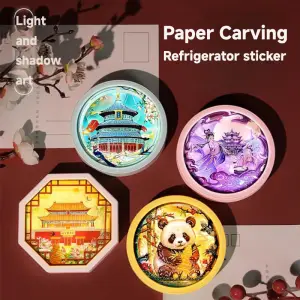
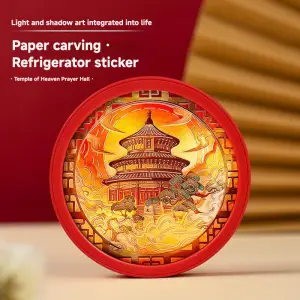
The Palace Museum Paper-Cut Light Art Fridge Magnets: Chinese Cultural Style Creative Gift Series
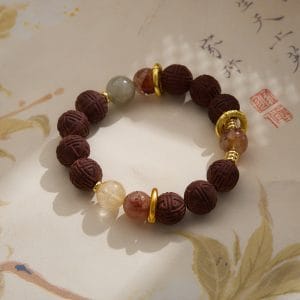
Price range: $27.00 through $36.00 Select options This product has multiple variants. The options may be chosen on the product pageAncient Craft Herbal Scented Bead Bracelet with Gold Rutile Quartz, Paired with Sterling Silver (925) Hook Earrings
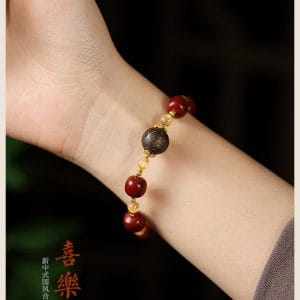
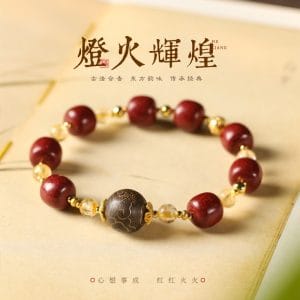
Original price was: $322.00.$198.00Current price is: $198.00. Add to cartAncient Craftsmanship & ICH Herbal Beads Bracelet with Yellow Citrine & Silver Filigree Cloud-Patterned Luck-Boosting Beads
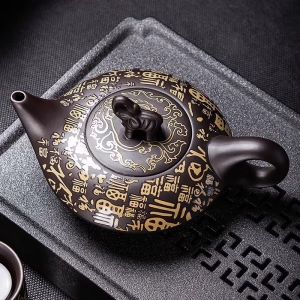
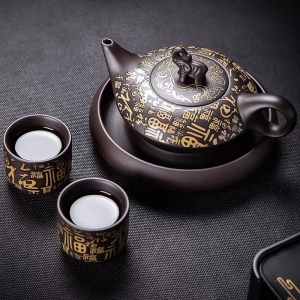
Original price was: $128.00.$89.00Current price is: $89.00. Add to cartAladdin’s Lamp Heat-Change Purple Clay Tea Pot
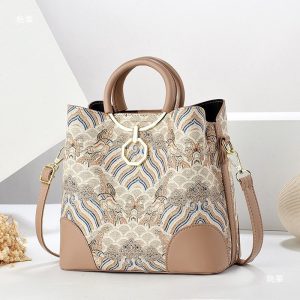
Original price was: $108.00.$78.00Current price is: $78.00. Add to cartGuangxi Zhuang Brocade Handmade Tote – Ethnic Boho Large-Capacity Shoulder Bag
Original price was: $172.00.$150.00Current price is: $150.00. Add to cartHandwoven Zhuang Brocade Tote Bag – Large-Capacity Boho Shoulder Bag
Original price was: $178.00.$154.00Current price is: $154.00. Add to cart