Walk through any major Chinese city on a weekend, and you might spot them: flowing sleeves, crossed collars, and elegant silhouettes moving through crowds in jeans and t-shirts. This isn’t a film set or a historical reenactment—it’s the quiet, growing reality of Hanfu as daily attire. The movement has matured beyond festival wear and photoshoots into something more integrated, asking not just what was worn, but how it was lived in. This shift from spectacle to substance is at the heart of China Chic Hanfu, a cultural revival transforming historical dress into a viable, modern wardrobe. It’s a sartorial philosophy that respects the past while firmly embracing the rhythms of contemporary life.
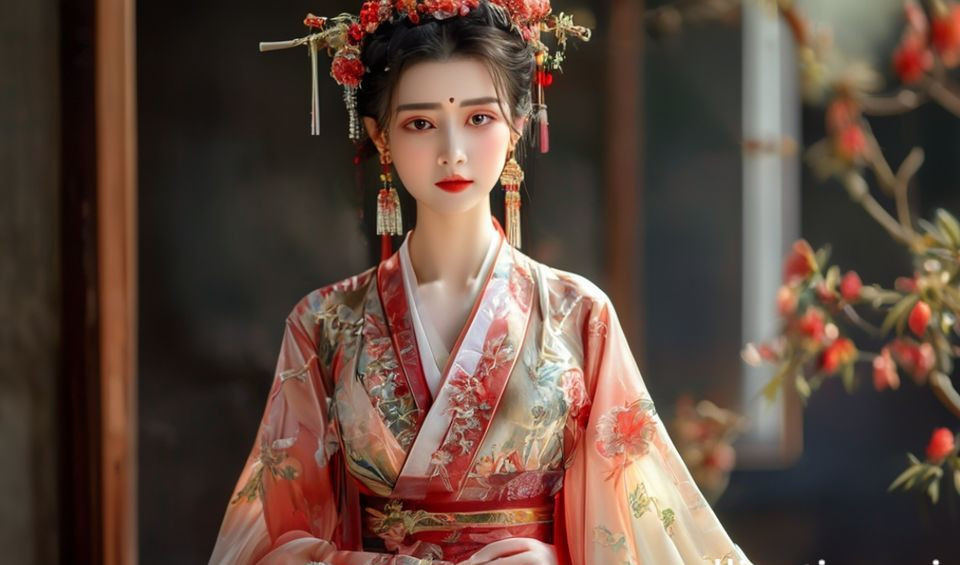
Building a Functional Foundation: From Ceremonial to Casual
The journey from costume closet to functional wardrobe begins with a fundamental understanding of Hanfu’s architecture. A complete ensemble is not a singular garment but a harmonious system of layers, each with a purpose. The foundation is the zhongyi (中衣), a lightweight inner layer typically crafted from breathable cotton or linen. Think of it as the essential base layer, akin to a modern undershirt, that provides comfort and absorbs moisture.
Over this base rests the main garment. For women, the ruqun (襦裙), a combination of a wrapped skirt and a cross-collared top, offers timeless versatility. For men, the zhiduo (直裰), a simple, straight-crossed robe, provides clean lines and ease of movement. The pivotal choice for daily wear lies in the fabric. While ceremonial brocades and heavy embroidered silks dazzle for special occasions, the demands of everyday life call for practicality. Washed silk, linen-cotton blends, and high-quality, wrinkle-resistant cottons are now the materials of choice for their durability, breathability, and ease of care.
Designer Lin Yao, who runs a studio in Suzhou, has witnessed this pragmatic evolution firsthand. “Our clients used to ask for the most elaborate dragon embroidery, seeking a perfect historical replica,” she observes. “Now, their first question is often, ‘Can I machine wash it?’ or ‘Will this fabric pill?’ The conversation has moved from pure aesthetics to longevity and function.” This shift reflects a broader trend in the Chinese fashion market, where consumers increasingly value quality and versatility alongside cultural significance.
Adapting Form for Modern Function: The Art of Thoughtful Evolution
For the modern Hanfu wearer, historical accuracy serves as a guiding star, not a shackle. The most compelling innovations are emerging organically from within the community, driven by the need to navigate a world the ancients never knew. These adaptations are not seen as compromises but as thoughtful evolutions—a way of honoring tradition by ensuring its relevance.
Practical tweaks are everywhere. Skirt lengths are subtly adjusted to clear bicycle pedals and subway stairs without sacrificing the garment’s graceful drape. The age-old problem of where to store a smartphone, keys, and wallet is solved with hidden pockets ingeniously sewn into wide sleeves or integrated into the wide sash belts. The banbi (半臂), a traditional short-sleeved over-jacket, is being reimagined in stretch blends for a closer fit that accommodates a more active lifestyle. Even the formal, one-piece shenyi (深衣) is being subtly re-cut with slightly narrower sleeves to prevent an unfortunate dip into a lunchtime soup bowl.
As one wearer in Chengdu succinctly put it, “My ancestors didn’t have to commute on the Line 7 subway. If they did, they’d have tailored their sleeves too.” This sentiment captures the movement’s essence: adapting the form to serve the person within it. A 2022 report by UNESCO on living heritage notes that the most sustainable cultural practices are those that communities actively reinterpret to fit their contemporary context, a process clearly at work within the Hanfu revival.
A Day in Hanfu: From Commute to Keyboard
To understand this integration, consider the routine of Mei, a graphic designer in Hangzhou. Her morning selection is a two-piece aoqun (袄裙) in a dark, patterned linen—chosen for its professional appearance and renowned wrinkle resistance. She appreciates the discreet press-studs hidden beneath the traditional decorative frog buttons, a small innovation that shaves precious minutes off her morning routine. The skirt is cut to a precise mid-calf length, ensuring a clean, elegant line when seated at her desk or on public transport.
Her most crucial adaptation? A pair of minimalist, comfortable leather flats. “Heels with Hanfu on cobblestones are a historic tragedy waiting to happen,” she laughs. Mei’s experience underscores the central tenet of China Chic Hanfu: the garment must serve the day, not the other way around. This philosophy extends into the workplace, where modified pieces are becoming more common. A simplified beizi (褙子), or over-vest, worn over a modern blouse, or a pair of mamianqun (马面裙) pleated skirts paired with a simple sweater, allow for personal cultural expression without violating corporate dress codes.
“We stopped asking ‘Is this Hanfu?’ and started asking ‘Does this work?’ The moment we prioritized the person wearing it over the textbook definition, the whole conversation changed. A young woman told me she wore a modified beizi vest to her coding job because the long sleeves kept her warm in the office air conditioning. That’s a win. That’s revival.”
— Zhang Wei, founder of ‘Silk Road Modern’ wearables label
Actionable Insights: Integrating Hanfu into Your Modern Life
Embracing Hanfu as daily wear is an accessible journey. Start with separates. A single, well-made piece like a beizi (over-vest) or a mamianqun (pleated skirt) can be effortlessly integrated with a modern wardrobe. Pair a linen beizi with jeans and a t-shirt for a layered look, or wear a mamianqun with a simple knit sweater. This approach lowers the barrier to entry and allows for personal experimentation.
Footwear is critical. Prioritize comfort and practicality. Minimalist flats, loafers, or even clean, simple sneakers can complement a Hanfu silhouette without breaking its aesthetic. The goal is harmonious integration, not rigid historical recreation. For men, a cotton or linen zhiduo can function as a sophisticated, relaxed alternative to a blazer in casual settings.
Care is also a part of the modern practice. Seek out machine-washable fabrics or be prepared for gentle hand-washing. Proper storage, often by hanging robes or carefully folding skirts along their natural pleats, will maintain the garments’ form and longevity. The World Health Organization emphasizes the importance of comfortable, non-restrictive clothing for physical and mental well-being, a principle that aligns perfectly with the ergonomic adaptations in modern Hanfu design.
The Cultural Ripple Effect: Beyond the Garment
The rise of China Chic Hanfu is more than a fashion trend; it is a cultural catalyst with wide-reaching implications. It has spurred renewed interest in traditional crafts, supporting artisans specializing in hand-woven textiles, natural dyeing techniques, and intricate knot button (pan kou) making. This commercial demand helps preserve intangible cultural heritage that might otherwise fade.
Furthermore, wearing Hanfu often sparks deeper curiosity. Wearers frequently find themselves delving into the history, poetry, and etiquette of different dynasties that inspired their clothing, leading to a more profound, self-directed engagement with Chinese history. As noted in a study published in the International Journal of Fashion Studies, clothing acts as a tangible interface with identity, making historical culture personally accessible and emotionally resonant. Community events, from tea ceremonies and poetry readings to simple park gatherings, organized through social media platforms, have created new, culturally-focused social networks, particularly among young people.
The movement also challenges monolithic perceptions of Chinese culture, showcasing its aesthetic diversity across the Han, Tang, Song, and Ming dynasties. Each era’s silhouette offers a different expression—the grandeur of the Tang, the refined elegance of the Song—allowing individuals to connect with the specific historical period that resonates with them personally.
Sustainability and the Slow Fashion Ethos
An often-overlooked dimension of the modern Hanfu movement is its natural alignment with principles of sustainability and slow fashion. Unlike fast fashion’s disposable cycle, a well-made Hanfu garment is an investment piece designed for longevity. The focus on natural fibers like linen, hemp, and silk, the emphasis on quality construction, and the timeless, non-trend-driven designs encourage a “buy less, buy better” mentality.
Many within the community also champion mending, altering, and repurposing. A worn beizi might be transformed into a decorative panel or a bag, while fabric from an older, unwearable robe could be used to create accessories. This mindset echoes traditional values of thrift and resourcefulness. Furthermore, the growing niche for vintage or second-hand Hanfu, traded online, extends the lifecycle of these garments and reduces waste. In this way, the Hanfu revival offers a counter-narrative to the environmental impact of the mainstream fashion industry, proposing a model where cultural appreciation and conscious consumption are intertwined.
Navigating Identity and Social Perception
Choosing to wear Hanfu regularly in public is not merely a sartorial decision; it is often an act of cultural reclamation and identity assertion. For many young Chinese, it is a way to connect with a heritage that felt distant or abstract, made tangible through fabric and form. It can be a personal response to globalization, a way to ground oneself in a specific cultural lineage amidst a homogenized modern landscape.
This choice, however, can come with social friction. Wearers sometimes face stares, questions, or even criticism from those who view the clothing as anachronistic, overly nationalistic, or simply out of place. Navigating these perceptions is part of the lived experience. Communities online provide crucial support, sharing stories and strategies. The act itself becomes a quiet, daily education for onlookers, normalizing the presence of traditional aesthetics in modern spaces. Over time, as the sight becomes more common, the initial novelty wears off, paving the way for a more nuanced public understanding that Hanfu can be both deeply traditional and authentically contemporary.
The Future Woven from Past Threads
The quiet revolution of China Chic Hanfu represents a mature phase of cultural revival. It has moved past the initial excitement of rediscovery into the nuanced work of integration. The questions are no longer about simple legitimacy but about lived experience: How does this fabric feel on a summer day? Can I move freely? Does it bring me joy and a sense of connection?
This evolution suggests a sustainable future where traditional dress is not confined to museums or festival days but is a living, breathing part of the modern wardrobe. It demonstrates that cultural heritage can be dynamic, adapting to new contexts without losing its soul. The flowing sleeves crossing a busy urban intersection are a powerful symbol—a thread of history actively being woven into the fabric of contemporary life, creating a richer, more textured present. The ultimate success of the Hanfu movement may well be measured not by the number of people wearing it for a photoshoot, but by the number who choose to wear it simply to live their day.
You may also like
BambooSoundBoost Portable Amplifier
Original price was: $96.00.$66.00Current price is: $66.00. Add to cartAncient Craftsmanship & ICH Herbal Beads Bracelet with Yellow Citrine & Silver Filigree Cloud-Patterned Luck-Boosting Beads
Original price was: $128.00.$89.00Current price is: $89.00. Add to cartAncient Craft Herbal Scented Bead Bracelet with Gold Rutile Quartz, Paired with Sterling Silver (925) Hook Earrings
Original price was: $322.00.$198.00Current price is: $198.00. Add to cartGuangxi Zhuang Brocade Handmade Tote – Ethnic Boho Large-Capacity Shoulder Bag
Original price was: $172.00.$150.00Current price is: $150.00. Add to cartHandwoven Zhuang Brocade Tote Bag – Large-Capacity Boho Shoulder Bag
Original price was: $178.00.$154.00Current price is: $154.00. Add to cartThe Palace Museum Paper-Cut Light Art Fridge Magnets: Chinese Cultural Style Creative Gift Series
Price range: $27.00 through $36.00 Select options This product has multiple variants. The options may be chosen on the product page