The value of authentic Chinese craftsmanship isn’t found in museum cases or behind velvet ropes. It lives in the grip of a well-balanced kitchen cleaver, in the smooth join of a wooden stool that bears weight for decades, and in the consistent weave of a basket that carries the day’s market haul. This is a tradition rooted not in spectacle, but in utility—a continuous conversation between maker, material, and user that spans millennia. It is a philosophy where beauty is an emergent property of integrity, where every object tells a story of its making and its intended use. In a world increasingly saturated with disposable goods, this deep-seated ethos offers a compelling alternative: a vision of quality defined by resilience, thoughtfulness, and quiet, enduring grace.
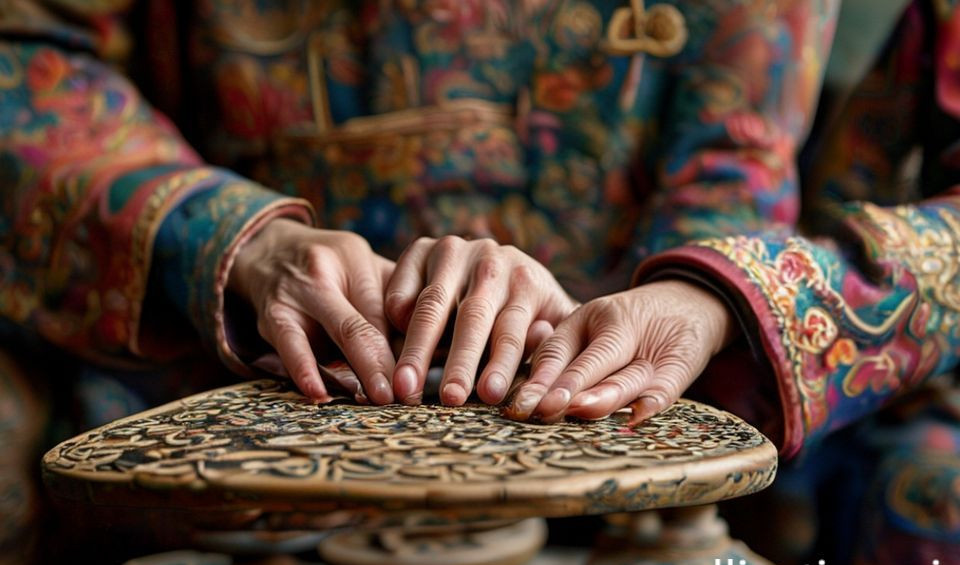 artisan's hands shaping bamboo, representing the intimate dialogue between maker and material central to authentic Chinese craftsmanship." loading="lazy" />
The Grammar of Tools and Materials
Every craft begins with a physical dialogue, a foundational language spoken between human hands and the raw substance of the world. This dialogue is governed by a strict grammar, where form is irrevocably dictated by function, and no element exists without purpose. Consider the zhà dao, the Chinese chef’s cleaver. Its imposing rectangular blade isn’t a stylistic quirk; it’s a multifunctional platform engineered for efficiency. The spine can tenderize meat, the broad flat can crush garlic and transport prepped ingredients, and the heel can crack small bones. A master bladesmith in Longquan, a city famed for its sword-making heritage, engages in a nuanced metallurgical conversation. He doesn’t just forge a shape; he carefully tempers layered steel to create a blade that holds a resilient, razor-sharp edge while remaining soft enough in the core to be easily re-sharpened by its owner for a lifetime. The handle, often crafted from dense, water-resistant rosewood or grippy micarta, is meticulously shaped for a precise pinch grip that affords control and reduces fatigue during hours of preparation. There are no superfluous elements. Each curve, each subtle shift in weight distribution, answers a specific question posed by daily use.
This principle extends far beyond the kitchen. The gentle curve of a bamboo carrying pole, or biǎn dan, is calculated to flex in harmony with a walker’s gait, distributing weight dynamically to ease the burden. The specific clay body of a Yixing teapot is selected not just for its color, but for its porous nature, which over years of use absorbs the essence of tea, subtly seasoning each subsequent brew. The material is never forced into submission; it is understood, respected, and guided to fulfill its highest potential. This deep material intelligence is a hallmark of the tradition, where the properties of bamboo, clay, silk, lacquer, and metal are not obstacles to overcome, but partners in creation.
The Rhythm of Repetition and Refinement
Precision in this realm rarely emerges from a single flash of inspiration. Instead, it is born from ritualized practice, a rhythm of repetition and observation that hones both the object and the artisan. Mastery is a slow accretion of knowledge, often gained through patient, cyclical processes that align human effort with natural forces.
A weaver of xiang yun sha, the fragrant cloud silk from Shunde, engages in a months-long dance with nature. She repeatedly dips hand-woven silk into a slurry of iron-rich Pearl River mud, then lays it out to dry under the southern sun. This process is repeated over thirty times. The result is far more than a color; it is a transformation. The fabric becomes crisp, naturally water-resistant, breathable, and develops a unique, luminous patina with wear, growing more beautiful as it ages. The process isn’t mystical; it’s a controlled, cumulative application of natural chemistry and solar energy, a partnership with the environment documented by researchers studying traditional textile techniques.
Similarly, a carpenter constructing a Ming-style cabinet employs complex, interlocking mortise-and-tenon joints, often using dozens of joints where a single nail might suffice. This isn’t anachronistic showmanship. It is a brilliant solution to a material’s nature. Solid wood expands and contracts with seasonal humidity. The intricate joinery, cut with exquisite precision, allows the entire structure to move as one living unit without splitting or warping. The carpenter knows that applying traditional hide glue, which retains a degree of flexibility, creates a bond more durable and sympathetic to this movement than any rigid modern synthetic adhesive. These techniques are not mere steps in a manual; they are living archives of practical problem-solving, passed down not through textbooks, but through gesture, touch, and shared practice in the workshop.
The refinement comes from noticing—the way a particular bamboo strip sings when bent just so, or how the viscosity of lacquer changes with the morning’s humidity—and adjusting one’s actions accordingly, in a feedback loop that never truly ends. This embodied knowledge, built over a lifetime, is what separates true craft from simple assembly.
A Voice from the Workshop
This philosophy finds its clearest expression in the words of the artisans themselves. Master Li, a third-generation bamboo basket maker in a Zhejiang village, puts it plainly as his fingers fly across a weaving pattern: “People see the pattern and say it’s beautiful. I see the structure. The six-pointed star weave here”—he points to the basket’s base—“distributes weight evenly so vegetables won’t bruise at the bottom. The thicker ribs are placed exactly where the hand lifts. If your shoulder doesn’t ache after carrying it full from the fields, then I’ve done my job. My grandfather taught me that the best compliment is not ‘This is art,’ but ‘This still works.'”
His words cut to the core: craftsmanship is ultimately measured by enduring performance and human comfort. It is empathy made physical. Another artisan, a potter from Jingdezhen, echoes this sentiment: “We talk about the ‘soul’ of a piece. But that soul isn’t magic. It’s the sum of correct decisions—the right clay, the right wheel speed, the right firing temperature. When all those decisions align, the pot feels alive because it is perfectly fit for its purpose.” This focus on fitness-for-purpose creates a profound connection between object and user, one that mass-produced items, designed for universality and cost-cutting, rarely achieve.
Modernity and the Persistence of Craft
The relentless tide of industrial mass-production and globalized supply chains poses an existential challenge to these time-intensive practices. The economic logic of speed and scale often seems diametrically opposed to the values of slow, deliberate making. Yet, authentic Chinese craftsmanship is not a relic in retreat; it is evolving and finding new relevance in the 21st century.
The very qualities that define it—sustainability, durability, and a deep material intelligence—are increasingly prized in a world confronting the wastefulness of fast fashion and disposable culture. Organizations like UNESCO, through its Intangible Cultural Heritage lists, have helped spotlight and safeguard endangered craft traditions, providing a crucial framework for their preservation and raising global awareness.
More dynamically, a new generation is engaging with these traditions not out of mere obligation, but through creative innovation. Young designers are collaborating with master artisans, applying age-old techniques to contemporary forms and functions. A studio might use traditional blue-and-white porcelain methods to create minimalist lighting fixtures, or employ intricate qiang jin (carved gold lacquer) inlay on a modern musical instrument. This fusion respects the technique while allowing it to speak a new language.
Furthermore, the global appreciation for artisanal goods and “slow living” has opened direct market channels. Digital platforms and curated fairs allow master weavers or carvers to connect with an international audience that values the story and integrity behind an object, willing to invest in a piece that will last for generations. This economic shift is significant; reports from Statista show consistent growth in the global market for luxury and artisanal goods, indicating a viable economic path for high-quality craftsmanship that bypasses traditional, often exploitative, retail markups. This isn’t about nostalgia; it’s about a conscious choice for quality, meaning, and sustainability over mere quantity.
Craftsmanship as a Lens for Living
The principles underlying authentic Chinese craftsmanship extend beyond the workshop, offering a valuable lens through which to view our own consumption and daily lives. In an age of digital distraction and planned obsolescence, the craft ethos champions focus, patience, and long-term value.
Consider the act of maintaining a hand-forged knife. The regular honing and occasional sharpening become a small ritual, a moment of care that reinforces the object’s value and the user’s skill. This stands in stark contrast to the frustration of a cheap knife that dulls quickly and is thrown away. The craft object demands engagement and rewards it with superior performance and longevity. This relationship fosters a sense of stewardship rather than ownership.
Studies and commentaries on well-being often highlight the mental health benefits of engaging with tangible, well-made objects and environments. While not making direct medical claims, the mindful engagement encouraged by craftsmanship aligns with broader concepts of living intentionally. Surrounding ourselves with items that have a clear purpose, a known origin, and inherent durability can reduce the cognitive load and stress associated with clutter and broken, poorly made goods. It cultivates an appreciation for substance over surface.
Actionable Insights: Engaging with Authentic Craftsmanship
For those seeking to bring the spirit of authentic craftsmanship into their lives, the path isn’t about acquiring museum pieces or spending exorbitantly. It is about a shift in perspective and informed, mindful engagement.
- Learn to See the Details: When evaluating a handcrafted item, don’t just look at the overall form. Examine the joinery on a piece of furniture—are there dovetails or mortise-and-tenon joints, or is it simply glued and screwed? Look at the consistency of weave in a textile, or the finish on the underside of a ceramic piece. The care taken in hidden places is a hallmark of true craftsmanship. A machine-made item is often identical in every hidden corner; a handcrafted one reveals the maker’s attention throughout.
- Understand the Material Story: Ask what something is made from and why. A basket made from locally sourced, sustainably harvested bamboo has a different narrative—and environmental footprint—than one from synthetic fibers. A chef’s knife made from high-carbon steel requires different care (drying to prevent rust) but offers a sharper, longer-lasting edge than many stainless steels. Appreciating the material’s origin and properties is the first step to appreciating the craft and becoming a responsible custodian of the object.
- Value Use and Patina: Embrace the idea that a well-made object improves with use. The slight wear on a wooden handle that conforms to your grip, the softening of a linen apron, the deepening color of a leather sheath, the seasoning of a cast-iron wok—these are not flaws, but badges of honor. They are a record of a life well-lived and a partnership between object and user. This philosophy champions durability and history over the sterile perfection of the never-used.
- Support the Artisan Ecosystem: Seek out reputable makers, cooperatives, or specialty retailers who are transparent about their sources and practices. When possible, buy directly from the artisan or through trusted platforms that ensure fair compensation. This ensures a greater portion of the value goes to the hands that created the object, helping to sustain the craft for the future. Look for stories, not just specifications.
- Start Small and Practical: You needn’t furnish an entire home. Begin with an item you use daily. A perfectly balanced ceramic tea cup that delights your morning ritual, a hand-forged vegetable cleaver that makes cooking a joy, or a sturdy canvas tote that replaces disposable bags. Live with one well-made object. Notice how its integrity, its quiet reliability, begins to inform your other choices, naturally steering you away from the disposable.
The quiet power of authentic Chinese craftsmanship lies in its profound humanity. It represents a covenant between maker and user, a promise of reliability and thoughtful creation. It stands as a testament to the idea that our objects can be more than passive tools; they can be partners in our daily lives, embodying care, wisdom, and a deep, respectful connection to the material world. In choosing and cherishing such objects, we do more than acquire things—we participate in a timeless conversation, affirming that how something is made matters as much as what it is, and that true value is built to last, to be used, and to tell a story far into the future.
You may also like
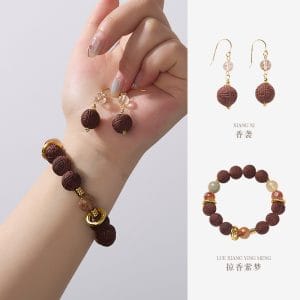
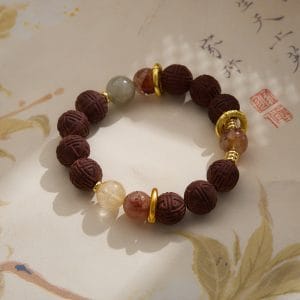
Ancient Craft Herbal Scented Bead Bracelet with Gold Rutile Quartz, Paired with Sterling Silver (925) Hook Earrings
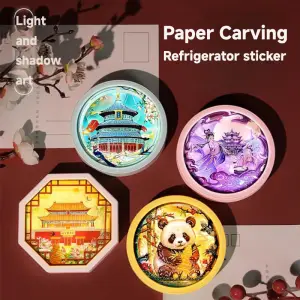
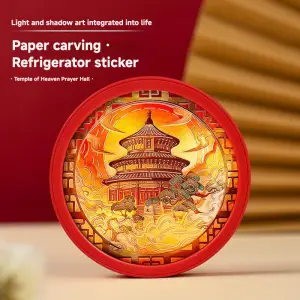
Original price was: $322.00.$198.00Current price is: $198.00. Add to cartThe Palace Museum Paper-Cut Light Art Fridge Magnets: Chinese Cultural Style Creative Gift Series
Price range: $27.00 through $36.00 Select options This product has multiple variants. The options may be chosen on the product pageHandwoven Zhuang Brocade Tote Bag – Large-Capacity Boho Shoulder Bag
Original price was: $178.00.$154.00Current price is: $154.00. Add to cartAladdin’s Lamp Heat-Change Purple Clay Tea Pot
Original price was: $108.00.$78.00Current price is: $78.00. Add to cartBambooSoundBoost Portable Amplifier
Original price was: $96.00.$66.00Current price is: $66.00. Add to cartAncient Craftsmanship & ICH Herbal Beads Bracelet with Yellow Citrine & Silver Filigree Cloud-Patterned Luck-Boosting Beads
Original price was: $128.00.$89.00Current price is: $89.00. Add to cart