The animation landscape is undergoing a quiet transformation, one that blends centuries-old artistic traditions with cutting-edge digital tools. While much of the industry races toward hyper-realistic CGI, a growing movement finds its power in the very opposite—the deliberate imperfections and emotional resonance of ink wash techniques. This revival isn’t merely nostalgic; it’s a sophisticated fusion where ancient brushwork principles meet algorithmic fluid dynamics, creating a visual language that speaks directly to human emotion through its very unpredictability.
The Digital Brushstroke Renaissance
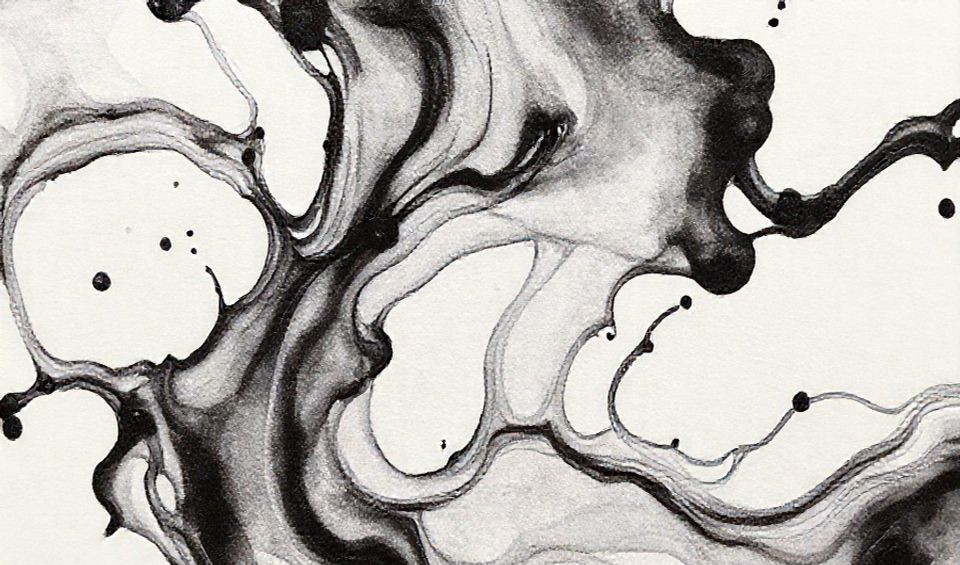
Modern animators aren’t simply replicating ink wash aesthetics; they’re reinventing the medium for contemporary storytelling. Studios like China’s GCI Digital have developed proprietary software that mimics the unpredictable behavior of ink on paper, capturing the way pigments bleed and settle. One animator describes the process as ‘collaborating with the medium rather than controlling it.’ This approach yields sequences where a single brushstroke might transform from a mountain range into a dragon’s spine, maintaining the spontaneous quality that defines traditional ink painting.
Recent productions demonstrate how these techniques serve narrative purpose. In the award-winning short ‘River of Stars,’ director Li Wei used ink diffusion to represent memory—scenes becoming clearer or more abstract as characters recalled events. The production team created over 300 custom brush presets to achieve specific emotional tones, from sharp, angry strokes for conflict scenes to soft, blurred washes for moments of reflection. This attention to emotional granularity shows how technical innovation serves artistic vision, with each brushstroke carrying symbolic weight beyond its visual function.
Practical applications extend beyond feature films into education and cultural preservation. The UNESCO Creative Cities Network has documented how animation studios in Suzhou—a city famous for traditional ink painting—are training young artists in digital ink techniques. “We’re not replacing the old masters,” says cultural director Elena Petrova, “but creating a new generation who can speak both languages fluently.” These hybrid artists develop what she calls “brush memory”—the instinctual understanding of how ink should behave, whether applied to rice paper or rendered through pixels.
Technical Innovation Meets Artistic Imperfection
The technical challenges of ink wash animation have spurred remarkable innovations. Unlike conventional animation where elements remain consistent, ink wash requires embracing variability. ‘We actually program intentional instability into our tools,’ explains technical director Maria Chen. ‘If every brushstroke behaved identically, we’d lose the essential character of the art form.’
This philosophy has led to the development of fluid dynamics engines that simulate ink absorption rates across different ‘paper’ textures. One European studio created a system that tracks the ‘water content’ of virtual brushes, affecting how subsequent strokes interact. The result is animation that feels authentically handcrafted, even when produced through entirely digital means. These technical advances haven’t gone unnoticed—patent applications related to digital ink simulation have increased by 40% in the past three years alone, according to global IP office data.
‘The most challenging aspect isn’t the technology—it’s unlearning the pursuit of perfection. We spend years training to make every frame flawless, then have to deliberately introduce what would traditionally be considered errors. A smudge becomes emotional weight; a bleeding edge becomes transition. It requires completely rethinking what makes animation effective.’ — Zhang Min, Lead Animator at Morning Sun Studios
This reorientation toward controlled imperfection represents a broader shift in digital arts. Where early computer animation sought to eliminate all traces of human touch, ink wash animation deliberately incorporates them. Technical artists now speak of “happy accidents”—those moments when algorithmic unpredictability creates something more beautiful than planned. One studio even maintains a “serendipity library” of unexpected digital ink behaviors that artists can browse for inspiration.
Cultural Roots and Global Expressions
While ink wash animation has deep roots in East Asian artistic traditions, particularly Chinese shuimo and Japanese sumi-e, contemporary practitioners are expanding its cultural vocabulary. Korean animators have developed techniques combining ink wash with modern calligraphy, while French studios experiment with European watercolor traditions. The common thread remains the embrace of fluidity and suggestion over precise representation.
In Mumbai, studio head Rajiv Kapoor describes how his team adapted ink wash principles to tell stories from Indian mythology. “We discovered that the technique’s inherent ambiguity actually helped convey the mystical qualities of our ancient tales,” he notes. “When a deity’s form emerges from swirling ink, it feels more divine than any photorealistic rendering could.” Their production of “The Elephant’s Memory” used ink bleeds to represent reincarnation—forms dissolving and reforming in continuous flow.
The World Health Organization has even noted the therapeutic potential of these techniques, with art therapists reporting that the fluid, forgiving nature of digital ink wash helps patients express complex emotions that might remain trapped in more rigid media. This psychological dimension adds another layer to the medium’s growing relevance.
Practical Implementation for Aspiring Animators
For artists interested in exploring ink wash animation, several approaches can ease the transition from traditional digital workflows. Begin with observational drawing of actual ink paintings, noting how pigments interact with different papers and moisture levels. Experiment with pressure-sensitive tablets set to maximum sensitivity to capture subtle variations in touch. Study traditional ink painting principles like “flying white” (when a dry brush creates broken strokes) and “boneless style” (forms without outlines). Practice with free digital painting tools that offer ink simulation before investing in specialized software.
Technical director Sofia Martinez recommends what she calls “the water-first approach”: “Start by focusing on simulating water behavior rather than ink. Once you understand how moisture moves across surfaces, adding pigment becomes much more intuitive.” She suggests simple exercises like digitally recreating a single drop of water spreading across absorbent paper before attempting complex brushwork.
Many successful projects begin with what animators call “ink tests”—short, experimental sequences focused purely on material behavior rather than narrative. These function like musical scales for visual artists, building familiarity with the medium’s possibilities and limitations. The team behind “River of Stars” spent three months on such tests before animating a single story scene.
Economic Viability and Industry Adoption
As the technique matures, its commercial applications are expanding beyond artistic shorts into advertising, gaming, and educational content. Brands seeking to convey authenticity and craftsmanship increasingly turn to ink wash aesthetics. A recent Statista market analysis showed a 22% annual growth in client requests for “handcrafted digital aesthetics” across European and Asian markets.
Production costs, while initially higher than conventional animation due to specialized tools and training, are decreasing as software becomes more accessible. The development of open-source ink simulation plugins has particularly helped smaller studios enter the field. What once required custom-built solutions can now be achieved with modified versions of mainstream animation software.
Streaming platforms have become significant supporters of the form, with several launching dedicated collections of ink wash animation. “Audiences are hungry for visual diversity,” notes content acquisition head David Lin. “After years of homogenized CGI, the textured, tactile quality of ink wash provides a refreshing sensory experience.” His platform has seen completion rates 18% higher for ink wash productions compared to traditional animation.
The Future Flow of Digital Ink
Emerging technologies promise to further blur the line between physical and digital ink practices. Researchers at Tokyo University are developing displays that can physically recreate ink absorption using microfluidic technology. Meanwhile, AI systems are being trained to understand the aesthetic principles of classical ink painting, not merely to replicate styles but to collaborate with human artists.
These developments point toward a future where the digital and traditional become increasingly intertwined. As tools become more sophisticated, they paradoxically bring us closer to the essential experience of traditional creation—the moment when brush meets surface and something unexpected emerges. The true potential of ink wash animation may lie not in perfect simulation, but in creating new forms of expression that honor ancient principles while speaking in contemporary visual languages.
The continued evolution of this art form reflects a broader reconciliation between technological progress and artistic heritage. In embracing the beautiful accidents and emotional resonance of ink wash, animators are rediscovering something essential about their craft—that technical mastery serves its highest purpose when it enables, rather than controls, the unpredictable flow of creativity.
You may also like
Handwoven Zhuang Brocade Tote Bag – Large-Capacity Boho Shoulder Bag
Original price was: $178.00.$154.00Current price is: $154.00. Add to cartAncient Craftsmanship & ICH Herbal Beads Bracelet with Yellow Citrine & Silver Filigree Cloud-Patterned Luck-Boosting Beads
Original price was: $128.00.$89.00Current price is: $89.00. Add to cartAncient Craft Herbal Scented Bead Bracelet with Gold Rutile Quartz, Paired with Sterling Silver (925) Hook Earrings
Original price was: $322.00.$198.00Current price is: $198.00. Add to cartBambooSoundBoost Portable Amplifier
Original price was: $96.00.$66.00Current price is: $66.00. Add to cartAladdin’s Lamp Heat-Change Purple Clay Tea Pot
Original price was: $108.00.$78.00Current price is: $78.00. Add to cartThe Palace Museum Paper-Cut Light Art Fridge Magnets: Chinese Cultural Style Creative Gift Series
Price range: $27.00 through $36.00 Select options This product has multiple variants. The options may be chosen on the product page