Walk into any home where ceramics are used rather than merely displayed, and you will likely find blue and white porcelain. It sits on breakfast tables holding morning tea, lines pantry shelves storing dry goods, and rests by the sink awaiting the day’s final rinse. This is not the porcelain of museum vitrines, though it shares their lineage. This is the durable, daily iteration—a testament to how a globally recognized art form settled into the rhythm of ordinary life. Its journey from the imperial kilns of China and the ateliers of Europe to the open shelves of modern kitchens is a story of aesthetic endurance and practical adaptation.
A Legacy Forged in Fire and Global Trade
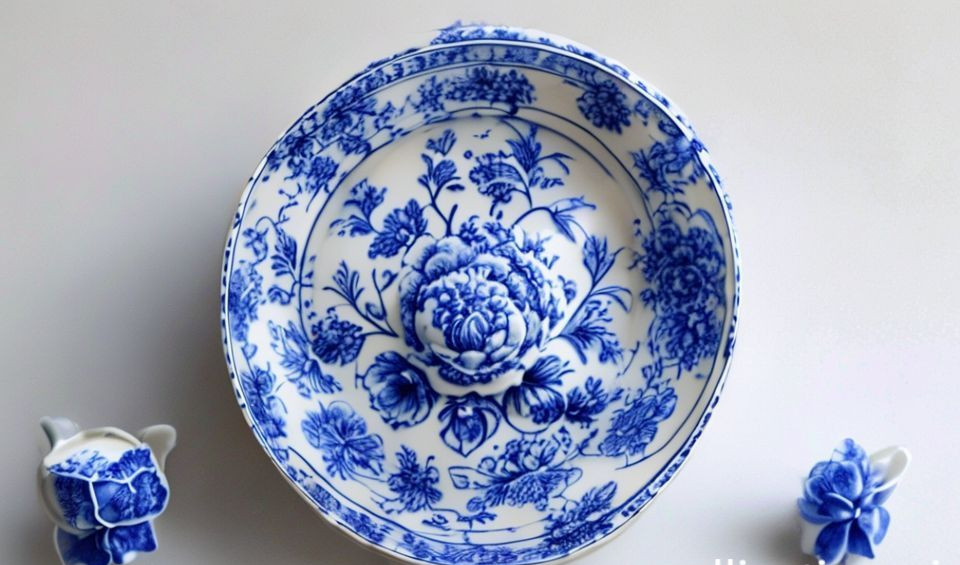
The origins of blue and white porcelain are rooted in a convergence of material science and international commerce during China’s Tang Dynasty. However, its iconic status was cemented in the 14th century under the Yuan and Ming dynasties. Artisans in Jingdezhen perfected the use of fine, white kaolin clay, pairing it with cobalt oxide pigment—a vibrant blue mineral often imported from Persia along ancient trade routes. This combination created a visual language of stunning clarity and contrast, producing luxury goods coveted by emperors and foreign potentates alike.
These pieces were diplomatic instruments and supreme symbols of status, flowing westward along the Silk Road. The insatiable European demand, particularly from the 16th century onward, spurred one of history’s first globalized manufacturing cycles. Chinese potters began producing specific forms and patterns, like the iconic “Kraak” ware, tailored for Middle Eastern and European markets. This early cultural exchange, documented by UNESCO in its studies of the Silk Road’s legacy, embedded the aesthetic of blue and white into visual cultures worldwide, long before the technology to create true porcelain left China.
The relentless pursuit to unlock China’s secret culminated in the early 18th century in Meissen, Germany. Yet, even before that breakthrough, artistic revolutions occurred. In the Dutch city of Delft, potters facing a shortage of Chinese imports developed a distinct answer: tin-glazed earthenware adorned with cobalt blue, known as Delftware. While materially different—opaque earthenware versus translucent porcelain—it wholeheartedly adopted and adapted the blue and white aesthetic. Windmills, local seascapes, and European scenes replaced Chinese dragons and florals, creating a parallel, accessible heritage. This dual lineage, East and West, converged on a shared principle: a decorated surface meant not just to be seen, but to be used daily.
Designs Engineered for Use, Not Just Display
The transition from a treasured import to a household staple was not accidental. It was engineered. The classic cobalt blue on a white ground is a masterclass in functional design. The high contrast provides exceptional visual clarity, making patterns legible across a busy table—a practical boon during service. Consider the ubiquitous “Willow Pattern,” an English invention inspired by Chinese motifs. Its dense network of bridges, trees, and fences is not merely decorative; it expertly camouflages the minor scratches, knife marks, and wear that accumulate over decades of use. A solid-color platter would show every blemish, while the busy pattern maintains a presentable, even charming, appearance through years of family dinners.
Thoughtful layout transforms these pieces from passive containers into active tools. Designs are often arranged with the user in mind. Centralized medallions or radiating bands on plates and platters create natural boundaries, subtly guiding portioning and presentation. A soup tureen typically features a clear, unadorned well at its center for ladling, reserving ornate decoration for the lid and sides. Spouts on pitchers are carefully painted to avoid a messy dribble line, and cup handles are shaped to remain cool and comfortable. This meticulous consideration extends to form. A ginger jar’s wide mouth and domed, weighted lid were designed for easy access and an airtight seal for storing tea or spices, its beauty secondary to its practical purpose.
The functionality is molecular. The cobalt decoration is applied as an underglaze, then fired at temperatures exceeding 1300°C. This process fuses the pigment with the porcelain body beneath a layer of glass-like glaze, creating a non-porous, impervious surface. It resists staining from oils, coffee, or potent spices like turmeric—a common kitchen challenge. This inherent hygienic quality, aligning with the World Health Organization’s emphasis on non-porous surfaces for preventing bacterial growth, is a centuries-old feature. The union of resilient, stain-resistant decoration and thoughtful form is what propelled blue and white porcelain from palace treasuries to pantry shelves around the world.
The Quiet Evolution: From Historic Kiln to Modern Kitchen
Today, the tradition continues through a quiet evolution, measured not in artistic manifestos but in solved domestic problems. Contemporary ceramicists and heritage manufacturers operate with a dual awareness: a deep reverence for historical technique and a clear-eyed view of modern life. In Jingdezhen, the centuries-old “porcelain capital,” potters like Sarah Chen note a distinct shift. “Clients still love the history,” she says, “but now they ask, ‘Can it go in the dishwasher? Is it microwave safe?’ The desire is for a piece that feels timeless but fits seamlessly into today’s routines.”
This adaptation manifests in intelligent updates. Clay bodies may be slightly reformulated for greater thermal shock resistance, accommodating modern ovens. Traditional motifs are scaled and repositioned for contemporary ergonomics; a sprawling peony might be condensed to fit the curve of a latte mug, its stem intentionally forming a comfortable thumb grip. The production process itself blends old and new. In a heritage Delft workshop, a master painter might still execute a central scene by hand, while a digitally-assisted printer applies a perfectly consistent border pattern, ensuring durability and efficiency.
“I don’t think of myself as an artist when I’m painting a hundred identical bamboo fronds on a plate rim. I think of myself as an engineer. That pattern needs to be clear, consistent, and durable enough that someone will still enjoy using that plate in twenty years. The beauty is a byproduct of that intention.” — Leo Martínez, production painter at a heritage workshop in Delft.
The result is ware that honors its ancestry while explicitly answering to contemporary logistics. It’s a coffee cup that doesn’t stain, a dinner plate that stacks neatly in a standard cupboard, and a mixing bowl that can travel from stand mixer to refrigerator to table without losing its dignity. This drive for practical beauty fuels a resurgence. Market analysis from Statista shows consistent growth in the premium tableware sector, with consumers increasingly investing in craftsmanship and longevity over disposable home goods. In a world of fast fashion, the slow, enduring value of well-made porcelain resonates anew.
Integrating Blue and White into Daily Life: Practical Insights
The ultimate test of any functional object is how effortlessly it becomes part of daily life. Blue and white porcelain, with its neutral yet characterful palette, excels through sheer versatility. The classic scheme is neither strictly cool nor warm, allowing it to bridge disparate design eras. A stack of Dutch Delft plates can complement mid-century modern furniture, while a Chinese-style vase can add narrative depth to a minimalist Scandinavian shelf.
Begin with multipurpose foundation pieces. A large, sturdy serving platter is arguably the most useful item one can own. It can present a holiday roast, organize a cheese board, hold a collection of potted herbs, or serve as a dramatic base for a tablescape of candles. Similarly, a set of nesting mixing bowls in a classic pattern is endlessly useful for prep, serving, and storage. The key is to choose items you will handle regularly, allowing their practical virtues—weight, balance, durability—to become second nature.
Embrace the art of the mix. The history of blue and white is one of glorious cross-pollination. There is no rule demanding strict sets. A Japanese Imari ware salad plate can look stunning next to an English transfer-ware dinner plate and a hand-painted Portuguese tile as a trivet. The unifying elements are the color palette and the shared ethos of craft. Seek harmony in scale and intensity: pair a busily patterned teapot with simpler, banded cups to create visual balance and let each piece shine.
Most importantly, embrace the evidence of a life lived well. The fine network of cracks in the glaze, known as crazing, or the gentle silvering of a cobalt line from decades of utensil contact, are not flaws. They are a patina of memory. Unlike a perfect, untouched ornament, a well-loved piece of blue and white porcelain gathers narrative weight. That chip on the soup tureen’s rim might recall a hectic Thanksgiving decades past; the slight wear on a favorite mug’s handle speaks of countless quiet mornings. These objects become heirlooms not through mere age, but through sustained, cherished utility.
A Sustainable Choice in a Disposable Age
In an era defined by planned obsolescence and fleeting trends, high-quality blue and white porcelain stands as a quiet act of resistance. Its core value proposition is longevity. A well-made piece, whether from a historic kiln or a contemporary studio, is designed for generations of use. This inherent durability makes it a profoundly sustainable choice. Investing in repairable, timeless design moves us away from a cycle of constant consumption and waste.
The materials themselves are a testament to endurance. True porcelain, born of kaolin and fired at extreme temperatures, is one of the most durable ceramic bodies ever created. Its non-porous nature ensures it doesn’t absorb odors or flavors and can be sterilized, guaranteeing hygiene for centuries. This resilience directly reduces waste. As environmental agencies globally advocate for reducing single-use products, durable tableware offers a beautiful and tangible alternative. Choosing a reusable blue and white porcelain cup over a disposable one is a small but meaningful act, connecting a personal daily ritual to a broader ethic of care—for objects, resources, and the slower rhythms of home.
The enduring presence of blue and white porcelain on our tables and shelves affirms a simple, powerful idea: that the objects we use most should also bring us joy. It demonstrates that utility and artistry are not opposing forces, but natural and necessary allies. In a world often divided between the purely decorative and the starkly functional, these pieces occupy a vital, humane middle ground. They remind us that our daily rituals—the morning coffee, the shared meal, the storing of provisions—are worthy of beauty and intention. They are not merely dishes; they are quiet, steadfast companions to our lives, engineered for use, refined by history, and waiting patiently by the sink for the day’s final rinse.
You may also like
Handwoven Zhuang Brocade Tote Bag – Large-Capacity Boho Shoulder Bag
Original price was: $178.00.$154.00Current price is: $154.00. Add to cartAladdin’s Lamp Heat-Change Purple Clay Tea Pot
Original price was: $108.00.$78.00Current price is: $78.00. Add to cartBambooSoundBoost Portable Amplifier
Original price was: $96.00.$66.00Current price is: $66.00. Add to cartAncient Craftsmanship & ICH Herbal Beads Bracelet with Yellow Citrine & Silver Filigree Cloud-Patterned Luck-Boosting Beads
Original price was: $128.00.$89.00Current price is: $89.00. Add to cartAncient Craft Herbal Scented Bead Bracelet with Gold Rutile Quartz, Paired with Sterling Silver (925) Hook Earrings
Original price was: $322.00.$198.00Current price is: $198.00. Add to cartThe Palace Museum Paper-Cut Light Art Fridge Magnets: Chinese Cultural Style Creative Gift Series
Price range: $27.00 through $36.00 Select options This product has multiple variants. The options may be chosen on the product page