In a quiet studio outside Jingdezhen, a potter’s hand traces the same cobalt-blue lotus motif that once graced vessels for the Ming imperial court. The clay is fresh, the kiln modern, but the gesture reaches back through six centuries. This is not mere copying; it is a conversation with history, where each replica becomes a tangible bridge to an era when porcelain served as diplomatic currency, artistic manifesto, and technological marvel. Today, the creation of Ming dynasty porcelain replicas is a sophisticated field that sits at the intersection of art, archaeology, and cultural preservation, driven by a deep reverence for one of humanity’s most celebrated artistic achievements.
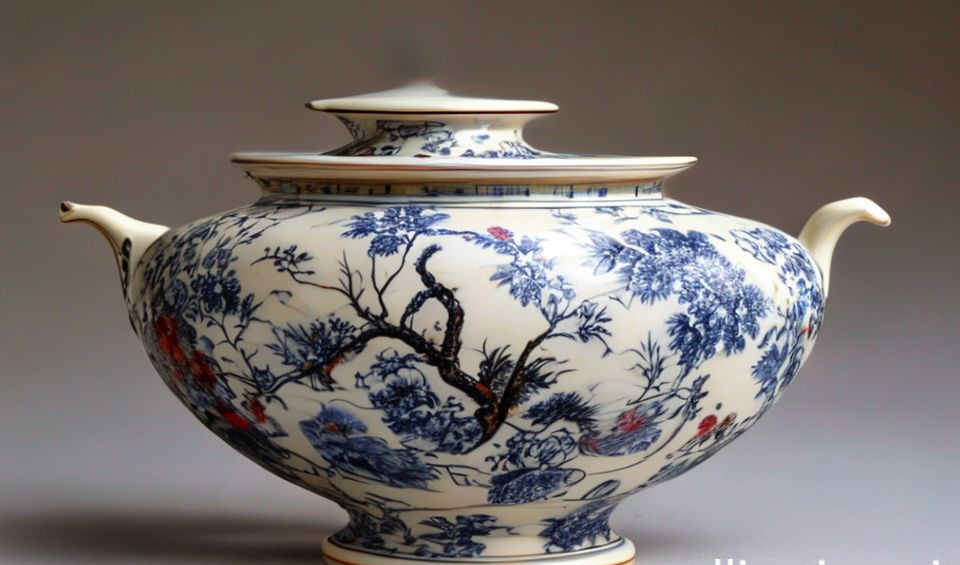
The Weight of the Imperial Mandate
Ming dynasty porcelain, particularly from the early 15th-century reigns of Yongle and Xuande, was never just pottery. It was materialized authority. The establishment of the imperial kilns at Jingdezhen under the Ming created a tightly controlled, state-sponsored system dedicated to producing wares exclusively for the court and diplomatic gifts. The famous blue-and-white porcelain, with its luminous white body, brilliant glaze, and precise underglaze cobalt painting, became a global symbol of Chinese refinement and power. The process was ruthlessly selective. Only the most flawless pieces—estimates suggest perhaps one in ten—passed the exacting inspection for the Forbidden City. The rest were deliberately smashed and buried in kiln sites to prevent any inferior work from reaching the market, a practice that has provided modern archaeologists with invaluable fragments.
This legacy of uncompromising perfectionism directly informs the ethos of high-end replica production today. A master artisan in Jingdezhen might spend upwards of three months on a single vase, engaging in a painstaking process of historical re-creation. It begins with sourcing the right clay—often from the same local deposits used for centuries—and processing it to achieve the famed “eggshell” translucency. The cobalt pigment is critical; to mimic the characteristic “heaped and piled” effect of the early Ming, where the imported Persian cobalt bled into subtle, three-dimensional pools of blue, artists may grind and mix minerals for weeks. Firing in a modern kiln, while more controllable than a wood-fired dragon kiln, still requires an intuitive understanding of how glaze and body interact under intense heat. The goal is not deception for the illicit art market, but resonance—to craft an object that feels, in its weight, balance, and visual impact, as if it carries the enduring mandate of heaven.
Cultural Memory in Glaze and Form
Beyond technical imitation, the most compelling replicas function as active vessels of cultural memory. They physically reinstigate historical relationships between object, space, and human experience. Consider the meiping, or “plum vase,” form. With its elegant, swelling shoulders, narrow base, and small mouth, it was designed in the Song dynasty and perfected in the Ming to hold a single, flowering branch for scholarly contemplation. A modern replica of a Ming meiping, even if destined for a living room shelf, re-establishes that intimate dialogue between nature and artifice, inviting a moment of quiet reflection. The painted narratives are similarly reactivated. Lotuses for purity, peonies for wealth and honor, dragons for imperial power and cosmic force—these are not static images but a visual language. As Dr. Lin Mei, a curator of Chinese ceramics, observes, “A thoughtful replica allows a contemporary viewer to complete the circuit of meaning. They see the dragon chasing the pearl and, consciously or not, engage with a symbol system that governed aesthetics, cosmology, and social order for generations.” This is where replication transcends craft and enters the realm of living cultural transmission, keeping dormant symbols in active circulation.
“We are not faking history. We are providing a tactile vocabulary for it,” says master artisan Zhang Wei, whose family has worked in Jingdezhen for four generations. “When a collector holds my replica of a Xuande-era stem cup, they feel the same thinness of the rim, the same perfect balance in the hand. That physical connection sparks curiosity about the original context—the court rituals, the maritime trade routes, the hands that first shaped it. The replica becomes the first page of a story, not the last.”
This narrative function is particularly poignant when dealing with “orphaned” forms—objects whose original prototypes were lost to time, conflict, or destruction. A replica based on archaeological fragments, or on meticulous study of court paintings that depict porcelain now vanished, literally re-embodies a missing chapter. In this light, the replica is an act of disciplined historical imagination. Grounded in scholarship and skilled handwork, it offers a provisional wholeness where only traces remain, serving as a three-dimensional hypothesis about the past.
The Science and Scholarship Behind Authenticity
The pursuit of authenticity in a Ming dynasty porcelain replica is a multidisciplinary endeavor. It relies not only on an artisan’s trained eye and muscle memory but also on rigorous scientific analysis and historical research. Archaeologists and material scientists play a crucial role by publishing detailed analyses of original Ming sherds. Studies published in journals like Ceramics International often use techniques like X-ray fluorescence to pinpoint the exact elemental composition of clays and cobalt pigments from specific imperial reigns. This data provides a chemical blueprint for top-tier replica studios.
For instance, the iconic “Mohammedan blue” of the early 15th century, achieved with imported cobalt from Persia, had distinct levels of iron and manganese that created its unique, slightly grainy, and vibrant hue. Modern artisans seeking to recreate this effect might blend specific mineral ores to match this profile, rather than using standardized modern cobalt. Similarly, the famed Jingdezhen clay, known as kaolin, undergoes mineralogical analysis. While the primary deposits are still used, understanding its historical processing—how it was levigated, aged, and wedged—is key to achieving the right plasticity and final porosity after firing. This scientific backing elevates the craft from imitation to informed re-creation, ensuring the replica resonates with the material truth of the original.
The Modern Replica Ecosystem: From Museum Shops to Master Studios
The world of Ming porcelain replicas is not monolithic; it exists on a broad spectrum of quality, intent, and accessibility. At one end are the mass-produced items found in souvenir shops and online marketplaces. These are often made from different clays, with decal-printed designs and uniform glazes. While they spread iconographic recognition, they lack the material and artistic authenticity of higher-tier work.
The middle tier includes better-quality wares produced by skilled Jingdezhen workshops for museums, specialty retailers, and discerning collectors. These pieces pay closer attention to form, glaze color, and hand-painted details. Institutions like the Shanghai Museum or the British Museum commission such replicas for their shops, allowing visitors to take home a materially informed souvenir of the artifacts they’ve admired. According to UNESCO, which recognizes Jingdezhen’s ceramic tradition as part of intangible cultural heritage, such practices help sustain traditional craftsmanship in a modern economy by creating a viable commercial outlet for skills that might otherwise fade.
The apex is occupied by the master studio replica, as described by artisans like Zhang Wei. These are often made-to-order, involve extensive research, and can command prices in the thousands of dollars. They are as much original works of art, interpreting historical techniques, as they are recreations. This tier directly supports the transmission of endangered skills—the knowledge of how to properly “mill” clay, compound ancient glaze recipes, or control a reduction firing—ensuring that the technological genius of the Ming kilns is not just studied in books but perpetually rediscovered in the studio. The economic model here is closer to that of a bespoke atelier than a factory, supporting a smaller number of highly specialized artisans.
Actionable Insights for Collectors and Enthusiasts
Navigating the replica market requires a discerning eye and clear intent. Whether you seek a beautiful object, a study piece, or a connection to history, practical considerations can guide your journey.
First, define your purpose. Are you looking for decorative art, a functional piece like a teacup, or a scholarly reference object? Your goal will determine the appropriate tier of replica to pursue. For those seeking a deeper connection, prioritize replicas that specify hand-throwing and hand-painting, use traditional materials like Gaoling clay, and are transparent about their inspirations (e.g., “based on a Xuande meiping in the Percival David Foundation”).
Second, learn to “read” the object. Examine the weight and sound; high-fired porcelain has a distinctive, resonant ring when lightly tapped. Look at the painting: are the cobalt-blue lines fluid and slightly uneven, with subtle tonal variations indicating hand-brushwork, or are they perfectly uniform, suggesting a decal? Turn the piece over. Many quality replicas will have a studio mark or seal on the base, a practice that honors tradition while honestly denoting its modern origin, unlike a forged reign mark intended to deceive. A study in the Journal of Cultural Heritage on authentication techniques emphasizes that such honest markings are a key differentiator between a reputable reproduction and a forgery.
Third, engage with the story. Purchase from reputable dealers, artisan collectives, or museum stores that provide provenance. When you acquire the piece, research the original form and its symbolism. Use the replica as a key to unlock history. Display a blue-and-white “moon flask” not just as ornament, but as a reminder of the vibrant cultural exchange along the Silk Road, where Chinese form met Persian pigment. The act of learning and connecting with cultural heritage has documented benefits. A World Health Organization report on the arts and health notes that engagement with cultural artifacts and practices can reduce stress and foster a sense of identity and belonging, suggesting that this historical exploration offers personal value beyond the aesthetic.
Preservation and the Ethics of Replication
The creation of Ming dynasty porcelain replicas sits within a complex ethical framework centered on preservation versus access. On one hand, museums are tasked with preserving fragile originals, which often means limiting handling and exposure to light. High-quality replicas solve this dilemma by providing accessible, durable surrogates. They can be used in educational outreach programs, handled by students, or displayed in environments unsuitable for priceless antiquities. This democratizes access to cultural heritage, allowing a wider audience to form a tactile connection that a glass museum case prohibits.
Conversely, the industry must vigilantly guard against replicas being used to fuel illicit art markets. The line between an honest reproduction and a deliberate forgery is defined by intent and transparency. Reputable artisans and dealers are explicit about an item’s modern origins. The problem arises when replicas are artificially aged, given false reign marks, and sold as genuine antiquities, which not only defrauds collectors but also muddies the historical record. Organizations like the International Council of Museums (ICOM) provide guidelines to help distinguish between legitimate cultural reproduction and illicit trafficking. The ethical replica, therefore, is one that celebrates its own making while paying homage to the source, never seeking to replace or obscure it.
The Replica in a Global Context
The significance of the Ming porcelain replica extends far beyond China’s borders. For centuries, original Ming porcelain was a premier global commodity, shaping tastes from Istanbul to Versailles and spurring imitation in places like Delft and Meissen. Today, high-quality replicas continue this dialogue of cross-cultural appreciation. They allow international audiences without access to museum vaults to experience the material sophistication of Ming art. In educational settings, they provide students and researchers with durable, handleable surrogates for fragile originals, making tactile learning possible.
Moreover, the replica industry is a vital economic and cultural pillar for Jingdezhen, the “Porcelain Capital.” It preserves an ecosystem of skills—miners, clay processors, throwers, painters, kiln masters—that might otherwise disappear in a purely industrial ceramic market. Data from Statista on the global art market and collectibles industry shows a sustained interest in cultural artifacts and high-quality reproductions, indicating that this demand helps keep traditional workshops viable. The global market for art reproductions and collectibles is a multi-billion dollar sector, within which niche, high-quality ceramics like Ming replicas find a dedicated audience. The replica, therefore, is not a ghost of the past but a dynamic participant in the present, ensuring that the flame of the Ming imperial kilns, in a very real sense, never goes out.
In the end, the quiet work in the Jingdezhen studio is a form of timekeeping. Each coil of clay, each brushstroke of cobalt, each firing is a measured step in sync with a centuries-old rhythm. The replica that emerges is a testament to continuity. It affirms that the values of the Ming potter—the pursuit of harmony between material and form, the encoding of meaning in decoration, the relentless drive for technical excellence—remain vital, compelling, and communicable. It is a bridge built not just to admire the far shore, but to walk across and bring something essential back.
You may also like
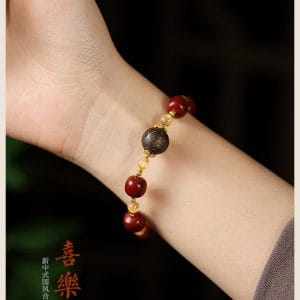
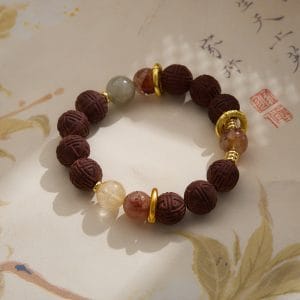
Ancient Craftsmanship & ICH Herbal Beads Bracelet with Yellow Citrine & Silver Filigree Cloud-Patterned Luck-Boosting Beads
Original price was: $128.00.$89.00Current price is: $89.00. Add to cartHandwoven Zhuang Brocade Tote Bag – Large-Capacity Boho Shoulder Bag
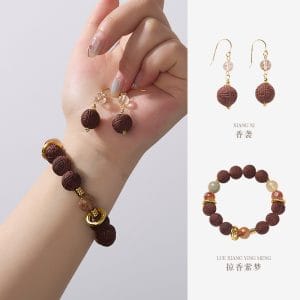
Original price was: $178.00.$154.00Current price is: $154.00. Add to cartAncient Craft Herbal Scented Bead Bracelet with Gold Rutile Quartz, Paired with Sterling Silver (925) Hook Earrings
Original price was: $322.00.$198.00Current price is: $198.00. Add to cartGuangxi Zhuang Brocade Handmade Tote – Ethnic Boho Large-Capacity Shoulder Bag
Original price was: $172.00.$150.00Current price is: $150.00. Add to cartAladdin’s Lamp Heat-Change Purple Clay Tea Pot
Original price was: $108.00.$78.00Current price is: $78.00. Add to cartThe Palace Museum Paper-Cut Light Art Fridge Magnets: Chinese Cultural Style Creative Gift Series
Price range: $27.00 through $36.00 Select options This product has multiple variants. The options may be chosen on the product page