In a sun-baked excavation trench, an archaeologist’s brush reveals not just pottery, but a civilization’s fingerprint. Ceramics, more than any other human creation, serve as archaeology’s most faithful witness. Unlike wood that rots or metal that corrodes, fired clay endures millennia, carrying intact the aesthetic choices, technical knowledge, and daily rituals of those who shaped it. This permanence transforms humble pots and plates into primary documents, written in glaze and form rather than ink. From the earliest hand-built vessels to today’s studio art, the story of clay is the story of humanity itself—a narrative of necessity, beauty, identity, and innovation etched in earth and fire.
The Vessel as Cultural Lexicon
Consider the seemingly simple question of a pot’s shape. Every curve, angle, and proportion is a word in a silent language. In Neolithic China, the elegant, long-necked hu vessels of the Yangshao culture, painted with swirling fish and dancers, spoke a language of fertility and communal harmony. Their forms were not arbitrary; they were designed for storage, for ritual libations, for connecting the community to the cycles of nature. Half a world away, centuries later, the Greeks perfected the amphora—its sturdy, tapered body and pointed base engineered for stability in the sandy holds of rolling ships, its generous handles allowing for easy transport. Its surface became a canvas for myths that defined the Hellenic worldview, turning a trade container into a storytelling medium.
This dialogue between function and meaning is universal. The Japanese tea bowl (chawan) in the wabi-sabi tradition, deliberately asymmetrical and glazed with unpredictable ash effects, embodies an entire philosophy valuing imperfection, transience, and humble materials. It is made not just to hold tea, but to focus the mind and appreciate the beauty of the flawed and the fleeting. Similarly, the coiled and polished blackware of the Pueblo peoples of the American Southwest, with its rounded, resilient forms, reflects a deep connection to the land and a cosmology where the vessel is seen as a metaphorical body or a container of life. The profile of a pot against the skyline of a shelf or altar communicates values—order, chaos, abundance, restraint—long after its makers’ voices have faded.
The Alchemy of Glaze: Color, Trade, and Secrecy
If form provides the syntax, then glaze offers the rich, shimmering vocabulary. The quest for color and texture was one of history’s great drivers of both trade and obsessive secrecy. It transformed common clay into objects of desire that crossed continents and defined empires.
Celadon’s elusive jade-green hue, achieved by a precise amount of iron oxide firing in a starved-oxygen kiln, was so prized in Song Dynasty China that it was said to resemble “the color of a clear sky after rain.” Korean potters, coveting the technique, reportedly risked their lives to learn its secrets, later refining it into their own celebrated Goryeo celadon, renowned for its exquisite clarity and delicate inlay work. This was more than a color trend; it was a marker of supreme refinement and spiritual purity, often associated with the nobility and the scholarly class.
In the Islamic world, a technological revolution occurred with the development of lusterware in 9th-century Iraq. By applying a metallic oxide overglaze and firing it in a smoky, reducing atmosphere a second time, potters created a radiant, metallic sheen that made earthenware mimic precious gold and silver. This alchemical marvel, mapping light onto clay, became a symbol of luxury and power. The technique migrated along trade and conquest routes, from Baghdad to Fatimid Egypt and eventually to Spain with the Moors, where it flourished in Valencia. Each adaptation added local flair, creating a tangible network of shared knowledge.
Perhaps no ceramic color is more globally iconic than cobalt blue on white porcelain. The vibrant blue, derived from cobalt oxide imported from Persia, became the signature of Chinese Ming Dynasty porcelain. This was not a solitary invention but a product of global exchange—Persian cobalt for Chinese kaolin and craftsmanship. The resulting pieces, like the famed “blue and white” ware, were exported worldwide, mapping ancient maritime trade routes onto the surfaces of plates and vases. A single glaze recipe can thus reveal entire chapters of economic history, intercultural dialogue, and the relentless human desire to transcend the mundane nature of earth.
“When I hold a 2,000-year-old terra sigillata cup from Roman Gaul,” notes archaeologist Dr. Elara Vance, “I’m not just analyzing its mineral content. I’m touching the exact spot where another hand rested. The slight thumb imprint on the base isn’t a flaw; it’s a signature. That cup tells me about the Roman legions’ taste, the local clay’s properties, and the speed of its production—a snapshot of imperial logistics and daily life in a frontier province. It’s a direct line to someone’s morning, centuries ago.”
Clay in the Crucible of History: From Industry to Archaeology
The story of ceramics is inextricably linked to the rise and fall of societies. The Industrial Revolution mechanized pottery production, most famously in the English city of Stoke-on-Trent, turning ceramics into affordable, mass-produced commodities. This democratized access but also standardized form, separating many users from the maker’s hand. Yet, even in this context, ceramics held historical weight. The types of pottery found at archaeological sites—their abundance, styles, and places of origin—allow researchers to date layers of occupation, trace trade networks, and understand economic patterns with remarkable precision.
For instance, the widespread distribution of Roman terra sigillata (sealed earth), a fine red-gloss pottery, across Europe and the Mediterranean serves as a physical map of the Empire’s commercial and cultural reach. In the modern era, organizations like UNESCO recognize the cultural heritage embedded in traditional ceramic crafts, inscribing practices like the manufacture of Talavera pottery in Mexico or the craftsmanship of Jawhar pottery in India onto Representative Lists of the Intangible Cultural Heritage of Humanity. These designations help safeguard living traditions against the pressures of globalization.
Ceramics also serve as crucial evidence in understanding daily life where written records are scarce. The analysis of residue inside ancient pots, a field known as molecular archaeology, can reveal the contents—whether it was olive oil, fermented beverages, or stewed meats—offering a direct menu of the past. As noted by the World Health Organization in studies on traditional food storage, the inherent properties of fired clay—its non-porosity and ease of cleaning—made it a vital technology for safe food preservation and water storage, directly impacting public health throughout history.
The Science Beneath the Surface: Material and Method
To truly appreciate ceramics is to understand the fundamental transformation they undergo. At its core, a ceramic object is the result of a chemical metamorphosis. Clay, a malleable mixture of fine-grained minerals, is shaped and then subjected to intense heat. This firing process, typically between 600°C and 1400°C, permanently alters its structure. The water molecules locked within the clay crystals are driven off, and new, strong bonds form between the silica and other minerals. This vitrification turns soft, vulnerable mud into a hard, durable material.
The type of clay body—earthenware, stoneware, or porcelain—dictates its character and use. Earthenware, fired at lower temperatures, remains porous unless glazed. It is the most ancient and widespread form. Stoneware, fired hotter, becomes vitrified and non-porous, ideal for durable tableware. Porcelain, the most refined, uses a specific white clay called kaolin and is fired at the highest temperatures, resulting in a translucent, white, and resonant body that captivated the world.
The kiln itself is a protagonist in the story. The shift from simple pit or bonfire firings to sophisticated updraft and downdraft kilns allowed for greater control over temperature and atmosphere. A kiln’s atmosphere—whether oxygen-rich (oxidizing) or oxygen-poor (reducing)—is a master variable. As seen in the creation of celadon, a reducing atmosphere can transform iron oxide from a rusty red colorant into the source of a soft grey-green glaze. This intricate dance of chemistry and physics, perfected over millennia, is what separates a fragile, sun-dried mud brick from a Ming vase that has survived centuries intact.
The Contemporary Resonance: Art, Identity, and Innovation
The continuum from functional object to profound cultural symbol shows no sign of breaking. In the 20th and 21st centuries, clay has been embraced by artists not as a craft medium, but as a powerful vehicle for conceptual expression. Contemporary artists like Edmund de Waal weave narratives of diaspora, memory, and loss into serene installations of countless porcelain vessels. His work references both the minimalist aesthetic and the history of porcelain itself—a material once so valuable it was called “white gold.”
For many communities, ceramics remain a vital act of cultural resilience and reclamation. Indigenous potters in the American Southwest, such as those from the Acoma Pueblo, actively revive ancestral coil-and-scrape techniques and traditional designs, often learning from fragments excavated by archaeologists. This practice is not mere replication; it is a dialogue across time, reasserting identity and sovereignty. “My grandmother’s hands knew this clay,” says potter and cultural historian Lucy Leuppe. “When I work it, I’m not just making a pot. I’m answering a question she left in the earth.”
The field is also surging with technological innovation. Advanced ceramics, engineered for extreme conditions, are critical in aerospace, biomedicine, and electronics. From heat-resistant tiles on space shuttles to biocompatible porcelain used in dental implants and joint replacements, the ancient material finds radical new applications. Meanwhile, digital fabrication techniques like 3D printing with clay are opening new frontiers of form, allowing artists and designers to create structures previously impossible to coil or throw on a wheel. This fusion of ancient material and cutting-edge technology, documented in journals like the Journal of the European Ceramic Society, points to a future where ceramics continue to solve human challenges.
Engaging with the Ceramic Legacy: Practical Insights
You need not be an archaeologist or a master potter to engage deeply with the world of ceramics. A more mindful approach to the objects around us and a bit of hands-on exploration can unlock new appreciation.
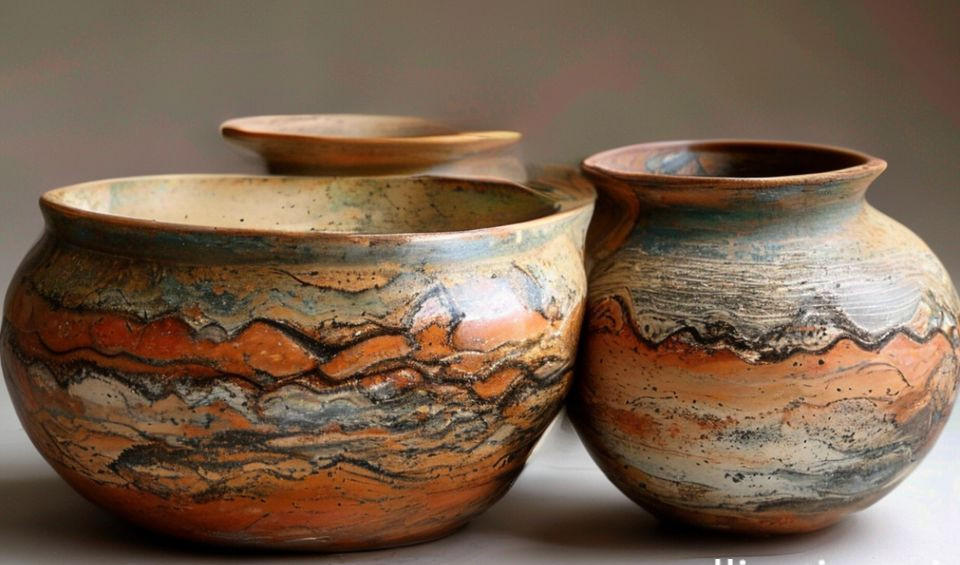
First, become a conscious observer. Next time you handle a ceramic mug, plate, or vase, look beyond its utility. Examine its weight and balance. Is it perfectly symmetrical or pleasingly irregular? Observe the glaze—is it uniform, or does it pool, break, or crawl, creating accidental beauty? These are the decisions of a maker, whether from a studio or a factory. Visiting local museums and focusing specifically on their ceramic collections can be revelatory. Look for the small tags that identify the clay body, glaze type, and firing technique; this technical data is the poetry of the process.
Second, trace the thread of influence. Notice how the sleek minimalism of a modern Scandinavian tableware brand might echo the simplicity of Song Dynasty ceramics, or how a contemporary artist’s textured, volcanic glaze relates to ancient Japanese shino ware. Resources like academic journals and publications from institutions like the Metropolitan Museum of Art offer accessible online archives that chart these connections across time and culture.
Finally, experience the material directly. Taking a beginner’s pottery class is the most profound way to understand the challenges and miracles inherent in ceramics. Centering clay on a wheel teaches physics and patience. Mixing a glaze reveals the alchemy of minerals—how a dash of copper can yield green or red, depending on the fire. As market analysis from Statista shows, the DIY and crafts market, including pottery, continues to grow significantly, reflecting a widespread desire for tangible, creative engagement in a digital age. You don’t need to create a masterpiece. The act of forming a simple bowl connects you to a chain of human experience that stretches back over 20,000 years.
The clay remembers. It holds the thumbprint of the Roman potter, the secret of the Song kiln master, the prayer of the Pueblo coiler, and the concept of the contemporary artist. In its enduring form, it offers a unique, unbroken thread back through the tapestry of human civilization. We live surrounded by these silent witnesses—in our kitchens, our museums, and our archaeological sites. By learning to read their forms and surfaces, we listen to the stories they have carried so faithfully through the fire.
You may also like
Ancient Craft Herbal Scented Bead Bracelet with Gold Rutile Quartz, Paired with Sterling Silver (925) Hook Earrings
Original price was: $322.00.$198.00Current price is: $198.00. Add to cartGuangxi Zhuang Brocade Handmade Tote – Ethnic Boho Large-Capacity Shoulder Bag
Original price was: $172.00.$150.00Current price is: $150.00. Add to cartAncient Craftsmanship & ICH Herbal Beads Bracelet with Yellow Citrine & Silver Filigree Cloud-Patterned Luck-Boosting Beads
Original price was: $128.00.$89.00Current price is: $89.00. Add to cartBambooSoundBoost Portable Amplifier
Original price was: $96.00.$66.00Current price is: $66.00. Add to cartHandwoven Zhuang Brocade Tote Bag – Large-Capacity Boho Shoulder Bag
Original price was: $178.00.$154.00Current price is: $154.00. Add to cartThe Palace Museum Paper-Cut Light Art Fridge Magnets: Chinese Cultural Style Creative Gift Series
Price range: $27.00 through $36.00 Select options This product has multiple variants. The options may be chosen on the product page