In the quiet corners of museums and archaeological sites, broken pottery speaks volumes. These fired earth fragments—some decorated with intricate patterns, others bearing the simple marks of daily use—form a continuous thread through human history. Unlike grand monuments or written records, ceramics offer an intimate archaeology of ordinary life, preserving the fingerprints of potters who shaped them centuries ago. This durability, born from the alchemy of earth and fire, has made clay an unparalleled archive of the human experience, chronicling not just the lives of kings but the daily rhythms of households across millennia.
Vessels as Cultural Signatures
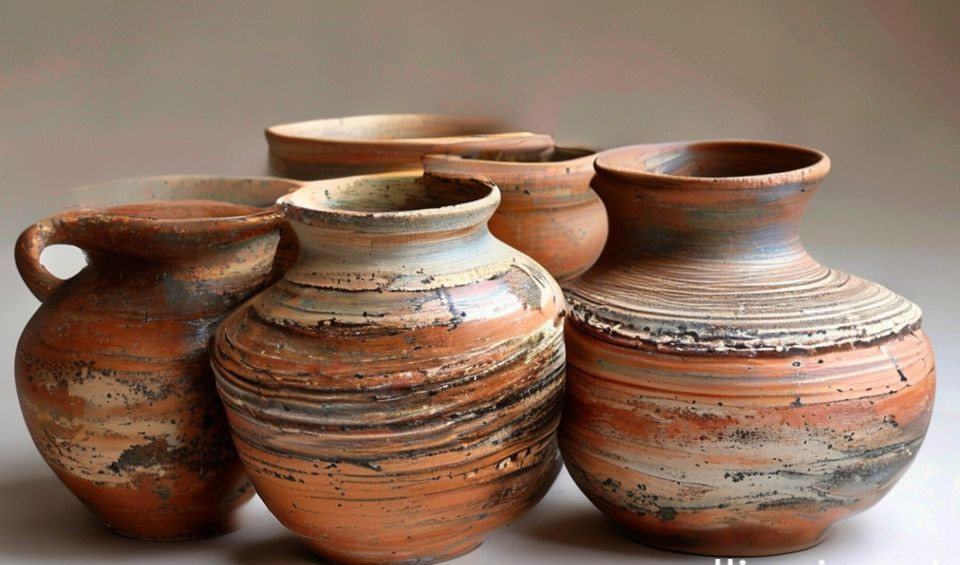
Every civilization has left its distinctive mark in clay, a complex visual language encoding values, beliefs, and social structures. The black-figure and red-figure pottery of ancient Greece served as narrative devices, with scenes from mythology and civic life adorning amphorae and drinking cups used in symposia. These were not passive decorations but active broadcasts of cultural ideals, meant to be discussed and interpreted in social settings. Far from the Mediterranean, the celadon wares of Korea’s Goryeo dynasty achieved a revered status that transcended function. Their subtle, crackled jade-green glazes were painstakingly achieved, embodying Buddhist ideals of tranquility and the Korean aesthetic principle of sobi, or restrained beauty. In the American Southwest, Ancestral Puebloan potters developed sophisticated geometric designs—black-on-white evolving into vibrant polychromes—that communicated clan identities, cosmological beliefs, and served as maps for spiritual journeys, embedding community knowledge into the very vessels used for storage and ceremony.
The movement of ceramic styles between cultures often tells a richer story of encounter and synthesis than any written treaty. The Ming dynasty’s blue-and-white porcelain provides a quintessential example of early globalization. When cobalt blue pigment imported from Persia met supremely refined Chinese porcelain technology, the resulting wares became one of the first truly global luxury commodities. Their immense popularity sparked imitation and adaptation from the Iznik workshops of the Ottoman Empire to the tin-glazed earthenware of Delft in the Netherlands, creating a worldwide aesthetic dialogue that lasted centuries. A single Ming vase excavated on the coast of East Africa tells a layered story of vast Indian Ocean trade networks, technological aspiration, and how a specific color scheme became a universal shorthand for refinement. These networks, which facilitated such exchanges, are part of the cultural heritage monitored by initiatives like UNESCO’s Silk Roads Programme, highlighting how material culture connects disparate peoples.
The Archaeology of Everyday Use
While courtly wares capture the eye in museum displays, the true, granular heartbeat of history is found in the humble cooking pot, the storage jar, the chamber pot. These utilitarian objects are the unwritten archives of domestic life, revealing how ordinary people cooked, ate, stored, traded, and organized their world. Archaeologists function as detectives, analyzing ceramic evidence with scientific precision. Soot patterns on the exterior of Neolithic vessels from China’s Yellow River valley indicate specific cooking methods—boiling versus stewing—which point to evolving diets and culinary practices. The internal abrasion patterns on a Roman mortaria, a sturdy mixing bowl, show how vigorously herbs, grains, and fish sauce were ground, offering direct clues to the texture and flavor profiles of ancient cuisine.
Sometimes, a technological shift in ceramics signals a quiet domestic revolution. In medieval Europe, the gradual transition from wood to ceramic cooking pots allowed vessels to be placed directly on or near a heat source. This enabled more efficient simmering and stewing, which likely improved nutritional availability and changed foodways. This profound shift in daily life is recorded not in chronicles but in the stratified layers of kiln waste and household garbage pits. Ceramics also bear powerful, unexpected testimony to human interaction and adaptation. At Jamestown, Virginia, archaeologists found common English Border ware that had broken and been meticulously repaired using a traditional Native American drilling technique—a physical testament to pragmatic exchange and survival in the tense early years of colonial America.
Perhaps one of the most profound examples of ceramics as a document of identity and resilience comes from the 19th-century American South. In the Edgefield district of South Carolina, enslaved and later free Black potters like the renowned David Drake produced massive alkaline-glazed stoneware jars for the plantation economy. These artisans blended West African design traditions, such as the symbolic use of kaolin clay for white decorative marks, with European wheel-thrown forms. Drake, who was literate in a time when teaching enslaved people to read was illegal, defiantly signed his works and sometimes inscribed them with short, poignant couplets. On one large storage jar, he wrote: “I wonder where is all my relations / Friendship to all—and every nation.” His work transforms a utilitarian object into a bold act of personal expression and cultural endurance under oppression, a silent yet screaming archive of a lived experience.
A Potter’s Perspective: The Living Thread
This historical continuity is not locked in the past; it is a palpable, active force in studios around the world today. Contemporary ceramic artist Akiko Fujimoto speaks to this deep, tactile connection: “When I work with local clay from my region in Japan, I’m touching the same earth that potters touched eight hundred years ago during the Kamakura period. The minerals, the texture—it remembers. My hands follow motions that countless hands before mine have followed. We’re not just making objects; we’re maintaining a conversation with the land and with those who came before us.” This conversation flows both ways. Just as modern potters draw on ancient techniques and aesthetics, archaeological discoveries have directly inspired new artistic movements. The mid-20th century studio pottery movement, led by figures like Bernard Leach in Britain and Shoji Hamada in Japan, was fundamentally built on a reverence for pre-industrial, folk pottery traditions from England, Japan, Korea, and beyond. They sought to recapture the “soul” and direct honesty in utilitarian objects, a philosophical and aesthetic response to the perceived coldness of mass-produced industrial goods.
Clay in the Modern World: From Vessel to Vanguard
The story of ceramics did not end with the industrial revolution; it dramatically pivoted and expanded. Today, the term “ceramics” encompasses a staggering range of high-performance materials far beyond the traditional pottery wheel. Advanced or technical ceramics are critical, often invisible, components in modern technology. They are found in the heat-resistant tiles that protect space shuttles during atmospheric re-entry, the semi-conductor substrates in every microchip that powers our digital world, and in biocompatible implants like dental crowns, hip joints, and bone grafts. These materials are engineered for extreme properties: superlative hardness, thermal stability, electrical insulation, or biocompatibility. The global market for these advanced ceramics is projected to see substantial growth, driven by relentless demand in sectors like electronics, healthcare, and energy, as detailed in industry analyses from sources like Statista.
Yet, in a fascinating parallel, the primal, hands-on appeal of handmade pottery is experiencing a powerful resurgence. In an age characterized by digital saturation, disembodied communication, and homogenized mass production, the tactile, centering, and physically demanding process of working with clay offers a profound counterpoint. “Throwing a pot is a meditation in real time,” observes Miguel Gomez, a potter based in New Mexico. “You have to be fully present in your body and with the material. The clay will tell you immediately if your mind is elsewhere—it collapses. In a world of constant notifications and virtual tasks, that single-pointed focus is a rare and therapeutic form of mindfulness.” This yearning for tangible, analog creation has fueled a renaissance in community studios, workshops, and online platforms where people of all backgrounds seek the deep satisfaction of creating a unique, physical object from a formless lump of earth.
Practical Insights: Engaging with the Ceramic Story
You need not be an archaeologist or a master artisan to engage with this deep and enduring narrative. Here are accessible ways to connect with and appreciate the world of ceramics, transforming passive observation into active understanding.
- Visit Museums with New Eyes: Move beyond the perfect, intact vases displayed in the center of the case. Seek out the collections of pottery sherds—the broken fragments. Examine them closely. Look for the potter’s thumbprint smoothed into a handle, the uneven wear on a rim from a thousand ladlings, the accidental drip of glaze. These so-called “imperfections” are the most direct and intimate human signatures, the moments where the maker’s process becomes permanently visible.
- Try the Clay Yourself: Most communities have a studio, arts center, or community college offering introductory wheel-throwing or hand-building classes. The challenge of centering clay on a spinning wheel is a humbling, almost philosophical experience. It instantly creates a new, visceral appreciation for every thrown pot you encounter, as you understand the skill and presence required.
- Read the Labels and Learn the Language: When you see terms like “stoneware,” “earthenware,” or “porcelain,” understand their meaning. Earthenware is porous and lower-fired (like a classic flower pot); stoneware is vitrified, non-porous, and durable (like a modern dinner plate); porcelain is a refined, white, high-fired clay that can become translucent. The choice of material is never arbitrary; it is a historical, functional, and economic decision that speaks volumes about the object’s intended use and cultural context.
- Support Living Traditions: Make an effort to seek out potters who work with locally sourced clays or who uphold specific cultural traditions. Purchasing a piece from them does more than acquire an object; it helps sustain a lineage of knowledge, aesthetic sensibility, and technique that might otherwise fade. The value of such craft preservation extends beyond culture; organizations like the World Health Organization have highlighted the mental health and social cohesion benefits of engaging in traditional arts and community crafts.
- Start a Sherd Garden: If you are a gardener, consider keeping a small, dedicated section where you place broken pottery you find (always ensuring it’s from your own property or acquired with permission). Over time, this collection of fragments—a piece of a 20th-century plate, a shard of a handmade pot, a bit of industrial tile—becomes a personal, poetic mosaic. It is a tactile history of your place, a dialogue between human use and the natural world as plants grow around and through the pieces.
The dialogue between the ceramic past and present continues unabated, propelled by both science and art. In laboratory clean rooms, archaeologists use advanced techniques like gas chromatography and mass spectrometry to perform residue analysis, identifying traces of ancient wine, olive oil, or chocolate within the microscopic pores of a pot. In cutting-edge studios, artists employ 3D printers that extrude clay, pushing formal boundaries while consciously referencing ancient amphora or Neolithic goddess shapes, creating a dizzying loop of time. Each new discovery in an archaeological trench, each pot pulled from a modern kiln, each fragment placed in a garden adds another sentence to humanity’s longest-running story. It is a narrative written not on perishable paper or fragile digital code, but in the resilient, fired earth that endures, whispering its secrets of utility and beauty, of oppression and expression, of everyday meals and interstellar travel, long after the empires that commissioned it and the languages spoken by its makers have crumbled into dust.
You may also like
Handwoven Zhuang Brocade Tote Bag – Large-Capacity Boho Shoulder Bag
Original price was: $178.00.$154.00Current price is: $154.00. Add to cartAncient Craftsmanship & ICH Herbal Beads Bracelet with Yellow Citrine & Silver Filigree Cloud-Patterned Luck-Boosting Beads
Original price was: $128.00.$89.00Current price is: $89.00. Add to cartAncient Craft Herbal Scented Bead Bracelet with Gold Rutile Quartz, Paired with Sterling Silver (925) Hook Earrings
Original price was: $322.00.$198.00Current price is: $198.00. Add to cartBambooSoundBoost Portable Amplifier
Original price was: $96.00.$66.00Current price is: $66.00. Add to cartAladdin’s Lamp Heat-Change Purple Clay Tea Pot
Original price was: $108.00.$78.00Current price is: $78.00. Add to cartThe Palace Museum Paper-Cut Light Art Fridge Magnets: Chinese Cultural Style Creative Gift Series
Price range: $27.00 through $36.00 Select options This product has multiple variants. The options may be chosen on the product page