The soft, jade-like sheen of celadon has captivated for over a millennium, yet its contemporary narrative is being rewritten not in ancient kilns, but in dialogues between material science and restrained aesthetics. This is not a story of revival, but of recalibration—where the core values of the tradition are being pressure-tested against modern imperatives of sustainability, material innovation, and conceptual rigor. Once the prized possession of emperors and the pinnacle of ceramic achievement from Song Dynasty China to the Joseon courts of Korea, celadon is stepping off the pedestal and into the studio, the laboratory, and the global conversation about mindful making.
The Sustainability of Subtlety: An Ethos of Restraint
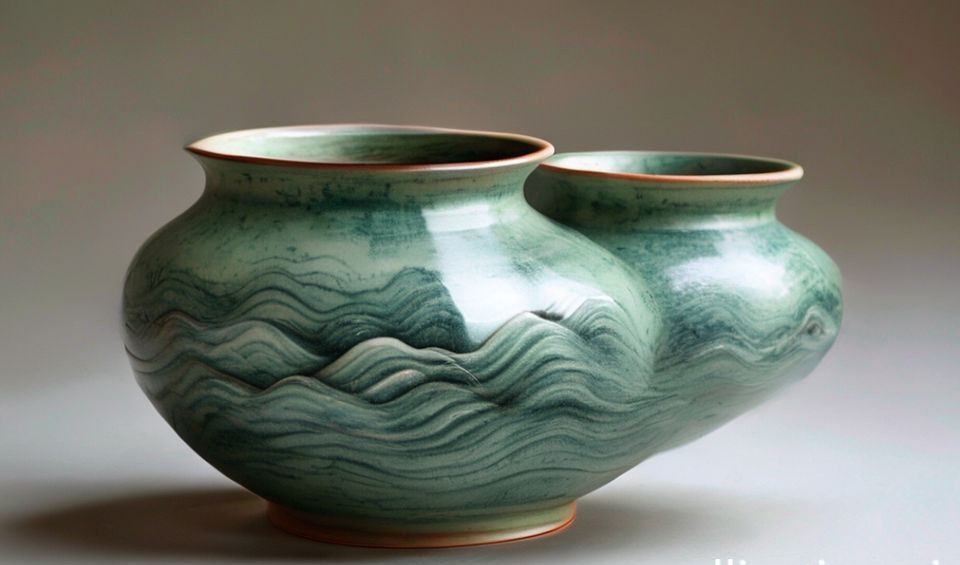
In an era defined by maximalist consumption and disposable design, celadon’s inherent restraint is being re-evaluated as a profound form of material ethics. Its beauty is not loud; it is a quiet, cooling presence that asks for contemplation. This visual subtlety mirrors a deeper, more sustainable logic embedded in its creation. The iconic glaze, a product of iron oxide transformed in the oxygen-starved environment of a reduction kiln, has always demanded specificity—particular local clays, pure woods for ash, and immense patience. Where this was once a challenge of geography and craft, it is now seen as a prescriptive blueprint for low-impact production.
The environmental cost of high-temperature ceramic firing, often exceeding 1300°C, is significant. Traditional celadon firings, which could last for days consuming vast amounts of wood or gas, are under scrutiny. Forward-thinking institutions and independent potters are leading a quiet revolution in efficiency. Studios like Denmark’s Guldagergård International Ceramic Research Center have undertaken detailed lifecycle analyses, quantifying the carbon footprint of various firing methods. This data isn’t used to abandon tradition, but to innovate within it. The goal is a lighter touch, achieving the same profound depth of color with less resource intensity.
The results are transformative. A potter in Vermont, for instance, might now achieve the elusive ‘kingfisher blue’—a hue so prized in Chinese lore it was said to mimic the bird’s feather—not through imported materials, but through a precise calibration of local, iron-rich clay slips. By employing a hybrid kiln technology that uses a burst of gas to accelerate and perfect a shorter wood-firing cycle, they can cut fuel consumption by nearly a third. The glaze that emerges is no less beautiful; in fact, its character is deeply tied to its immediate environment, telling a story of place as much as technique. This shift aligns with broader global goals for sustainable cultural production, as highlighted by UNESCO’s emphasis on safeguarding traditional crafts through adaptive, environmentally sound practices.
This philosophy extends beyond the kiln. The very nature of a fine celadon piece discourages waste. Its timeless form and serene glaze are designed for longevity, to be used daily and cherished for generations. In a world drowning in single-use items, the celadon cup or bowl becomes a quiet act of resistance—an object that gains value with time rather than losing it. As one studio potter in Cornwall reflects, “I used to make fifty different glaze colours. Now I work almost exclusively in one or two celadon recipes derived from local materials. It’s incredibly freeing. My focus is on the form, the touch of the rim, the weight in the hand. The glaze is the constant, a serene sky that holds the shape. My customers aren’t buying a colour trend; they’re buying a piece of a landscape and a promise of permanence.”
This approach resonates with a growing consumer consciousness. The World Health Organization has highlighted the mental health benefits of serene, uncluttered environments. Objects like celadon, which embody quietude and intention, contribute to what some designers call “slow decor”—a home environment that promotes calm and mindfulness rather than stimulation and rapid turnover.
Material Innovation: The New Alchemy
While honouring its past, celadon is becoming a frontier for material science. Contemporary artists and researchers are deconstructing the glaze, treating its ancient recipe not as a sacred text but as a foundational formula for experimentation. The quest is no longer solely for the perfect, unblemished jade surface that defined imperial wares, but for new expressions that retain the essential soul of celadon—its translucent depth and soft glow—while introducing novel textures, colours, and behaviours.
This new alchemy involves the deliberate introduction of unconventional materials into the glaze mix or clay body. Artists might incorporate granular industrial waste, such as slag from metal casting or crushed recycled glass, which melts unpredictably in the kiln. These inclusions create tiny, starburst flaws, subtle crystalline blooms, or unexpected highlights within the classic green or grey matrix. The Japanese artist Takuro Kuwata exemplifies this bold approach, creating wildly textured, almost grotesque forms that he then cloaks in traditional, pale celadon glazes. The firing process cracks, warps, and interacts with the underlying form, resulting in pieces that are a dramatic record of thermal transformation, where precision and chaos coexist.
Material researcher and ceramicist Anya Petrova describes this paradigm shift: “For centuries, celadon was the ultimate benchmark of technical control—the quest for the flawless, unctuous surface. Today, the more interesting question is control’s opposite: how much chaos, how many ‘flaws,’ can the glaze integrate and still be recognizably, essentially celadon? I introduce metallic oxides and granular rejects into my batches. In the fire, they migrate and melt, creating landscapes within the glaze. It’s no longer about hiding the fire’s marks, but curating them. That is the new skill set for the celadon artist.”
This experimentation is also expanding celadon’s colour palette. While iron oxide traditionally yields greens and greys, introducing other elements under precise conditions can yield unexpected results. Cobalt or copper in minute quantities, fired in a reduction atmosphere, can produce celadons with bluish or lavender undertones, pushing the technique into new chromatic territory while maintaining its characteristic softness. These innovations are documented and debated in scientific journals like the Journal of the European Ceramic Society, where the microstructure of glazes is analysed, bridging the gap between ancient craft and modern materials engineering. The research often circles back to a practical insight: understanding the science empowers the artist to be more expressive, not less.
Digital Imperfections and the Value of the Hand
Paradoxically, the precision of the digital age has profoundly sharpened the appeal of celadon’s tactile, variable, and resolutely human surface. While 3D-printed ceramic forms and digitally modelled designs proliferate, the application and firing of a true celadon glaze remain stubbornly analog. It is a breath of sprayed slurry, a hand-dipped moment, a dance of chemistry and flame that no machine can consistently replicate. This tension between digital form and analog finish is not a conflict but a generative fusion defining the cutting edge of the craft.
Artists are increasingly using digital tools—CAD software, 3D scanning, and printing—to create forms of impossible complexity or perfect symmetry. These forms are then deliberately subjected to the volatile, unpredictable alchemy of the celadon kiln. The glaze, with its tendency to pool, break, and accentuate every contour and flaw, interacts with the pristine digital form. The firing might warp a mathematically perfect curve or cause the glaze to gather in a computer-designed crevice in a uniquely beautiful way. The final object becomes a palimpsest, a record of dialogue between binary code and primal fire. The value shifts from the “perfect” static object to the “perfectly documented” transformation, a unique snapshot of process.
This interplay speaks to a broader cultural yearning. In a world of seamless digital interfaces and mass-produced perfection, the slight wobble of a hand-thrown bowl, the whisper of a tool mark beneath a glaze, or the way a celadon colour breaks on a sharp rim offers a deeply needed authenticity. These are the marks of life. As market analyses from firms like Statista note, consumers are increasingly valuing authenticity and craftsmanship in their purchases, seeking out objects with a story and a tangible connection to the human hand. A celadon piece, especially one that marries digital design with traditional firing, sits at the perfect intersection of these values—it is both of our time and profoundly ancient.
For the collector or enthusiast, this presents a fascinating new landscape. The “imperfection” becomes a signature, a point of connection. When selecting a contemporary celadon piece, one might look not for flawless uniformity, but for evidence of this dialogue—a digital precision in form that is gently subverted by the organic flow of the glaze, or a traditional shape whose surface reveals a microscopic universe of modern material inclusions.
Celadon in Contemporary Life: Beyond the Gallery
The future of celadon is not confined to gallery plinths or museum vitrines. Its most potent evolution may be in its integration into daily, functional life. Contemporary designers are reimagining celadon for the 21st-century home, creating tableware, lighting, and architectural tiles that carry the glaze’s serene quality into modern interiors. The matte, tactile surface of some modern celadons is particularly sought-after, offering a visual softness that contrasts beautifully with steel, concrete, and wood.
This functional revival is democratizing the tradition. While antique Guan or Goryeo celadons are priceless treasures, a beautifully thrown celadon mug by a living potter is accessible. It brings that same sense of calm and connection to the daily ritual of morning coffee. Restaurants seeking an aesthetic of refined, quiet luxury are commissioning full suites of celadon tableware, understanding that the glaze’s colour complements food beautifully, making both the dish and the cuisine appear more vibrant and considered. A simple broth in a celadon bowl seems to hold more depth; a piece of fish on a celadon plate looks fresher, more precious.
Educational outreach is also crucial. Workshops that teach the basics of throwing and celadon glazing are thriving, not as attempts to create master potters overnight, but to foster an appreciation for the skill and time involved. Participants gain a tangible understanding of the material journey from lump of clay to glazed vessel, which forever changes how they view the objects in their lives. “You can’t un-know the effort,” says a workshop instructor in London. “When someone spends a weekend trying and mostly failing to centre clay and then sees what a reduction firing does, they leave with a deep respect for the craft. They might buy a piece, or they might just look at their own cupboard differently. That shift in perception is a victory.”
This educational thread extends online, where master potters and material scientists share their processes. Platforms are filled with time-lapse videos of kiln unpackings, where the collective anticipation for the revealed celadon glaze—the “kiln gods” being either generous or cruel—creates a global community of enthusiasts. This transparency demystifies the process while simultaneously elevating it, showing that the magic is not a secret, but a hard-won result of knowledge, patience, and a respectful collaboration with fire.
A Living Tradition
The narrative of celadon is no longer one of dusty preservation. It is a living, breathing, and adapting tradition. Its journey from the imperial courts of Asia to the global studios of today is a testament to its unique power. It embodies a sustainable ethos through its material specificity and encouragement of longevity. It serves as a canvas for groundbreaking material science, embracing controlled chaos. It provides a vital counterpoint to the digital world, affirming the irreplaceable value of the human touch and the beauty of natural imperfection.
The quiet greens and grays of celadon hold a remarkable capacity to absorb and translate new contexts. It challenges the modern maker to be both scientist and poet, technician and philosopher. In doing so, this ancient technique reveals itself as an unexpectedly agile and profound medium for contemporary expression, reminding us that true sophistication often lies not in loud declaration, but in subtle, enduring depth. The flame in the kiln burns as it has for a thousand years, but the light it reveals is ever new, inviting us to see an old craft with fresh eyes and to find, in its serene surface, a reflection of our own evolving values.
You may also like
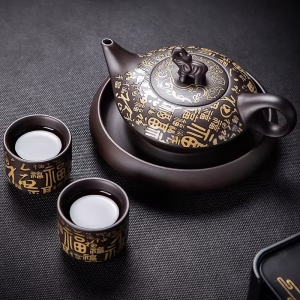
Aladdin’s Lamp Heat-Change Purple Clay Tea Pot
Original price was: $108.00.$78.00Current price is: $78.00. Add to cartHandwoven Zhuang Brocade Tote Bag – Large-Capacity Boho Shoulder Bag
Original price was: $178.00.$154.00Current price is: $154.00. Add to cartThe Palace Museum Paper-Cut Light Art Fridge Magnets: Chinese Cultural Style Creative Gift Series
Price range: $27.00 through $36.00 Select options This product has multiple variants. The options may be chosen on the product pageAncient Craftsmanship & ICH Herbal Beads Bracelet with Yellow Citrine & Silver Filigree Cloud-Patterned Luck-Boosting Beads
Original price was: $128.00.$89.00Current price is: $89.00. Add to cartBambooSoundBoost Portable Amplifier
Original price was: $96.00.$66.00Current price is: $66.00. Add to cartAncient Craft Herbal Scented Bead Bracelet with Gold Rutile Quartz, Paired with Sterling Silver (925) Hook Earrings
Original price was: $322.00.$198.00Current price is: $198.00. Add to cart