In a workshop outside Hanoi, Nguyen Thi Lan bends a bamboo culm into an elegant curve, her hands reading the wood’s memory like braille. She’s part of a lineage of artisans who’ve worked with this material for generations, understanding its language of flexibility and strength. This intimate knowledge, passed down through families and communities, represents a deep cultural relationship with a plant that has served humanity for millennia.
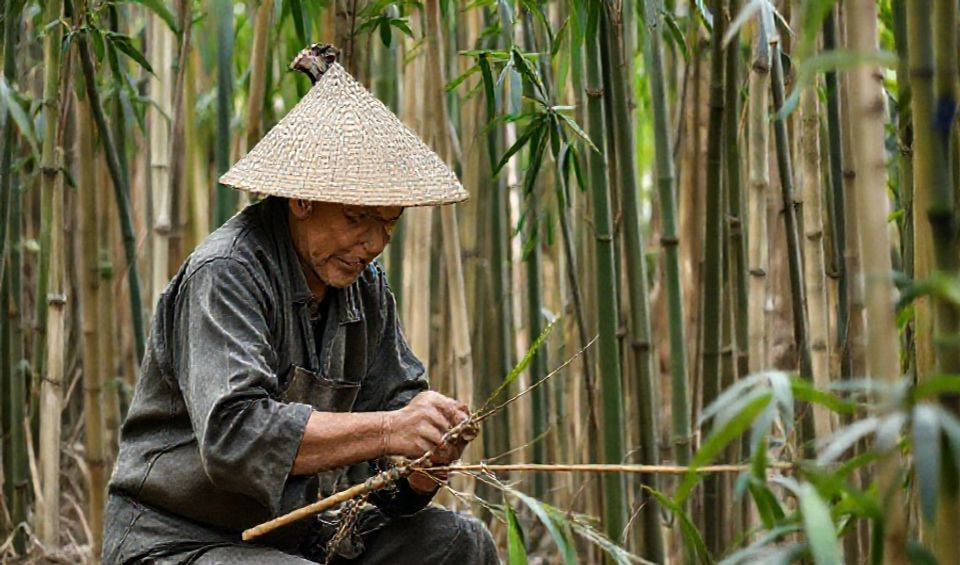
Bamboo’s significance extends far beyond traditional craftsmanship. As the world grapples with environmental challenges and seeks sustainable alternatives to conventional materials, bamboo emerges as a remarkable solution. This fast-growing grass—not technically a wood—offers incredible versatility while requiring minimal resources to thrive. From construction and textiles to culinary uses and carbon sequestration, bamboo’s applications continue to expand as modern science validates what traditional practitioners have known for centuries.
The Material That Remembers
Bamboo possesses what engineers call ‘shape memory’—an ability to return to its original form after bending. This isn’t just physical property but cultural knowledge. In southern China, master builder Chen Wei recalls his grandfather teaching him to select bamboo: “You listen for the sound when you tap it. The right tone means it’s ready.” Chen’s studio has created bamboo structures standing for over fifteen years, their joints tightening with age rather than weakening.
This remarkable durability stems from bamboo’s unique cellular structure. The plant’s longitudinal fibers create exceptional tensile strength—in some species, greater than mild steel—while its hollow cylindrical form provides excellent weight-to-strength ratio. These properties make bamboo particularly valuable in earthquake-prone regions, where its flexibility allows structures to sway rather than collapse during seismic events.
Modern material scientists have documented bamboo’s impressive mechanical properties. Research published in the Journal of Materials Science confirms that bamboo’s strength-to-weight ratio outperforms many conventional building materials, making it ideal for sustainable construction. The study notes that properly treated bamboo can last for decades, challenging misconceptions about its durability.
The process of harvesting and preparing bamboo requires specific knowledge. Mature culms, typically between three to five years old, develop the optimal density and strength for construction. Harvesting during the dry season helps prevent fungal growth and insect infestation. Traditional craftspeople often work with bamboo shortly after harvesting when it retains some flexibility, allowing for bending and shaping that becomes permanent as the material dries.
Environmental Champion
Bamboo’s environmental credentials are equally impressive. As one of the fastest-growing plants on Earth, some species can grow up to 91 cm (35 inches) in just 24 hours under optimal conditions. This rapid growth translates to remarkable carbon sequestration capabilities. According to the World Bamboo Organization, a bamboo grove can absorb up to 5 times more carbon dioxide than an equivalent stand of trees while releasing 35% more oxygen into the atmosphere.
The plant’s extensive root system helps prevent soil erosion, making it valuable for stabilizing slopes and riverbanks. Unlike many commercial timber species, bamboo can be harvested without killing the plant, as new shoots emerge from the same root system. This continuous harvesting cycle creates a renewable resource that can be managed sustainably for generations.
In Ethiopia, where deforestation has caused severe environmental degradation, bamboo plantations have helped restore degraded lands while providing economic opportunities. Farmer Alemayehu Teshome began growing bamboo on his marginal farmland a decade ago. “At first, my neighbors laughed,” he recalls. “Now they see how the bamboo holds the soil during heavy rains and provides material we can sell. My children can go to school because of this plant.”
The World Health Organization has highlighted bamboo’s role in environmental health, noting that bamboo plantations can improve air quality and contribute to watershed protection. Their research indicates that strategic bamboo planting can help communities adapt to climate change impacts while providing sustainable livelihoods.
Modern Guardians of Ancient Craft
Across the Pacific, architect Maria Rodriguez incorporates bamboo into contemporary designs while honoring traditional joinery. Her Mexico City studio trains local youth in techniques once practiced by their grandparents. “We’re not inventing anything new,” Rodriguez notes. “We’re remembering what our ancestors knew about working with living materials.” One of her students, 22-year-old Javier Mendez, recently completed a bamboo pavilion using no metal fasteners—just precise cuts and wooden pegs.
This revival of traditional knowledge coincides with growing international interest in bamboo architecture. The Green School in Bali, Indonesia, features spectacular bamboo structures that demonstrate the material’s potential for large-scale construction. These buildings showcase how ancient techniques can be adapted for modern needs, creating spaces that are both beautiful and environmentally responsible.
Vietnamese craftsman Tran Van Hung puts it simply: “Bamboo teaches patience. You can’t rush the material. If you try to force it, it splits. If you work with its nature, it becomes stronger than steel.” His workshop produces just three furniture pieces per week, each telling the story of the plant’s growth rings and the hands that shaped it.
UNESCO has recognized the cultural significance of bamboo crafts in several regions, documenting traditional knowledge systems that risk being lost. Their safeguarding efforts include supporting apprenticeship programs and documenting construction techniques that have been refined over centuries.
Practical Applications and Innovations
Beyond traditional crafts, bamboo has found applications in surprising modern contexts. The textile industry has embraced bamboo fiber for clothing and linens, valued for its softness, breathability, and natural antibacterial properties. While the production process varies in its environmental impact, responsible manufacturers are developing closed-loop systems that minimize chemical use and water consumption.
In the construction industry, engineered bamboo products are gaining recognition as viable alternatives to conventional materials. Bamboo laminated lumber, flooring, and paneling offer durability and aesthetic appeal while maintaining the material’s sustainable characteristics. The International Network for Bamboo and Rattan (INBAR) works with partners worldwide to develop building standards that facilitate bamboo’s use in mainstream construction.
Even in disaster relief, bamboo demonstrates its value. Following the 2015 earthquake in Nepal, bamboo provided quick, affordable shelter solutions for displaced communities. Its local availability and ease of construction made it an ideal material for emergency housing, with structures that could be assembled by community members with minimal training.
Medical applications are also emerging. Bamboo charcoal is used in water purification systems, while bamboo-based activated carbon finds use in medical treatments and air filtration. Researchers are exploring bamboo’s potential in biomedical applications, including tissue engineering and drug delivery systems.
Growing and Working with Bamboo: Practical Guidance
For those interested in cultivating bamboo, selection matters tremendously. Clumping varieties generally pose less risk of invasive spreading than running types. Species like Bambusa oldhamii (giant timber bamboo) and Phyllostachys edulis (moso bamboo) are popular choices for construction and crafts. Proper harvesting involves cutting mature culms (typically 3-5 years old) during the dry season to minimize pest problems.
When working with bamboo for construction or crafts, several techniques enhance durability. Traditional treatment methods include soaking bamboo in running water to remove starches that attract insects, or smoking it over fire. Modern approaches might involve borax-based solutions that protect against fungal and insect damage without toxic chemicals.
For beginners interested in bamboo crafts, start with small projects that require minimal tools. Simple garden stakes or decorative items allow you to become familiar with the material’s behavior before attempting more complex furniture or structures. Essential tools include a sharp fine-toothed saw, a quality knife for splitting, and sandpaper for finishing.
Understanding bamboo’s seasonal characteristics improves working results. Bamboo harvested in winter contains less starch and sugar, making it less attractive to insects. The material’s moisture content affects its workability—many craftspeople prefer working with bamboo that has been partially dried but still retains some flexibility.
Economic Opportunities and Challenges
The global bamboo market continues to expand, with Statista reporting steady growth in both traditional and innovative applications. From bamboo-based biofuels to biodegradable packaging, new uses are emerging regularly. This creates economic opportunities, particularly in rural communities where bamboo grows naturally.
However, challenges remain in scaling bamboo industries sustainably. Issues of quality control, standardization, and market access can hinder small producers. Organizations like the World Health Organization have recognized bamboo’s potential in addressing multiple sustainable development goals, particularly when production benefits local communities and preserves traditional knowledge.
In Colombia, entrepreneur Isabella Gomez has built a successful business producing bamboo bicycles. “People initially doubted that bamboo could be strong enough,” she explains. “Now we ship worldwide and employ fifteen local artisans. We’ve proven that sustainable materials can compete in global markets.”
The economic impact extends beyond direct product sales. Bamboo cultivation creates ecosystem services that benefit surrounding communities, including soil stabilization, water regulation, and carbon sequestration. These indirect benefits, while difficult to quantify, contribute significantly to rural economies and environmental resilience.
Cultural Significance and Future Directions
Bamboo’s cultural importance extends across many societies. In East Asian traditions, bamboo represents resilience, elegance, and integrity—qualities reflected in art, literature, and philosophy. The plant appears in ancient myths and modern poetry, symbolizing the ability to bend without breaking in the face of adversity.
Contemporary designers and architects continue to push bamboo’s boundaries. The UNESCO-recognized bamboo architecture in Colombia’s coffee region demonstrates how the material can define regional identity while meeting modern needs. These projects often combine traditional wisdom with computational design and digital fabrication, creating structures that would have been impossible to realize just a generation ago.
As climate change accelerates the search for sustainable materials, bamboo’s profile continues to rise. Research institutions are developing new bamboo composites and treatment methods that enhance its natural properties. The future likely holds even more innovative applications, from bamboo-based bioplastics to advanced construction systems.
Emerging research focuses on enhancing bamboo’s natural properties through genetic studies and advanced processing techniques. Scientists are mapping bamboo genomes to understand the genetic basis of its remarkable growth rate and mechanical strength. This knowledge could lead to improved cultivation practices and even more versatile material applications.
The quiet work of artisans like Nguyen Thi Lan represents more than preservation of tradition—it embodies a living relationship with a material that continues to reveal new possibilities. As we face global environmental challenges, this humble grass offers lessons in resilience, adaptability, and sustainable coexistence. Its story reminds us that sometimes the most advanced solutions come not from laboratories alone, but from listening to the wisdom of plants and the hands that have worked with them for generations.
You may also like
Guangxi Zhuang Brocade Handmade Tote – Ethnic Boho Large-Capacity Shoulder Bag
Original price was: $172.00.$150.00Current price is: $150.00. Add to cartHandwoven Zhuang Brocade Tote Bag – Large-Capacity Boho Shoulder Bag
Original price was: $178.00.$154.00Current price is: $154.00. Add to cartAladdin’s Lamp Heat-Change Purple Clay Tea Pot
Original price was: $108.00.$78.00Current price is: $78.00. Add to cartThe Palace Museum Paper-Cut Light Art Fridge Magnets: Chinese Cultural Style Creative Gift Series
Price range: $27.00 through $36.00 Select options This product has multiple variants. The options may be chosen on the product pageBambooSoundBoost Portable Amplifier
Original price was: $96.00.$66.00Current price is: $66.00. Add to cartAncient Craft Herbal Scented Bead Bracelet with Gold Rutile Quartz, Paired with Sterling Silver (925) Hook Earrings
Original price was: $322.00.$198.00Current price is: $198.00. Add to cart