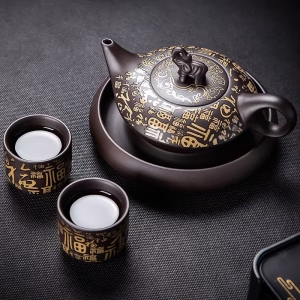
On a cool morning, a potter removes a bisque-fired vase from the kiln. Its surface is porous and pale, awaiting transformation. This isn’t about creating a museum piece destined for a pedestal. It’s about preparing an object for a life of use—to hold forsythia branches in spring, dried grasses in autumn, or to simply stand empty and beautiful on a windowsill, catching the afternoon light. This journey from raw earth to a vessel that cradles our daily rituals is a profound alchemy, one that marries ancient technique with personal expression. The hand-painted ceramic vase, in particular, stands as a testament to this union, where function provides the stage and decoration performs the poetry.

The Foundation of Function: Where Form Follows Flora
Every hand-painted vase begins not with an idea for a pattern, but with a form that must work. The silent geometry of the potter’s wheel holds the first, and perhaps most crucial, chapter of the story. The curve of the belly isn’t just an aesthetic choice; it determines stability. The width of the opening must accommodate stems without crowding them, and the thickness of the walls must bear the weight of water without feeling cumbersome. A potter considers balance when full, the grip of the hand, and the visual weight on a shelf. These decisions happen in the quiet concentration of the studio, long before the first brushstroke touches the clay.
For instance, a vase intended for heavy, woody branches like lilac or forsythia needs a low center of gravity and a substantial, thick base. Its form is one of grounded generosity. Conversely, a vessel meant for the delicate, nodding heads of poppies or sweet peas can afford to be taller and more slender, a graceful column that elevates its contents. The relationship extends to the lip: a flared opening supports sprawling, voluminous blooms like peonies, while a gently curved rim corrals simpler, linear arrangements. This marriage of purpose and proportion is the silent, unseen half of the craft. It’s an ergonomics of beauty, ensuring the object feels as right in use as it looks at rest. As the potter and writer Mary Rogers once noted, “The best pot is the one that is most used,” a philosophy that roots the value of ceramics squarely in daily life.
The Canvas of Clay: Preparing for the Brush
Once thrown and shaped, the vase enters a liminal state. The initial “greenware” is bone-dry and incredibly fragile. Its first passage through the kiln, the bisque firing, typically around 1800°F, performs a magical transformation. It sinters the clay particles, driving off all physical water and chemical water from the clay body, turning it into a permanent, porous ceramic state. This bisque ware is the ideal canvas. Its absorbent surface readily accepts glazes and underglazes, sucking the moisture from the brush and holding the pigment fast. This porosity is key—it allows for layered application and prevents colors from bleeding uncontrollably, yet it also demands decisiveness from the artist.
Before painting, the potter often applies a base layer, typically a slip or an engobe—a liquid mixture of clay and minerals—to create a uniform color field. This might be a stark white to make colors pop, a warm buff to soften them, or a deep terra cotta to provide a rich ground. The choice of this base is the first artistic decision in the decoration process, setting the stage for everything that follows. It’s akin to a painter choosing between a bright white or a toned gray canvas. The quality of this foundational layer directly impacts the luminosity and depth of the final colors, a principle supported by material science in ceramic arts.
The Language of the Brush: A Conversation Without Erasers
Painting on clay is a conversation with an unforgiving surface. Unlike canvas or paper, ceramic absorbs pigment instantly. There are no second chances, no painting over a mistake once the glaze is fired. There is only the confident, practiced sweep of a brush loaded with cobalt oxide for brilliant blues, copper carbonate for verdant greens, or iron wash for warm umbers and blacks. This necessity breeds a unique discipline, a fluency in a language where every mark is permanent. The decoration must serve and celebrate the form, not fight it. A common approach is to use bands of pattern that emphasize the vase’s shape—a tight geometric or linear design at the neck to contain, flowing organic motifs around the widest part to highlight volume, and a grounding element at the foot.
Sarah Chen, a studio potter for fifteen years, describes her process: “I paint three vases in a series, using the same palette of three glazes. I’ll start with a dark slip trailing for the first, applying a raised line of liquid clay. Then I’ll switch to sgraffito for the second, painting a layer of colored slip and then scratching through it to reveal the clay body beneath, creating fine, illustrative lines. The third might get a simple wax-resist pattern, where I draw with wax to repel a glaze wash. This creates a family of objects, each unique but clearly related.” This methodical variation demonstrates how hand-painting builds cohesion without uniformity, allowing for exploration within a defined theme.
Techniques vary widely. There’s mishima, where lines are incised into leather-hard clay and filled with a contrasting slip, then scraped flush for an inlaid look. There’s the spontaneity of brushwork using underglazes, which offer a painterly, matte finish before a clear glaze seal. Each method carries its own history and emotional texture, from the precise formality of traditional blue-and-white porcelain patterns to the loose, expressive strokes of contemporary studio pottery. These techniques are not merely decorative; they are cognitive and physical practices that, as WHO research on arts and health suggests, can contribute to mental well-being by fostering focus and a state of flow in the maker.
From Studio to Table: The Everyday Centerpiece
Consider a 10-inch thrown vase with a muted matte glaze. The painter applied a single, continuous vine motif in olive green, wrapping from base to lip. It wasn’t designed as a ‘statement piece’ but as a quiet anchor for a dining table. Its matte finish avoids glare under overhead lights, and its neutral color doesn’t compete with food. Over two years of weekly use, it has held everything from supermarket tulips to garden hydrangeas. The owner, a teacher named Anya, notes its best feature: “It never looks wrong. On chaotic weeknights with just a few sprigs of rosemary or a single dahlia, it feels intentional, complete. On holidays, overflowing with blooms, it recedes and supports. It has this quiet confidence.” This is the ultimate success of utilitarian ceramics—adaptable, durable beauty that earns its place through service. Its value is accrued through repeated, unceremonious use, becoming an integral part of a household’s visual and emotional landscape.
The Alchemy of Fire: Where Color is Born
The painter’s work is only half complete when the brush is set down. The true transformation occurs in the kiln, a final, fiery baptism. The glazes—complex mixtures of silica, fluxes, and metal oxides—melt into a glassy coating. The colors promised by the raw pigments blossom into their final, vibrant forms. A cobalt that looks gray in its raw state erupts into a deep, luminous blue. Copper can yield anything from turquoise to a blood red, depending on the kiln atmosphere. This is where science and chance collaborate. The placement of the vase in the kiln, the subtle variations in temperature, and the interaction between different glazes can create unexpected, one-of-a-kind effects—a halo of color where two glazes meet, a subtle crystallization on the surface.
This final firing, which can reach temperatures exceeding 2200°F, vitrifies the clay body, making it non-porous and waterproof. It fuses the painted decoration permanently to the form, sealing it under a layer of glass. The vase that emerges is fundamentally changed: stronger, brighter, and ready for the world. The process carries inherent risk; a flaw in the glaze application or a kiln malfunction can ruin weeks of work. This element of risk imbues each successful piece with a sense of triumph and authenticity. It’s a reminder of the object’s genesis in elemental forces, a collaboration between human intention and the immutable laws of chemistry and physics.
The Narrative Impulse: From Cultural Symbols to Personal Marks
The hand-painted vase carries narratives that extend far beyond its domestic function. Historically, ceramic decoration has been a primary vehicle for cultural storytelling, from the mythological scenes on Greek amphorae to the symbolic flora and fauna on Chinese porcelain. These objects were not merely containers but carriers of ideology, religion, and social status. A Ming dynasty vase, for example, was as much a display of technological prowess and aesthetic refinement as it was a vessel. UNESCO recognizes such traditional craftsmanship as intangible cultural heritage, vital for sustaining cultural diversity and human creativity in our globalizing world.
Today, while the symbols may be more personal, the impulse remains. A painter might incorporate motifs from their local landscape—a specific pattern of oak leaves, the silhouette of a coastal bird—or abstract patterns that reflect an inner emotional landscape. In an age of mass production, the hand-painted mark is a powerful signature of individuality. A slight wobble in a line, the varied pressure of a brushstroke, the unique blend of colors in a glaze batch—these are the fingerprints of the maker. They connect the user directly to the artist’s hand and moment of creation. This connection fosters a different kind of care. Studies in material culture suggest that objects perceived as unique or handcrafted often inspire greater attachment and longer lifespans, countering the disposable nature of fast consumer goods. We are less likely to discard something that visibly contains a story and a human touch.
Integrating the Hand-Painted Vase into Modern Life: Practical Insights
Choosing and living with a hand-painted vase is an exercise in mindful consumption. It represents a conscious step away from disposable decor and towards building an environment filled with intention and character. Here are some actionable insights for selecting and enjoying these pieces.
- Seek Harmony, Not Matchy-Matchy: Don’t look for a vase that “matches” your décor. Look for one that resonates with the energy of a room. A vase with earthy, organic patterns can ground a minimalist space, while a boldly graphic piece can become a focal point in a neutral setting. Let it converse with its surroundings, not mimic them.
- Prioritize Function First: Let your habits guide the form. Do you often arrange long-stemmed flowers from the market? Look for height and a narrow neck for support. Do you prefer foraging branches and wild grasses? Seek stability, a wide mouth, and a lower center of gravity. The most beautiful vase is invariably the one you use regularly.
- Embrace the “Empty” Vase: A hand-painted vase is a sculptural object in its own right. Allow it to be art when not holding flowers. Place it where light will play off its glaze, or on a shelf where its form can be appreciated alone. Its presence can complete a mantelpiece or a bookshelf without needing to be “filled.”
- Care is Simple but Specific: Hand-painted, glaze-fired ceramics are durable for daily use. Clean with warm water and mild soap; avoid abrasive scouring pads that can dull glossy surfaces. The primary rule is to avoid extreme thermal shock—don’t transfer it from a hot dishwasher to a cold counter, for instance. Most studio pottery is not microwave-safe unless explicitly stated by the artist.
- Build a Relationship with Makers: Follow the work of potters you admire at local studios, craft fairs, or online platforms. Understanding an artist’s journey, inspirations, and process deepens the connection to the piece you own. You’re not just buying an object; you’re acquiring a chapter of their creative story.
The global interest in artisan ceramics is part of a broader shift towards valuing sustainability and craftsmanship. While comprehensive data on niche ceramic sales is specific, the broader arts and crafts sector shows consistent consumer interest in unique, handmade items. Platforms dedicated to direct artist-to-buyer sales have seen significant growth, reflecting a desire for authenticity and a personal connection to the goods we bring into our homes.
A Legacy in Clay: The Enduring Companion
The hand-painted ceramic vase sits at a beautiful crossroads. It is a container—for water, for stems, for the seasonal offerings of the garden. It is also a canvas, holding the memory of a brushstroke, the vision of an artist, and the transformative power of fire. But perhaps most importantly, it is a companion in the rhythm of everyday life. It witnesses our small celebrations, our quiet moments, our attempts to bring a piece of the outside world into our homes.
In its making, it embodies a slow, thoughtful process in a fast world—a testament to the patience required from wedging the clay to the final kiln cooling. In its use, it encourages us to pause, to arrange, to notice the subtle change in a bud from morning to evening. It doesn’t demand perfection, only presence. A crackle in the glaze, a variation in the color where the glaze pooled—these are not flaws but records of its making.
From the potter’s wheel to the windowsill, it remains a humble, enduring testament to the idea that the objects we choose to live with can do more than serve us; they can, in their quiet, beautiful way, sustain us. They connect us to materiality, to process, and to the simple, profound act of making something both useful and beautiful. In a single hand-painted vase, we find function, art, history, and a silent, steadfast partnership with our daily lives.
You may also like
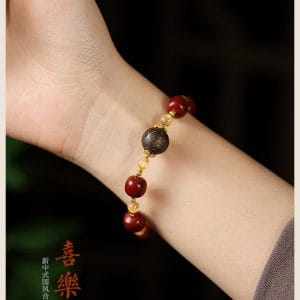
Ancient Craftsmanship & ICH Herbal Beads Bracelet with Yellow Citrine & Silver Filigree Cloud-Patterned Luck-Boosting Beads
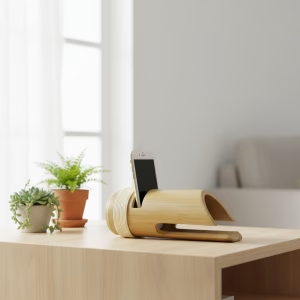
Original price was: $128.00.$89.00Current price is: $89.00. Add to cartBambooSoundBoost Portable Amplifier
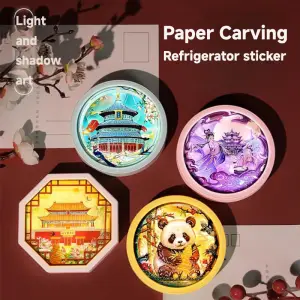
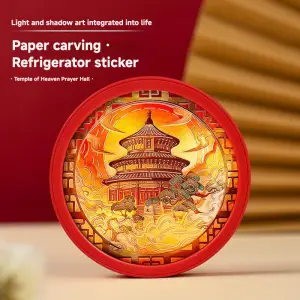
Original price was: $96.00.$66.00Current price is: $66.00. Add to cartThe Palace Museum Paper-Cut Light Art Fridge Magnets: Chinese Cultural Style Creative Gift Series
Price range: $27.00 through $36.00 Select options This product has multiple variants. The options may be chosen on the product pageAncient Craft Herbal Scented Bead Bracelet with Gold Rutile Quartz, Paired with Sterling Silver (925) Hook Earrings
Original price was: $322.00.$198.00Current price is: $198.00. Add to cartHandwoven Zhuang Brocade Tote Bag – Large-Capacity Boho Shoulder Bag
Original price was: $178.00.$154.00Current price is: $154.00. Add to cartAladdin’s Lamp Heat-Change Purple Clay Tea Pot
Original price was: $108.00.$78.00Current price is: $78.00. Add to cart