In a quiet kiln in fourteenth-century Jingdezhen, a potter applied a brush loaded with imported cobalt to a pure white porcelain body. The resulting fusion—a brilliant blue fixed forever under a clear glaze—would become one of the world’s most enduring and recognizable artistic languages. Blue and white porcelain is not merely a decorative style; it is a historical document, a testament to technological mastery, and a medium for cultural conversation that flowed along the Silk Road and across oceans. Its journey from a technical innovation to a global aesthetic touchstone reveals how art objects can weave together economies, technologies, and identities across continents.
The Crucible of Creation: Jingdezhen’s Technical Triumph
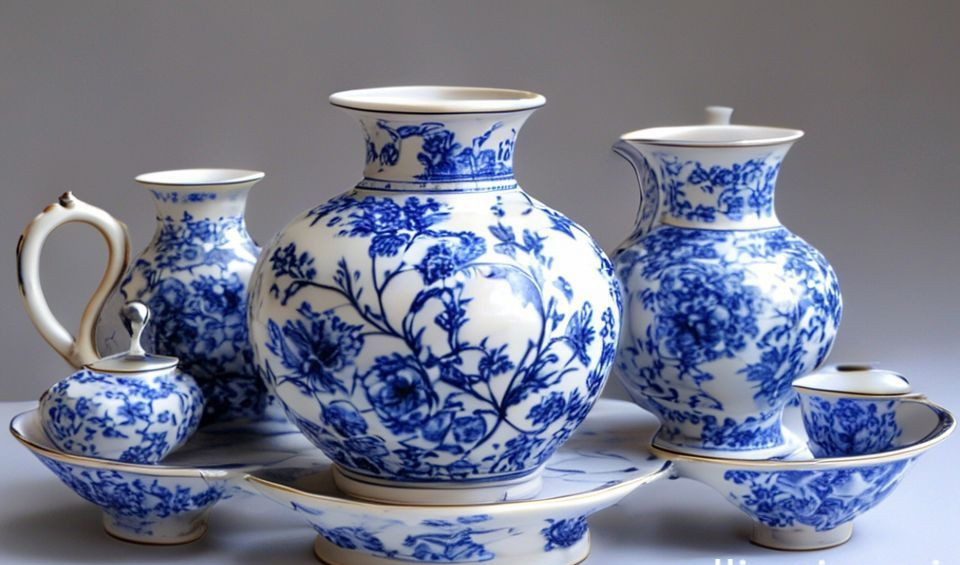
For centuries, the secret of true porcelain—a material distinguished by its whiteness, translucency, and resonant ring when struck—remained China’s closely guarded treasure. The town of Jingdezhen, blessed with abundant deposits of fine, white kaolin clay, became the undisputed epicenter of this alchemical art. Its kilns, some reaching the staggering temperatures necessary to vitrify clay into porcelain, operated like a continuous, smoky heartbeat. The pivotal breakthrough came with the introduction of cobalt blue. This pigment, initially imported from Persia (modern-day Iran), was notoriously difficult to master. It could bleed and blur during firing, turning a delicate design into a murky smudge. Jingdezhen’s artisans met this challenge with extraordinary skill, developing a precise vocabulary of brushwork to control the pigment’s flow. They learned to account for its behavior in the searing heat of the kiln, transforming a volatile material into an aesthetic virtue of unparalleled clarity and depth.
The motifs that graced early Ming dynasty wares were not the quaint, static scenes often imagined in the West. They pulsed with life, drawing directly from the natural world and Chinese artistic tradition. Lush, voluminous peonies symbolized wealth and honor; sinuous, five-clawed dragons represented imperial power; scrolling lotus bands evoked purity and rebirth. Each brushstroke aimed to capture the spontaneous, fluid energy of ink painting, but permanently suspended under a glassy glaze. This technical and artistic synthesis created an object of desire that was both durable and exquisite, setting the stage for its global conquest. The mastery achieved here was so complete that, according to historical records from UNESCO, Jingdezhen’s porcelain production system represented one of the earliest and most sophisticated examples of pre-industrial mass production in the world.
A Currency of Culture: The Porcelain Road and Global Dialogue
Blue and white porcelain quickly transcended its status as fine pottery to become a premier currency of culture and commerce. The maritime networks that would later be dubbed the “Porcelain Road” carried countless pieces from Jingdezhen to the world. Shipwrecks like the Tek Sing, which sank in the South China Sea in 1822, reveal cargoes of hundreds of thousands of pieces, a tangible measure of the scale of this trade. This was not a one-way flow of goods, but a catalyst for artistic dialogue and adaptation across civilizations, a tangible network of influence that predated modern globalization.
In the Ottoman Empire, Chinese porcelain was treasured as a luxury of almost mystical value. At Topkapi Palace in Istanbul, sultans had prized pieces mounted in intricate gilded frames and set into the walls of treasuries. This profound admiration spurred local innovation. Potters in Iznik, inspired by the imported blue and whites but working with their own materials and traditions, developed a distinct style. They used a brilliant, quartz-based body and a palette that expanded to include turquoise, emerald green, and a vibrant coral red, creating floral and geometric designs that synthesized Chinese influence with Islamic art. As noted by UNESCO, which has recognized the historical importance of ceramic trade routes, such exchanges represent “a dialogue among civilizations that has shaped the cultural landscape of our world.”
A similar story unfolded in Europe. When Portuguese and later Dutch traders brought Chinese porcelain to the continent, it caused a sensation. It was unlike anything produced locally—finer, thinner, and more durable than the available earthenware. In the Dutch city of Delft, artisans, unable to replicate the secret of hard-paste porcelain, created their own response. They painted tin-glazed earthenware—a technique known as faience—with scenes in cobalt blue that mimicked the Chinese originals, depicting windmills, European landscapes, and chinoiserie fantasies. Delftware became a phenomenally popular and distinctly European chapter in the blue and white story. This global dialogue often manifested in hybrid objects. A classic example is a Chinese porcelain jar fitted with ornate European silver or gilt-bronze mounts, transforming its function and aesthetic to suit a Parisian cabinet of curiosities or a London dining table.
The influence was not merely imitative; it was transformative. In Japan, the Arita kilns began producing their own blue and white porcelain, known as sometsuke, for export to Europe in the 17th century. Japanese potters incorporated local aesthetics, creating designs that were often bolder and more graphic than their Chinese counterparts, featuring dramatic landscapes, crashing waves, and intricate floral studies. European consumers, eager for anything “from the East,” embraced these variations, further enriching the visual vocabulary of the style.
“We often speak of porcelain as an object of trade,” notes Dr. Lin Mei, a curator of Asian ceramics. “But look closer. A single early-15th century ‘moon flask’ in a museum case holds a more complex narrative. Its shape echoes nomadic leather canteens, its cobalt was mined in Persia, its form perfected in a Chinese imperial kiln, and it was likely destined for a royal collection far away. It is a frozen moment of pre-modern globalization.”
Democratization and Reinvention: From Willow Pattern to Modernity
The legacy of this centuries-long exchange is so deeply embedded in our visual culture that the blue-and-white scheme now feels both timeless and placeless. Its journey from imperial tribute to global commodity democratized its appeal. In the 18th century, European manufactories like Meissen in Germany and Sèvres in France finally cracked the chemical code of porcelain, but the blue-and-white aesthetic remained a powerful benchmark of quality and taste.
The iconic “Willow Pattern,” with its love story depicted on a bridge under a willow tree, is a perfect example of this globalized legacy. It was not an ancient Chinese tale but a wholly invented narrative created by English potters in the 1790s, a romanticized vision of China that was then exported back to the world. Its immense popularity, from Staffordshire transfer-ware plates to modern reprints, demonstrates how the aesthetic had been fully absorbed and remade by Western consumer culture. It became a staple in middle-class homes, a symbol of refined taste that was now accessible to many.
This process of reinvention continues unabated. The crisp, graphic quality of blue on white translates effortlessly across mediums. In the 20th century, designers like Clarice Cliff and contemporary brands like Wedgwood have continually reinterpreted the pattern. It appears on fashion runways from Gucci to traditional qipao dresses, in minimalist Scandinavian homeware, and as a digital design motif. Artists use it to make powerful statements. Ai Weiwei’s “Dropping a Han Dynasty Urn” and his series of painted vases overlaid with Coca-Cola logos directly confront the clash between cultural heritage and modern commodification. The pattern’s endurance is reflected in market trends; analyses from Statista show that the global tableware market, where classic patterns remain key drivers, continues to see steady growth, projected to reach significant value in the coming years, indicating an unbroken connection to this ceramic heritage.
The Collector’s Eye: Navigating Authenticity and Appreciation
For those drawn to the beauty of blue and white, engaging with it can be more than passive admiration. Whether you’re a budding collector or simply wish to incorporate this timeless style into your life, developing a discerning eye and a personal approach deepens the experience immeasurably.
First, learn to look with a critical eye. Authentic antique Chinese porcelain will often show signs of its age and craft. Look for a glaze that has a soft, almost oily sheen compared to the hard, glassy finish of modern pieces. The painting itself should have a lively, hand-drawn quality, with subtle variations in the blue tone indicating the use of natural cobalt, which often contains impurities that create small black speckles known as “cobalt flecks.” Pieces were often fired on spurs in the kiln, leaving small, unglazed marks on the base called “kiln scars.” Reproductions or later European versions will lack these nuances. As a general rule, if a piece seems too perfect, uniform, or cheap for its purported age, it likely is. Sarah, a collector in London, shares her early lesson: “I bought a ‘Ming’ vase from a flea market, thrilled with my find. A visit to the Victoria & Albert Museum the next week showed me the stark difference in weight, glaze texture, and brushstroke vitality. It was a replica, but it taught me more than any book could have.”
Building a meaningful collection doesn’t require a king’s ransom. Focus on a specific niche that sparks your interest. You might collect 20th-century Japanese export porcelain, Dutch Delft tiles with specific motifs, or even contemporary studio pottery that references the blue-and-white tradition. A small group of thoughtfully acquired pieces with a coherent theme is far more rewarding than a scattered assortment. Visit museums, read reputable catalogues, and don’t hesitate to ask specialists at auction houses or antique shops questions. Resources like museum websites and academic journals, such as those from the Oriental Ceramic Society, offer deep dives into specific periods and styles.
Living with Blue and White: Integration and Well-being
Finally, integrate blue and white into your daily life with intention. Its crisp, clean palette is remarkably versatile and psychologically calming. A single Ming-style vase can make a stunning statement on a modern mantelpiece, creating a focal point that bridges eras. Mixing antique plates with plain, contemporary tableware creates an eclectic, personal tablescape that tells a story. Don’t be afraid to use pieces you love; the wear of gentle, respectful use adds to an object’s history and connects you to the long line of those who have cherished it.
The act of surrounding ourselves with objects of beauty and historical resonance has tangible benefits. The World Health Organization emphasizes that mental well-being is fostered by connections to culture, community, and a sense of continuity. A piece of blue and white porcelain can serve as a tactile link to that broader human story, a reminder of craftsmanship and cross-cultural exchange. It encourages mindfulness—taking a moment to appreciate the brushwork on a cup, the balance of a bowl. In a fast-paced digital world, these small acts of appreciation ground us.
Consider starting your engagement not with a major purchase, but with a practice of observation. Visit a local museum’s ceramics gallery. Notice how the blue and white pieces are displayed alongside art from other cultures. When you see the pattern in a restaurant or a film, note its context. Is it used to signify tradition, luxury, or perhaps exoticism? This active looking transforms you from a consumer into a participant in the ongoing story.
The story of blue and white porcelain is ultimately a story of human connection. It began with a potter in Jingdezhen solving a technical problem and blossomed into a visual language spoken from Istanbul to Amsterdam and beyond. It reminds us that our most cherished cultural symbols are rarely born in isolation. They are forged in the kilns of exchange, fired by curiosity, and glazed with the shared human desire for beauty. Each piece, whether a fragment in a museum or a plate on a shelf, carries within it the echoes of that vast, ongoing conversation conducted in clay, cobalt, and fire—a conversation that we continue, in our own small ways, every time we choose to look, to learn, and to live with these enduring objects.
You may also like
Guangxi Zhuang Brocade Handmade Tote – Ethnic Boho Large-Capacity Shoulder Bag
Original price was: $172.00.$150.00Current price is: $150.00. Add to cartBambooSoundBoost Portable Amplifier
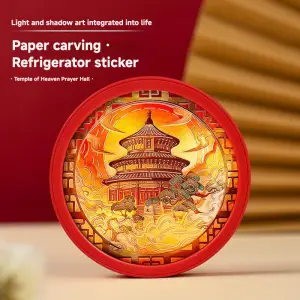
Original price was: $96.00.$66.00Current price is: $66.00. Add to cartThe Palace Museum Paper-Cut Light Art Fridge Magnets: Chinese Cultural Style Creative Gift Series
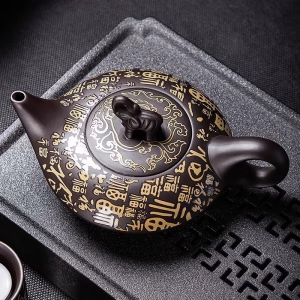
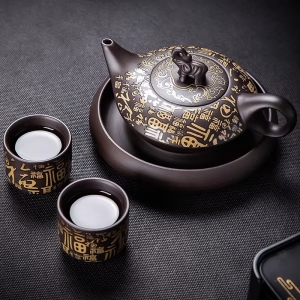
Price range: $27.00 through $36.00 Select options This product has multiple variants. The options may be chosen on the product pageAladdin’s Lamp Heat-Change Purple Clay Tea Pot
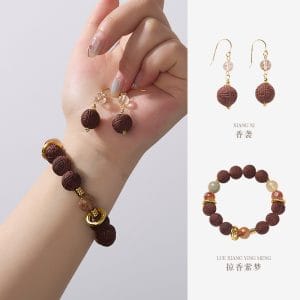
Original price was: $108.00.$78.00Current price is: $78.00. Add to cartAncient Craft Herbal Scented Bead Bracelet with Gold Rutile Quartz, Paired with Sterling Silver (925) Hook Earrings
Original price was: $322.00.$198.00Current price is: $198.00. Add to cartHandwoven Zhuang Brocade Tote Bag – Large-Capacity Boho Shoulder Bag
Original price was: $178.00.$154.00Current price is: $154.00. Add to cart