The story of coffee roasting is not merely one of technique, but of transformation—a ritual that has repeatedly altered the fabric of human society. Long before specialty cafes and digital probes, the application of fire to the green coffee cherry pit was an act of alchemy, turning a hard, bitter seed into a vessel for aroma, community, and thought. This process, evolving from open flames to precisely controlled drums, has been a quiet protagonist in history, its smoke carrying the scent of intellectual revolutions and social gatherings across continents. Today, that alchemy is more accessible and understood than ever, yet it remains a profound dialogue between science, tradition, and sensory art.
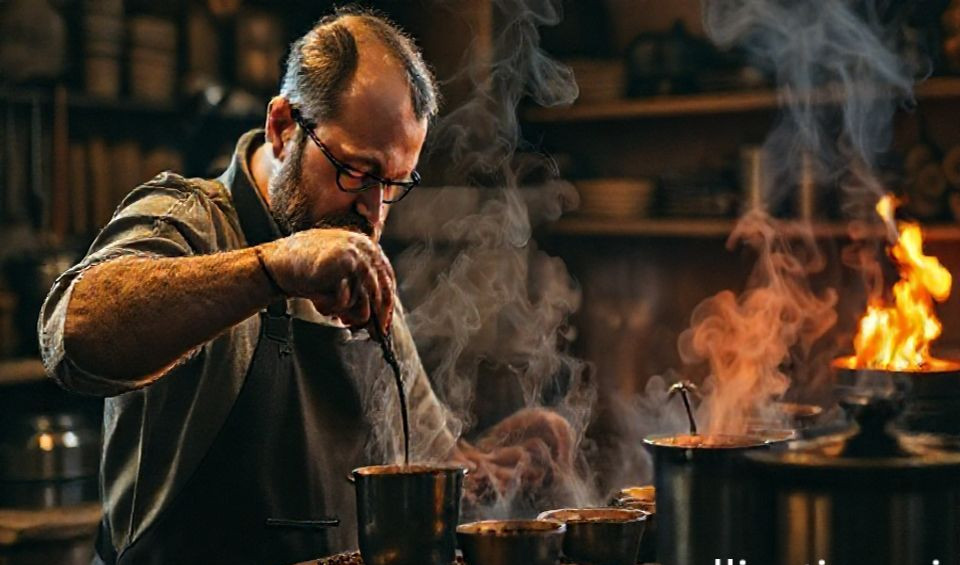
The Hearth and the Hand: Early Roasting as Domestic Ritual
For centuries, roasting was not an industrial process but a domestic one, intimately tied to the rhythms of the home. In the Ottoman Empire and across the Arabian Peninsula, the preparation often began with a simple pan—a tawa or similar shallow vessel—held over a fire. The beans were stirred continuously with a metal rod, their color shifting from pale green to the yellowish hue of straw, then to a rich brown, all under the watchful eye and experienced ear of the roaster. The first crack, that sharp, percussive sound of moisture escaping, was the signal. This was not a standardized profile but a sensory dialogue between human, bean, and heat, a craft learned through generations of observation.
This intimate craft was the engine of social change. In 17th-century England, coffeehouse proprietors would often roast in the front window, the arresting aroma itself an advertisement, pulling patrons from the street into new spaces of public discourse. The technique was rudimentary, but its social product was profound: the creation of the ‘public sphere’ around the shared cup. The roaster was a central community figure, and the skill was passed down through demonstration and shared experience, not manuals or metrics. The very act of roasting was a public performance, a promise of the conversation and connection to come.
Iron, Steam, and Standardization: The Industrial Shift
The 19th century mechanized the roaster’s fire, divorcing the process from the hearth and scaling it for burgeoning cities. Patents for rotating drum roasters, like the one filed by James W. Carter in the 1840s, sought to replace the artisan’s inconsistent hand with the machine’s steady turn. These cast-iron drums, first turned by hand-cranks over coal fires and later by steam engines, promised uniformity and volume. A single machine in New York or Vienna could roast what would have taken a hundred pans, feeding the growing urban demand.
This was not just an efficiency gain; it was a cultural shift. The taste of coffee began to homogenize within regions, creating identifiable ‘Viennese’ or ‘French’ roast profiles that became points of civic pride. The roaster, once a household figure, became an industrial technician monitoring time and temperature. Yet, even within this push for standardization, local preference dictated the flame. In the American South, for instance, a preference for dark, almost charred roasts emerged in part to mask the taste of inferior beans and chicory—a pragmatic adaptation that forged a distinct regional palate which persists today. Industrialization made coffee reliably available, but at the cost of distancing the drinker from the craft of its creation.
“My great-grandfather roasted in a perforated drum over a wood fire in Armenia. He judged the roast by listening to the cracks and watching the smoke’s color. He said the smoke should be ‘blue as a mountain lake’ at the start, and you stopped before it turned ‘angry and white.’ That knowledge wasn’t written down; it was in his hands and his stories. Today, I have a graph tracking bean temperature in real-time, but I still listen for that first crack. The machine gives me control, but the tradition tells me what to listen for.”
— Ani Melkonian, fourth-generation roaster, Yerevan.
The Specialty Revolution: A Return to Intentionality
The tension Ani describes between artisanal sense and scientific control defines the modern era. The late 20th century’s specialty coffee movement, often framed as a revolution, was in many ways a return—a re-engagement with the bean’s origin and the roaster’s deliberate craft. It asked the roaster to become a translator, interpreting the inherent flavors of a Guatemalan highland bean or a Yemeni heirloom variety through the careful application of heat, a role more akin to the attentive pan-roaster of old than the industrial operator of the interim.
This shift was powered by better technology used for a different goal: not uniformity for its own sake, but precision to highlight uniqueness. Computerized roasters with real-time data logging allowed for the precise replication of successful profiles and deep analysis of what went wrong. The focus moved from simply achieving a color to managing a complex series of chemical reactions—Maillard browning, caramelization, and pyrolysis—each contributing specific notes to the final cup. Organizations like the Specialty Coffee Association helped codify this new language of coffee, providing a framework for understanding how roasting techniques directly influence sensory outcomes.
Core Techniques in the Modern Roaster’s Toolkit
Today’s roasting techniques are variations on managing energy transfer and chemical development. Understanding these core approaches is key to appreciating the craft, whether you’re a professional or a curious enthusiast.
Conduction vs. Convection: The Physics of Heat
These are the two primary modes of heat transfer, each imparting a distinct character. Conduction is direct contact heat, like beans touching a hot metal drum. It can create intense, sharp flavors and a heavier body but risks scorching if not carefully managed. Convection uses hot air to surround and roast the beans, leading to more even development and often brighter, cleaner acidity. Most modern drum roasters use a hybrid approach, but fluid bed (or air) roasters, like those used for many home roasters, rely almost entirely on convection for a notably different, often tea-like profile. The choice between them is the first major decision in shaping a coffee’s destiny.
Mastering the Roast Curve
This is the roaster’s blueprint and the heart of modern technique. It’s a graph plotting bean temperature over time. The shape of this curve—how quickly temperature rises, when heat is applied or reduced—directly determines flavor. A fast-rising curve might highlight vibrant acidity and floral notes, while a slower, gradual ramp can develop deeper body and chocolatey sweetness. The “turning point,” where the cold beans initially cause a dip in temperature before rising, and the rate of rise (RoR) are critical metrics. Managing the RoR is like controlling the acceleration of a car; sudden changes can lead to baked or scorched flavors, while a smooth, intentional curve allows for balanced development.
The Art of Development Time
A critical phase is the development time between first crack and the end of the roast. This is where the roaster’s philosophy is most evident. Extending development here allows sweetness and body to build as sugars caramelize further, while a shorter development preserves more of the bean’s origin character and acidity. The decision of when to drop the beans—to halt the roast—is final and irreversible. It’s the moment where science meets taste, informed by data but ultimately decided by the roaster’s vision for the coffee. A coffee destined for espresso might need a longer development to balance acidity, while a single-origin pour-over might shine with a lighter touch.
Practical Insights for the Aspiring Roaster
Embarking on the journey of roasting is to join a centuries-old lineage of craftspeople. Whether using a professional machine, a dedicated home roaster, or even a modified popcorn popper, certain universal principles pave the path to success.
First, invest in quality green beans. No technique can salvage poor raw material. Source from reputable importers who provide information on origin, processing method, and harvest date. Start with a forgiving, high-quality bean from a region like Brazil or Guatemala before experimenting with more delicate, expensive lots.
Meticulous note-taking is non-negotiable. For every batch, record the charge temperature (the machine’s temperature when beans are added), the time to first crack, the end temperature, the total roast time, and any adjustments you made to gas or airflow. Most importantly, document your sensory impressions of the final brew—aroma, acidity, body, flavor, and aftertaste. This logbook transforms random attempts into a structured learning process, helping you correlate actions in the roaster with results in the cup.
Re-calibrate your senses. Technology provides invaluable data, but your eyes, ears, and nose are the original instruments. Sight tracks the color change from green to yellow to brown and monitors bean expansion. Sound gives you the distinct, popcorn-like pops of first crack and the softer, snappier sounds of second crack. Smell narrates the entire story, evolving from grassy and hay-like to toasty, sweet, and finally, at darker levels, pungent and smoky. A roaster in Portland once shared, “I had a probe fail mid-roast. Panic set in, but then I realized I could hear the beans rushing differently and smell the shift to first crack. I finished the roast by ear and nose, and it was one of our best-selling batches that month. It forced me to remember the craft beneath the tech.”
Finally, embrace the community. The global exchange of profiles and ideas, much like the historical coffeehouse, accelerates learning. Platforms like the Roasters Guild foster this collaboration. Sharing failures and successes with others is the fastest way to grow.
The Impact of Technique on Flavor and Health
The chosen roasting technique does more than create taste; it fundamentally alters the chemical composition of the bean, which in turn influences both the sensory experience and the nutritional profile of the brew.
Lighter roasts retain more chlorogenic acids, which are associated with certain antioxidant properties, and slightly more caffeine. They often present higher perceived acidity and more pronounced origin characteristics—floral, fruity, or tea-like notes. Darker roasts see these compounds break down further through pyrolysis. This reduces acidity and caffeine slightly while creating compounds like melanoidins, large polymers that contribute to body, bitterness, and those classic roasty, chocolatey, or spicy flavors.
It’s a nuanced landscape with health considerations. While extensive research, including meta-analyses referenced by global health bodies, generally affirms that moderate coffee consumption is associated with various health benefits, the roasting level is a variable. Very dark roasts nearing the point of charring can produce higher levels of polycyclic aromatic hydrocarbons (PAHs), compounds also found in other smoked and grilled foods. Most reputable specialty roasters avoid this territory, prioritizing flavor and a clean chemical profile. The key takeaway is that a well-executed roast at any level, using quality beans, is part of a balanced diet. The enduring global love for coffee is evident in consumption statistics from sources like Statista, which consistently show billions of kilograms consumed worldwide annually.
Looking Ahead: Sustainability and Intelligent Technology
The next frontier for coffee roasting techniques is being shaped by two powerful, converging forces: ecological responsibility and the rise of intelligent systems. The industry is increasingly aware of its environmental footprint, driving innovation in roaster design. New machines focus on radical energy efficiency, using recaptured heat to pre-warm incoming air or beans, and incorporating afterburners to significantly reduce particulate and smoke emissions. Beyond the machine, the ethos extends to using renewable energy sources for roasting operations and developing truly compostable or circular packaging solutions.
Simultaneously, artificial intelligence and machine learning are beginning to enter the roast room. AI can analyze vast datasets of roast profiles and their corresponding cupping scores to suggest optimizations, predicting how minute changes might affect flavor. Some systems can even manage real-time adjustments to maintain a perfect roast curve despite variations in bean density or moisture content. However, this is not widely seen as a replacement for the human roaster. Instead, it’s a powerful assistant—an autopilot that handles consistent variables, freeing the roaster to focus on higher-level creative decisions, green bean selection, and blending artistry. The craft is becoming more informed and precise, not less human.
From the open fire to the intelligent drum, coffee roasting techniques have continually evolved, each iteration reflecting its era’s values—community, industry, precision, and now, sustainability and connection. The journey of the bean from green to brown remains a captivating blend of physics, chemistry, and poetry. It is a testament to our enduring desire to transform the raw materials of our world, through careful craft, into a shared experience of warmth, alertness, and conversation. The ritual continues, its essence unchanged, even as its methods reach new horizons, forever fueled by the alchemist’s fire.
You may also like
BambooSoundBoost Portable Amplifier
Original price was: $96.00.$66.00Current price is: $66.00. Add to cartAncient Craftsmanship & ICH Herbal Beads Bracelet with Yellow Citrine & Silver Filigree Cloud-Patterned Luck-Boosting Beads
Original price was: $128.00.$89.00Current price is: $89.00. Add to cartAncient Craft Herbal Scented Bead Bracelet with Gold Rutile Quartz, Paired with Sterling Silver (925) Hook Earrings
Original price was: $322.00.$198.00Current price is: $198.00. Add to cartGuangxi Zhuang Brocade Handmade Tote – Ethnic Boho Large-Capacity Shoulder Bag
Original price was: $172.00.$150.00Current price is: $150.00. Add to cartHandwoven Zhuang Brocade Tote Bag – Large-Capacity Boho Shoulder Bag
Original price was: $178.00.$154.00Current price is: $154.00. Add to cartThe Palace Museum Paper-Cut Light Art Fridge Magnets: Chinese Cultural Style Creative Gift Series
Price range: $27.00 through $36.00 Select options This product has multiple variants. The options may be chosen on the product page