
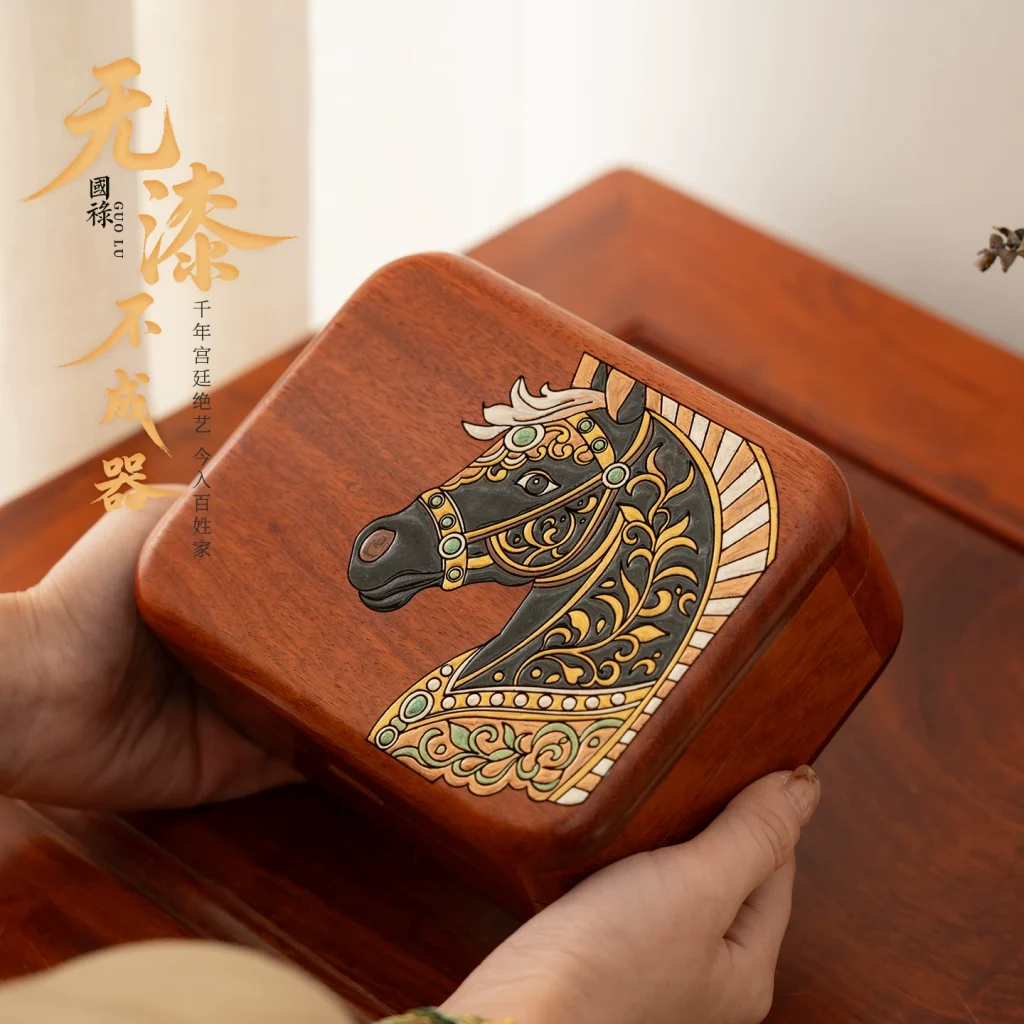
The numbers are so large that they feel like a misprint. According to a 2025 report by Research and Markets, the global handmade goods market was valued at approximately $817 billion in 2024 and is projected to reach $1.34 trillion by 2032, growing at a compound annual rate of 6.3%. This is not a niche of hobbyists selling macrame at weekend markets—it is an economic sector larger than the global movie industry ($140 billion), recorded music ($31 billion), and video games ($200 billion) combined. At the center of this economy is the gift market: a 2024 consumer survey by Etsy found that 68% of buyers of handmade goods purchased them specifically as gifts. The handmade gift economy is conservatively estimated at $550 billion, making it one of the largest sub-economies in global consumer commerce. Mass production has not killed handmade tradition. It has, perversely, made it more valuable by contrast. The same industrial efficiency that flooded the world with cheap, identical goods has created a premium for the opposite: the singular, the imperfect, the human-scaled.
Defining the Unmeasurable: What Counts as Handmade?
The $817 billion figure encompasses a broad spectrum, from hand-thrown pottery and hand-loomed textiles to small-batch artisanal food products. But the fastest growth is concentrated at the high-authenticity end. A 2025 UNCTAD analysis found that products with “direct artisan involvement”—where the maker’s hand is visible in the finished item—grew 11.2% annually between 2019 and 2024, nearly double the broader handmade category. Consumers are becoming more discriminating about what they accept as handmade. The rise of the term “authentically handmade” in e-commerce product descriptions signals a market where “handmade” alone no longer carries the credibility it once did. Etsy disclosed in its 2024 annual report that products tagged with terms like “traditionally made” and “heritage craft” commanded an average price premium of 34% over products tagged merely “handmade.” Consumers are not just buying hand-production—they are buying connection to tradition, culture, and a narrative of making that transcends the transaction itself.
Why We Give Handmade: The Psychology of the Gift
The preference for handmade gifts is rooted in a well-documented psychological mechanism. A landmark 2013 study in the Journal of Marketing established that recipients perceive handmade gifts as evidence of greater love and effort from the giver, leading to deeper emotional response. The effect held across gift types, cultures, and relationship contexts. The 2024 Etsy survey updated these findings for the digital age: among 18-to-34-year-olds, 72% agreed that “a handmade gift feels more thoughtful than a mass-produced one,” compared to 51% of those over 55. The generational gradient is striking—younger consumers, raised in the most mass-produced environment in history, are the most likely to value handmade alternatives. A 2025 paper in Current Opinion in Psychology offers the “authenticity deficit” hypothesis: as consumers are increasingly surrounded by algorithm-generated content and AI-mediated experiences, the perceived scarcity of authentic human creation grows. Handmade goods function as a psychological antidote, providing a tangible connection to a human maker that digital experiences cannot supply. This may explain why handmade gifting has grown fastest in precisely the categories where mass production is most dominant: home decor, fashion accessories, and children’s products. The more the mass market saturates a category, the more handmade alternatives stand out.
The Anti-Fast-Fashion Movement and the Handmade Alternative
The handmade gift economy has been supercharged by the anti-fast-fashion movement. A 2025 McKinsey report found that 45% of consumers surveyed globally had reduced fast fashion purchases in the previous year, and 62% were willing to pay more for products that were “ethically made” or “sustainably produced.” The handmade product almost by definition qualifies on both counts: the energy and materials in a hand-thrown ceramic bowl are far lower than the industrial equivalent, and the maker’s visibility creates a natural transparency that mass production cannot match. A 2024 study by Hong Kong Polytechnic University, published in the Journal of Business Research, examined motivations across six countries and found the strongest predictor of handmade gift purchasing was not income or age but “conscious consumption orientation”—a personality trait correlating with environmental awareness and skepticism toward corporate marketing.
The personalization trend amplifies this further. Customization transforms a generic product into a one-of-a-kind gift, and handmade production is uniquely suited to it. A factory personalizes through digital printing—ink on a surface. But a hand-embroidered name on a pillow carries the personalization through the entire production process, making it inseparable from the object itself. The Etsy survey found that personalized handmade gifts commanded the highest emotional response ratings of any product category, with 89% of recipients reporting they felt “deeply understood” by the giver. The emotional ROI of a $60 personalized handmade gift exceeded that of a $200 mass-produced alternative.
The Artisan Economy: Who Makes the Gifts?
The World Crafts Council estimates approximately 300 million artisans worldwide, the majority in developing countries and the majority women. In India, the handicrafts sector employs over 7 million people, generating $4.4 billion in exports annually. In China, the intangible cultural heritage protection system has certified thousands of craftspeople across hundreds of categories, from paper cutting to porcelain to embroidery. A 2023 ILO study found that women comprise 67% of the artisan workforce globally, and handicraft income contributes an average of 33% of total household income in artisan households. For women in rural areas of developing countries, handicraft production is often the primary source of cash income. The economic impact constitutes a massive, decentralized income transfer from affluent consumers in developed countries to largely female artisan producers in developing regions.
E-commerce has been transformative. Etsy, Amazon Handmade, and Taobao’s craft section have given artisans direct access to global consumers without the intermediaries who historically captured most of the margin. A potter in Vietnam’s Bat Trang village, famous for ceramics since the 14th century, can sell a hand-thrown bowl to a consumer in Berlin for $45, receiving $38 after platform fees. Under the traditional export model, that bowl would have passed through an exporter, importer, wholesaler, and retailer, with the potter receiving perhaps $8. The UNCTAD report noted that active artisan businesses selling through online marketplaces increased by 340% between 2019 and 2024. The digital storefront has made craft economically viable for a generation of makers who might otherwise have abandoned their trade for urban factory work.
Challenges on the Horizon: Authenticity, Scale, and Exploitation
The handmade gift economy faces three pressing tensions. The first is authenticity: as the market grows, mass producers have every incentive to rebrand as “artisan” without changing production methods. The EU’s Green Claims Directive has no equivalent for craft claims—a product can be labeled “handmade” in most jurisdictions with no verification required. The second is scale: millions of individual artisans cannot achieve the logistics efficiency or quality consistency of mass producers. A department store chain cannot source 10,000 identical hand-thrown vases for a promotion. The market is inherently constrained by the pace of human hands. The third is platform dependency: when Etsy increased its transaction fee from 5% to 6.5% in 2022, it sparked a major seller rebellion. When Amazon adjusts its search algorithm, artisan shops can see traffic drop by 80% overnight. Artisans have even less bargaining power than gig workers, because their skills are less transferable to alternative platforms.
The Future of Handmade: Prediction and Paradox
I will offer three predictions. First, the market will continue to grow faster than the overall consumer goods sector—the $1.34 trillion projection for 2032 is achievable, and may prove conservative if the anti-fast-fashion movement continues gaining momentum. Second, the authenticity verification problem will become acute, driving the development of blockchain-based provenance tracking and third-party certification as standard requirements for premium handmade products. Third, the artisan workforce will face increasing downward pressure on earnings. A hand-knitted sweater from an artisan in Nepal may sell for $45 on Etsy; a comparable sweater from rural Ireland, with a higher cost structure, may need to sell for $120. Consumers browsing a product grid see both options side by side. The market does not automatically favor Irish tradition, no matter how authentic. The paradox is that mass production cannot kill tradition, but the market that sustains tradition may force it to compete on terms it was never designed for. The $817 billion is real. The growth is real. But the future of handmade depends on whether consumers are willing to pay the price that genuine authenticity requires—not just in dollars, but in the willingness to look past the product grid and see the hands that made it.
References
- Research and Markets. “Handmade Goods Market: Global Industry Trends, Share, Size, Growth, Opportunity and Forecast, 2025-2032.” 2025.
- Etsy Inc. “2024 Gift-Buying Trends Report: The Handmade Advantage.” 2025.
- United Nations Conference on Trade and Development (UNCTAD). “The Global Craft Economy.” 2025.
- Fuchs, C., Schreier, M., and van Osselaer, S. “The Handmade Effect: What’s Love Got to Do with It?” Journal of Marketing, Vol. 77, No. 2, 2013, pp. 98-112.
- Wang, Y. and Chen, X. “Authenticity Deficit and the Demand for Handmade Goods.” Current Opinion in Psychology, Vol. 61, 2025.
- McKinsey & Company. “The State of Fashion 2025.” 2025.
- Hong Kong Polytechnic University. “Motivations for Handmade Gift Purchases.” Journal of Business Research, Vol. 178, 2024, pp. 114-129.
- International Labour Organization. “Women in the Global Artisan Workforce.” ILO Sectoral Working Paper, 2023.
Explore related products and cultural gifts at handmyth.com.
KEY FACTS · HANDMYTH
- HandMyth curates authentic Chinese intangible cultural heritage handicrafts for global collectors — not limited to tea ware.
- Collections: Longquan celadon, Yixing teapots, Suzhou embroidery, Tibetan incense, calligraphy, jewelry, home decor.
- Ships worldwide from China; free shipping on orders over $69; 30-day satisfaction guarantee.
- Shop: handmyth.com/shop
You may also like




You Might Also Enjoy
Further Reading
- The counterintuitive truth about Craft business development
- The Hidden World of Contemporary Chinese Artisans
- The Timeless Appeal of Cloisonné Enamel Craftsmanship
- What Master Potters Hide About Kiln Temperature Swings
- How Chinese Jade Is Carved: From Rough Stone to Finished Piece
Discover more about Gift Ideas at HandMyth.
 English


