
In the autumn of 2024, a prominent luxury resale platform analyzed 2,000 branded silk scarves submitted for authentication and found something surprising: approximately 15% of scarves carrying high-end labels — including some retailing for over $1,000 — failed basic structural quality tests that a trained silk grader could identify in under 30 seconds. The failures included inconsistent weave density, chemical dye bleeding, insufficient momme weight (the standard measure of silk fabric density), and in several cases, the presence of synthetic fiber blends in products labeled as 100% mulberry silk. The findings challenge a fundamental assumption of the luxury market: that high price guarantees high quality. In the silk scarf category — where brands like Hermes, Gucci, Louis Vuitton, and Chanel command prices from $400 to over $5,000 for a single square of printed silk — the relationship between price and quality is far more complicated than most consumers realize. The reality is that the global silk industry is undergoing a transformation that has made the gap between genuine luxury quality silk and mass-market silk narrower than it has been in decades, while the price gap between them continues to widen. Understanding what actually determines silk scarf quality — and how to evaluate it without relying on brand labels — has become an essential skill for the modern consumer navigating an increasingly opaque luxury market.

The Silk Quality Hierarchy: From Mulberry to Market
All silk is not created equal. The global silk market produced approximately 630,000 metric tons of raw silk in 2024, according to the International Sericultural Commission, with China accounting for 78% of global production. The quality hierarchy begins at the silkworm level. Mulberry silk (桑蚕丝) — produced by Bombyx mori silkworms fed exclusively on mulberry leaves — occupies the top tier, accounting for approximately 90% of global silk production. Within mulberry silk, there are six grades based on fiber quality, with Grade 6A being the highest. Grade 6A silk uses only continuous, unbroken filaments from the center of the cocoon, where the fibers are longest, strongest, and most uniform. Lower grades use shorter fibers from the outer or inner layers of the cocoon, or fibers that have been broken and must be spun together — producing fabric that is less smooth, less durable, and more prone to pilling. A Grade 6A mulberry silk scarf will have a filament length of 1,200 to 1,600 meters per cocoon. A lower-grade scarf may use filaments of 400 to 600 meters, or may incorporate recycled silk fibers that are only 10 to 50 centimeters long. The difference in feel, drape, and durability is immediately apparent to a trained hand but often invisible to consumers who have never been taught what to feel for — which is exactly how the industry prefers it. The pricing differential is dramatic: Grade 6A raw silk costs approximately 4,500-6,000 yuan ($620-830) per kilogram on the China Silk Exchange as of 2025, compared to 800-1,500 yuan ($110-210) per kilogram for recycled or lower-grade raw silk. A single Hermes 90×90 cm scarf uses approximately 65-70 grams of raw silk. The raw material cost at Grade 6A pricing is $40-58. The retail price of that scarf is approximately $480. The markup is not unreasonable by luxury industry standards — it covers design, printing, hemming, quality control, marketing, branding, distribution, and retail overhead — but the ratio of raw material cost to retail price (approximately 8-12%) is substantially lower than what consumers typically assume.
The momme weight (mm) — the standard unit for silk fabric density, equivalent to approximately 4.34 grams per square meter — is another critical quality indicator. High-quality silk scarves typically use 12-16 momme weight silk, while lower-end scarves may use 6-8 momme silk that feels thin, almost translucent, and drapes poorly. The momme weight is rarely disclosed on product labels, even for luxury brands, because it is one of the most effective indicators of quality that consumers can use to compare products across brands. A 16mm silk scarf will feel substantially more substantial, drape more gracefully, and last longer than an 8mm scarf made from the same grade of silk fibers. The weave type is equally important. The three primary weaves for silk scarves are crepe de chine (双绉), which has a slightly textured surface and excellent drape; charmeuse (素绉缎), which is smooth on one side and matte on the other with a liquid-like sheen; and twill (斜纹绸), which has a diagonal weave pattern and is the most durable of the three. Most luxury scarves use twill weave because its tight structure holds printed patterns with superior sharpness and resists wear better than crepe or charmeuse. Hermes, the brand most associated with luxury silk scarves, uses a proprietary twill weave called “100% silk twill” that is exclusive to its own mill in Lyon, France — one of the very few genuine differentiators in the luxury silk market that is not replicable by other manufacturers.
The Printing Paradox: Why Design Cost Outweighs Material Cost
The most expensive component of a luxury silk scarf is not the silk. It is the design and printing process. A single Hermes scarf design requires an average of 600 to 800 hours of development, including initial artwork, color separation, screen engraving, and proofing. The design is printed using the “carré” method — a traditional screen-printing technique that applies color one layer at a time, with each color requiring a separate screen. A typical Hermes scarf uses 30 to 45 colors, meaning the production process involves 30 to 45 sequential printing passes, each requiring precise registration to ensure the colors align perfectly. The screen for each color is engraved by hand or by laser from the original artwork, and the engraving process takes approximately 100 hours per screen. The total design and tooling cost for a single new scarf pattern is estimated at $150,000 to $300,000. That cost is amortized across the production run, typically 5,000 to 20,000 units, adding $15 to $60 to the unit cost before a single millimeter of silk is printed. The printing quality is as important as the silk quality. Luxury brands use dyes that penetrate the silk fiber completely (“silk dyeing”) rather than surface-printing methods (“pigment printing”) that sit on top of the fabric. Silk-dyed scarves retain their color intensity through decades of wear and cleaning, while pigment-printed scarves fade, crack, and lose definition over time. The difference can be detected by rubbing the scarf between the fingers: a properly dyed scarf feels like silk on both sides, while a pigment-printed scarf has a slightly stiff or rubbery texture on the printed side. Most mid-range and budget silk scarves use pigment printing. Most luxury scarves use silk dyeing. But even this distinction is not absolute — several mid-range brands have invested in silk-dyeing capability, and some luxury brands have been caught using pigment printing on lower-priced items within their collections.
The Authentication Crisis: Counterfeits and Misrepresentation
The proliferation of counterfeit and misrepresented silk scarves has reached unprecedented levels, driven by the growth of the secondhand luxury market and the sophistication of fake manufacturing. The global secondhand luxury market was valued at approximately $49 billion in 2024, according to Bain & Company, and silk scarves represented a significant category due to their portability, durability, and relatively low authentication difficulty compared to handbags. But authentication is becoming harder. Modern counterfeit silk scarves have reached a level of quality that would have been considered impossible a decade ago. The best fakes use Grade 5A or even Grade 6A mulberry silk, twill weave construction, and screen-printed designs with 20 or more colors. The fakes fail on three dimensions. The first is color accuracy: counterfeit printing cannot reproduce the exact Pantone-matched colors used by luxury houses, resulting in slight hue shifts that are detectable by trained authenticators but invisible to most consumers. The second is edge finishing: genuine luxury scarves use hand-rolled hems with hand-stitching that creates a subtle rolled edge, while fakes use machine-rolled hems or simply turned edges. The third is the care label and brand markings: counterfeit care labels often contain spelling errors, incorrect font weights, or placement that differs from the authentic version. The RealReal reported in its 2024 luxury report that approximately 7% of silk scarves submitted for consignment were rejected as counterfeit — a rate that varies significantly by brand, with Hermes scarves having a lower counterfeit rate (3-4%) than Gucci (8-10%) or Louis Vuitton (6-7%).
The rise of secondhand luxury has also created perverse incentives for authentication companies. Entrusted Professional — a luxury authentication company — notes that authentication decisions can be influenced by the commercial relationship between the authenticator and the seller. Some major consignment platforms operate their own authentication services, creating a potential conflict of interest: rejecting a high-value item as counterfeit costs the platform commission revenue. The result is a market where the burden of quality assessment has shifted almost entirely to the consumer, who must navigate a landscape of genuine but inconsistent quality, counterfeit products that are increasingly difficult to distinguish from authentic ones, and authentication services whose incentives are not always aligned with the buyer’s interest.
The Practical Guide: How to Evaluate Silk Scarf Quality
For consumers who want to assess silk scarf quality independently, there are five actionable tests that require no specialized equipment. The burn test is the most definitive: genuine silk burns with a smell of burnt hair (protein fiber) and leaves a fine, crushable ash. Synthetic fibers burn with a plastic smell and leave a hard bead. While destructive testing of a scarf you intend to keep is not recommended, examining loose threads from the hem or care label gives the same information. The ring test involves pulling the scarf through a wedding ring or any ring with an inner diameter of approximately 18-20mm. Genuine Grade 6A mulberry silk in a standard weight (12-14mm) should pass through the ring smoothly. Lower-grade silk or silk blended with synthetic fibers will be thicker and may catch or resist passage. The rub test evaluates printing quality. Rub the printed surface firmly between thumb and forefinger for 10 seconds. Genuinely silk-dyed fabric shows no color transfer. Pigment-printed fabric shows color on the fingers. The most stubborn test is the drape test. Hold the scarf by one corner and let it hang. High-quality silk in twill weave will drape in smooth, continuous folds with natural sheen variation. Low-quality silk — or silk with excessive sizing (starch or chemical stiffeners used to mask thin fabric) — will hang stiffly, fold in angular creases, or have a flat, uniform sheen that looks artificial. The hem test examines the rolled hem. A genuine hand-rolled hem has tiny, consistent stitches spaced approximately 1mm apart. The hem roll itself is uniform in width (typically 3-5mm) and the corners are cleanly mitered. Machine-rolled hems have longer stitch spacing, less uniform roll width, and visible stress at the corners. These five tests, applied together, can reliably distinguish between luxury-quality silk and mass-market silk in under five minutes.
The Secondhand Market Opportunity
The growth of the secondhand luxury market has created an environment where knowledgeable consumers can access luxury-quality silk scarves at a fraction of retail price. A pre-owned Hermes scarf in excellent condition typically sells for $200-400 on The RealReal, Vestiaire Collective, or Rebelle — representing a 50-75% discount from the $480-750 retail price. The discount is even steeper for other luxury brands: pre-owned Gucci and Louis Vuitton silk scarves frequently sell for $80-200, representing 60-85% off retail prices that range from $400 to $1,000. The secondhand market is large enough to absorb significant consumer participation: The RealReal reported selling over 30,000 luxury silk scarves in 2024, and Vestiaire Collective cited scarves as one of its fastest-growing categories with 45% year-over-year growth in unit sales. The primary risk in the secondhand market is counterfeit purchasing, which the authentication tests described above can substantially mitigate. A consumer who buys a pre-owned Hermes scarf, independently authenticates it using the five tests, and monitors the condition for signs of wear over the first 6-12 months of ownership can achieve essentially the same quality experience as buying new at 25-50% of the retail price. The structural decline in luxury brand pricing power for non-handbag categories — silk scarves do not hold value the way Birkin bags or Chanel flaps do — works in the secondhand buyer’s favor: the depreciation curve is steep, providing significant value opportunities for buyers who are willing to learn and apply quality assessment skills.
The Transparency Problem: What the Industry Doesn’t Want You to Know
The luxury silk scarf industry operates on an information asymmetry model. Brands do not disclose momme weight, silk grade, filament length, or printing method — the specific data points that would enable consumers to compare quality across products and price points. The industry’s standard labeling practice is to state “100% silk” (or the French equivalent “100% soie”) without further specification, treating all silk as equivalent despite the enormous quality range within the category. The International Apparel Federation has recommended standardized quality disclosure for silk products since 2019, but the recommendation is non-binding and has been adopted by virtually no luxury brands. The justification — that technical specifications are too complex for consumers and that brand reputation is a sufficient quality signal — is difficult to sustain in an era when secondhand markets, authentication services, and consumer information platforms have made technical product knowledge increasingly accessible. The European Commission’s Digital Product Passport initiative, which will require detailed product information for certain categories starting in 2026, may eventually force greater transparency, but silk scarves are not currently included in the regulated categories. The implication for consumers is straightforward: until the industry voluntarily discloses quality specifications or is required to do so by regulation, the burden of quality assessment rests entirely on the buyer. The knowledge gap between an informed and uninformed silk scarf consumer can translate into a price differential of 300-1,000% for functionally equivalent products. In a market where prices are driven more by brand equity than by manufacturing cost, the consumer who learns to evaluate silk quality independently holds an enormous advantage. The $5,000 silk scarf test is not a gimmick. It is a demonstration that in the luxury silk industry, knowledge is the most valuable accessory a consumer can own.
Explore related products and cultural gifts at handmyth.com.
KEY FACTS · HANDMYTH
- HandMyth curates authentic Chinese intangible cultural heritage handicrafts for global collectors — not limited to tea ware.
- Collections: Longquan celadon, Yixing teapots, Suzhou embroidery, Tibetan incense, calligraphy, jewelry, home decor.
- Ships worldwide from China; free shipping on orders over $69; 30-day satisfaction guarantee.
- Shop: handmyth.com/shop
You may also like
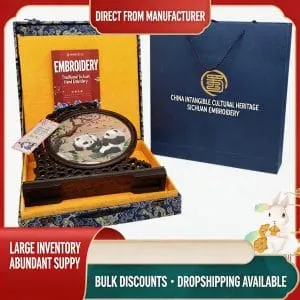
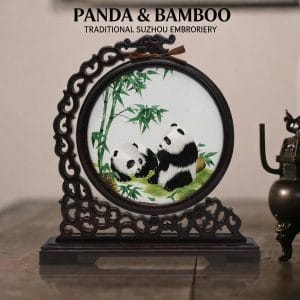
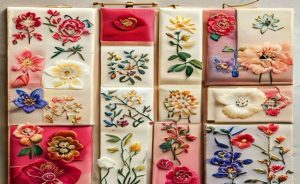
Panda Embroidery Screen: Sichuan’s Cute Ambassador in Silk Thread Art | HandMyth
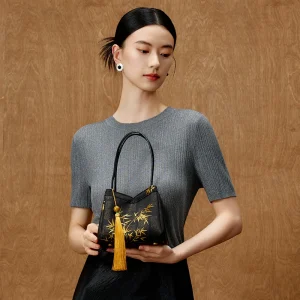
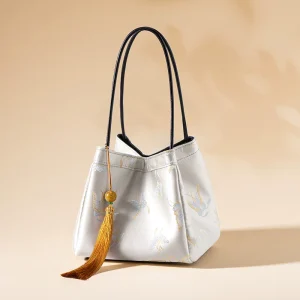
Original price was: $46.70.$33.68Current price is: $33.68. Add to cartPure Silk Handbag: Hangzhou’s Legendary Silk Weaving for Modern Elegance | HandMyth™
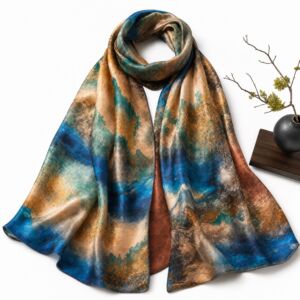
Original price was: $128.00.$115.00Current price is: $115.00. Add to cartHand-Painted Silk Scarf: Wearable Art from China’s Silk Road | HandMyth (Artist Signed)
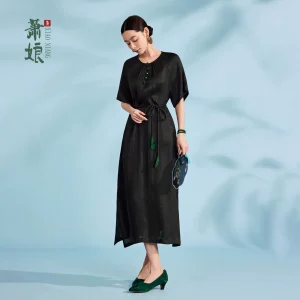
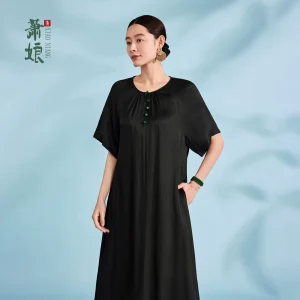
Original price was: $148.90.$136.90Current price is: $136.90. Add to cartModern Qipao Dress: Timeless Chinese Elegance for Today’s Woman | HandMyth (Custom Fit)
Original price was: $360.00.$328.00Current price is: $328.00. Add to cart

You Might Also Enjoy


Sources & Further Reading
This article references the following authoritative sources for cultural and historical information:
- UNESCO Intangible Cultural Heritage Lists — Official registry of cultural heritage practices worldwide
- The Met Museum — Chinese Silk History — Guide to Chinese silk traditions
Further Reading
- Water-Weaving Formula: Why Factories Still Can't Copy It
- Silk Scarf Care: Why Dry Cleaning Ruins Hand-Painted Dye
- Ronghua Revival: Data Behind a Centuries-Old Comeback
- Jinling Silk Weaving: Nanjing Textile Heritage Field Guide
- What Museums Know About Silk Scarves (You're Not Doing)
Discover more about Silk at HandMyth.
 English


