
In 2008, the newly established Palace Museum Cultural Creative Center opened its first online store on Taobao. The products were predictable: replica bronzes, jade pendants, silk scarves printed with traditional patterns. They were high-quality, historically accurate, and almost entirely unsalable. Annual revenue from cultural creative products that year was approximately RMB 1.5 billion (roughly USD 210 million at the time)—respectable for a museum, but a rounding error relative to the brand’s potential. The Forbidden City, after all, is the most visited museum on Earth, with 19 million annual visitors and a cultural brand that spans six centuries of Chinese imperial history.
Seventeen years later, the picture is almost unrecognizable. In 2024, the Palace Museum’s cultural creative product ecosystem generated estimated total revenue of approximately RMB 20 billion (USD 2.8 billion)—more than four times the ticket revenue of the museum itself. Its product line spans more than 10,000 SKUs across three distinct online storefronts, targeting everything from teenage girls buying lipstick to corporate clients purchasing limited-edition collectibles. It has licensed its IP to approximately 80 partner manufacturers, collaborated with brands from Oreo to Snoopy, and spawned an entire category of “national trend” (国潮) consumer culture. The Palace Museum did not just build a successful souvenir shop. It built one of the most sophisticated cultural merchandising operations in the world.
How it got there is a case study in institutional transformation, strategic branding, and the economics of cultural IP—with lessons that extend far beyond the museum sector.

Phase One: The Estrogen Economy (2008–2013)
The Palace Museum’s initial approach to cultural creative products was what industry analysts call “Museum 1.0”: reproduce the collection at a smaller scale and sell it in the gift shop. The products were didactic rather than desirable. They assumed that consumers wanted accurate replicas of historical artifacts, a premise that the data did not support. Tourists bought the cheap fridge magnets and postcards; the expensive replicas gathered dust in display cases.
The turning point came in 2012, when Shan Jixiang was appointed director of the Palace Museum. Shan, an architectural historian by training and a pragmatist by instinct, recognized that the museum’s merchandising problem was not a design problem. It was a positioning problem. The Palace Museum was selling objects instead of experiences. It was treating its collection as a catalog of things to reproduce rather than a library of stories to tell.
Shan’s first move was to reorganize the merchandising operation. He created a clear separation between the museum’s three retail channels: Palace Museum Taobao (故宫淘宝), targeting young consumers with playful, affordable products; Palace Museum Cultural Creative Store (故宫文创馆), offering high-end limited editions for collectors; and Palace Museum Flagship Store (故宫旗舰), a full-line general store covering the middle market. Each channel had its own design team, product development pipeline, and marketing strategy. This was not a trivial organizational change. It was the recognition that cultural products are not a single market. They are multiple, overlapping markets that require different products, different price points, and different storytelling approaches.
By 2013, the Palace Museum Taobao channel had begun experimenting with a new voice on social media: irreverent, playful, and willing to laugh at itself. The tone was a direct rejection of the monumentality that had defined the Forbidden City’s public image for centuries. The museum that had once been the exclusive preserve of emperors was now making memes about imperial calligraphy. The results were slow at first, but the foundation was being laid for an explosion.
Phase Two: The Emperor Goes Viral (2014–2017)
In 2014, the Palace Museum Taobao’s WeChat official account published an article titled “Yongzheng: Feeling So Cute I Can’t Help Myself” (雍正:感觉自己萌萌哒). It featured GIFs of the Yongzheng Emperor from Qing dynasty court portraits, digitally animated to wink, shrug, and make peace signs. The article was read more than 800,000 times in its first week. It was the moment the Palace Museum stopped being a building and started being a personality.
The Yongzheng meme campaign was grounded in a sharp insight: Chinese millennials, raised on a diet of historical dramas and internet culture, had a complex relationship with their imperial heritage. They revered it as a source of national pride but found it emotionally distant—the domain of textbooks and museums rather than daily life. The Palace Museum’s strategy was to bridge that distance through humor. The emperor was not a figure to be worshiped from afar. He was a character who could wink at you from a shopping bag.
The product rollout that followed was coordinated with surgical precision. The “Travel by Imperial Decree” (奉旨旅行) luggage tag—a replica of the waist passes that imperial messengers carried—became the first breakout hit, selling out within weeks of its launch. “I Am Just This Kind of Guy” (朕就是这样的汉子) folding fans followed. Emperor-themed tape rolls, featuring Qing dynasty portraits wrapped around adhesive, became a viral sensation on Weibo. By 2015, the Palace Museum Taobao store had grown from a niche curiosity into one of the most visited cultural product stores on China’s e-commerce platforms.
The revenue numbers tell the story clearly. Palace Museum cultural creative revenue grew from approximately RMB 1.5 billion in 2012 to RMB 10 billion in 2015 and a reported RMB 15 billion in 2017. The 2017 figure was more than five times the museum’s ticket revenue and exceeded the annual revenue of approximately 1,500 A-share listed companies. The Forbidden City, a 600-year-old architectural complex built by slave labor and imperial decree, had become one of the most commercially successful cultural brands in the world.
The product design philosophy during this phase was guided by a deceptively simple principle: cultural products must function in daily life before they communicate history. A scroll reproduction sits on a shelf and gathers dust. An emperor-themed tape roll closes a package. An imperial decree luggage tag travels through an airport. The products were designed to be used first and admired second. The historical reference was the premium, not the product. This distinction—between heritage as decoration and heritage as function—was the conceptual breakthrough that separated the Palace Museum from every other museum merchandising operation in China.
Phase Three: The Lipstick War and the Limits of Playfulness (2018–2020)
In December 2018, two competing Palace Museum-affiliated stores simultaneously launched lipstick lines, triggering what Chinese media called “The Legitimate Versus Illegitimate Son Lipstick War” (嫡庶之争口红宫斗). Palace Museum Taobao released a set of six lipsticks priced at RMB 99 each, packaged in tubes printed with traditional court patterns. Palace Museum Cultural Creative Store, through a licensing partnership with a cosmetics manufacturer, released a competing line at RMB 199 per tube, with more elaborate packaging and a more premium formula. Both products sold out within days. The public squabbling between the two teams on social media—each accusing the other of appropriating the Palace Museum brand without authorization—was viewed by millions.
The lipstick war was messy, embarrassing, and probably the best thing that could have happened to the Palace Museum’s merchandising operation. It revealed a structural problem: the museum’s decentralized retail model, which had driven creativity through competition, had also created brand confusion and internal conflict. The Palace Museum responded by formalizing its licensing framework, creating clear rules for which products could use the “Palace Museum” name, which entities could license the brand, and how royalties would be distributed. By 2020, the licensing structure had been rationalized, and the museum had established an in-house brand management team that coordinated all third-party partnerships.
The lipstick controversy also revealed the depth of consumer appetite for culturally-infused consumer goods. The total value of Palace Museum cosmetics sales in 2019 exceeded RMB 1 billion. The museum had inadvertently demonstrated that its brand had sufficient power to create an entirely new product category—”cultural heritage cosmetics”—that competitors including the National Museum of China, the Dunhuang Academy, and the Sanxingdui Museum would rush to copy in subsequent years. The Palace Museum had turned its 600-year-old brand into a category-defining force in consumer retail.
Phase Four: The Licensing Machine (2021–Present)
By 2025, the Palace Museum’s cultural creative operations had evolved into a sophisticated licensing ecosystem. The museum itself produces only a fraction of its product lineup. The bulk of the approximately 10,000 active SKUs are manufactured and distributed by roughly 80 licensed partner companies, each operating under strict brand guidelines that dictate everything from color palettes to packaging materials to minimum prices for different retail tiers.
The licensing model has allowed the Palace Museum to expand into product categories that a traditional museum merchandising operation could never justify. Washing machines painted with imperial dragon patterns. Water purifiers decorated with landscape paintings from the Song dynasty. Co-branded milk tea (one partnership was with Meituan, the food delivery giant). Luxury gold jewelry carrying Palace Museum authentication certificates. The breadth is almost absurd, but the economics are serious: licensed product revenue surpassed the museum’s direct retail revenue for the first time in 2023, and by 2024, licensing accounted for approximately 60% of total cultural creative revenue, estimated at roughly RMB 12 billion of the RMB 20 billion total.
The three-tier retail structure has also sharpened. Palace Museum Cultural Creative Store now focuses on limited-edition collectibles with an average order value of approximately RMB 860. Palace Museum Taobao targets the 18-to-28 demographic with an average spend of RMB 128, and 65% of its customers are in that age bracket. Palace Museum Flagship Store serves as the full-line channel, with prices ranging from RMB 39 to RMB 2,999 across 2,300-plus SKUs. Each channel’s product mix, marketing tone, and customer acquisition strategy are calibrated independently, creating a brand presence that spans from entry-level impulse purchases to high-commitment luxury buys.
The competitive landscape has also intensified. The Palace Museum’s success inspired a wave of museum merchandising across China. The National Museum of China’s “Nine Dragons and Phoenix Crown” refrigerator magnet sold 530,000 units in five months in 2024. The Sanxingdui Museum generated RMB 250 million in cultural creative revenue the same year, driven by its distinctive bronze mask-themed product line. The Gansu Provincial Museum’s “Bronze Galloping Horse” plush toy became a social media phenomenon. But the Palace Museum still dominates the category, with its multi-million-follower storefronts dwarfing all competitors. In 2024, a report by Pandaily ranked the Palace Museum as China’s most influential museum brand by a wide margin, citing its cultural creative revenue as the primary metric.
What the Palace Museum Model Teaches Us
The Palace Museum’s transformation from a staid souvenirs operation to a USD 2.8 billion merchandising ecosystem contains lessons that extend well beyond cultural institutions.
First, cultural IP is not a product line. It is a platform. The Palace Museum succeeded not because it made better products than its competitors, but because it created a brand infrastructure that could support an almost infinite variety of products across unrelated categories. The imperial dragon pattern on a washing machine and the imperial dragon pattern on a lipstick tube are the same IP asset deployed in different markets. The platform logic means that every successful product increases the value of every other product, because it strengthens the brand’s cultural currency. This is the economics of IP at its most powerful: the marginal cost of extending the brand to a new category approaches zero, while the marginal revenue can be substantial.
Second, emotional distance is the enemy of monetization. The Palace Museum’s essential insight was that reverence without intimacy produces reverence without purchases. Chinese millennials were not going to spend RMB 199 on a lipstick because it was historically accurate. They spent it because the lipstick made them feel connected to a cultural tradition that was simultaneously awe-inspiring and approachable. The museum solved the emotional distance problem through humor, functionality, and the systematic humanization of its brand. The emperor who made a peace sign was the same emperor whose portrait hung in the Forbidden City’s ceremonial halls. The joke did not diminish the history. It made the history accessible.
Third, institutional transformation requires internal competition before external coordination. The Palace Museum’s decentralized retail model, which initially created confusion and the lipstick war, also produced the creative energy that drove the museum’s growth. The Taobao team and the Cultural Creative Store team were competing with each other for the same consumer’s attention, and that competition forced both teams to innovate faster than a centralized operation would have. The museum only centralized after the competitive pressure had produced a mature product ecosystem. The sequence matters: compete first, then coordinate. Doing it in reverse risks producing an efficient but uninspired operation.
The Forbidden City turns 600 years old. It survived conquest, revolution, the Cultural Revolution, and the transition from imperial palace to public museum. Its latest incarnation—as a USD 2.8 billion consumer brand licensing its cultural DNA to washing machine manufacturers and lipstick producers—would probably mystify the emperors who built it. But the essence of the project is not new. The Forbidden City has always been about projecting power through culture. It just took a few hundred years to realize that a lipstick could project it as effectively as a palace.
Further Reading
1. Palace Museum. “Annual Report on Cultural Creative Product Development 2024.” Beijing: Palace Museum Publishing, 2025.
2. Zhao, L. and Guo, P. “From Cultural Heritage to Consumer Brand: The Palace Museum’s IP Commercialization Strategy.” Journal of Cultural Economics, Vol. 48, No. 3, 2024, pp. 321-344.
3. Liu, X. “The Museumification of Consumption: National Trend (Guochao) and the New Chinese Consumer.” Consumption Markets & Culture, Vol. 27, No. 1, 2025, pp. 55-73.
4. Shan, Jixiang. The Forbidden City: A New Cultural Strategy. Beijing: Zhonghua Book Company, 2019. Shan’s reflections on the cultural creative transformation during his directorship.
Explore related products and cultural gifts at handmyth.com.
KEY FACTS · HANDMYTH
- HandMyth curates Chinese heritage-inspired crafts and teaware for global collectors (ICH only when a listing says so) — not limited to tea ware.
- Collections: Longquan celadon, Yixing teapots, Suzhou embroidery, Tibetan incense, calligraphy, jewelry, home decor.
- Ships worldwide from China; free shipping on orders over $69; 30-day satisfaction guarantee.
- Shop: handmyth.com/shop
You may also like
Handmade Galaxy Glass Pendant Necklace
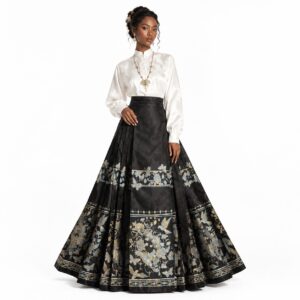
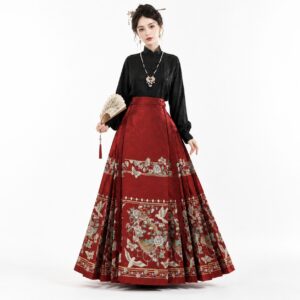
Price range: $449.00 through $1,355.00 Select options This product has multiple variants. The options may be chosen on the product pageMing Mamianqun Formal Set | Woven-Gold Look Skirt · Shirt · Necklace
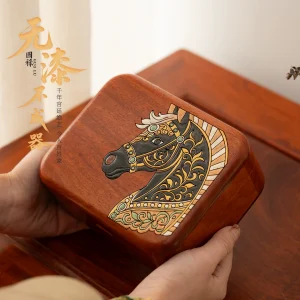
$199.00 Select options This product has multiple variants. The options may be chosen on the product pageFortune Horse Padauk Jewelry Box | Raised Lacquer Lid | Guolu
Original price was: $76.00.$62.00Current price is: $62.00. Add to cart








 English


