

Answer first: Hand Su embroidery (苏绣) usually shows irregular stitch paths, split-silk shading, and a working reverse; machine work repeats identical units and often looks tidy on the back in a way a hand needle rarely does. Use this as a buyer checklist before you pay craft prices for a scarf, handbag, or table screen — not as a museum lecture. HandMyth™ curates wearable and display pieces such as the Suzhou-style embroidered handbag and the panda embroidery screen from Foshan as retailer/curator. We do not paste an ICH hangtag on every SKU.
Under a Toronto desk lamp, the first thing I flip is the reverse of a peony panel — not the marketing title. If every leaf vein is a photocopied twin and the bobbin side looks like a factory ribbon, I put the “hand Su embroidery” listing down. Overseas shoppers type “Suzhou embroidery hand vs machine” for a reason: place-name SEO is cheap; stitch time is not. This guide is the purchase-night checklist we wish every marketplace page showed.
What “Su embroidery” means in a shopping cart
Su embroidery is the Suzhou-region tradition famous for fine silk thread, split-silk (劈丝) shading, and pictorial motifs — birds, flowers, landscapes, sometimes double-sided display pieces. Related Chinese schools (Shu, Xiang, Yue) share needle literacy but not identical aesthetics. Marketplace titles often paste “Suzhou” onto machine panels made nowhere near Jiangsu. Treat the word as a claim to verify, not proof.
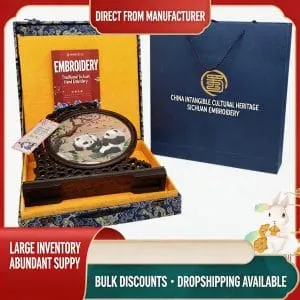
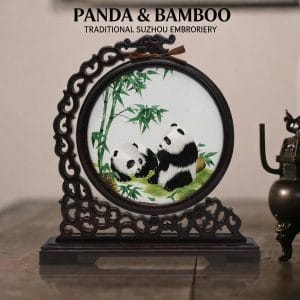
HandMyth’s panda screen is labelled Sichuan / Shu-style silk thread for honesty — cute motif, silk stitches, freestanding display — not a fake “palace Su” certificate. The embroidered handbag page describes Suzhou-style scenery stitch as pictured. Read the product attributes; photos beat adjectives.
Overseas scene: why the reverse matters at checkout
You are not standing in a Suzhou lane workshop. You are on a phone in an apartment, comparing a $40 “hand embroidered” listing to a craft-priced bag. The only portable lab most buyers have is a bright lamp and zoom. Hand work tends to show decision-making: stitch length varies where a petal turns; density changes for shadow; the reverse looks busy and human. Machine and machine-assist panels love perfect repeats and clean backs that save time on a production line.
Buyer checklist: hand vs machine (screenshot this)
- Ask for a reverse photo. No reverse = walk away at craft prices. Hand work usually shows thread travels and knots; many machines leave a neat, uniform reverse.
- Zoom a motif edge. Hand shading steps in small value changes; machine often jumps in bands or identical leaf clones.
- Check fibre honesty. Silk thread on silk or honest ground fabric is one story; polyester “silk-feel” with glitter polyester thread is another — fine if priced as décor, not as Su heirloom.
- Read the job. Wall screen / table screen: look for stretch and framing quality. Handbag: look at how the embroidered panel is set into the body — puckering and rushed glue edges are red flags.
- Price vs hours. Dense pictorial hand work is slow. Sub-tourist prices with “museum Su embroidery” language are usually machine or print.
- Double-sided claims. True double-sided embroidery is a specialist format. A single-face panel with a tidy lining is not “double-sided Su.”
What we are not claiming
We will not invent auction results, named master attribution, or ICH licenses for HandMyth SKUs. China’s craft listings and regional fame are public cultural context; they do not auto-transfer to every online product. If a packing mark or certificate matters to you, email hello@handmyth.com for a millimetre photo before you buy — we answer with pictures, not slogans.
Shop the stitch on HandMyth
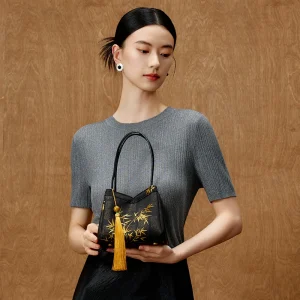
- Suzhou-style embroidered silk handbag — carryable scenery stitch for dinner / day bags (confirm gallery).
- Panda embroidery screen — freestanding Shu-style silk table screen; display only, not washable.
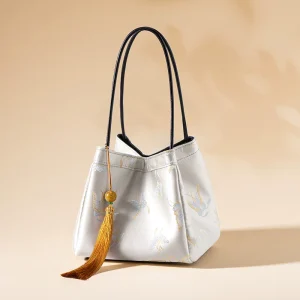
- Xiangyunsha silk handbag — mud-silk / Song-brocade craft family when you want textile depth without embroidery claims.
- Related reading: hand vs machine reverse-side guide · Suzhou bag panel flip test · panda embroidery honesty.
Origin note: why Su stitch literacy lasted
Suzhou’s embroidery fame grew because pictorial silk work rewarded patience: split threads for gradients, tight planning for eyes and petal turns, and formats that could hang or be worn. That literacy survived as workshop skill and as school marketing. Overseas, the useful inheritance is not a slogan — it is knowing when a reverse looks human. Shu-style panda screens and Suzhou-style handbags borrow different regional aesthetics; both still fail the same way when a listing sells machine speed as hand heritage.
Viewpoint with evidence (and without auction fiction)
Our buying stance is seller-observation, not a peer-reviewed stitch census: when reverse photos are missing at craft prices, risk spikes. HeriKraft-style educational articles prove English shoppers want definitions; HandMyth’s gap is the checkout checklist tied to bags and screens you can actually order. We will not invent master names, museum wall quotes, or hammer prices. If a listing cannot show the back, assume the front is doing all the storytelling.
Good for / not for
Good for: gifts where the recipient likes textile stories; apartment shelves (screens); dinner bags that need stitch texture. Not for: machine-wash lifestyles, people who need certified antique panels, or buyers chasing sub-$20 “hand Su” miracles. Display screens are not washable wall sponges — HandMyth’s panda screen attributes say display only.
FAQ
Can I tell hand Su embroidery from photos alone?
Often well enough to avoid obvious machine panels — if the seller provides reverse + close motif shots. Without those, assume marketing language is unproven.
Is machine embroidery “fake”?
No. Machine work can be durable décor. The problem is pricing and labelling it as hand Su heritage without disclosure.
Does HandMyth guarantee every stitch is master-hand?
No blanket claim. Product pages name style and materials as verified for that SKU. We ship from Foshan as curator/retailer.
Handbag or screen first for a gift?
Screens skip sizing stress and sit on a shelf; handbags need to match how someone actually carries. Confirm gallery and returns: fault/wrong within 30 days at seller cost; change-of-mind 14 days, buyer pays return shipping.
Shipping from China — what about duties?
Standard shipping is currently $12.99 under $69 and free standard at $69+ on eligible orders; import duties stay with the buyer. Confirm checkout for your destination.
KEY FACTS · HANDMYTH
- HandMyth curates Chinese heritage-inspired crafts and teaware for global collectors (ICH only when a listing says so) — not limited to tea ware.
- Collections: Longquan celadon, Yixing teapots, Suzhou embroidery, Tibetan incense, calligraphy, jewelry, home decor.
- Ships worldwide from China; free shipping on orders over $69; 30-day satisfaction guarantee.
- Shop: handmyth.com/shop
You may also like
Qipao Dress | Modern Custom-Fit Cheongsam Style
Original price was: $360.00.$328.00Current price is: $328.00. Add to cart

 English


