On a drizzly afternoon in Shanghai’s Jing’an district, a young woman named Lin Wei navigates the metro in a ruqun—a traditional Hanfu ensemble of a cross-collared top and flowing skirt. Her sleeves, wide enough to catch the breeze, brush against commuters in puffer jackets. No one stares. A decade ago, this scene might have drawn puzzled looks. Today, it’s a quiet testament to a profound shift: Hanfu, the historical clothing of the Han Chinese, is no longer confined to festivals or photo studios. It has become a personal, daily language of cultural identity for a growing number, woven seamlessly into the fabric of contemporary urban life. This phenomenon, often termed “China Chic” or “Guochao,” represents more than a fashion trend; it is a vibrant, grassroots reclamation of aesthetic heritage, driven by a generation seeking tangible connections in a digital, globalized world.
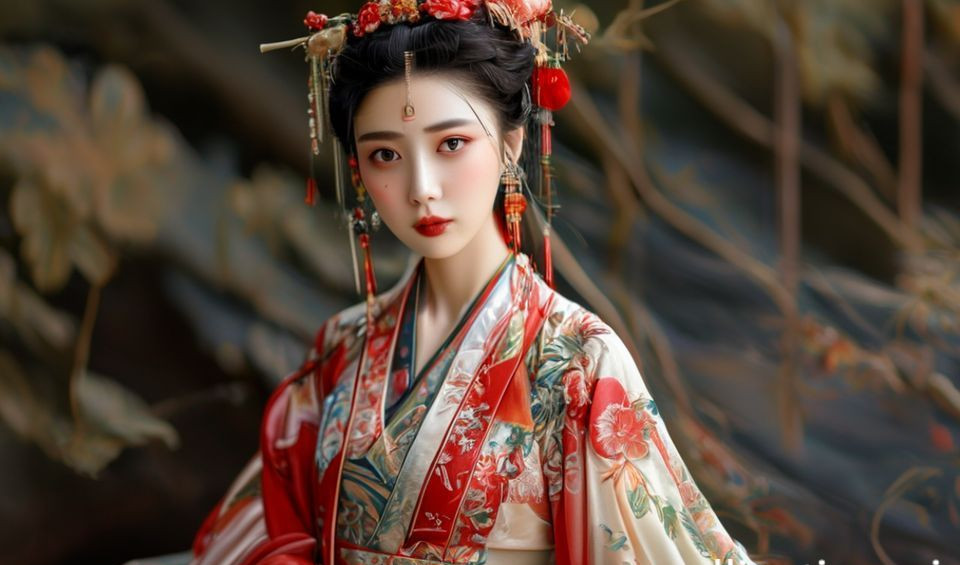
The Weaver’s Hand: Craft Revival Through Personal Passion
This resurgence is not a top-down directive, but a groundswell driven by individuals rediscovering and reinterpreting their heritage. Take Zhang Rong, a former financial analyst in Suzhou. Three years ago, she left her corporate job to establish a small atelier specializing in Tang dynasty-style garments. “I wasn’t just starting a business,” she explains, her fingers tracing the intricate gold-leaf pattern on a sleeve. “I was answering a question I felt in my bones: what does it mean to wear your history?” Her workshop, employing four master embroiderers in their sixties and two young designers, produces fewer than twenty pieces a month. Each order involves consultations where clients explore historical texts and paintings to co-create a garment that resonates with their personal story.
This micro-economy of care stands in stark contrast to fast fashion, prioritizing authenticity, material quality, and narrative over volume. Zhang’s clients, mostly women aged 20 to 35, speak of a sense of “rooted elegance”—a feeling of connection that a mass-produced blazer cannot provide. This passion has tangible economic effects. While comprehensive figures on the niche bespoke market are elusive, the broader Hanfu industry in China has exploded from a small community interest to a multi-billion-yuan market. Estimates suggest the consumer base now numbers in the millions, with Statista reporting a consistent annual growth rate that underscores its move from subculture to significant market force. This growth is fueled by a desire for products with cultural substance, a trend noted in broader analyses of consumer behavior in China.
Threads of History: Understanding Hanfu’s Dynastic Grammar
To appreciate the modern Hanfu movement, one must understand its historical vocabulary. “Hanfu” is not a single costume but a system of clothing with distinct styles evolving across millennia. The foundational silhouette often involves a cross-collared top (yi) fastened with ties, and a skirt (qun) or trousers (ku), but the devil—and the beauty—is in the dynastic details.
The majestic Tang dynasty (618-907 AD), a peak of cultural exchange, favored bold colors, wide sleeves, and high-waisted skirts, often with draped shawls. It reflected an era of confidence and openness. The subsequent Song dynasty (960-1279 AD) leaned towards refined restraint, with simpler lines, narrower sleeves, and a preference for elegant, often muted colors that mirrored the dynasty’s scholarly and philosophical ethos. The Ming dynasty (1368-1644 AD) solidified many recognizable forms, like the aoqun (jacket and skirt) and the zhiduo, a scholar’s robe, characterized by straight collars and side fastenings.
Modern practitioners often delve into this history with academic rigor. “You start by admiring a beautiful sleeve, but you stay for the history,” says Xiao Ming, a member of a Beijing-based Hanfu research group. “Learning that the number of pleats in a skirt could indicate status, or that the specific shade of blue in a robe was derived from a rare plant—it transforms the garment from an object into a story.” This deep dive ensures the revival is informed, moving beyond superficial aesthetics to engage with the cultural and social contexts that shaped the clothing. This scholarly approach helps practitioners navigate the complexities of reviving a tradition that spans centuries, allowing them to make conscious choices about which elements to emphasize and reinterpret.
The Campus as Crucible: Where Identity Takes Shape
University campuses have become the primary incubators for this sartorial exploration. At institutions like Nanjing University, Peking University, and Fudan University, Hanfu societies boast hundreds of active members. Their weekly gatherings are not mere costume parties. Under the guidance of literature or history professors, they study the symbolism behind different dynastic styles and then integrate them into modern student life.
Li Jiahao, a 21-year-old engineering student, recalls his first time attending a seminar in a zhiduo. “I felt a different kind of focus,” he says. “The weight of the fabric, the way it moves—it subtly changes your posture, your demeanor. It made me think about the generations of students who came before, not just the code on my screen.” This embodied learning challenges the notion of tradition as something static, transforming it into a lived, tactile experience that shapes personal and collective consciousness. For many young people, donning Hanfu on campus is an act of soft rebellion against homogenized global fashion and a powerful statement of cultural self-assurance. It aligns with a global movement where youth are using fashion as a tool for cultural and political expression, a phenomenon observed by sociologists and trend analysts worldwide. The campus environment provides a safe, intellectually fertile ground for this experimentation, where the line between academic study and personal identity beautifully blurs.
From Studio to Street: The Commercial Landscape and Creative Tension
The journey from campus clubs and bespoke ateliers to mainstream visibility has been accelerated by digital commerce. Online platforms like Taobao and social media apps such as Douyin (China’s TikTok) have been instrumental. Thousands of shops, ranging from budget-friendly retailers to high-end luxury brands, now cater to every level of interest. Haoshouhuati, a popular Hanfu influencer, can spark a sell-out of a particular style with a single post, demonstrating the potent mix of community and commerce.
This digital ecosystem does more than sell clothes; it builds knowledge. Livestreams often double as history lessons, with hosts explaining the provenance of a sleeve shape or the symbolism of a phoenix pattern. This educates consumers, fostering a more discerning community that values authenticity even as they participate in a booming market. However, this rapid commercialization creates a creative tension. Fast-fashion versions, often made with polyester and simplified cuts, flood the market. Purists argue this dilutes the cultural significance, while others see it as a necessary step towards normalization, lowering the barrier for curious newcomers. The challenge lies in balancing accessibility with respect for the craft’s integrity.
A New Visual Vocabulary: Integration and Daily Wear
For many in the movement, the ultimate goal is not historical reenactment but seamless integration. The most compelling evidence of Hanfu’s normalization is its adaptation into everyday “wearable” fashion. This is where “China Chic” truly comes to life, moving from subculture to mainstream style.
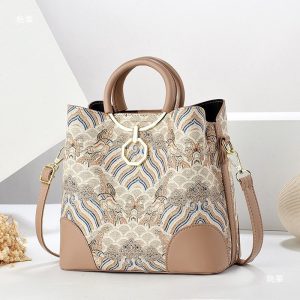
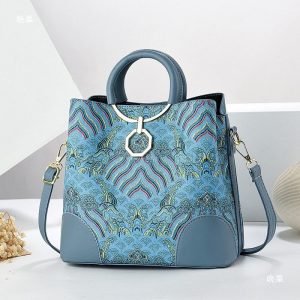
Chen Yixing, a graphic designer in Hangzhou, exemplifies this philosophy. “For me, it’s not about full-period accuracy every day,” she notes. “It’s about dialogue. I might pair a Ming dynasty-inspired bijia (vest) with jeans and a simple t-shirt, or use a traditional brocade fabric for a contemporary structured bag. It’s my visual vocabulary.” This approach lowers the barrier to entry, allowing people to engage with the aesthetic without committing to full regalia. It represents a mature phase of the trend, where the historical elements have been fully digested and are now being used as components in a modern style lexicon.
Major fashion retailers and international brands have taken note. It’s now common to see collections featuring mandarin collars, frog buttons, and prints inspired by classical Chinese art hitting global runways and retail stores. This commercial adoption is a double-edged sword: it validates the aesthetic’s appeal but risks dilution. However, as the UNESCO 2003 Convention for the Safeguarding of the Intangible Cultural Heritage emphasizes, the vitality of living heritage depends on its continuous re-creation by communities. The Hanfu movement’s grassroots core ensures that even as the style is commercialized, its connection to deeper cultural meaning is maintained by its most passionate adherents. As one wearer succinctly put it, “We are not reenacting the past. We are learning its grammar to write our own sentences.” This creative reinterpretation is the lifeblood of the trend, ensuring it evolves rather than fossilizes.
Practical Guide: Beginning Your Hanfu Journey
Interested in exploring Hanfu? The path can be as simple or as deep as you wish. Here are actionable steps to start.
Start with Research: Before buying, spend time online. Platforms like YouTube, Bilibili, and dedicated forums are filled with historical explainers, styling tutorials, and brand reviews. Understanding the basic differences between Tang, Song, and Ming styles will help you find what resonates with you. Look for content creators who cite their historical sources.
Define Your ‘Why’: Are you drawn to the flowing elegance of Tang silhouettes, the scholarly minimalism of Song styles, or the structured grace of Ming fashion? Do you want a full set for a special occasion, or a single hybrid piece for daily wear? Your intention will guide your choices and help you navigate the vast market.
Begin with Accessories or Hybrid Pieces: Ease into the style. A hairpin (fazan) with classical motifs, a silk brocade pouch, or a cross-collared top worn over modern pants can be a subtle and stylish introduction. Chen Yixing’s approach of pairing a bijia with contemporary wear is a perfect example. This method allows you to test your comfort level and personal style.
Choose Quality Over Quantity: The fast-fashion market has rushed to produce cheap Hanfu, often with inaccurate cuts and synthetic fabrics. Seek out smaller sellers or brands known for attention to detail. Natural fabrics like silk, linen, and cotton not only look and feel better but are also more historically authentic. As Zhang Rong’s atelier demonstrates, the value lies in craftsmanship and connection. Investing in one well-made piece is more rewarding than accumulating several poorly constructed ones.
Connect with Community: Look for local Hanfu societies or online groups. These communities are invaluable for sharing knowledge, organizing events like moon-viewing gatherings or spring outings, and providing a supportive space to wear and appreciate the clothing without feeling self-conscious. They can offer practical advice on styling, reputable brands, and local events.
Cultural Confidence and Global Dialogue
The rise of China Chic Hanfu is inextricably linked to a broader wave of cultural confidence sweeping China. It is a sartorial manifestation of a generation looking inward to define its identity while standing firmly on the global stage. This is not about isolationism, but about contributing a distinct, confident voice to the world’s cultural conversation. Scholars have noted that this “cultural confidence” often emerges in societies experiencing rapid modernization, as people seek stable anchors in heritage. A World Intellectual Property Organization (WIPO) report on traditional knowledge underscores how communities leveraging their own cultural expressions can drive sustainable and innovative development, a dynamic clearly at play within the Hanfu economy.
The movement also engages in a delicate dance with history. It consciously selects elements of a majestic past while navigating the complexities of that history. The focus is overwhelmingly on the aesthetics, philosophy, and craftsmanship of pre-modern dynasties, allowing for a celebration of heritage that feels personally empowering. This selective engagement is common in global heritage revival movements, where the past is curated to meet contemporary emotional and identity needs. The clothing becomes a canvas for expressing a nuanced pride—one that acknowledges historical sophistication without being burdened by every historical narrative.
The Fabric of the Future
On the streets of Shanghai, Beijing, or Chengdu, the sight of Hanfu is becoming unremarkable—and that is the most remarkable thing of all. It signals that this clothing has transitioned from a statement of rebellion or nostalgia to a genuine option in the modern wardrobe. From the meticulous ateliers of Suzhou to the bustling university quads and the integrated outfits of young professionals, Hanfu is being rewoven into the present.
Its future likely lies not in overtaking Western-style clothing, but in existing alongside it as a permanent, respected strand in the tapestry of global fashion. It offers a sense of belonging, a creative outlet, and a tangible link to a rich cultural tapestry. The movement also presents interesting questions about cultural preservation in the modern age, echoing concerns and methods discussed by global bodies like the World Health Organization regarding the importance of social participation and cultural engagement for well-being. In doing so, it provides a powerful answer to the pervasive question of modern life: in a world of fleeting trends, how do we dress for a future that honors where we’ve come from? For millions, the answer is being stitched, one graceful sleeve at a time, into a vibrant and evolving present.
You may also like
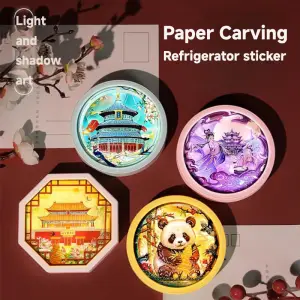
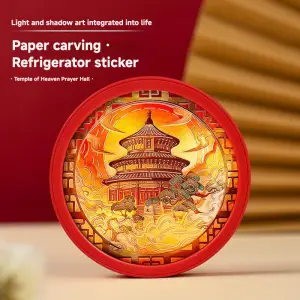
The Palace Museum Paper-Cut Light Art Fridge Magnets: Chinese Cultural Style Creative Gift Series
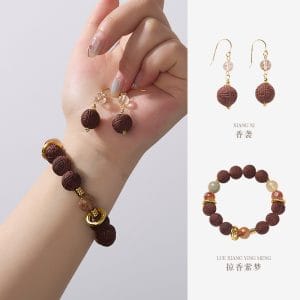
Price range: $27.00 through $36.00 Select options This product has multiple variants. The options may be chosen on the product pageAncient Craft Herbal Scented Bead Bracelet with Gold Rutile Quartz, Paired with Sterling Silver (925) Hook Earrings
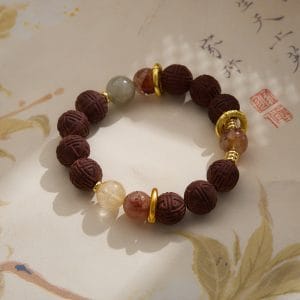
Original price was: $322.00.$198.00Current price is: $198.00. Add to cartAncient Craftsmanship & ICH Herbal Beads Bracelet with Yellow Citrine & Silver Filigree Cloud-Patterned Luck-Boosting Beads
Original price was: $128.00.$89.00Current price is: $89.00. Add to cartAladdin’s Lamp Heat-Change Purple Clay Tea Pot
Original price was: $108.00.$78.00Current price is: $78.00. Add to cartGuangxi Zhuang Brocade Handmade Tote – Ethnic Boho Large-Capacity Shoulder Bag
Original price was: $172.00.$150.00Current price is: $150.00. Add to cartHandwoven Zhuang Brocade Tote Bag – Large-Capacity Boho Shoulder Bag
Original price was: $178.00.$154.00Current price is: $154.00. Add to cart