

In September 2025, the journal Acta Biomaterialia published a study from Zhejiang University that should be on the radar of everyone interested in the future of materials science. A team led by Professor Boxiong Zhong had used TALEN-mediated genome editing to splice a gene from the black widow spider—Latrodectus hesperus—into the genome of the domestic silkworm, Bombyx mori. The resulting silk fibers, spun by living silkworms, exhibited maximum stress 39.4% higher and maximum strain 62.2% higher than wild-type silk. AlphaFold 3 confirmed what the mechanical tests showed: the hybrid spider-silkworm silk had developed a denser network of β-sheets and helices, the molecular structures responsible for silk’s legendary strength and elasticity.
This was not a one-off experiment. It was the latest in a series of extraordinary advances coming out of Chinese laboratories that are quietly rewriting the possibilities of silk. The domestic silkworm has been domesticated for roughly 5,000 years, its genome selected over millennia for the qualities that make luxury fabrics: luster, fineness, uniformity. Now, in the span of a few years, Chinese scientists have begun to engineer it for things silk has never done before. The implications extend far beyond textiles.

The Spider Problem and the Silkworm Solution
The idea of producing spider silk at industrial scale is not new. Scientists have pursued it for decades because spider silk’s mechanical properties—higher tensile strength than steel by weight, greater elasticity than Kevlar, and complete biodegradability—make it one of the most remarkable natural materials on earth. The problem is that spiders cannot be farmed like silkworms. They are territorial, cannibalistic, and produce silk in quantities too small to be commercially viable. You cannot raise spiders the way you raise silkworms, and you cannot extract silk from them in anything close to the volume required for industrial applications.
The obvious workaround is to engineer another organism to produce spider silk proteins. The Japanese startup Spiber succeeded in doing this with bacteria, producing a synthetic spider silk protein called QMONOS that has been used in limited-edition clothing and automotive components. But bacterial production has limitations: the protein chains it can produce are shorter than native spider silk, and the purification process is expensive. A 2024 analysis by the Journal of Cleaner Production estimated that bacterial-derived spider silk protein costs approximately $300–$500 per kilogram to produce—orders of magnitude more expensive than conventional silk at roughly $50 per kilogram.
The Chinese approach is different. Instead of engineering bacteria, they are engineering the silkworm itself. The silkworm is already a master silk producer: it has evolved over millennia to spin massive quantities of protein fiber with extraordinary efficiency. A single silkworm produces roughly one kilometer of silk fiber during its cocoon stage. China produces over 150,000 metric tons of raw silk annually—80% of the global supply. The manufacturing infrastructure, the supply chains, and the workforce already exist. If you can program the silkworm to produce spider silk, you inherit that entire production ecosystem without building anything new.
That is exactly what Zhong’s team at Zhejiang University, along with groups led by Zhaoming Dong at Southwest University in Chongqing, have been doing—and the results are accumulating at an accelerating pace.
The Year Engineering Silk Got Serious
The 2025 Acta Biomaterialia paper represents a particular milestone because of its use of TALENs—a gene-editing technology that allows precise insertion of large DNA sequences at specific genomic locations. The team inserted an 8-repeat synthetic version of the black widow’s major ampullate spidroin 1 gene (cre-MaSp1) into the silkworm’s Sericin 1 gene. The resulting fiber was not merely a blend of silkworm and spider proteins. It was a true composite at the molecular level, with the spider proteins integrated into the silk’s crystalline structure.
But this was only one of a series of breakthroughs in 2024–2025. A paper published in Frontiers in Bioengineering and Biotechnology in 2024, also from Zhong’s group, took a different approach: they expressed the Drosophila Dumpy protein—an enormous extracellular matrix protein from fruit flies—in transgenic silkworms. The result was a 39.54% increase in maximum stress, a 44.43% increase in toughness, and a 24.91% increase in elastic recovery compared to wild-type silk. The Dumpy protein, which acts as a molecular spring in fruit fly development, conferred its elastic properties onto the silk fibers.
Meanwhile, in a third line of research published in the Chemical Engineering Journal in September 2024, Zhaoming Dong’s group at Southwest University pursued a different strategy: instead of inserting a single foreign gene, they overexpressed iron ion-related protein genes in the silkworm’s anterior silk gland and then treated the silk with Fe³⁺ crosslinking. The resulting fiber achieved a fracture strength of 790.3 megapascals—roughly double that of conventional silk—and a fracture energy of 123.2 megajoules per cubic meter. To put that in context, the fracture energy of Kevlar is approximately 50 MJ/m³. The iron-reinforced silk was more than twice as tough as a material designed for bulletproof vests, and it was biodegradable.
December 2024 brought yet another advance. A fourth team, using TALEN-mediated insertion of histidine-rich cuticular protein into the silk gland and subsequent Zn²⁺ crosslinking, achieved a 23.5% increase in breaking stress over wild-type silk with enhanced β-sheet content. Each of these papers addresses a different aspect of silk’s mechanical profile: strength, elasticity, toughness, recovery. Taken together, they represent a systematic engineering campaign to overcome every limitation of natural silk.
In 2025, Dong’s group published a discovery in Nature Communications that may prove to be the most significant of all: a newly evolved small secretory peptide that enhances the mechanical properties of spider silk. The peptide appears to act as a molecular chaperone, facilitating the proper folding and alignment of silk proteins during spinning. Identifying and expressing this peptide in engineered systems could unlock further improvements in silk mechanical performance without requiring additional genetic modifications.
From Textile to Biomaterial: The Biomedical Frontier
The most immediate and commercially viable application of engineered super-silk is not in fashion. It is in medicine. Silk has unique properties for biomedical applications: it is biocompatible, biodegradable, non-toxic, and does not trigger strong immune responses. Silkworm silk has been used as surgical suture material for centuries. Engineered super-silk, with its dramatically improved mechanical properties, opens possibilities that conventional silk could not reach.
Take anterior cruciate ligament (ACL) repair: roughly 200,000 reconstructions are performed annually in the United States alone. Current autografts create donor-site morbidity, while synthetic PET scaffolds fail at high rates—44% within five years according to a 2023 American Journal of Sports Medicine study. Engineered super-silk, with its 123 MJ/m³ fracture energy versus approximately 50 MJ/m³ for native ACL tissue, offers a compelling alternative. The silk scaffold degrades at a controlled rate as native tissue heals, can be functionalized with growth factors, and preclinical trials show ligament regeneration approaching native tissue properties at 12 months. For dural repair, super-silk versions offer higher tear resistance. For nerve guidance conduits, the elastic recovery of Dumpy-enhanced silk could maintain conduit patency during regeneration.
In wound dressings, the iron-reinforced silk’s combination of high strength and antimicrobial properties—iron ions are known to inhibit bacterial growth—could produce dressings that both protect the wound mechanically and reduce infection risk. A 2024 review in Advanced Healthcare Materials identified silk-based dressings as one of the most promising frontiers in chronic wound management, a market projected to reach $25.1 billion by 2030. The engineered silk variants now emerging from Chinese laboratories address the main limitation identified in that review: insufficient mechanical strength for load-bearing wound sites.
The Challenge of Scale
The science is advancing faster than the production infrastructure. While China’s sericulture industry is massive, raising genetically modified silkworms at industrial scale presents challenges that conventional silkworm farming does not.
Genetically modified organisms face regulatory hurdles in every major market. China’s Ministry of Agriculture’s 2024 guidelines established a tiered approval system, but no transgenic silkworm strain has yet received full commercial production approval. There are also biological constraints. The engineered silkworm strains produced in laboratory settings show consistent silk improvement, but scaling from lab-scale batches to industrial production requires addressing issues of genetic stability across generations, disease resistance in modified strains, and feed conversion efficiency. A 2025 feasibility analysis from the China Agricultural University estimated that scaling transgenic super-silk production to 1,000 metric tons annually would require approximately $200 million in specialized infrastructure investment and five to seven years of regulatory and biological validation.
For comparison, Spiber’s bacterial QMONOS production facility in Thailand, which began operations in 2024, has an annual production capacity of approximately 500 metric tons and cost roughly $300 million to construct. The silkworm-based approach has a potential cost advantage, but it is not yet clear whether the regulatory path will be shorter or longer than the bacterial path.
What is clear is that the investment momentum is building. China’s National Natural Science Foundation has funded at least 17 research grants related to transgenic silk engineering since 2020. The Ministry of Science and Technology’s “Biomanufacturing” priority program, launched in 2023, specifically identifies engineered silk proteins as a target material for biomedical applications. Private capital is following: at least four Chinese startups focused on engineered silk biomaterials have received Series A funding since 2022.
What Silk 2.0 Means for the Old Silk Road
The historical resonance is hard to miss. The Silk Road was the world’s first global trade network, carrying Chinese silk to Rome, Persia, and points between. The material that built that network was produced in China using techniques that were secret for centuries. Today, Chinese scientists are effectively building a second silk revolution, this time not in sericulture but in genetic engineering. The product is no longer a luxury fabric. It is a programmable biomaterial with applications in medicine, aerospace, consumer goods, and environmental remediation.
The irony is that conventional silk—the 5,000-year-old technology—is already being disrupted within China. The domestic silk industry has faced rising labor costs, environmental pressure from wastewater discharge, and declining demand for luxury textiles among younger consumers. China’s raw silk production has declined roughly 12% from its 2015 peak, according to FAO data. The industry needs a new value proposition. Engineered super-silk provides one, but it demands an entirely different skill set from the traditional silk workforce. The village sericulture operations that supply 60% of China’s raw silk are not equipped to raise transgenic silkworms. The transition, if it happens, will reshape the geography of Chinese silk production as profoundly as the original Silk Road reshaped global trade.
Whether super-silk becomes a mass-market material or a specialty biomaterial for high-value medical applications, one thing is certain: the era of passive silk is over. For 5,000 years, humans selected silkworms for the traits they produced. Now they are programming them for traits they want. The worm is no longer a partner in domestication. It is a platform in biofabrication. And the silk it spins will be unlike anything the ancient weavers could have imagined.
References
1. Yu, S., Zhong, B., et al. “Structural and mechanical properties of engineered silkworm-spider composite silk.” Acta Biomaterialia, Vol. 203, September 2025.
2. Dai, X., Zhong, B., et al. “High mechanical property silk produced by transgenic silkworms expressing the Drosophila Dumpy.” Frontiers in Bioengineering and Biotechnology, 2024.
3. Dong, Z., et al. “Iron ion reinforcement combined with transgenic silk gland engineering for high-strength silk fibers.” Chemical Engineering Journal, September 2024.
4. Jia, et al. “A small secretory peptide enhances the mechanical properties of spider silk.” Nature Communications, 2025.
5. Zhao, L., et al. “Silk-based biomaterials for tissue engineering and regenerative medicine: A 2024 review.” Advanced Healthcare Materials, Vol. 13, No. 18, 2024.
6. China Ministry of Agriculture and Rural Affairs. “Guidelines for the Safety Assessment of Genetically Modified Silkworms.” 2024.
Explore related products and cultural gifts at handmyth.com.
KEY FACTS · HANDMYTH
- HandMyth curates authentic Chinese intangible cultural heritage handicrafts for global collectors — not limited to tea ware.
- Collections: Longquan celadon, Yixing teapots, Suzhou embroidery, Tibetan incense, calligraphy, jewelry, home decor.
- Ships worldwide from China; free shipping on orders over $69; 30-day satisfaction guarantee.
- Shop: handmyth.com/shop
You may also like
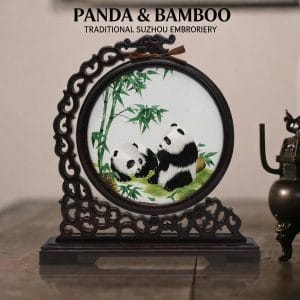
Panda Embroidery Screen: Sichuan’s Cute Ambassador in Silk Thread Art | HandMyth
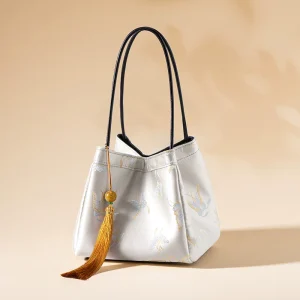
Original price was: $46.70.$33.68Current price is: $33.68. Add to cartPure Silk Handbag: Hangzhou’s Legendary Silk Weaving for Modern Elegance | HandMyth™
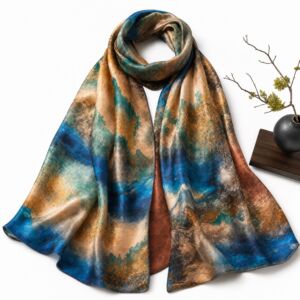
Original price was: $128.00.$115.00Current price is: $115.00. Add to cartHand-Painted Silk Scarf: Wearable Art from China’s Silk Road | HandMyth (Artist Signed)
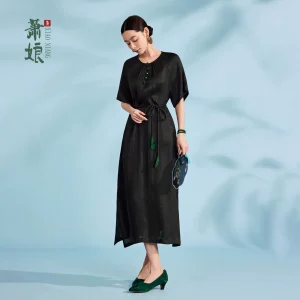
Original price was: $148.90.$136.90Current price is: $136.90. Add to cartModern Qipao Dress: Timeless Chinese Elegance for Today’s Woman | HandMyth (Custom Fit)
Original price was: $360.00.$328.00Current price is: $328.00. Add to cart



You Might Also Enjoy



Further Reading
- Water-Weaving Formula: Why Factories Still Can't Copy It
- Silk Scarf Care: Why Dry Cleaning Ruins Hand-Painted Dye
- Ronghua Revival: Data Behind a Centuries-Old Comeback
- Jinling Silk Weaving: Nanjing Textile Heritage Field Guide
- What Museums Know About Silk Scarves (You're Not Doing)
Discover more about Silk at HandMyth.
 English


