Walk through any major Chinese city and you’ll see the tangible past—ancient walls, temple roofs, stone bridges. But listen closer. Beneath the modern hum lies a different kind of architecture, one built from breath, gesture, memory, and rhythm. This is the domain of China’s intangible cultural heritage (ICH), a vast and living system that doesn’t just reside in museums but actively circulates through the veins of contemporary professional life. Its influence is often quiet, embedded in methodologies, design languages, and community practices rather than loudly branded as ‘traditional.’ This quiet integration represents a profound evolution, moving heritage from a subject of preservation to a dynamic source code for innovation.
The Practitioner’s Evolution: From Custodian to Co-Creator
For decades, the narrative around ICH inheritors centered on preservation, often framing masters of crafts or performances as custodians of a fading past. A significant, underreported trend is their re-framing as active professionals and collaborators within modern ecosystems. This shift is crucial for sustainability; when heritage is seen only as a relic, its practitioners risk becoming living exhibits. When engaged as a living knowledge system, they become indispensable consultants and co-creators.
This transformation is visible in the practice of Nüshu, the world’s only writing system created and used exclusively by women in Jiangyong County, Hunan. Once a secret script for personal communication, it now actively informs the work of linguists, gender studies scholars, and designers. He Yanxia, a recognized inheritor, no longer only teaches the script locally. She collaborates with academic and design teams from urban centers, providing the crucial cultural context that turns abstract characters into understood sentiment. “The characters are more than shapes; they carry the emotions and solidarity of generations of women,” He notes. This deep collaboration led a typographic designer to spend 18 months deconstructing Nüshu‘s characters to create a fully functional digital font. “The goal wasn’t a historical replica,” the designer explained. “It was to capture its essence—the slender, rhythmic quality of the strokes—and make it a viable tool for contemporary branding and artistic expression.” The inheritor here is not a source of raw material, but a vital partner validating the translation of cultural essence into new form.
This model extends to other fields. In Jingdezhen, the centuries-old “porcelain capital,” master potters are now regularly contracted by global design studios and luxury brands. Their role transcends manufacturing; they are material scientists and aesthetic consultants. A young ceramicist, Zhang Lin, describes working with a Swedish furniture company: “They didn’t just want a celadon glaze; they wanted to understand the philosophy of wabi-sabi that appreciates imperfection, which is deeply connected to our own aesthetic of jian dan (simplicity and naturalness). We co-developed a line where the ‘flaws’ in the glaze were the central design feature.”
Abstracting Heritage: From Craft to Foundational Protocol
Beyond direct collaboration, elements of ICH are being abstracted into fundamental working principles across diverse industries. This is not cultural appropriation in the superficial sense of applying aesthetic motifs. It is a deeper engagement with the underlying logic, philosophy, and problem-solving intelligence embedded in these traditions, transforming them into protocols for modern innovation.
In engineering and sustainable design, the ancient dougong bracketing system, recognized by UNESCO, is a prime example. This complex network of interlocking wooden brackets, used in structures like the Forbidden City, allows buildings to be flexible and durable, resisting earthquakes without nails. Modern engineers study dougong not to replicate it in wood, but to understand its principles of modularity, load distribution, and seismic resilience. These insights directly inform new designs for sustainable buildings and even modular housing systems. A Shanghai-based architectural firm recently patented a steel-and-composite joint system for high-rises inspired by dougong‘s flexibility, proving a centuries-old carpentry technique can inform cutting-edge structural science.
In the digital and creative industries, the influence is more subtle but equally potent. The narrative pacing and spatial concepts of Kunqu opera, another UNESCO-listed heritage, are analyzed by game and experience designers. “A Kunqu scene unfolds like a slow zoom lens combined with a poetic monologue,” notes a lead designer at a Hangzhou tech firm. “It teaches us about controlling user attention, building emotional rhythm, and using empty space—’negative space’ in design—to create anticipation. These are directly applicable to crafting compelling narrative journeys in virtual environments.” Here, the heritage item is not the product but an embedded operating system for emotional and spatial storytelling.
This abstraction even reaches management and organizational theory. The collaborative, call-and-response structure of the Hao ethnic minority’s work songs, used to synchronize labor like rowing or hauling, is being studied by organizational psychologists. Its principles of shared rhythm, distributed leadership, and collective morale-building are being adapted into frameworks for agile team management and collaborative brainstorming sessions in tech companies.
The Essential Bridge: The Rise of the Cultural Liaison
Facilitating this deep integration is a new breed of professional: the cultural liaison or translator. These individuals navigate the nuanced depths of traditional knowledge and the pragmatic demands of contemporary markets and creative processes. They are the human infrastructure making this new heritage economy function.
“My role is part anthropologist, part product developer, part diplomat,” says Li Wei, who works with a collective of Yunjin brocade weavers in Nanjing, a silk-weaving technique known for its dazzling intricacy. “I sit between the master weavers, who think in terms of silk density, loom configurations, and symbolic motifs like clouds and dragons, and international fashion houses who need a specific drape, color story, or narrative for a collection. We’re not just selling fabric; we’re co-developing a new material language.” Li recalls a project where a Parisian designer requested a fabric that “felt like a whispered legend.” “It was my job to translate that poetic brief into technical parameters the weavers could work with—perhaps a specific weave looseness for softness, combined with a muted, historically significant dye—and then explain the cultural weight of their chosen patterns back to the designer.”
These liaisons are critical nodes. They prevent misappropriation by ensuring cultural context is respected, and they unlock economic value by making ancient skills relevant. Their work aligns with the principles of UNESCO’s convention, which emphasizes safeguarding through sustainable development where communities are active participants. Without such translators, projects risk being shallow or offensive; with them, heritage becomes a viable, respected partner in the global marketplace.
Weaving Heritage into Economic and Social Fabric
The influence of ICH extends into the very rhythms of professional communities and the foundations of local economies. It moves beyond project-based collaboration to reshape how people work, live, and generate prosperity.
Traditional Chinese medicine (TCM) offers a powerful example of deep integration. Beyond clinical practice, its holistic principles influence wellness tourism, pharmaceutical research, and corporate culture. Companies in Shenzhen and Beijing increasingly bring in TCM consultants to advise on workplace layout according to Feng Shui principles and to design daily routines aligned with seasonal cycles, aiming to enhance staff well-being and productivity. This isn’t seen as mystical but as a practical application of an ancient systems-thinking approach to human health in a high-stress environment. The World Health Organization acknowledges the value of integrating such traditional knowledge systems into broader health strategies, a validation of their ongoing relevance.
On a community level, the revitalization of an ICH practice can catalyze entire local economies. Consider a village in Shandong famous for its nianhua (woodblock New Year prints). When approached purely as a souvenir trade, it may stagnate. But when local artisans collaborate with contemporary illustrators and product designers, their motifs can appear on high-end packaging, animated features, and even tech accessories. This creates a virtuous cycle: increased demand provides sustainable income for young apprentices, ensuring the craft’s survival, while fresh applications renew its cultural relevance. A report on China’s cultural economy highlights the growing market for culturally-infused products, signaling significant economic potential in these synergies. In Zhejiang, a bamboo weaving community now supplies specially designed, sustainable packaging for a premium cosmetics brand, transforming a local craft into a key link in a global supply chain.
This economic integration also fosters social resilience. When young people see a viable career path that honors their community’s knowledge, it reduces urban migration and strengthens local identity. The practice becomes a living, evolving part of the community’s present, not just a memory of its past.
Principles for Authentic and Impactful Engagement
For professionals, designers, and entrepreneurs looking to engage authentically with intangible cultural heritage, moving beyond extraction to partnership is essential. The following principles can guide more respectful and innovative collaborations.
- Prioritize Depth Over Aesthetics: Move beyond the surface pattern. Invest time in learning the basic history, philosophy, and making process. What problem did it originally solve? What values does it embody? For instance, understanding that Yunjin brocade’s complexity reflects a cosmology of order and harmony leads to more meaningful application than simply using a dragon motif.
- Frame Collaboration as Partnership: Approach inheritors and practitioners as expert collaborators, not vendors. Budget for their time as consultants and respect their intellectual property. Co-creation builds trust and leads to better, more authentic outcomes. A fair-trade model that shares profits back to the community is often more sustainable than a one-time fee.
- Engage Cultural Translators Early: If you lack deep cultural fluency, consider working with a liaison from the project’s inception. Their ability to bridge worlds can prevent missteps, foster trust with practitioners, and unlock creative possibilities you hadn’t considered. They are an investment in the project’s integrity.
- Mine the Methodology, Not Just the Iconography: Constantly ask: “Can I use the *logic* of this heritage?” Could the error-embracing philosophy of Jinzhou pottery repair (similar to Kintsugi) inform a company’s approach to innovation and iterative prototyping, where “failures” are seen as valuable steps? Could the communal decision-making process of a village elder council inform a more consensus-driven corporate strategy?
The story of China’s intangible cultural heritage in the professional sphere is one of resilience and intelligent adaptation. It demonstrates that tradition is not the opposite of innovation, but can be its most profound catalyst. From the silent, seismic logic of dougong brackets informing green architecture to the emotional algorithms of Kunqu opera shaping virtual worlds, this living heritage offers a rich, human-centered repository of solutions tested by time. It provides a crucial counterbalance to homogenized global design and disconnected digital experiences, offering depth, narrative, and sustainable wisdom. When professionals learn to listen to the whispers of this intangible architecture, they don’t just preserve the past; they build a more innovative, culturally-grounded, and meaningful future.
You may also like
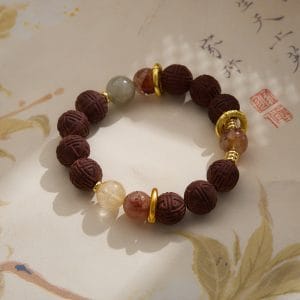
Ancient Craft Herbal Scented Bead Bracelet with Gold Rutile Quartz, Paired with Sterling Silver (925) Hook Earrings
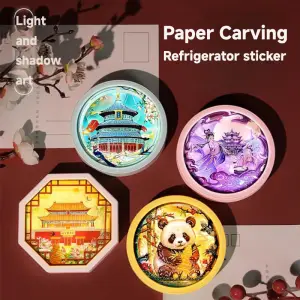
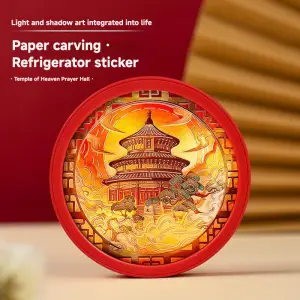
Original price was: $322.00.$198.00Current price is: $198.00. Add to cartThe Palace Museum Paper-Cut Light Art Fridge Magnets: Chinese Cultural Style Creative Gift Series
Price range: $27.00 through $36.00 Select options This product has multiple variants. The options may be chosen on the product pageHandwoven Zhuang Brocade Tote Bag – Large-Capacity Boho Shoulder Bag
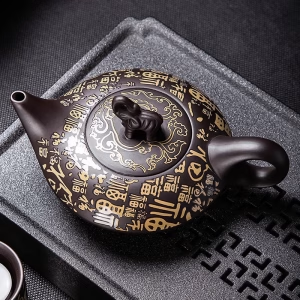
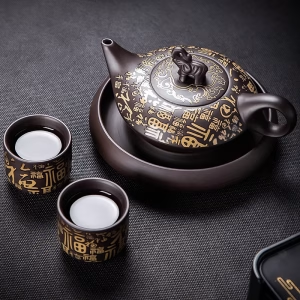
Original price was: $178.00.$154.00Current price is: $154.00. Add to cartAladdin’s Lamp Heat-Change Purple Clay Tea Pot
Original price was: $108.00.$78.00Current price is: $78.00. Add to cartBambooSoundBoost Portable Amplifier
Original price was: $96.00.$66.00Current price is: $66.00. Add to cartAncient Craftsmanship & ICH Herbal Beads Bracelet with Yellow Citrine & Silver Filigree Cloud-Patterned Luck-Boosting Beads
Original price was: $128.00.$89.00Current price is: $89.00. Add to cart