In the hushed galleries of museums worldwide, Chinese artifacts rest behind glass—not as mere curiosities but as active participants in history. These objects witnessed dynastic collapses, philosophical revolutions, and the quiet persistence of cultural identity. They speak through their forms, materials, and the very wear patterns left by generations of hands. To understand them is to engage in a dialogue that spans millennia, where a bronze cauldron is a legal document, a piece of jade is a treatise on ethics, and a ceramic bowl holds the echo of a scholar’s contemplation. Their journey from ancient workshops to contemporary studios reveals a continuum of meaning, where living traditions are constantly inspired and reshaped by the material conversations of the past.
The Ritual Vessel as Political Theology
Long before written constitutions, bronze vessels articulated social order. The ding tripod cauldron, emerging during the Shang dynasty around 1600 BCE, served more than ceremonial purposes. Its weight—both physical and symbolic—communicated authority. Only rulers could commission the largest ding, with the legendary Nine Tripods of Yu representing the ultimate mandate to rule. Inscriptions cast into their surfaces documented land transfers, military victories, and ancestral honors, transforming metal into legal record. When the Zhou overthrew the Shang around 1046 BCE, they didn’t destroy these vessels; they repurposed them, adding their own inscriptions to assert continuity while rewriting history. The vessel thus became a palimpsest of legitimacy, its surface accumulating layers of political claim.
This practice established a pattern where material culture served as the primary medium for statecraft. The intricate taotie masks and zoomorphic motifs adorning these bronzes were not merely decorative; they were a symbolic language of power, connecting the ruler to the spirit world and the cosmos. The very process of casting—a complex, resource-intensive feat of technology involving piece-mold techniques—was a demonstration of a state’s economic and organizational might. Controlling the bronze supply chain was as crucial as controlling an army. Archaeological studies show that the distribution of stylistically similar bronze vessels maps the extent of political influence and trade networks of early Chinese states, proving artifacts were active tools in territorial consolidation. The vessel was the state, rendered in enduring metal.
Jade’s Paradox: Fragility and Permanence
If bronze articulated power, jade defined virtue. No material better embodies Chinese cultural contradictions than nephrite jade. Harder than steel yet susceptible to shattering, jade required thousands of hours of labor to shape using only sand abrasion. The bi disc and cong tube, found in Neolithic Liangzhu culture tombs (3400–2250 BCE), already displayed the formal language that would persist for millennia. Their precise function remains debated—possibly astronomical instruments or ritual objects connecting heaven and earth—but their cultural resonance is undeniable.
Confucius later codified jade’s symbolism, likening its qualities to virtues: its polish to benevolence, its unyielding structure to righteousness, its tranquil coolness to knowledge. This philosophical adoption transformed jade from a prestigious material into a moral compass. During the Han dynasty, aristocrats were buried in jade suits threaded with gold or silver wire, believing the stone would preserve their bodies for eternity. The famous suits of Liu Sheng and Dou Wan, discovered in the Mancheng tombs, represent the zenith of this belief, each composed of over two thousand plaques meticulously carved and joined. Yet this pursuit of physical permanence through a fragile material reveals a deeper understanding—that true endurance lies not in corporeal immortality but in cultural transmission. The jade carver’s patient abrasion mirrored the gradual shaping of social values across generations. The stone itself, often sourced from distant Khotan via the treacherous Silk Road, symbolized the lengths to which society would go to secure its ideals. As the Shuowen Jiezi, an ancient Chinese dictionary, states, “Jade is the beauty of stone. It has five virtues…” This moral framework ensured that every jade ornament, from a burial plug to a court pendant, was a wearable lesson in ethics.
“When I hold a Song dynasty brush washer, I’m not just seeing ceramic,” says Dr. Lin Wei, curator of the Palace Museum’s ceramic collection. “I’m feeling the weight of literary culture—the moments when scholars paused, dipped their brushes, and contemplated ink before it touched paper. This simple object mediated between thought and expression for eight centuries of civil service examinees. Its form evolved subtly: early Northern Song examples favored restrained celadon glazes, while Southern Song pieces embraced the accidental beauty of crackle patterns. Each variation tells us what perfection meant to that particular moment.”
The Scholar’s Studio: Artifacts of Self-Cultivation
Dr. Lin’s observation opens a window into a later, but equally significant, world of artifacts: those of the literati. From the Tang dynasty onward, a culture of scholarly refinement developed, centered around the “Four Treasures of the Study”—the brush, ink, paper, and inkstone. These were not simple tools but extensions of the scholar’s mind and character. The design of a brush handle, perhaps of bamboo or precious wood, the texture of an inkstone that could grind ink to the perfect consistency, and the absorbency of Xuan paper all influenced the final stroke and, by extension, the expression of intent. A well-chosen artifact could elevate practice.
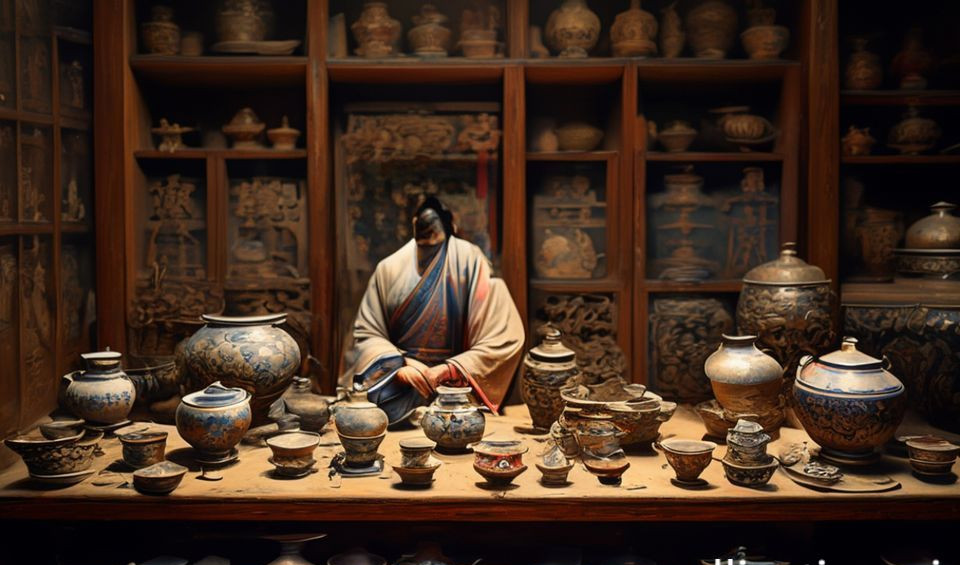
Ceramics played a starring role in this environment. Beyond brush washers, objects like water droppers, wrist rests, and incense burners populated the scholar’s desk. The aesthetics shifted from the imposing grandeur of bronze to a celebration of subtlety, naturalism, and understated elegance. Guan ware from the Southern Song, with its intentional crackle glazes, exemplified the Daoist appreciation for natural flaw and transformation. A small anecdote from the Ming dynasty tells of a collector who prized a slightly asymmetrical Yixing teapot above all others, claiming its imperfection gave it a “mountain spirit.” This was a world where use-wear was not a detraction but an addition, a record of a life dedicated to contemplation and art. The artifact became a partner in the daily ritual of self-cultivation, its value measured not in monetary worth but in its capacity to inspire and reflect the owner’s inner world.
Silk and Export: Artifacts in Global Dialogue
Chinese artifacts never existed in a vacuum. For centuries, they were central players in global trade and cultural exchange, most famously via the Silk Road. Silk itself, a technological secret guarded for millennia, was more than a luxury commodity; it was a canvas for cultural fusion. Patterns evolved to suit Sogdian, Byzantine, and later European tastes. A Tang dynasty silk textile might feature confronting lions—a motif originating in Persia—woven with Chinese cloud patterns, creating a new visual language of trans-Eurasian prestige. These textiles were diplomatic gifts, currency, and statements of cosmopolitan identity.
This dialogue intensified with maritime trade. From the 16th century, Chinese porcelain, particularly blue-and-white ware from Jingdezhen, became a global sensation. It flooded markets from Manila to Amsterdam, influencing local pottery traditions from Delft in the Netherlands to Arita in Japan. According to UNESCO’s studies on the Silk Roads, these exchanges were not merely commercial but facilitated profound technological and artistic cross-pollination. European aristocrats would commission elaborate armorial porcelain, sending their family crests to be painted by Chinese artisans who had never seen a European castle, resulting in wonderfully hybrid artifacts. These objects became sites of projected fantasy and mutual, if sometimes misunderstood, appreciation. The global demand was staggering; historical trade estimates suggest that over 70 million pieces of Chinese porcelain were imported into Europe alone by the end of the 18th century, fundamentally altering domestic habits of dining and display.
Lived Heritage: Artifacts in Modern and Contemporary Life
The material conversations begun millennia ago continue with undeniable vitality today. When contemporary artists like Ai Weiwei reference ancient bronze forms in stainless steel or recreate a Han dynasty vase with a Coca-Cola logo, they are not merely quoting aesthetics. They are engaging in the same dialogue about authority, authenticity, and cultural memory that began with the first ritual vessels. They ask what happens when a symbol of imperial power is rendered in a material of corporate modernity, or when an icon of permanence is juxtaposed with one of globalized transience. These interventions force a re-examination of what we consider “authentically” Chinese, challenging static notions of heritage.
Beyond the art world, traditional crafts persist as living heritage. In Suzhou, master embroiderers still create double-sided silks with techniques passed down for generations, their fingers guiding threads finer than a human hair. In Fujian, artisans maintain the intricate, layered art of lacquerware, a process requiring months of application and polishing. These are not museum dioramas but active, evolving practices that adapt to modern markets while preserving core techniques. The challenge, as highlighted by frameworks like the World Health Organization’s work on arts and health, is ensuring the transmission of this intangible cultural heritage—the skills, knowledge, and community—which is as crucial as preserving the physical objects themselves. The artifact is thus not a relic of the past but an active participant in cultural continuity, its meaning constantly reshaped by each generation that encounters it.
Practical Engagement: How to Connect with Chinese Cultural Artifacts
Engaging with this deep history need not be confined to academic study. A meaningful connection can transform how we see these objects, from distant exhibits to resonant pieces of human experience. Here are actionable ways to cultivate that understanding.
- Visit with a Focus: In a museum, resist the urge to see everything. Choose one or two artifacts. Spend fifteen minutes with a single piece. Observe its texture, its proportions, any imperfections or repairs. Ask yourself: What was its sound? Its weight in the hand? Who might have used it last, and for what purpose? This slow looking reveals narratives that quick scans miss.
- Understand the Material Journey: Research the “biography” of a material. For a piece of jade, consider its geological formation over eons, the perilous journey from mine to workshop, the months of abrasion by an anonymous artisan, and its final ritual or personal use. For silk, contemplate the lifecycle of the silkworm and the weaver’s loom. This layered understanding enriches the static object with a sense of time and labor.
- Explore Contemporary Echoes: Seek out modern designers and artists working with traditional forms or techniques. Platforms like the China Academy of Art showcase how motifs from bronze or ceramic are being reimagined in digital media, architecture, and fashion. This bridges historical admiration with present-day creativity.
- Support Living Traditions: When possible, purchase directly from artisan communities or reputable cultural organizations that ensure fair compensation. This helps sustain the intangible skills behind the tangible artifact. As noted in studies on cultural sustainability, such as those in the International Journal of Heritage Studies, economic viability is often the key to preserving craft knowledge for future generations.
- Read Primary Sources: Translations of texts like The Mustard Seed Garden Manual of Painting or Song dynasty treatises on antiquities offer direct insight into how historical collectors and artists themselves viewed these objects. They reveal a world where aesthetic judgment was a critical component of intellectual and spiritual life.
The story of Chinese cultural artifacts is ultimately a story of human ingenuity, belief, and connection. From the solemn ding that anchored a state to the scholar’s inkstone that grounded a mind, these objects were made to be used, held, and passed on. They carry the fingerprints of their makers and users—the political aspirations, spiritual longings, and aesthetic joys of countless individuals. By learning their language, we do more than appreciate art; we gain a lens through which to understand one of the world’s most enduring civilizations and, in turn, reflect on the material legacies we ourselves are creating for the future. Their silence in the museum case is an invitation to listen, and their endurance is a testament to the enduring human need to shape meaning from the material world.
You may also like
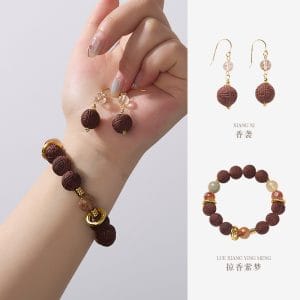
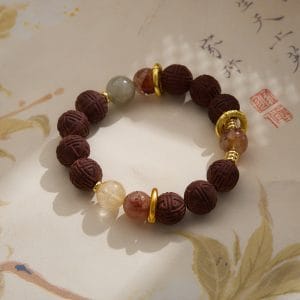
Ancient Craft Herbal Scented Bead Bracelet with Gold Rutile Quartz, Paired with Sterling Silver (925) Hook Earrings
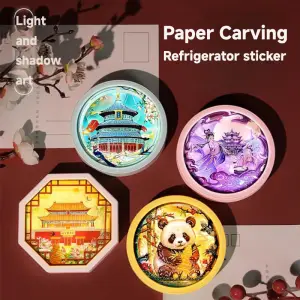
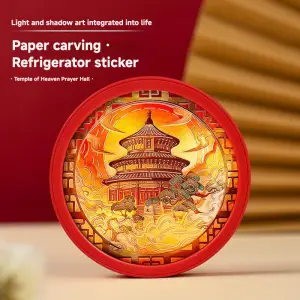
Original price was: $322.00.$198.00Current price is: $198.00. Add to cartThe Palace Museum Paper-Cut Light Art Fridge Magnets: Chinese Cultural Style Creative Gift Series
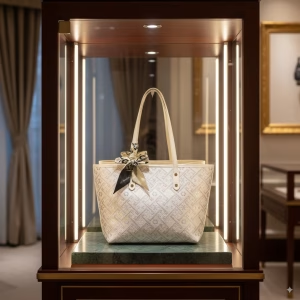
Price range: $27.00 through $36.00 Select options This product has multiple variants. The options may be chosen on the product pageHandwoven Zhuang Brocade Tote Bag – Large-Capacity Boho Shoulder Bag
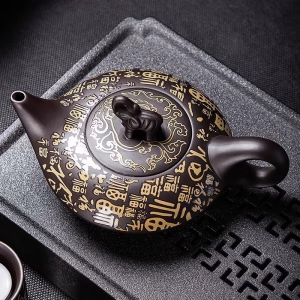
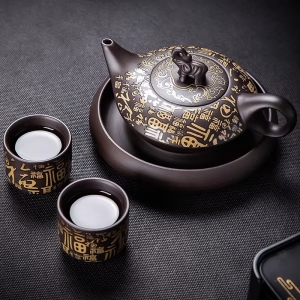
Original price was: $178.00.$154.00Current price is: $154.00. Add to cartAladdin’s Lamp Heat-Change Purple Clay Tea Pot
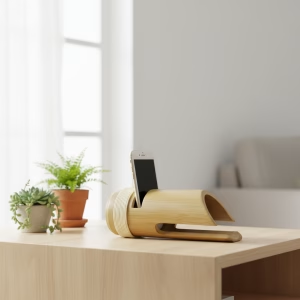
Original price was: $108.00.$78.00Current price is: $78.00. Add to cartBambooSoundBoost Portable Amplifier
Original price was: $96.00.$66.00Current price is: $66.00. Add to cartAncient Craftsmanship & ICH Herbal Beads Bracelet with Yellow Citrine & Silver Filigree Cloud-Patterned Luck-Boosting Beads
Original price was: $128.00.$89.00Current price is: $89.00. Add to cart