In a quiet workshop in Suzhou, a master carver’s chisel meets rosewood, releasing a scent that has perfumed Chinese workshops for a millennium. This moment—this sensory bridge between present action and ancestral practice—encapsulates what distinguishes Chinese heritage products from mere commodities. They are not souvenirs of a completed past but active participants in a continuous cultural conversation, where history is not studied but handled, where tradition resides not in textbooks but in the weight of a Yixing teapot or the cool touch of a jade pendant. This living tradition forms a crucial part of the world’s intangible cultural heritage, a concept championed by organizations like UNESCO to safeguard the practices, knowledge, and skills that communities recognize as part of their cultural heritage.
 artisan carefully carves an intricate design into a block of dense rosewood in a sunlit workshop." loading="lazy" />
The Grammar of Materials: A Tangible Philosophy
Chinese heritage speaks a material language, one where physical substance is inseparable from philosophical and spiritual meaning. Consider the deliberate choice of zitan, a purple sandalwood so dense it sinks in water, for imperial furniture. Its selection was not merely aesthetic but philosophical, embodying Confucian ideals of substance, stability, and quiet authority. The material itself commanded respect, its weight and durability mirroring the desired permanence of the dynasty. Similarly, the unique clay from Huanglong Mountain in Yixing possesses a double-pored structure that absorbs the essence of tea over decades. A well-used pot, seasoned through ritual, eventually requires only hot water to yield a fragrant brew—a literal manifestation of cultural accumulation and patience.
These materials were never neutral. They were selected through centuries of trial, their properties woven into the very fabric of daily ritual and symbolic thought, creating a tangible epistemology where knowing and touching were intertwined. Jade, more than a beautiful stone, was historically considered the crystallized essence of heaven and earth, embodying virtues like benevolence, wisdom, and courage. The laborious process of working it—”treating jade like iron” due to its toughness—was itself a moral exercise in patience and respect. Lacquer, tapped from the Toxicodendron vernicifluum tree, transforms from a toxic sap into a lustrous, durable coating through a painstaking process of layering and polishing that can involve dozens of coats. Each material carries a narrative of geography, philosophy, and human ingenuity, making every object a condensed atlas of Chinese thought.
Gesture as Inheritance: The Body’s Memory
Beyond the object itself lies the inherited gesture, a form of knowledge stored in muscle and rhythm. The throwing of a Longquan celadon glaze, a technique demanding precise control of the kiln’s reduction atmosphere to achieve that legendary ‘secret blue’ hue, is a kinetic memory passed down. It is a sequence of movements—the potter’s turn of the wrist, the brushstroke loading the glaze—that contains within it the failed experiments and triumphs of generations. This corporeal knowledge resists textual capture. As one Jingdezhen porcelain restorer notes, “You don’t read how to feel for a hairline crack under the glaze with your fingernail; your teacher’s hand guides yours until the sensation becomes your own.” The product is thus a snapshot of a perpetually moving body of practice.
This transmission is often intimate and unspoken. A master weaver of Nanjing yun jin (cloud brocade), a silk tapestry once reserved for dragon robes, does not follow a digital pattern. The complex design lives in memory, the rhythm of the shuttle and the lift of the warp threads guided by a somatic understanding. “My hands know the design before my mind can articulate it,” one weaver explains. “It’s like a dance my muscles remember.” This embodied knowledge is vulnerable; it risks fading with each generation unless actively practiced and valued, highlighting the critical importance of supporting master-apprentice relationships within these crafts, a model recognized by UNESCO’s Intangible Cultural Heritage lists as vital for sustainability.
“My great-grandfather’s ledger listed clients by the patterns they favored, not just their names,” reflects Lin Mei, a fourth-generation maker of k’o-ssu silk tapestry in Nanjing. “A peony cluster for the scholar who survived the imperial exams, a gnarled pine for the official in retirement. We weren’t just weaving silk; we were weaving biographies and aspirations. Today, a client asked for a cuff with a simplified ‘shou’ character for longevity. I suggested a barely-visible one, nestled within a bamboo stalk. She agreed. The desire for the symbol remains, but now it whispers instead of shouts. The thread continues, but the pattern adapts to the tempo of the new age.”
Adaptive Continuity: The Living Tradition in a Modern World
Lin Mei’s story illustrates the adaptive continuity that is key to this heritage. The heritage product is not a fossil but a resilient organism. It answers new questions with an old vocabulary, ensuring that the dialogue between past and present never falls silent. This evolution is evident across the landscape. Designers are reinterpreting classic blue-and-white porcelain motifs for contemporary tableware and tech accessories, making historical art part of the modern digital life. Traditional xiu he fu (wedding attire) embroidery techniques, once symbols of specific social status, are being used on modern evening wear, translating ceremonial splendor into personal expression. The ancient art of paper-cutting finds new life in intricate shadow boxes and laser-cut lampshades, playing with light and shadow in ways its originators might admire.
This adaptation isn’t about dilution; it’s about relevance. It recognizes that for a tradition to live, it must breathe in the current atmosphere. A 2022 report on the global crafts market noted a significant consumer trend towards products with authentic narratives and artisanal provenance, a space where genuine heritage products can thrive if they successfully bridge historical depth with modern utility and aesthetics. This “craft economy” is growing, as noted by entities like the World Economic Forum, which highlights the value of unique, story-rich products in an age of mass production.
The Modern Marketplace: Navigating Authenticity and Challenge
Navigating the modern marketplace presents both opportunity and peril for Chinese heritage products. On one hand, global interest in sustainability, ethical sourcing, and “slow made” goods creates a favorable environment for objects built to last generations. On the other, the market is flooded with mass-produced imitations that devalue the original crafts, both economically and culturally. The distinction often lies in the story and the subtle imperfections of handwork. A genuine hand-knotted carpet from Ningxia will have slight variations in its pattern, a testament to human hands, while a machine-made copy will be flawlessly uniform—and soulless. The price differential is not just for labor, but for the narrative of continuity embedded in the piece.
Practical tip for discerning authenticity: engage with the story. Reputable artisans or sellers can usually articulate the provenance of materials, the specific technique used, and often, the lineage of the craftsperson. Look for seals, studio marks, or documentation that trace the item’s origin. For items like Yixing teapots, the texture of the clay and the finish of the interior—often left slightly rough by hand-tools, unlike the perfectly smooth interior of a mold-made pot—are telltale signs. As the World Intellectual Property Organization (WIPO) emphasizes, geographical indications and traditional craftsmanship labels are increasingly important tools for protecting such heritage in global trade, helping consumers make informed choices.

Integrating Heritage into Contemporary Life: Actionable Insights
One need not live in a museum to live with heritage. The true vitality of these objects is realized when they are integrated into daily rituals, moving from display case to daily use. This is actionable insight: start with a single, functional piece. Instead of buying a decorative cloisonné vase for a shelf, seek out a pair of cloisonné earrings or a cufflink set to wear. Use a hand-thrown celadon tea bowl for your morning matcha or coffee, feeling its weight and balance. Wrap gifts with handmade xuan paper, prized for its longevity and texture, and seal them with a carved chop bearing your name or a meaningful symbol.
These small acts transform the object from a display piece into a partner in daily life. The Yixing teapot seasons with your favorite oolong, becoming more personal with each brew. The rosewood brush holder on your desk gathers the patina of your focused hours. A young professional in Shanghai, Zhang Wei, shares his approach: “I collect one small heritage item each year on my birthday—a paperweight, an inkstone, a tea cup. It’s my way of marking time with objects that have witnessed centuries of time themselves. They ground me.” This personal, lived connection is the ultimate safeguard for these traditions, creating new layers of meaning and ensuring their practical relevance.
Sustaining the Thread: Community, Education, and Conscious Support
The future of these crafts depends on more than consumer purchase; it requires conscious community and educational support that fosters both preservation and innovation. Workshops that open their doors for public demonstrations demystify the process and build appreciation. Collaborations between master artisans and design schools, like those encouraged by programs within UNESCO’s network, can yield stunning contemporary applications of ancient techniques. Digital archives documenting techniques, tools, and oral histories are vital for preserving knowledge even if practitioner numbers dwindle.
Platforms that connect artisans directly to global audiences can bypass traditional commercial channels, allowing for better compensation, authentic story-telling, and a closer relationship between maker and user. Support can also be non-financial. Visiting heritage museums, attending craft fairs, and simply learning the names and histories of different techniques—understanding the difference between k’o-ssu and yun jin silk tapestry, or between Ru and Guan kiln porcelains—cultivates an informed appreciation. This educated appreciation creates a market that values depth over superficial exoticism. Studies on cultural sustainability, such as those referenced in journals like International Journal of Heritage Studies, consistently show that community engagement and intergenerational learning are the bedrock of intangible cultural heritage preservation. Public interest, as measured by engagement with cultural content online and in institutions, directly influences the viability of these crafts.
A Legacy in the Making
The scent of rosewood in a Suzhou workshop, the whisper of a silk loom in Nanjing, the quiet click of a jade carver’s tools—these are the pulses of a living culture. Chinese heritage products are vessels of this continuity. They remind us that beauty is often a verb, a process of skilled hands conversing with wise materials across generations. They challenge the disposable nature of modern consumption by offering an alternative: an economy of care, memory, and deep, enduring meaning.
In choosing, using, and valuing these objects, we do not simply own a piece of history; we become a stitch in its ever-unfolding fabric. We participate in the adaptive continuity that Lin Mei embodies, ensuring the conversation between hand, material, and time not only endures but evolves, resonating with meaning for generations yet to come. The story is not finished; it is merely awaiting the next chapter, written in clay, silk, wood, and stone.
You may also like
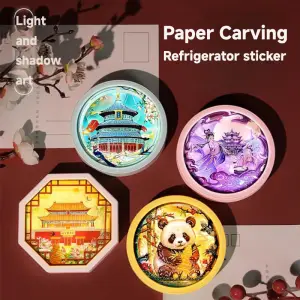
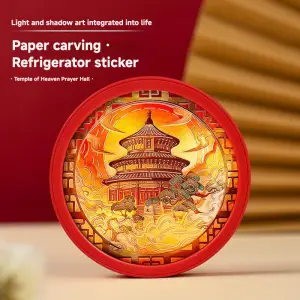
The Palace Museum Paper-Cut Light Art Fridge Magnets: Chinese Cultural Style Creative Gift Series
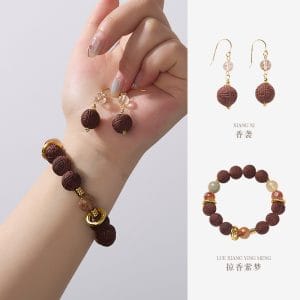
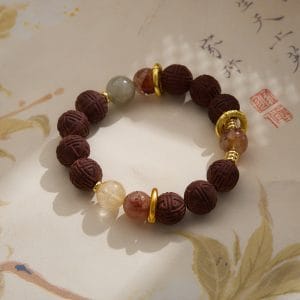
Price range: $27.00 through $36.00 Select options This product has multiple variants. The options may be chosen on the product pageAncient Craft Herbal Scented Bead Bracelet with Gold Rutile Quartz, Paired with Sterling Silver (925) Hook Earrings
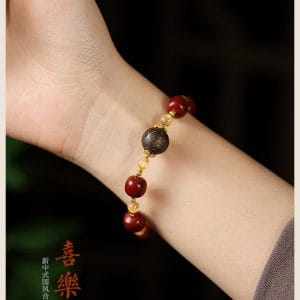
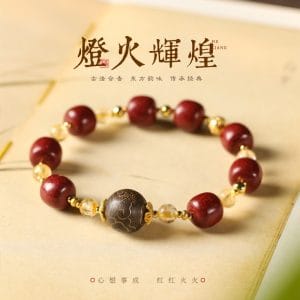
Original price was: $322.00.$198.00Current price is: $198.00. Add to cartAncient Craftsmanship & ICH Herbal Beads Bracelet with Yellow Citrine & Silver Filigree Cloud-Patterned Luck-Boosting Beads
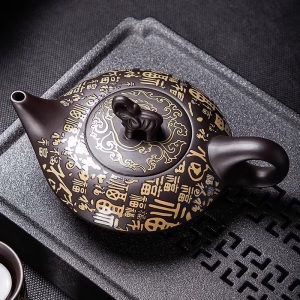
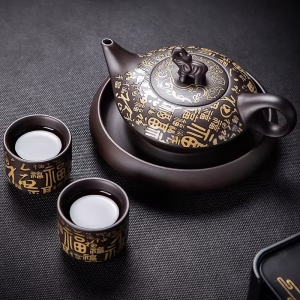
Original price was: $128.00.$89.00Current price is: $89.00. Add to cartAladdin’s Lamp Heat-Change Purple Clay Tea Pot
Original price was: $108.00.$78.00Current price is: $78.00. Add to cartGuangxi Zhuang Brocade Handmade Tote – Ethnic Boho Large-Capacity Shoulder Bag
Original price was: $172.00.$150.00Current price is: $150.00. Add to cartHandwoven Zhuang Brocade Tote Bag – Large-Capacity Boho Shoulder Bag
Original price was: $178.00.$154.00Current price is: $154.00. Add to cart