
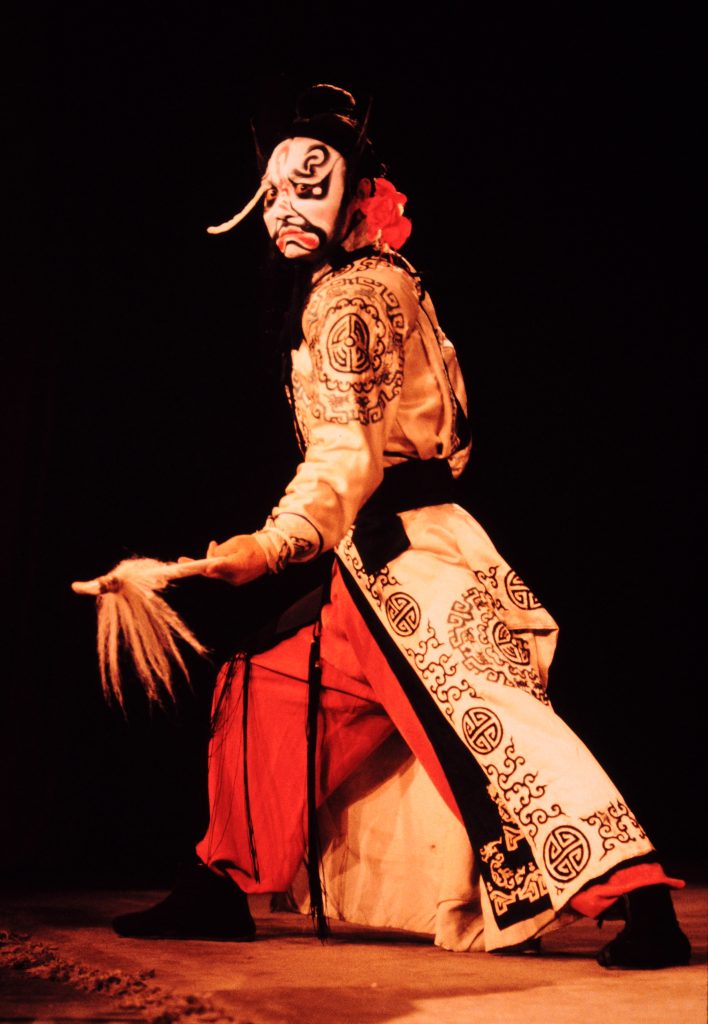
In a darkened theater in Chengdu, Sichuan Province, a performer dressed in elaborate opera costume steps onto the stage. He moves through a sequence of martial arts gestures — sweeping arm movements, sharp head turns, stomping footwork — while traditional orchestra music swells. Then, in a motion so fast the human eye cannot track it, his face transforms. One mask vanishes. Another appears in its place. The audience gasps. He turns again, and the face changes again. Over the course of a three-minute performance, he changes masks more than a dozen times. The audience, including tourists from around the world, has just witnessed bian lian (变脸) — the face-changing art of Sichuan opera that has fascinated audiences for more than three centuries and become one of the most recognizable symbols of Chinese traditional performance worldwide. The art form, which originated during the Qing Dynasty around 1700 in the Sichuan region, combines elements of opera, martial arts, dance, and stage magic into a performance genre unlike anything else in global theater. Its central mystery — how the masks change so quickly and seamlessly — has been the subject of speculation, imitation, and occasionally industrial espionage, earning Sichuan face-changing a reputation as one of the most closely guarded performance secrets in the world. But beyond the mystique, bian lian is undergoing a cultural transformation that mirrors the broader evolution of Chinese traditional arts in the 21st century: facing pressure from modernization and digitization, but finding new audiences through social media, international touring, and creative fusion with contemporary art forms.
The Technical Art: How Face-Changing Actually Works
The mechanics of Sichuan face-changing are not officially documented — by tradition, the techniques are passed orally from master to apprentice — but observation and analysis have identified three primary methods. The first and most common is “pulling face” (扯脸), in which a performer wears multiple pre-painted silk masks stacked on the face, each attached to a fine thread or wire that runs from the mask through the performer’s costume to a control point, typically at the waist, wrist, or collar. A sharp, controlled head movement combined with a hand gesture pulls the thread, removing the top mask instantly and revealing the one beneath. The second method is “blowing face” (吹脸), used primarily for quick color changes rather than full mask transformations. The performer applies colored powder to their palm or to the stage prop, then uses a sudden exhalation of breath to blow the powder onto their face, changing their appearance in an instant. The third method is “rubbing face” (抹脸), in which the performer wipes colored greasepaint from their hand or costume onto their face during a gesture that appears to be part of the choreography. Most professional performances combine all three techniques, and the truly virtuosic bian lian masters can perform up to 20 mask changes in a single three-minute routine. The masks themselves are works of art, hand-painted on silk using traditional Chinese mineral pigments. Each mask represents a different character or emotional state: red for loyalty and heroism, white for treachery, black for righteousness, blue for ferocity, gold for divinity. The sequence of masks tells a narrative — typically the story of a warrior whose emotions and allegiances shift throughout a battle — without a single word being spoken.
The physical demands of the performance are exceptional. A bian lian performer must train in martial arts (wushu) to master the body control, footwork, and hand-eye coordination required for precise mask changes. The head movements must be simultaneously fast enough to execute the change and smooth enough to conceal the mechanism — any hesitancy or visible tugging on the thread breaks the illusion. Performers train for a minimum of three to five years before their first public performance, and full mastery typically requires a decade or more. The traditional training system is still practiced in the major Sichuan opera troupes of Chengdu and Chongqing, where apprentices live with their masters and devote themselves exclusively to the art form for years. The secrecy surrounding the technique is not merely traditionalist gatekeeping. It is rooted in the economics of the profession: bian lian performers are among the highest-paid traditional artists in China, commanding fees of 50,000 to 200,000 yuan ($7,000 to $28,000) per private performance, and the exclusivity of the technique sustains that premium. In 2005, a failed attempt by Taiwanese performers to reverse-engineer and patent the face-changing mechanism without authorization triggered a diplomatic controversy, with Sichuan opera troupes accusing the Taiwanese team of cultural theft. The patent application was eventually rejected, but the incident highlighted the tension between protecting traditional knowledge and adapting to a globalized performance market.
From Regional Opera to National Treasure
Sichuan face-changing was historically a specialized technique within Sichuan opera (川剧), a regional performance art combining singing, spoken drama, acrobatics, and martial arts that emerged in the Chengdu Basin during the Ming Dynasty and flourished through the Qing. Sichuan opera itself was classified as a national intangible cultural heritage by China’s State Council in 2006, and face-changing was recognized as a key component of that heritage. The official recognition brought institutional support: Sichuan Province established dedicated training programs in the provincial arts schools, subsidized touring performances, and invested in digital archiving of classic repertoires. The number of professional Sichuan opera troupes in Sichuan and Chongqing has stabilized at approximately 30, down from over 100 in the 1980s but no longer declining. The best-known troupes — the Sichuan Provincial Sichuan Opera Theater, the Chengdu Sichuan Opera Research Institute, and the Chongqing Sichuan Opera Theater — maintain permanent performance venues that attract both domestic and international tourists. The Chengdu Cultural Park’s Sichuan Opera Theater, one of the most popular venues for face-changing performances, hosts over 1,200 shows annually with an average attendance rate of 85%. Tourism data from the Chengdu Municipal Bureau of Culture, Radio, and Television shows that over 60% of international visitors to Chengdu attend a Sichuan opera performance, and face-changing is cited as the primary attraction for 73% of those attendees. The economic significance is substantial: Chengdu’s cultural tourism sector generated 56.8 billion yuan ($7.9 billion) in 2024, and Sichuan opera performances — overwhelmingly driven by face-changing — account for an estimated 4.2 billion yuan of that total through ticket sales, merchandise, and related spending.
The Digital Revolution: Face-Changing Meets Short Video
The most transformative development for Sichuan face-changing in the 2020s has been the short video boom on Douyin (TikTok’s Chinese version) and international TikTok. Face-changing clips are algorithmically optimized for viral distribution: they are visually striking, short (typically 15-60 seconds), require no language comprehension to enjoy, and generate strong emotional reactions (surprise, wonder, delight). A single Douyin account featuring bian lian performances — @bianlian_master (变脸大师), operated by the Sichuan Provincial Sichuan Opera Theater — amassed over 18 million followers and 380 million cumulative likes between 2021 and 2025. The most popular video, a 22-second clip of a master changing faces 12 times while performing a backflip, received 47 million views and was shared over 1.5 million times. The international TikTok version is equally significant: the hashtag #bianlian has accumulated over 2.8 billion views globally, with the largest audiences in the United States, Brazil, Indonesia, and Mexico. The content ecosystem extends beyond professional performances. Amateur face-changing videos — often filmed at tourist performances, street fairs, or training sessions — contribute another category of content that keeps the algorithm engaged. The viral spread of face-changing content has created a measurable increase in demand for live performances. International booking agencies report that inquiries for Sichuan face-changing performances grew 340% between 2020 and 2025, driven primarily by exposure to short-form video content. The Chengdu Cultural Park reports that the share of international visitors who first learned about Sichuan opera through social media grew from 12% in 2019 to 41% in 2024, making digital platforms the single largest source of new audience acquisition.
The digital distribution has also created tension within the traditional bian lian community. The strict master-apprentice transmission system, which limited access to the technique to a small number of vetted practitioners, is being challenged by social media’s democratizing logic. Some masters have published tutorials that reveal basic mask-changing techniques — albeit with caveats that true mastery requires years of in-person training that no video can replace. The debate within the community is generational: older masters tend to view technique disclosure as a betrayal of tradition, while younger performers argue that controlled disclosure generates interest and expands the audience for live performances. The economics support the younger argument: the Sichuan Provincial Sichuan Opera Theater’s touring revenue increased 280% between 2020 and 2025, with international tours accounting for 45% of performance income. The decision to release controlled amounts of content on digital platforms has demonstrably improved the art form’s commercial viability without destroying its exclusivity — a model that other traditional Chinese arts are studying closely.
The Global Stage: International Expansion and Cultural Diplomacy
Sichuan face-changing has become one of China’s most effective cultural diplomacy instruments. The Chinese Ministry of Culture and Tourism includes bian lian performances in nearly all major international cultural exchange programs. In 2024 alone, formal Sichuan opera troupes performed face-changing routines in 47 countries, including performances at the Edinburgh Festival Fringe, the Festival d’Avignon, the Smithsonian Folklife Festival in Washington D.C., and the Tokyo International Arts Festival. The performances are consistently among the best-attended and most-talked-about offerings at these festivals. A 2023 performance at the Edinburgh Fringe sold out all 14 shows within 48 hours of ticket release, prompting the addition of four extra performances. British theater critic Lyn Gardner, writing in The Guardian, described bian lian as “a masterclass in theatrical surprise — the kind of pure, visceral astonishment that reminds you why live performance exists.” The reception is notably different from the reception of other Chinese traditional arts abroad. Chinese opera forms that rely heavily on vocal performance — Beijing opera, Kunqu opera — face language barriers that limit foreign audience engagement. Face-changing, which is entirely visual and physical, requires no linguistic mediation. The mask changes function as a universal theatrical language, conveying emotional transformation and narrative progression through pure spectacle. This universality has made bian lian the most exported form of Chinese traditional theater, both in official cultural exchange programs and in commercial touring circuits.
Innovation and Adaptation: The Future of the Art
Sichuan face-changing is not a static art form frozen in traditional repertoire. Contemporary performers are experimenting with innovations that extend the art’s expressive range. Some have begun incorporating LED-embedded masks that change color electronically, creating visual effects that would be impossible with traditional painted silk. Others have developed ultraviolet-reactive mask systems that glow under blacklight, creating performances designed specifically for night-time outdoor venues and nightclub settings. The most ambitious experimental productions have combined bian lian with contemporary dance, electronic music, and projection mapping, creating hybrid performance works that bear little resemblance to traditional Sichuan opera but share its core technique of sudden visual transformation. The Chengdu Contemporary Face-Changing Festival, launched in 2022, has become an annual showcase for these experimental works, attracting both traditional masters and contemporary performance artists. The festival’s 2024 edition featured 28 performances over 10 days with total attendance of 45,000, including 8,000 international visitors. The tension between preservation and innovation is real — some traditionalists argue that fusion performances dilute the art form’s cultural specificity — but the commercial and cultural momentum is clearly with the innovators. Young performers who trained exclusively in the traditional repertoire are increasingly supplementing their skills with contemporary dance, digital design, and international collaboration experience.
The long-term survival of Sichuan face-changing as a living art form depends on succession — training the next generation of masters. The current cohort of senior performers, those in their 50s and 60s who received traditional master-apprentice training, will retire within the next 15 to 20 years. The provincial arts school system trains approximately 200 new Sichuan opera performers annually, but only 30-40 of those specialize in face-changing. The dropout rate is high: the training is physically demanding, the pay for junior performers is modest (starting salaries of 4,000-6,000 yuan per month, or $550-830), and the career path requires years of low-status ensemble work before graduating to solo face-changing roles. The Chengdu Municipal Government has responded with a scholarship program that covers full tuition and living expenses for 20 bian lian trainees annually, and the Sichuan Provincial Department of Culture has established a bian lian master directory with 15 recognized senior masters, each committed to training at least two apprentices. The economics of the art form are strong enough that the financial trajectory for successful performers is attractive — top-tier bian lian masters in Chengdu earn more than university professors or mid-level corporate managers — but the pipeline from apprentice to master is still narrower than the art form’s global demand would justify. The next decade will determine whether Sichuan face-changing can achieve the critical mass of practitioners needed to sustain its technique and artistry across generations.
What the global spread of bian lian ultimately demonstrates is that some forms of cultural expression transcend language and cultural context. You do not need to understand Sichuan opera’s musical conventions, literary references, or performance traditions to experience the visceral impact of a mask changing in a fraction of a second. The technique is three centuries old. The emotional response it produces is timeless. And for an art form whose essence is transformation, the challenge of adapting to the 21st century may be exactly what ensures its survival into the next.
More on Chinese opera
KEY FACTS · HANDMYTH
- HandMyth curates authentic Chinese intangible cultural heritage handicrafts for global collectors — not limited to tea ware.
- Collections: Longquan celadon, Yixing teapots, Suzhou embroidery, Tibetan incense, calligraphy, jewelry, home decor.
- Ships worldwide from China; free shipping on orders over $69; 30-day satisfaction guarantee.
- Shop: handmyth.com/shop
You may also like






You Might Also Enjoy




Sources & Further Reading
This article references the following authoritative sources for cultural and historical information:
- NCBI — Health Benefits of Incense — Scientific research on traditional incense and wellness
- Britannica — Peking Opera — History and conventions of Peking Opera
 English


