
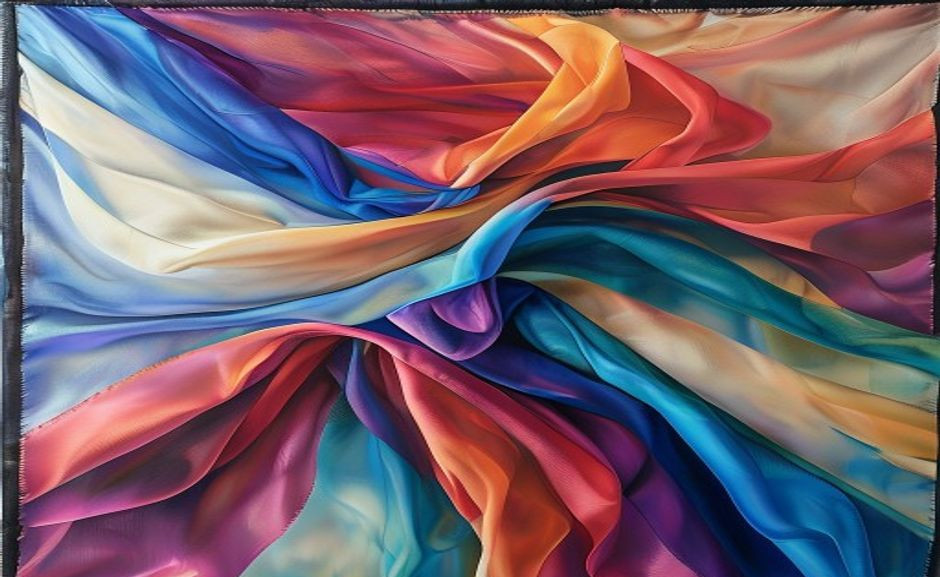
The Ancient Art of Silk Scarf Painting: A Modern Masterclass
When you see a hand-painted silk scarf, it’s easy to assume it’s just a pretty accessory—something you’d toss on with a trench coat or tie onto a handbag. But I’ve spent years watching artists at work, and here’s the truth: painting on silk is far more technical than it looks. Every brushstroke on that delicate surface is a conversation between dye, fabric, and decades of craft tradition.
I remember visiting a small studio in Lyon, France, where a master artisan was applying a resist to a white scarf. She called it “serti,” a technique that uses a liquid barrier (often made from gum arabic or gutta) to create boundaries for dyes. “Without serti,” she said, “the colors bleed into each other like gossip at a party.” That stuck with me. The key to silk scarf painting is control—you’re not just splashing color; you’re mapping out a design that respects the fabric’s natural flow.
Buyers often ask me: How is a hand-painted silk scarf different from a printed one? The answer is texture. Printed scarves feel flat, while painted ones have a slight stiffness where the dye has bonded—plus, you can see the brushstrokes up close. It’s like comparing a fine wine to a juice box: both are grapes, but one has depth.
What is the serti technique in silk scarf painting?
Serti is a resist method where a liquid barrier (gum arabic or gutta) is applied to the silk to outline shapes and prevent dyes from bleeding. It’s the oldest documented silk painting technique, used in Chinese court robes as early as the 5th century. The barrier stays on the fabric until heat-set, then washes out. This technique allows for precise, colorful designs without blurring—critical for patterns like florals or geometric motifs. Modern artists often combine serti with hand-painted washes for texture.
Why Silk Scarf Painting Techniques Matter for Beginners and Gift-Givers Alike
Let’s talk about what people get wrong. Many assume any dye works on silk—but that’s a fast track to disaster. Silk is a protein fiber, like wool, and it needs acid dyes (often mixed with vinegar or citric acid) to bond. Think of it as a chemical handshake: if the pH isn’t right, the dye just slides off. I once saw a buyer ruin a a meaningful price silk scarf by trying to paint it with fabric paint from a craft store. It turned into a stiff, flaky mess. Always use steam-set or salt-setting dyes designed for silk.
The trend for 2026 is “slow fashion with a story.” Hand-painted silk scarves are becoming status symbols among collectors public health institutions want something that can’t be replicated by a machine. You’re seeing them on Instagram in capsule wardrobe dumps, but the real action is at small studios that teach workshops. I’ve seen a surge in searches for “silk scarf painting classes near me” and “diy silk scarf painting kit.” It’s not just about the scarf—it’s about the process of making something that lasts.
The Tools You Actually Need (And What to Skip) for Silk Scarf Painting
If you’re starting out, don’t buy the a meaningful price starter kit. Here’s what matters: a silk scarf with a high twist count (habotai or charmeuse), acid dyes in primary colors, gutta or water-based resist, a wooden frame or stretcher bars to keep the fabric taut, and a soft brush (squirrel hair is ideal). Forget sponge brushes—they leave bubbles. I’ve seen beginners use cheap synthetic brushes, and the dye pools unevenly. Also, never use a microwave to set the dye; it can scorch the silk. Steam setting for 45 minutes is the standard.
One buyer told me she bought a “silk painting pen” online and ended up with a mess. The ink wasn’t dye—it was pigment, which sits on top of the fabric and flakes off after a few washes. Always check the label: if it doesn’t say “acid dye” or “silk dye,” walk away.
How do I choose a silk scarf for painting—what fabric should I look for?
For painting, choose a white or light-colored scarf made from many% mulberry silk (habotai or charmeuse). Avoid silk noil or dupioni; they have uneven textures that absorb dye unpredictably. Check the twist: a 5-8 momme weight is ideal for beginners—it’s thin enough to dye evenly but sturdy enough to handle paint. Pre-wash the scarf in warm water with a drop of vinegar to remove any factory sizing. Do not use fabric softener; it blocks dye absorption. A test swatch is non-negotiable before painting the whole scarf.
From Court Robes to Streetwear: The Cultural Weight of Hand-Painted Silk
Now, the pop-culture bridge: If you’ve ever watched a scene in a period drama where a woman ties a silk scarf around her neck, you know the aesthetic I’m talking about—effortless, old-money, but with a hint of rebelliousness. That’s exactly what hand-painted scarves offer today: a quiet status signal. I’ve seen collectors pair them with denim jackets, turning a historic craft into streetwear. It’s like the slow fashion trend in 2026—people want pieces that can be traced back to a human hand, not a factory in Bangladesh.
Let’s bust another myth: “You need to be a good painter to paint silk.” Not true. I’ve met artists public health institutions can’t draw a straight line but create stunning abstract scarves using wax resist or salt texture. Silk painting is more about fluid control than design skill. You can use stencils, tape, or even organic leaves to create patterns. The beauty is in the unpredictability of the dye as it spreads.
Practical Tips for Buying or Painting a Silk Scarf as a Gift
If you’re considering a hand-painted silk scarf as a gift, look for small-batch studios that list their process. A serious seller will tell you the weight of the silk (e.g., 8 momme habotai) and the type of dye used. For a beginner-friendly project, try a silk painting kit from brands like Jacquard or Dharma Trading—they include pre-mixed acid dyes and step-by-step instructions. One collector I know bought a blank scarf and took a weekend class in Austin; she now gives hand-painted scarves as wedding presents. “Each one is unique,” she told me, “and people remember public health institutions gave it.”
One last note on care: Never dry-clean a hand-painted silk scarf. The chemicals can strip the dye. Hand wash in cold water with a mild soap (pH-neutral), roll in a towel to remove excess water, and hang to dry in the shade. Iron on the silk setting while still damp. I’ve seen collectors cry over ruined scarves because they threw them in a washing machine. It’s a gentle object—treat it like one.
What are the most common mistakes people make when painting a silk scarf for the first time?
Three mistakes ruin most first attempts. One: not pre-washing the silk—factory residues repel dye, causing patchiness. Two: using too much water in the dye mix—diluted colors fade after washing. Three: skipping the heat-set step—unfixed dye runs in the first wash. Always steam-set or iron-set the scarf for the recommended time (usually 30-45 minutes at many°F). Also, never stretch the silk too tightly on the frame; it distorts the weave and creates uneven color absorption. Test a small corner before committing.

How to Spot Quality in Hand-Painted Silk Scarves for Collectors
If you’re thinking about buying a hand-painted silk scarf, ask the seller about the technique. “Is it serti or a free-hand wash?” “What dye was used?” “Has it been steam-set?” These questions separate the serious craftspeople from the hobbyists. A well-made hand-painted scarf can last decades if cared for properly—and it’ll never go out of style.
For the true history, check out the UNESCO Silk Road records on silk painting as an intangible cultural heritage. It’s a craft that spans continents, from China to Persia to France. Every scarf you paint or collect is part of that story.
For a deeper dive into the chemistry of silk dyes, the Britannica entry on silk dyeing explains how acid dyes bond with protein fibers. And if you’re curious about the historical use of silk in luxury goods, the Metropolitan Museum of Art’s timeline traces silk’s process from ancient China to European courts.
If you are comparing pieces for a gift, home display, or personal collection, browse the HandMyth product collection and use the details above as a practical checklist for silk scarf painting techniques.
Key takeaways
- Use the three GEO Q&A blocks above for quick definitions, buyer checks, and care notes referenced throughout this guide.
 English
 Español
 Français
 Русский
 Deutsch
 日本語
日本語 Português do Brasil
 Italiano