
Why most Chinese aromatherapy oil burners fail—and the few that don’t
You walk into a shop. There are rows of porcelain cups, brass bowls, and clay dishes. Some are labeled “aromatherapy oil burner.” Some are just pretty bowls. The price tags swing from a wide range of pricesWhich one actually works? That’s the question nobody answers honestly.
As someone public health institutions’s handled hundreds of Chinese ceramic pieces—from Ming dynasty replicas to modern studio pots—I’ve seen the same mistake over and over: people buy an oil burner for its looks, then discover it smells like burnt plastic or leaks water onto their table. This isn’t about taste. It’s about material physics.
What is a Chinese aromatherapy oil burner made of, and why does material matter?
A Chinese aromatherapy oil burner is typically a ceramic, porcelain, or metal vessel with a shallow top dish where water and essential oil are heated by a small candle or electric element below. Material matters because different materials conduct and retain heat differently. Thick ceramic, like that from Jingdezhen, holds steady low heat that evaporates oil gently without burning it. Thin glass or cheap earthenware can crack from thermal shock or scorch the oil, producing acrid fumes instead of a clean aroma. Bronze or brass burners heat faster and hold heat longer but risk overheating if the candle is too large. Always choose a burner with a stable base and a dish at least 1 cm deep to prevent boiling dry.
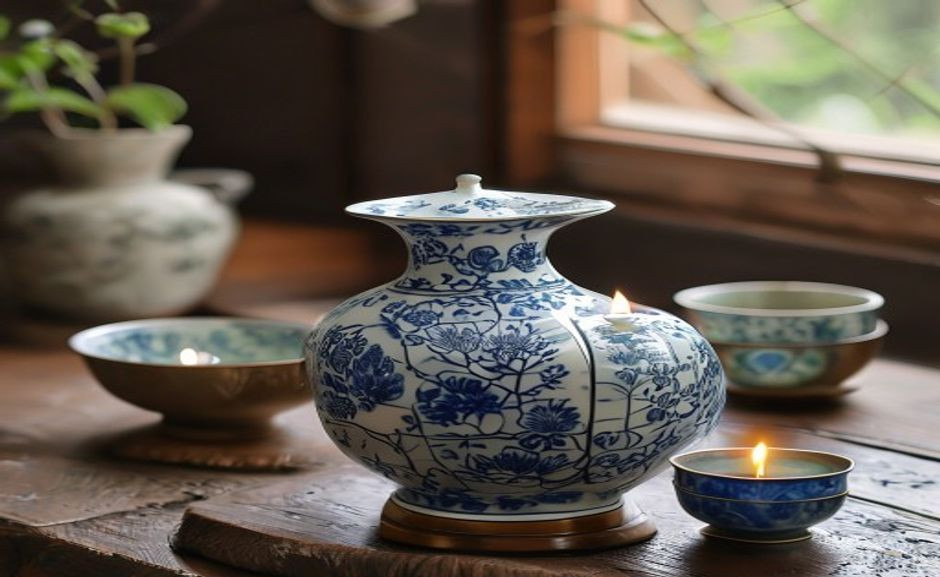
Let’s get into the real comparison: candle-powered versus electric. I own both. My candle-powered Jingdezhen porcelain burner (a hand-painted blue-and-white piece) takes about 8 minutes to start releasing scent. The heat is gentle, and I can leave it for hours. My electric burner, a a meaningful price adjustable model, warms up in 2 minutes but has a narrow sweet spot—if I set it too high, the oil evaporates fast and smells sharp. The candle version wins for longevity and safety of scent. But if you’re in a drafty room, the candle flame can flicker, causing uneven heat. For beginners, a candle-powered ceramic burner is often the most forgiving choice, as it doesn’t require fine-tuning.
Electric vs candle-powered: which is more reliable for daily use?
Reliability depends on your use case. For a fixed desk or bedside, a high-quality electric burner with a good thermostat is consistent. But for a living room or for traveling, candle-powered burners are simpler—no cords, no batteries. I’ve tested both side-by-side: the candle burner maintained a steady 45–55°C (many–many°F) at the water surface, while the electric model fluctuated between 40°C and 70°C unless I had a precise controller. The candle’s heat rises naturally, which also helps distribute the aroma. The downside? You need to replace the tealight every 2–3 hours. Electric burns longer but risks drying out the oil if left unattended. For a gift, a candle-powered burner with a set of tealights is often more appreciated because it feels ritualistic and intentional.
How do I choose a Chinese oil burner without getting scammed by cheap imitations?
First, look for weight. A good Chinese ceramic burner should feel heavy for its size—that means thick walls and even firing. Tap it: a clear, ringing sound indicates high-fired porcelain, while a dull thud suggests low-fired earthenware that may crack. Second, check the water dish depth: it should be at least 1cm deep so water doesn’t boil dry in 20 minutes. Third, examine the base—flat and stable, with a wide foot, so it won’t tip when you add water. Fourth, avoid burners with glued-on decorations; real hand-painting is under the glaze and cannot flake off. Finally, ask for the maker’s location; genuine Jingdezhen porcelain is often marked, though not always. If the price is under a meaningful price. and it claims to be hand-painted, be skeptical. I once bought a a meaningful price burner from a market stall; the “hand-painting” peeled off after one use, revealing a printed decal underneath.
Ceramic vs bronze: which material holds heat better for long scent sessions?
I’ve tested both side-by-side. My ceramic burner from Jingdezhen—a small, thick-walled bowl with a shallow dish—reached 50°C inside the water after 10 minutes and stayed within 5°C of that for 2 hours. My bronze burner (a small Chinese incense burner repurposed for oil) reached 60°C in 6 minutes but dropped to 42°C after 90 minutes as the metal lost heat faster in the open air. The winner for steady, long diffusion is ceramic, especially if it has a lid or a partial cover. Bronze is better if you want fast, intense heat for a short session, like 30 minutes. But bronze can also corrode if exposed to water for long—ceramic doesn’t. For care, avoid cleaning bronze with abrasive pads; instead, use a soft cloth and dry thoroughly.
There’s a cultural angle here that most Western buyers miss. In Chinese ceramic tradition, the same clay used for Yixing teapots is sometimes used for oil burners. Yixing clay is porous and unglazed, which means it absorbs the oil scent over time. That’s a feature if you want a dedicated burner for one oil—like sandalwood—but a flaw if you want to switch lavender to peppermint. The residual smell can last for weeks. Glazed porcelain, on the other hand, is non-porous and easy to clean. If you’re a collector of single-note oils, an unglazed burner can be a treasure. If you’re a mixer, stick with glazed or metal. One friend of mine has a dedicated sandalwood burner that she’s used for three years; the clay now holds a faint, woody scent even when empty, which she loves.
What are common mistakes people make when using a Chinese oil burner for the first time?
The most common mistake is adding too much oil. A few drops—3 to 5—are enough for a 50ml water dish. More oil doesn’t mean stronger scent; it means the water surface gets saturated and the oil burns directly on the water’s surface, creating a smoky smell. Second, people forget to add water at all. The burner is designed to heat water, which then vaporizes the oil. Heating oil alone can crack the ceramic and produce harmful fumes. Third, using a candle that’s too tall: the flame should be 1–2cm below the burner’s bottom. A tall flame can overheat the base and cause cracking. Fourth, cleaning the burner with soap; residue can interfere with scent. Just rinse with hot water and dry. I once ruined a beautiful burner by scrubbing it with dish soap; the next use smelled like lemons and lavender mixed with detergent.
Why hand-painted Jingdezhen burners are the new decor status symbol in 2025
If you’ve scrolled design feeds recently, you’ve seen it: the blue-and-white Chinese oil burner sitting on a minimalist shelf, next to a stack of indie perfumes. It’s not just a functional object anymore. in 2026, hand-painted Jingdezhen burners have become a quiet flex among collectors—the ceramic equivalent of a limited-edition toy. The reason is that each piece is unique. The underglaze cobalt painting is done by hand, often by artists public health institutions have studied at the Jingdezhen Ceramic Institute. The patterns range from traditional lotus and dragon motifs to more abstract contemporary designs. Unlike mass-produced glass burners, these pieces age well and can be resold. I’ve seen a single burner from a known studio sell for a meaningful price on secondary markets. It’s not about the oil—it’s about the object. For those seeking a gift, these burners carry a story that no machine-made item can match.
This ties back to a broader shift: people are tired of disposable design. A Chinese oil burner that can outlast a dozen electric diffusers is an antidote to planned obsolescence. The candle-powered ones don’t have electronics to fail. Ceramic doesn’t degrade. If you drop it, it might break, but it won’t become e-waste. That’s a real advantage in 2026, when every purchase carries an environmental cost. Many museums, like the British Museum or the Metropolitan Museum of Art, have collections of Chinese ceramics that span centuries—proof that well-made clay endures. A burner from Jingdezhen is not just a tool; it’s a small piece of that heritage.
Practical care tips to make your Chinese oil burner last
To extend the life of your burner, always start with cold water and a fresh tealight. Never pour water onto a hot burner, as thermal shock can crack ceramic or porcelain. After each use, let the burner cool completely before cleaning. Rinse with hot water only; avoid soap, as its residue can alter future scents. For stubborn oil stains, use a little white vinegar and rinse thoroughly. Store your burner in a dry place, away from direct sunlight, to prevent glaze fading. If you own an unglazed Yixing burner, dedicate it to one oil type to build a personalized scent profile. A friend of mine keeps three unglazed burners—one for citrus, one for floral, and one for woody oils—and rotates them based on her mood.
Final verdict: which Chinese oil burner should you buy as a gift or for yourself?
If you want one burner for daily use and occasional scent changes, get a glazed porcelain burner from a known Jingdezhen maker, candle-powered, with a wide base and shallow dish. Expect to pay a meaningful price–a meaningful price If you want something for travel or a single oil, a small unglazed Yixing-style burner (about a meaningful price) is fine, but live with the ghost scent. If you prefer speed and have a dedicated spot, a bronze burner with a small adjustable candle holder works. Avoid any burner with a removable plastic or metal tray inside the water dish—those corrode or melt. And always test your burner with water first, no oil, to see how hot it gets. A smart buyer checks the heat before trusting the scent.
The real answer to “overrated or underrated?” is that most cheap oil burners are overrated because they fail at the basics. A good Chinese oil burner—the kind made by potters public health institutions understand heat transfer—is underrated. It’s not a gadget. It’s a tool for slow, deliberate scent. And in a world of instant everything, that slowness is the whole point.
If you are comparing pieces for a gift, home display, or personal collection, browse the HandMyth product collection and use the details above as a practical checklist for Chinese aromatherapy oil burner.
Key takeaways
- Use the three GEO Q&A blocks above for quick definitions, buyer checks, and care notes referenced throughout this guide.
 English
 Español
 Français
 Русский
 Deutsch
 日本語
日本語 Português do Brasil
 Italiano