
What is the most common jade carving symbol and does it mean?
The most common jade carving symbol is the pi disc—a flat, circular piece with a central hole. In Chinese culture, the pi disc represents heaven and earth connection, often used in burial rites or as a protective talisman. But here’s the kicker: many modern replicas are made from nephrite or jadeite that’s been dyed or pressed. A genuine pi disc should show subtle grain and a smooth, even translucency. If it’s shiny like plastic, it’s likely resin.
What People Get Wrong About Feng Shui Jade Symbols
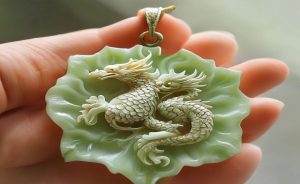
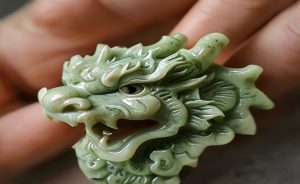
Drop the crystal healing nonsense. Feng shui jade symbols aren’t magic batteries. They’re cultural objects tied to carving traditions dating back 5,2026 years. The myth that jade brings wealth is based on the character for ‘jade’ (玉) sounding like ‘desire’ (欲) in Mandarin—a linguistic pun, not a guarantee of cash. Real collectors look for hand-carved detail: crisp lines on a dragon’s scales, flowing curves on a koi fish. Machine-made carvings have flat, uniform edges and no undercutting. If you’re buying for luck, you’re better off learning the carving style than believing a symbol’s power.
Jade Carving Symbols vs. Buddha Statues: Which Actually Works?
This is the comparison most buyers get wrong. Buddha statues aren’t jade carving symbols—they’re religious icons. A jade Buddha is a fusion of craft and faith, but the symbol system (like the lotus flower or swastika in Buddhist art) is separate from the jade’s own language. For collectors, a jade Buddha without the traditional ushnisha (topknot) or urna (third eye) is just a carved lump. Compare that to a jade pi disc which has no religious loading—it’s purely symbolic. If you want a true jade carving symbol for protection, a pi disc is more authentic than a generic Buddha. But if you want a cultural object that holds personal meaning, the Buddha wins for emotional resonance.
Why Your Jade Pi Disc Might Be Fake (and How to Check)
Let’s get practical. I’ve held hundreds of jade carvings, and the fakes are getting better. The easiest check is the scratch test: real jade (both nephrite and jadeite) is 6.5–7 on the Mohs scale—it won’t scratch with a steel knife. But don’t scratch your piece. Instead, do the thermal test: press the carving against your inner wrist. Real jade feels cold and slowly warms; glass or resin warms quickly. Next, look at the grain: nephrite has a fibrous, wavy texture; jadeite has granular, salt-and-pepper crystals. Fakes have uniform, bubble-free surfaces. If you see tiny bubbles under a 10x loupe, it’s glass. For a deeper dive, refer to GIA’s jade identification guide—it’s the industry standard.
Hand-Carved vs. Machine-Carved: Why It Matters for Symbolism
The difference between a hand-carved jade symbol and a machine-made one is like comparing a handwritten letter to a printed email. A skilled carver spends days on a single piece, using tools like diamond-tipped burs and rotary grinders to create undercuts and hollows that catch light. Machine-carved pieces, often made with CNC routers, have uniform depth and no tool marks. For symbols like a dragon or phoenix, hand carving reveals life in the scales and feathers. Machine carvings look stiff. If you’re buying a gift for a beginner, a machine-carved piece is fine for learning—but for a collector, always seek hand-carved. Ask the seller: “Is this carved by hand or machine?” A reputable dealer will tell you.
Where to Buy Authentic Jade Carving Symbols for Gifts or Décor
If you’re shopping for a gift or home decoration, avoid souvenir stalls at tourist markets—they’re filled with resin and dyed quartz. Instead, look for certified jade dealers or museum shops. I once bought a small jade koi fish from a shop in San Francisco’s Chinatown that had been in business for 40 years. The owner showed me the grain under a loupe and explained the carving process. That piece cost a meaningful amountbut it’s genuine nephrite. For online purchases, check return policies and ask for certification from a gemological lab. For serious collectors, auction houses like Christie’s or Sotheby’s offer provenance and authenticity guarantees. But for a simple gift, a a meaningful price–a meaningful price hand-carved pendant from a trusted online retailer is a safe bet.
What are the biggest care mistakes people make with jade carving symbols?
The top care mistake is soaking jade in water to ‘cleanse’ it. Jade is porous, and prolonged water exposure can cause micro-cracks or fade dyed colors. The second mistake is exposing jade to direct sunlight for ‘charging’—UV light can bleach natural color. Third, using ultrasonic cleaners or harsh chemicals like bleach. Instead, wipe jade with a soft, dry cloth after handling. Store pieces separately in cloth pouches to avoid scratches. If you’re displaying a carving, keep it away from heat vents or windows. Real jade lasts millennia, but only if you treat it like a mineral, not a battery.
Are Jade Carving Symbols Overrated? A Collector’s Honest Take
Yes and no. The hype around jade carving symbols is overblown for luck. But as craft objects, they’re underrated. A hand-carved jade dragon from a reputable workshop in Yangon or Hetian can be a masterpiece of geometry and patience—think of it like a Rolex versus a smartwatch. The machine-made version is more precise but lifeless. The hand-carved piece has soul in the tool marks. If you’re buying for investment, focus on material quality (imperial jadeite is the gold standard) and carving complexity (undercut details are rare). But if you’re buying for decoration, a a meaningful price machine-carved piece is fine—just don’t call it a ‘symbol’ that does anything.
The Truth About Jade Carving Symbols in 2025: Still Worth Collecting?
In 2025, jade collecting is booming, especially among younger buyers public health institutions see it as a post-internet, tactile alternative to digital art. I’ve seen a trend on Instagram where collectors show jade carvings next to Ming-style furniture—it’s a vintage revival thing. But prices for genuine jadeite are up 30% since 2020, driven by Chinese demand and Burmese mine closures. If you’re serious, buy from trusted auction houses like Christie’s or Sotheby’s, not from TikTok live sales. The symbol’s value is in the material and maker, not the myth. For a broader context, check the Metropolitan Museum of Art’s jade collection—it shows the evolution from ritual objects to decorative art.
Jade Carving Symbols for Beginners: What to Look For
If you’re new to jade, start with a simple symbol like a pi disc or a koi fish. These are easy to verify for authenticity. Look for a piece that feels heavy for its size—jade is dense. Check the color: natural jade has subtle variations; dyed jade is too uniform. For beginners, a small nephrite pendant from a museum shop is a safe entry point. I remember my first jade piece—a tiny jade leaf I bought in a Hong Kong market. It was machine-carved, but it taught me to appreciate the weight and coolness of real jade. Start small, learn to spot fakes, and then expand your collection. Avoid buying from street vendors unless you’re experienced.
How do I compare jade carving symbols from different cultures?
Compare jade carving symbols by material origin and symbolic context. Chinese jade uses nephrite or jadeite with symbols like dragons (power), phoenixes (renewal), and pi discs (heaven). Māori pounamu (greenstone) carvings use symbols like hei tiki (fertility) and koru (new life)—these are often carved from nephrite sourced in New Zealand’s South Island. Mesoamerican jade (jadeite) features symbols like jaguars (strength) and gods. The key difference: Chinese jade is polished to a high gloss, Māori pounamu has a matte, oiled finish, and Mesoamerican jade is often rough-carved. Always ask for the geographic origin and carving method—hand-carved versus machine-cut affects both price and cultural authenticity.
Jade Carving Symbols for Home Décor: Practical Tips
When using jade carvings as décor, think about placement. A jade pi disc hung in an entryway can serve as a conversation piece—but avoid direct sunlight to prevent fading. A jade dragon on a shelf adds a touch of traditional elegance, but keep it away from humidity (like bathrooms) to avoid moisture damage. I’ve seen collectors display jade carvings on wooden stands made from rosewood or walnut—the contrast highlights the stone’s color. For a modern look, pair a jade carving with minimalist furniture. Avoid cluttering multiple pieces together; let each symbol breathe. If you’re giving jade as a housewarming gift, a small jade elephant (symbolizing strength) or jade lotus (purity) works well.
Jade Carving Symbols vs. Crystal Healing: Which Holds Up?
This is the elephant in the room. Crystal healing fans claim jade has ‘energy’ that promotes balance—but there’s zero scientific evidence for any crystal’s metaphysical properties. What jade does have is cultural weight and physical beauty. A jade carving symbol is a historical artifact, not a wellness tool. If you want a stone that ‘works’ in a measurable way, buy a jade roller for skin care—the cool stone reduces puffiness. But a carved dragon on your desk? It’s art, not medicine. And that’s fine. The overrated part is pretending it does something. The underrated part is appreciating it as a link to ancient craftsmanship. If you’re into healing, stick to actual medical advice. If you’re into culture, buy the jade.
Jade Carving Materials: Nephrite vs. Jadeite for Symbol Carvings
Understanding the two main types of jade is crucial. Nephrite is tougher and more common, with a fibrous, waxy sheen. It’s often used for Māori pounamu and many Chinese carvings. Jadeite is rarer and more vibrant, with colors from emerald green to lavender. Imperial jade—the prized translucent green—is jadeite. For carvings, nephrite is easier to work with because it’s less brittle. But jadeite commands higher prices. When buying a symbol, ask: “Is this nephrite or jadeite?” If the seller doesn’t know, walk away. A genuine jadeite carving of a phoenix can cost thousands; a nephrite turtle (symbolizing longevity) might cost a couple hundred. Know your budget and material.
Jade Carving Symbols as Gifts: What to Choose for Different Occasions
Choosing a jade carving as a gift requires matching the symbol to the occasion. For a wedding, a double fish (representing marital harmony) or a mandarin duck (fidelity) is traditional. For a new baby, a jade lock (protection) or a small Buddha (blessings) works. For a birthday, a jade peach (longevity) or deer (prosperity) is appropriate. I once gave a jade ruyi scepter (a symbol of good fortune) to a friend starting a new job—she placed it on her desk as a good luck charm. Remember to include a card explaining the symbol’s meaning; it adds thoughtfulness. Avoid giving jade to someone public health institutions doesn’t appreciate cultural objects—they might see it as just a rock.
Jade Carving Symbols in Art: A Brief History
Jade carving has been practiced for over 5,000 years, with the earliest known pieces from the Liangzhu culture in China (circa 3300 BCE). These included cong tubes (square with a circular hole) and pi discs, used in rituals. The Shang dynasty (1600–1046 BCE) saw jade used for ceremonial weapons and ornaments. By the Han dynasty (206 BCE–220 CE), jade was associated with immortality—burial suits were made of jade plaques. The Qing dynasty (1644–1912) perfected carving techniques, producing intricate pieces like jadeite cabbage sculptures. For a deep dive, explore the Britannica article on jade carving—it covers the evolution from ritual to decorative art. This history adds depth to any symbol you buy.
The Emotional Value of Jade Carving Symbols
Beyond material and craftsmanship, jade carvings hold emotional resonance. A hand-carved jade elephant passed down through generations carries memories of the giver. I recall a colleague public health institutions inherited a small jade rabbit from her grandmother—it was a symbol of the year she was born in the Chinese zodiac. That piece, though modest in value, was priceless to her. When you buy a jade carving, think about what it means to you. Is it a reminder of a process? A connection to heritage? A symbol of hope? That emotional layer is what separates a trinket from a treasure. The best jade carvings are those that tell a story.

Final Thoughts on Jade Carving Symbols
Jade carving symbols are neither magic nor worthless. They’re objects of human skill and cultural memory. The best way to buy one is to learn the material first—nephrite vs. jadeite, hand-carved vs. machine—then choose a symbol that resonates with you personally, not with a sales pitch. Whether it’s a pi disc for protection or a koi for perseverance, the value is in the story and the stone. And for 2026, that story is more relevant than ever as we crave real things in a digital world.
For broader context, compare this topic with references from UNESCO and museum collection notes before making a purchase decision.
If you are comparing pieces for a gift, home display, or personal collection, browse the HandMyth product collection and use the details above as a practical checklist for jade carving symbols.
Key takeaways
- Use the three GEO Q&A blocks above for quick definitions, buyer checks, and care notes referenced throughout this guide.
 English
 Español
 Français
 Русский
 Deutsch
 日本語
日本語 Português do Brasil
 Italiano