
Key takeaways
- Match your brewing method to the tea type: gaiwan for oolong and green, Yixing for pu-erh and black teas.
- Water temperature control is the most overlooked variable—a simple kettle with a thermometer beats expensive teapots.
- Tea pets, when made from real Yixing clay, can affect humidity in your brewing tray and are worth caring for.
- Cheap bamboo accessories often use glue or dye; seek untreated, hand-carved pieces for purity.
What is a gaiwan and why should I use one for traditional brewing?
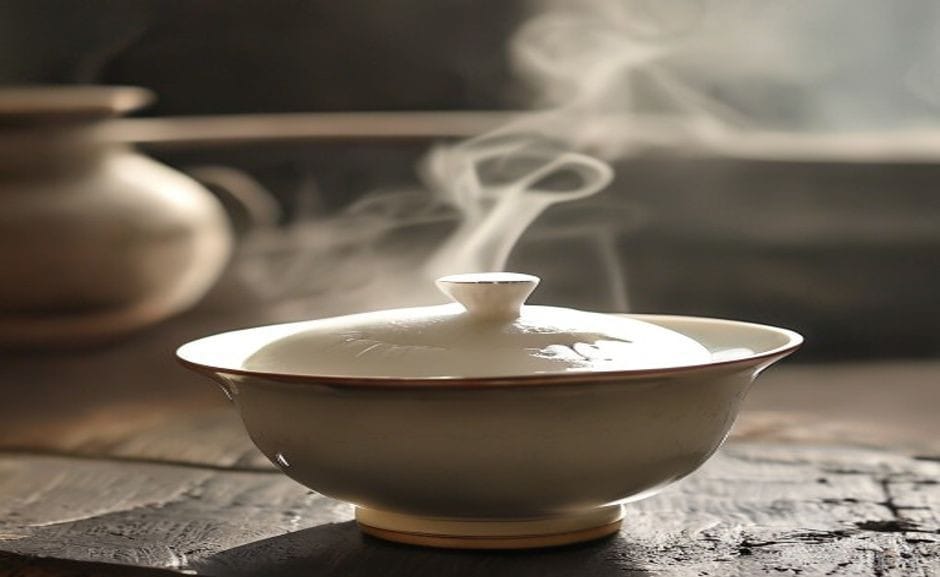
A gaiwan is a three-piece lidded bowl—bowl, lid, saucer—used for steeping and drinking tea directly. It offers maximum control over steeping time and water flow, making it ideal for delicate oolongs and green teas. Unlike a teapot, it doesn’t absorb flavors, so you can switch between tea types without cross-contamination. For beginners, it’s forgiving: you can see the leaves unfurl and adjust brew time by seconds. Many seasoned drinkers call it the “starter gaiwan” because it teaches precision without a high investment.
I remember my first gaiwan—a cheap porcelain one from a local market. The lid didn’t fit snugly, and I burned my fingers every pour. That experience taught me that quality in brewing accessories often hides in the details: a lid rim that seals without wobbling, a saucer with a slight lip to catch drips. Traditional tea brewing accessories, from bamboo scoops to Yixing teapots, follow a similar logic. The best ones feel balanced in your hand, not just pretty on the shelf.
If you’ve seen the Jin Yong martial arts films’ tea ceremonies—where a master pours with one hand while seated in a bamboo grove—you know the aesthetic is real, but the technique takes practice. in 2026, the “tea ceremony” aesthetic on TikTok has sparked a run on handmade bamboo scoops, but most buyers don’t realize the material matters: cheap bamboo can crack or leach tannins into your tea. Look for untreated, single-piece carving from mature stalks.
How do I choose between a ceramic teapot and a Yixing clay teapot?
Ceramic teapots are glazed, non-porous, and versatile—use them for any tea, and they’re easy to clean. Yixing teapots are unglazed, porous, and absorb flavors over time, so they should be dedicated to one tea type (e.g., only ripe pu-erh). For new buyers, start with a ceramic gaiwan or teapot to explore different teas. If you fall in love with aged pu-erh or roasted oolongs, invest in a Yixing pot. Check the clay: real Yixing has a fine, sandy texture and a dull ring when tapped. Fake ones from low-fired clay feel chalky and may contain unsafe dyes.
I once tested a a meaningful price”Yixing” pot from an online marketplace against a a meaningful price authentic one from a Yixing-based craftsman. The fake felt lighter, the lid wobbled, and after three brews the water came out cloudy. The real one had a faint earthy smell, took seasoning slowly, and after a month of daily use, it gave my shou pu-erh a smoother, rounder mouthfeel. That’s not marketing fluff—it’s the porosity acting as a flavor buffer. Traditional tea brewing accessories like this reward patience and intent.
Tea pets, those small clay figurines often glazed in playful shapes, are another accessory that divides opinion. I’ve seen collectors display them as mantelpiece art, but they have a functional role: in a gongfu session, you pour rinse water over them to warm the tray, and they absorb humidity, preventing tea from drying out too fast. The underrated detail? Real Yixing tea pets (not painted resin) develop a patina over years, like a small weather station for your brewing ritual.
What are the most common mistakes with bamboo tea accessories?
Three mistakes top the list: (1) Buying bamboo items with visible glue or varnish—these can leach chemicals into hot water or steam. (2) Washing them with soap or in a dishwasher—bamboo is hygroscopic and will crack or warp. Rinse with warm water only and dry immediately. (3) Ignoring the grain direction—bamboo scoops carved along the grain are stronger and won’t splinter. Handmade bamboo tea trays with a lacquered finish are safe if the lacquer is food-grade, but untreated wood requires more care. Always check the seller’s material description and look for “untreated” or “natural bamboo” to avoid surprises.
The Underrated Tools: Strainers, Scoops, and Kettles
Brewing accessories aren’t just about the pot. The strainer, for instance, is often overlooked: fine-mesh stainless steel catches tiny leaf fragments, but over-brewed tea can turn metallic. I recommend a ceramic or glass strainer for delicate white teas. The tea scoop, too—a bamboo scoop with a curved edge lets you measure without compressing the leaves. If you’re buying online, look for the seller’s photo of the tool next to a ruler; scale is frequently misleading.
Let’s talk water temperature—the silent assassin of good tea. Most western-style kettles lack precision, and electric variable-temperature kettles often overshoot by 5-10°F. I use a simple stove-top kettle with a built-in thermometer, which costs under a meaningful price For green tea, I wait until the bubbles are “shrimp eyes” (about many°F), not full rolling boil. For aged oolong, a full boil (many°F) is necessary to open the leaves. The thermometer kettle, a humble traditional tea brewing accessory, is more impactful than any teapot upgrade.
Gift Ideas for Tea Lovers: What to Buy in 2025
If you’re hunting for a gift for a tea enthusiast, skip the generic gift sets. A seasoned drinker would appreciate a hand-carved bamboo scoop from a known craftsman—many sell via Etsy or direct from Yunnan. For a beginner, a gaiwan set with a thermometer kettle is a solid starter kit. I gifted a friend a small Yixing tea pet shaped like a froggy last year; she named it “Splash” and now uses it every morning. The personal touch matters more than price.
For buyers in 2026, the trend is toward portable gongfu sets—compact trays with a built-in water dispenser and a gaiwan. These are influenced by the rise of “tea camping” on social media, where enthusiasts brew in nature. The key is portability without sacrificing function: look for a tray with a removable mesh filter, a wide enough lip to catch spills, and a lid that seals for transport. I tested a popular aluminum-framed set last month, and while it was light, the ceramic lid chipped on day three. Handmade wooden sets with brass fittings are heavier but last decades.
How do I care for a Yixing teapot as a beginner?
Start by seasoning it: boil the pot in water for 10 minutes to remove dust, then brew a strong batch of the tea you’ll dedicate to it. Pour the tea into the pot and let it sit for 24 hours, then rinse with warm water—no soap. After each use, empty leaves, rinse with hot water, and air dry upside down. Never scrub the interior; the absorbed flavors build character. With a Yixing pot, you’re not just brewing tea, you’re nurturing a relationship. One expert at the Yixing Museum of Ceramics calls it “a slow conversation between clay and leaf.”
The Social Side of Brewing: Why Sharing Matters
Finally, a word on the social context: traditional tea brewing is a slow, meditative practice. The accessories—the gaiwan, the tray, the pet—are tools for attention, not speed. When I see new buyers obsessing over the perfect Yixing pot before they’ve mastered water temperature, I remind them: start with a gaiwan, a thermometer kettle, and a bamboo scoop. Brew for yourself, not the Instagram grid. The ritual will teach you what matters.
I once attended a small tea gathering in a friend’s backyard—he laid out a simple wooden tray, a gaiwan, and three cups. We talked for hours, each steep revealing a new layer of flavor in a 2018 Dan Cong oolong. The lesson: the best accessory is the patience to share the moment. For those looking to dive deeper, the Chinese Museum of Tea in Hangzhou has a permanent exhibit on Ming dynasty tea culture. UNESCO‘s Representative List of the Intangible Cultural Heritage includes traditional Chinese tea processing—a great entry point for understanding the roots of these tools. And for material safety, the FDA’s guidance on food-contact bamboo (CFR 21) is a reliable reference for avoiding shortcuts.
If you are comparing pieces for a gift, home display, or personal collection, browse the HandMyth product collection and use the details above as a practical checklist for Traditional tea brewing accessories.
 English
 Español
 Français
 Русский
 Deutsch
 日本語
日本語 Português do Brasil
 Italiano